


This article was automatically translated from the original Turkish version.
Heavy-duty freight cars are specialized railway vehicles designed for transporting high-tonnage, bulky loads that typically require specialized equipment. They feature greater carrying capacity, specialized bogie systems, and low-center-of-gravity platforms compared to standard freight cars. Large machinery, transformers, military vehicles, and railway equipment used in industrial production, defense, energy, and infrastructure sectors are transported using these cars.
Heavy-duty freight cars are manufactured from high-strength steel and consist of the following key components:
Heavy-duty cars play a critical role in the following sectors:
The use of these cars is preferred for loads that cannot be transported or are too risky to move by road.
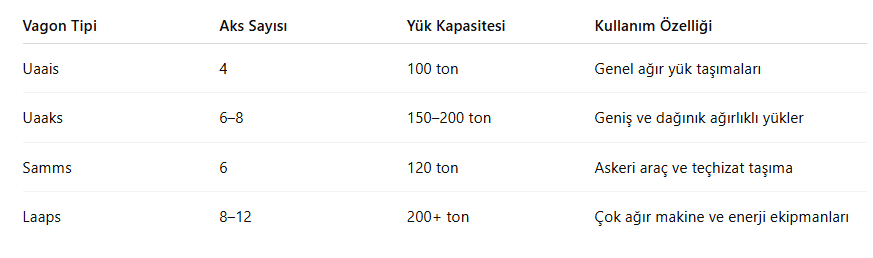
Car Type Table (Generated by Artificial Intelligence)
According to TCDD’s General Order No. 203, the following principles must be strictly observed during heavy-duty car loading:
Loading instructions are prepared under the supervision of technical services and specialized engineers.
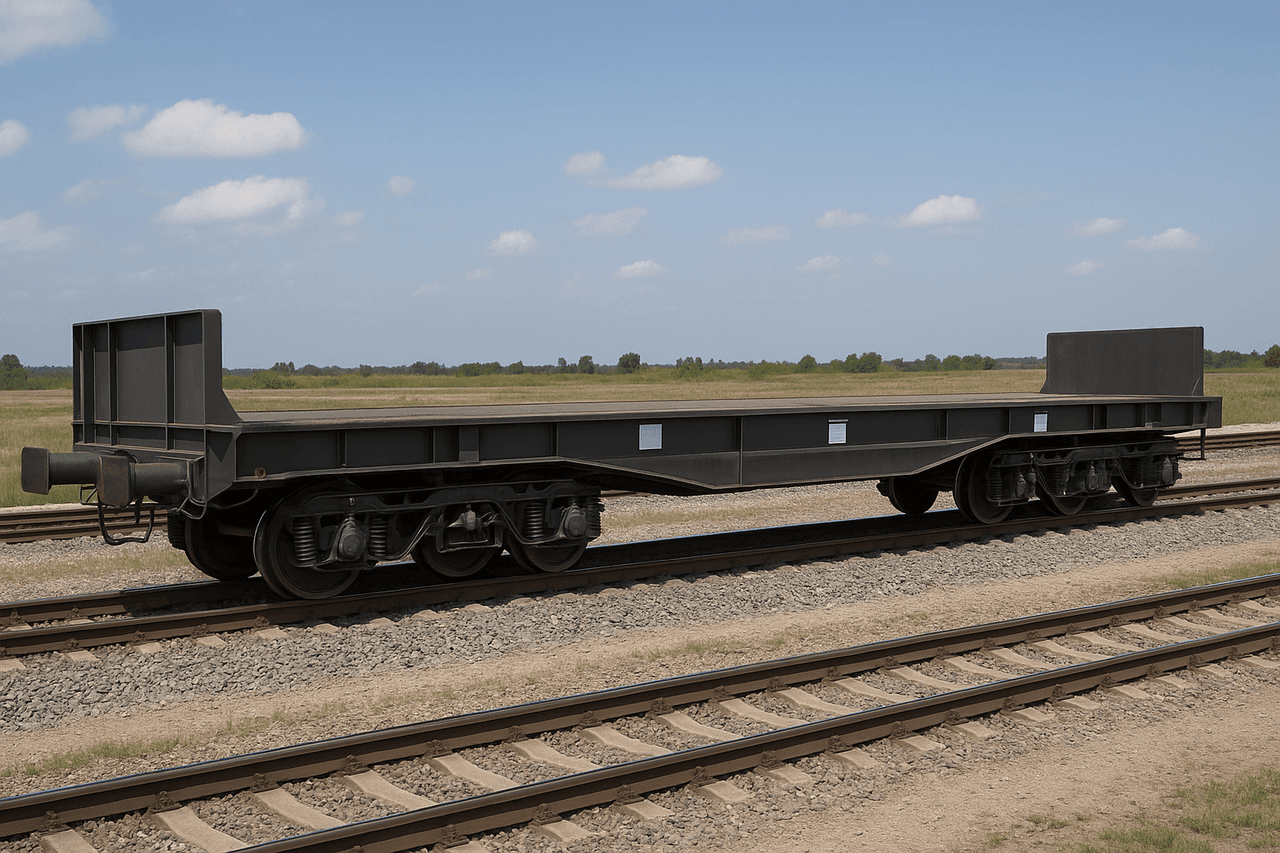
A Heavy-Duty Freight Car with Wide Platform (Generated by Artificial Intelligence)
Locally produced heavy-duty freight cars by TÜRASAŞ are used domestically by TCDD Taşımacılık and also exported. In particular, Samms-type cars are actively deployed in defense industry transportation. Under domestic development programs, the following models have been developed and put into service:
Loading and transportation operations involving heavy-duty cars fall under the category of high-risk work. In this context, the following elements are vital:
Heavy-duty freight cars are engineering-based railway vehicles developed to meet specialized transportation needs. As modern industry, defense, and energy systems grow, demand for these cars is increasing, and domestic production and compliance with technical standards are becoming more widespread in Türkiye. Safe, planned, and technically compliant heavy transport enhances the strategic capacity of railway systems.
Ministry of National Education. *Raylı Sistemler Teknolojisi: Tren Dizisinin Oluşturulması ve Kontrolü*. Ankara: MEGEP, 2011. https://megep.meb.gov.tr/mte_program_modul/moduller_pdf/Tren%20Dizisinin%20Olu%C5%9Fturulmas%C4%B1%20ve%20Kontrol%C3%BC.pdf
Ministry of National Education. *Raylı Sistemler Teknolojisi: Yük Taşıma*. Ankara: MEGEP, 2011. https://megep.meb.gov.tr/mte_program_modul/moduller_pdf/Yük%20Taşıma.pdf

No Discussion Added Yet
Start discussion for "Heavy Duty Freight Car" article
Structural Features
Applications and Load Types
Loading and Safety Regulations
Applications in Türkiye
Occupational Health and Safety