


This article was automatically translated from the original Turkish version.
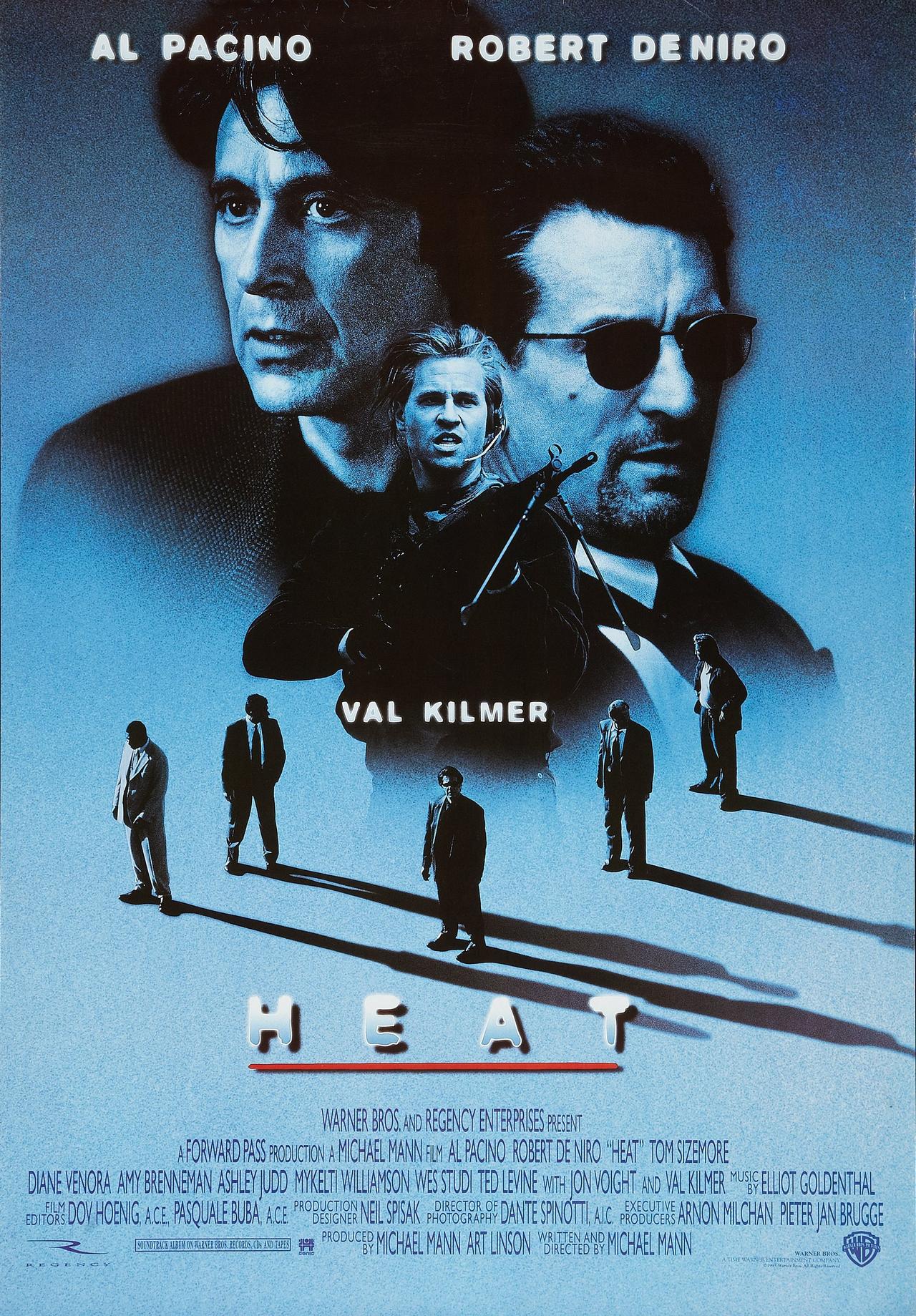
Great Settlement
Original Name | Heat | ||||||||
|---|---|---|---|---|---|---|---|---|---|
Director | Michael Mann | ||||||||
Screenplay | Michael Mann | ||||||||
Genre | Drama Thriller Crime | ||||||||
Production Year | 1995 | ||||||||
Duration | 170 minutes | ||||||||
IMDb Rating | 8.3 | ||||||||
Actor | Diane Venora (Justine Hanna) Al Pacino (Lt. Vincent Hanna) Robert De Niro (Neil McCauley) Val Kilmer (Chris Shiherlis) Jon Voight (Nate) Tom Sizemore (Michael Cheritto) Ashley Judd (Charlene Shiherlis) | ||||||||
Heat is an epic crime-thriller in which the line between crime and justice becomes blurred, bringing two professionals face to face. Set in Los Angeles, the film centers on Vincent Hanna (Al Pacino), a determined and obsessive police detective, and Neil McCauley (Robert De Niro), a disciplined and professional criminal.
McCauley and his crew carry out an armored car robbery, but leave behind traces that lead Hanna and his team to pursue them. The chase between them evolves into more than just a crime story; it becomes a character study revealing how the two men, despite choosing different paths, embody the same existential reality through strikingly similar life philosophies.
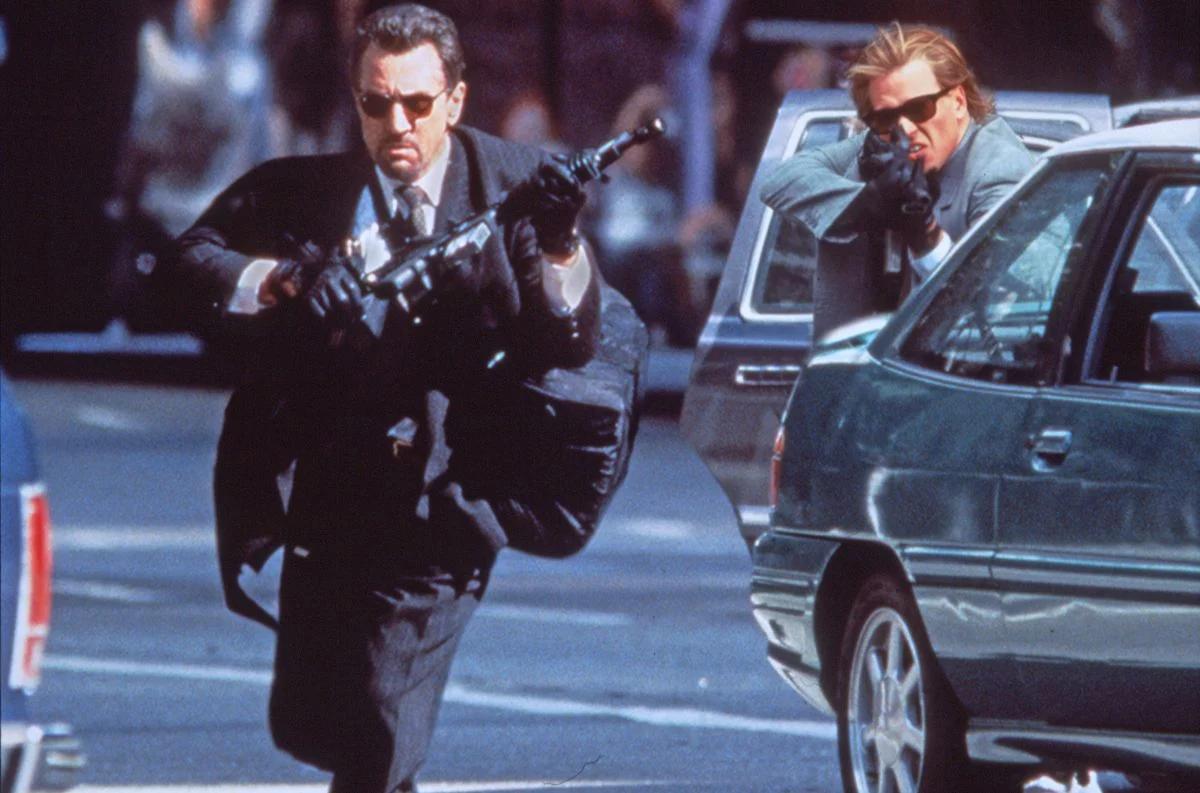
One of the film’s iconic scenes -American Cinematographer
Although Hanna and McCauley stand on opposite sides of the law, they exhibit profound similarities. Both are deeply committed to their work, struggle with personal relationships, and maintain only limited ties to society. Their famous cafeteria scene is one of cinema’s most compelling confrontations, marked not by conflict but by mutual understanding and respect.
Both characters are passionately devoted to their professions. Yet this devotion distances them from human connections, family bonds, and emotional intimacy. The film reflects the cost of professionalism as both emotional and existential loneliness.
Los Angeles is more than a backdrop; it is nearly a character in itself. The city, with its nocturnal lights, wide boulevards, and silence, mirrors the inner worlds of the protagonists. Michael Mann’s visual language masterfully conveys the alienation and quiet tension of urban life.
The film’s confrontations are not exaggerated; they are cold, fast, and realistic. The street shootout following the bank robbery is widely regarded as one of the greatest action sequences in cinema history. Sound design, spatial planning, and acting reach their peak in this scene.
Michael Mann drew inspiration for Heat from his own 1989 television film L.A. Takedown. The events in the film are based on real criminals and police cases. On-location shooting, conducted on the streets of Los Angeles rather than in studios, enhances the sense of authenticity.
According to The ASC, cinematographer Dante Spinotti’s use of light and color visually completes the feeling of urban isolation. Gunfire sounds were recorded on set rather than during post-production. This approach lends an extraordinary realism to the bank aftermath shootout scene.
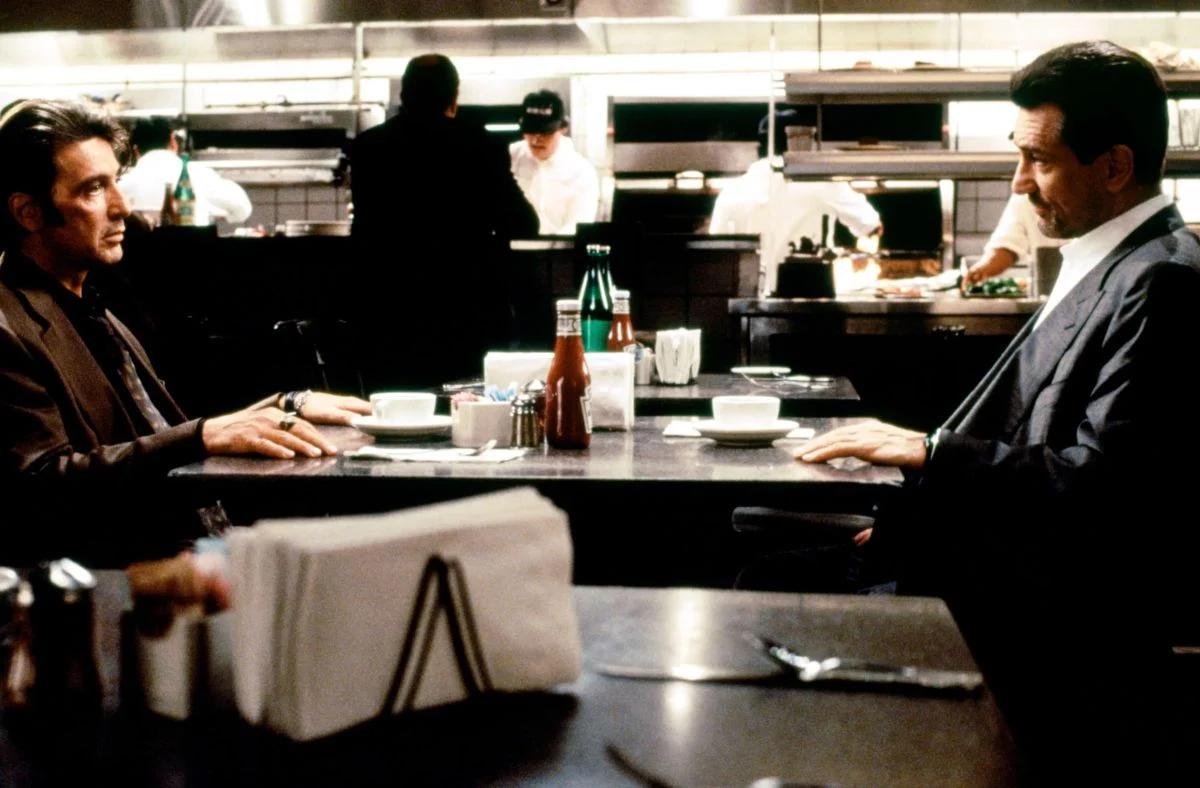
Al Pacino and Robert De Niro at the same table -American Cinematographer
Al Pacino delivers an energetic and complex performance as Vincent Hanna, an emotionally volatile, frenetic yet duty-bound detective.
Robert De Niro stands out with his cold, controlled, yet deadly portrayal of Neil McCauley, marked by quiet intensity and depth.
Val Kilmer contributes a strong supporting performance, particularly praised for his physicality in the action sequences.
Though the female supporting characters exist in the shadow of the male-dominated narrative, they add emotional depth to the film.
Heat is more than a crime thriller; it represents the pinnacle of character-driven storytelling. By bringing Al Pacino and Robert De Niro together for the first time in a single confrontation scene, the film created a unique moment in cinema history. With its intellectual tension exploring themes of existence, professionalism, crime and justice in the modern city, the film remains one of the foundational pillars of contemporary cinema.
Although it did not win major awards, Heat has since become a cult classic and is regarded by many film authorities as the pinnacle of its genre.
MTV Movie Awards (1996) – Best Action Sequence (Nomination)
Chicago Film Critics Association – Best Cinematography (Nomination)
National Society of Film Critics – Best Supporting Actor (Val Kilmer, nomination)
Christopher Nolan has stated that he drew direct inspiration from Heat while filming The Dark Knight.
In 2022, Michael Mann published the novel Heat 2, set in the same universe, expanding the film’s legacy.
All The Right Movies. "25 Interesting Facts About Heat." Accessed April 2, 2025.
American Society of Cinematographers. “Hot Set: Shooting Heat.” Accessed April 2, 2025.
Beyazperde. “Büyük Hesaplaşma (1995).” Accessed April 2, 2025.
IMDb. "Heat (1995)." Accessed April 2, 2025.
Roger Ebert. “Heat (1995).” Accessed April 2, 2025.

Great Settlement
Original Name | Heat | ||||||||
|---|---|---|---|---|---|---|---|---|---|
Director | Michael Mann | ||||||||
Screenplay | Michael Mann | ||||||||
Genre | Drama Thriller Crime | ||||||||
Production Year | 1995 | ||||||||
Duration | 170 minutes | ||||||||
IMDb Rating | 8.3 | ||||||||
Actor | Diane Venora (Justine Hanna) Al Pacino (Lt. Vincent Hanna) Robert De Niro (Neil McCauley) Val Kilmer (Chris Shiherlis) Jon Voight (Nate) Tom Sizemore (Michael Cheritto) Ashley Judd (Charlene Shiherlis) | ||||||||
No Discussion Added Yet
Start discussion for "Heat (Big Settlement, Film)" article
Themes and Analysis
1. Reflection in the Mirror: Cop and Criminal
2. Professionalism and Loneliness
3. The City and Its Contribution to Narrative
4. Realism of Violence
Production Process and Technical Features
Performances
Impact and Significance
Awards and Nominations
Nominations and Honors
Long-Term Influence