


This article was automatically translated from the original Turkish version.
+1 More
Hatim, Kur’ân-ı Kerîm’in complete recitation from beginning to end, either from the text or from memory, is recognized as a longstanding and deeply rooted tradition among Muslims. The term derives from the Arabic root h-t-m (ختم).
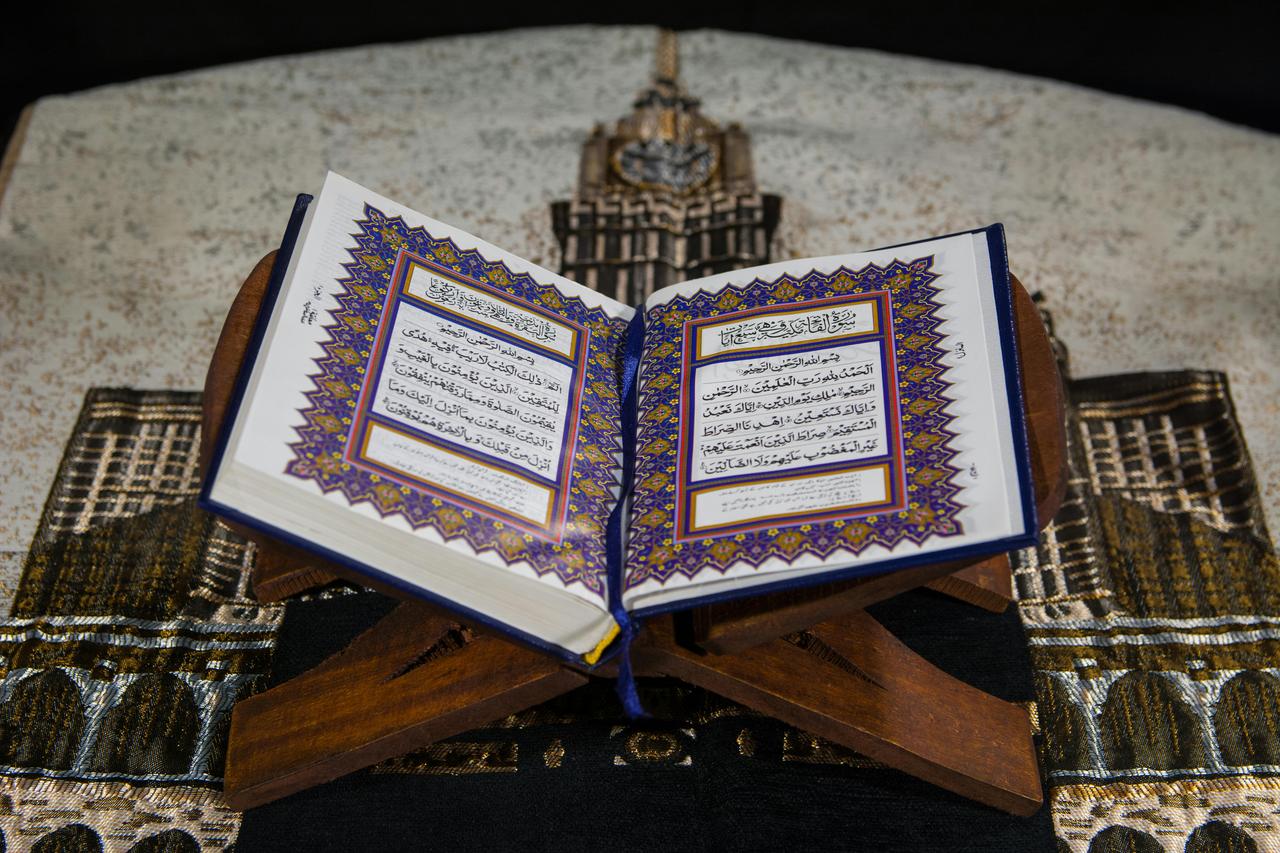
Kur’ân-ı Kerîm (Pexels)
H-t-m root and its derivatives appear in eight different verses of the Kur’ân-ı Kerîm, though the term “hatim” itself is not used as a technical term in these contexts. However, words derived from this root are used in various contexts within the Kur’ân. In its verbal form, h-t-m means to seal, while in its nominal form it denotes the end or consequence of something.【1】 It also carries meanings such as to close, to secure, to cover, to reach the end of something, and to complete it.【2】
In the traditions, the terms “hatim” and “kıraat” are sometimes used interchangeably and sometimes distinguished. However, a semantic difference between the two is noted. The word “kıraat” derives from the Arabic root k-r-e (قرأ) and generally means “to recite.” In Arabic, the terms h-t-m and k-r-e have distinct meanings. When used in connection with the Kur’ân, the term “hatim” encompasses the meaning of “kıraat” and refers specifically to the complete recitation of the entire text from beginning to end. In contrast, “kıraat” refers solely to the act of recitation. Therefore, not every recitation constitutes a hatim. In other words, every hatim includes a kıraat, but not every kıraat qualifies as a hatim.【3】
The hatim tradition is generally traced back to the early periods of Islam. During the time of the ongoing revelation of the Kur’ân, the practice of hatim involved the recitation of the verses revealed up to that point. In preserving the Kur’ân, both written documentation and memorization were primary methods. The practice of hatim is considered to have contributed indirectly rather than directly to the preservation of the Kur’ân.【4】

Recitation of the Kur’ân-ı Kerîm (Generated by Artificial Intelligence)
Traditions indicate that during the recitation of the Kur’ân, a takbîr is recited at the end of each sūrah, or according to some views, at the beginning. Over time, the practice of reciting takbîr at the end of sūrahs became widespread, and the addition of tahlîl and tahmîd phrases gave rise to specific supplicatory formulas. Hatim is typically completed with the recitation of Sūrat an-Nâs. This is followed by the recitation of Sūrat al-Fâtiha and the first five verses of Sūrat al-Baqarah, which are regarded as the beginning of a new hatim.【5】
No fixed or definitive time limit has been established for completing a hatim. Traditions emphasize that the duration should be adjusted according to the individual’s recitation capacity, intensity of worship, and level of comprehension. Three general approaches to the duration of hatim are recognized: short, medium, and long.【6】
Some reports indicate that certain early Muslims completed the hatim in very short periods, such as within a single day or even less. However, such practices have not been accepted as a standard or obligatory method for hatim and are not regarded as common or normative.【7】
The majority of scholars consider a recitation period of three to seven days to be the most balanced and appropriate for completing a hatim. Some traditions state that reciting the Kur’ân in less than three days may prevent the reader from fully comprehending what is recited. Among the Companions, some completed a hatim weekly or every three days, while others did so in shorter or longer intervals.【8】
Long-duration hatim practices include reciting the entire Kur’ân once a month, every two months, or at even longer intervals. It is reported that Ubayy ibn Ka’b completed a hatim every eight days, and during the generation of the Successors, Makhūl narrated that some Companions completed it in seven days, others in one month, others in two months, and still others in longer periods.【9】
Hatim tradition is closely associated with the practice of mukabele, which involves completing a hatim by listening to and following along with another person’s recitation. The reciprocal recitation of the Kur’ân between Prophet Muhammad (peace be upon him) and Jibril during the month of Ramadan is regarded as the foundational basis for this practice. This practice is known as arza.

Mukabele (Generated by Artificial Intelligence)
Offering a supplication after completing a hatim is a widely accepted practice within the hatim tradition. It is reported that prayers offered after hatim are more likely to be accepted. Some Companions are reported to have performed the hatim supplication together with their family members. There is no definitive evidence requiring the recitation of specific sūrahs before the hatim supplication. In particular, no binding ruling has been established mandating the recitation of Sūrat al-Ikhlâs three times. The hatim supplication is regarded as a devotional practice of invocation and prayer performed immediately after the completion of recitation.【10】
Today, hatim practices continue both individually and communally. In particular, the mukabele practice, conducted in mosques and some homes especially during the month of Ramadan, is considered an important component of this tradition. In the Ottoman period, the mukabele tradition began with a hâfız or a skilled reciter reading the Kur’ân aloud while other participants listened and followed along. In Türkiye, the mukabele tradition is not confined to mosques but is also conducted through media such as radio and television. During Ramadan, some mosques combine the completion of the Kur’ân hatim with the performance of teravih prayers.
An example of communal hatim practice is the 1001 Hatim tradition in Erzurum. This program, maintained since the 16th century during the winter months outside of Ramadan, creates a festive atmosphere in the city. It is performed with the intention of seeking protection from disasters such as earthquakes and other natural calamities.【11】
In contemporary times, reciting the Kur’ân and completing a hatim for deceased individuals is also a widespread practice. Following a person’s death or during visits to their grave, certain sūrahs—especially Sūrat Yâsîn—are recited. Additionally, distributing specific portions of the Kur’ân to complete a hatim and then offering a supplication has become an established cultural and religious practice within the community.
GR Stocks. "Kur’ân-ı Kerîm." Pexels. Accessed February 27, 2026. https://www.pexels.com/tr-tr/fotograf/kitap-kultur-gelenek-inanc-iman-8522572/
Karakaya, Koray. “Kur'ân Hatmi ile İlgili Rivâyetlerin Değerlendirilmesi.” Master's thesis, Ankara Üniversitesi, 2020. Accessed February 27, 2026. https://tez.yok.gov.tr/UlusalTezMerkezi/TezGoster?key=_F5QEpayDXGqGZlp9XiFtCl_Fc5ORu1zvdU8GFrY1oYAuuVLfI3d43FJnkgnfzT8
Türkiye Diyanet Vakfı İslam Ansiklopedisi. "Hatim." Accessed February 27, 2026. https://islamansiklopedisi.org.tr/hatim--kuran
Çelikan, Serkan. "Kur’ân Hatmi Geleneğinin Rivâyetlerdeki Temelleri." *Diyanet İlmi Dergi* 56, no. 3 (2020): 781-806. Accessed February 27, 2026. https://dergipark.org.tr/en/pub/did/article/716014?issue_id=56925
[1]
Serkan Çelikan, “Kur’ân Hatmi Geleneğinin Rivâyetlerdeki Temelleri,” Diyanet İlmi Dergi 56, no. 3 (2020): 787, https://dergipark.org.tr/en/pub/did/article/716014?issue_id=56925
[2]
Koray Karakaya, ''Kur'ân Hatmi ile İlgili Rivâyetlerin Değerlendirilmesi'' (Yüksek lisans tezi, Ankara Üniversitesi, 2020), 8, https://tez.yok.gov.tr/UlusalTezMerkezi/TezGoster?key=_F5QEpayDXGqGZlp9XiFtCl_Fc5ORu1zvdU8GFrY1oYAuuVLfI3d43FJnkgnfzT8
Abdurrahman Çetin, “Hatim,” Türkiye Diyanet Vakfı İslam Ansiklopedisi, Accessed 27 February 2026, https://islamansiklopedisi.org.tr/hatim--kuran
[3]
Karakaya, ''Kur'ân Hatmi ile İlgili Rivâyetlerin Değerlendirilmesi,'' 17.
[4]
Karakaya, ''Kur'ân Hatmi ile İlgili Rivâyetlerin Değerlendirilmesi,'' 19.
[5]
Abdurrahman Çetin, “Hatim,” Türkiye Diyanet Vakfı İslam Ansiklopedisi, Accessed 27 February 2026, https://islamansiklopedisi.org.tr/hatim--kuran
[6]
Abdurrahman Çetin, “Hatim,” Türkiye Diyanet Vakfı İslam Ansiklopedisi, Accessed 27 February 2026, https://islamansiklopedisi.org.tr/hatim--kuran
[7]
Serkan Çelikan, “Kur’ân Hatmi Geleneğinin Rivâyetlerdeki Temelleri,” 787-789.
[8]
Abdurrahman Çetin, “Hatim,” Türkiye Diyanet Vakfı İslam Ansiklopedisi, Accessed 27 February 2026, https://islamansiklopedisi.org.tr/hatim--kuran
[9]
Serkan Çelikan, “Kur’ân Hatmi Geleneğinin Rivâyetlerdeki Temelleri,” 88-789.
[10]
Abdurrahman Çetin, “Hatim,” Türkiye Diyanet Vakfı İslam Ansiklopedisi, Accessed 27 February 2026, https://islamansiklopedisi.org.tr/hatim--kuran
[11]
Karakaya, ''Kur'ân Hatmi ile İlgili Rivâyetlerin Değerlendirilmesi,'' 95.

Hatim and Kıraat Concepts
Historical Foundations of the Hatim Tradition
Recitation Schedule and Duration in Hatim
Short-Duration Hatim Practices
Medium-Duration Hatim Practices
Long-Duration Hatim Practices
Mukabele and Arza Tradition
Hatim Supplication
Hatim Practices in Contemporary Times