


This article was automatically translated from the original Turkish version.
Amin Maalouf’s novel The Ports of the East is a historical and psychological novel that explores the impact of conflicts between different cultures, religions and nations on an individual’s life. Published in 1991, the novel examines the painful transition from the collapse of the Ottoman Empire to the modern world, set against the geographical backdrop stretching from the Eastern Mediterranean to Europe in the first half of the 20th century. Maalouf masterfully portrays the longing for the past and roots, the search for identity, and the profound effects of historical transformations on individuals.
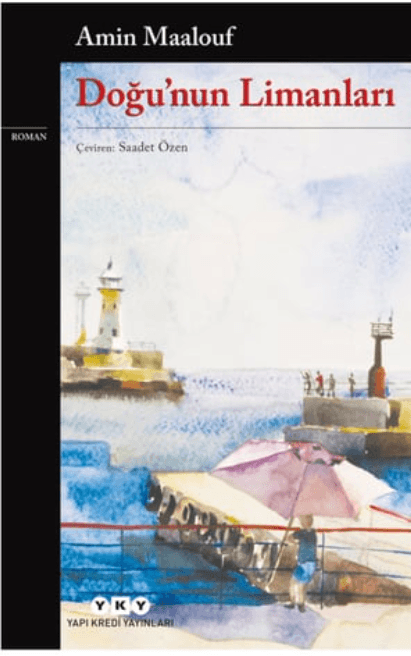
The Ports of the East
The novel opens with the narrator’s journey to his village in Lebanon. This journey is not merely a physical movement but also represents a confrontation with the past and a journey into the depths of memory. In this section, Maalouf explores the protagonist’s attachment to his origins and his yearning for the past.
The backdrop of the novel is the collapse of the Ottoman Empire and the emergence of a new order. This historical context shapes the characters’ lives and compels individuals to question their sense of belonging. Maalouf presents a historical perspective through the characters’ personal experiences.
The central theme of the novel is the search for identity and belonging. The main character acts as a bridge between the East and the West, yet becomes trapped between these two distinct worlds. Maalouf vividly depicts the inner conflicts of individuals striving to find a balance between Eastern traditions and Western modern values.
The novel examines in detail the relationships between different cultures and religions. In particular, the dynamics among Muslim, Christian and Jewish communities are presented through the characters’ lives. Maalouf provides a deep analysis of how these conflicts affect individuals.
In the novel, relationships of love and importance betrayal play a significant role. Love gives meaning to the characters’ lives, while betrayal generates emotional conflicts and disillusionment. Maalouf uses these themes as a means to explore the characters’ inner worlds.
The novel questions how the past influences individuals and how one can cope with its legacy. The protagonist attempts to strike a balance between his loyalty to his past and roots and the demands of the modern world. Maalouf conveys the idea that an individual cannot construct a future without understanding the past.
Amin Maalouf. Doğu'nun Limanları. Çevirmen: Saadet Özen, Yapı Kredi Yayınları, 2019.

No Discussion Added Yet
Start discussion for "Harbors of the East (Book)" article
Content of the Book
Beginning: The Narrator’s Journey
The Collapse of the Ottoman Empire and the New Order
The Search for Identity and Belonging
Conflict Between Different Cultures and Religions
Love and Betrayal
Traces of the Past and Views of the Future