


This article was automatically translated from the original Turkish version.
+1 More
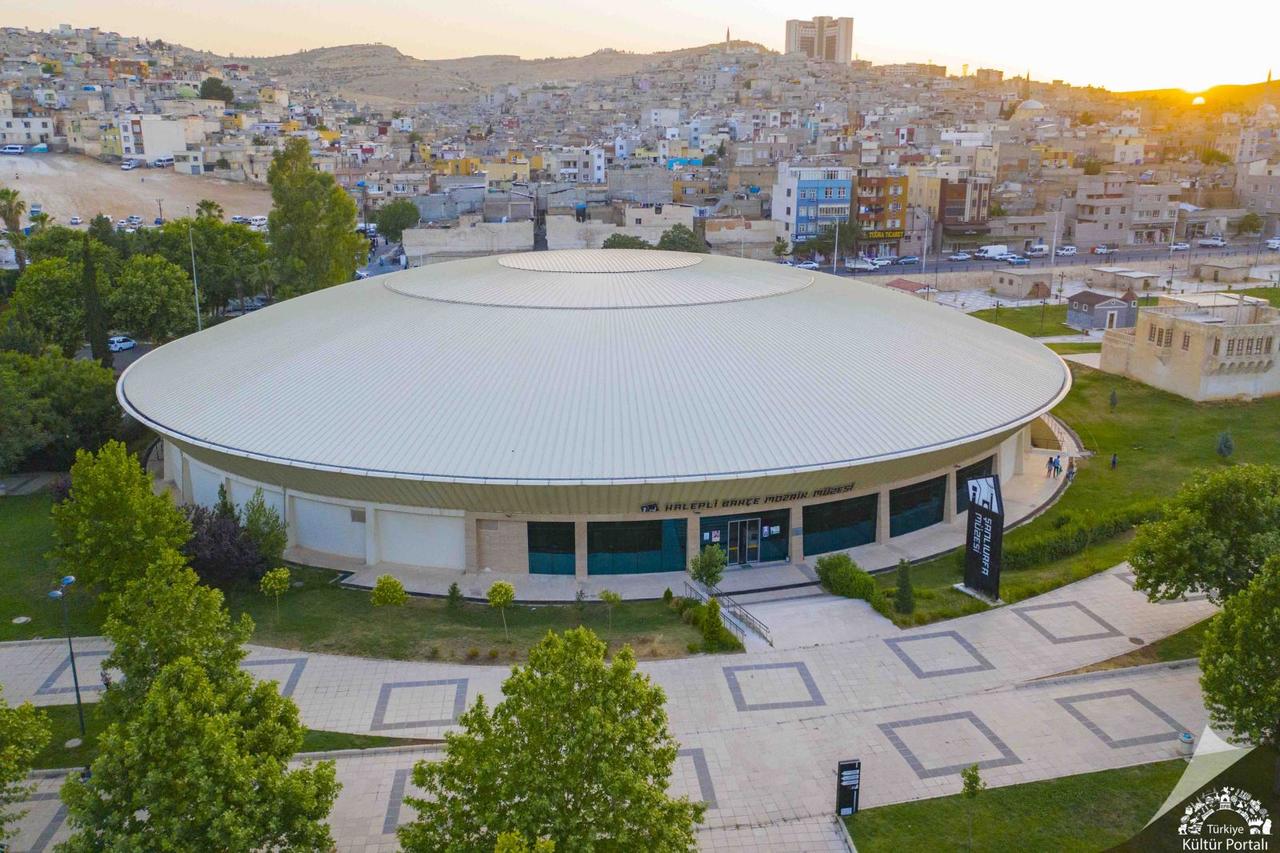
Haleplibahçe Mosaic Museum
Location | Şanlıurfa Türkiye | ||||||||
|---|---|---|---|---|---|---|---|---|---|
Mosaic Period | Roman Period | ||||||||
Foundation | after the 2006 excavations | ||||||||
Notable Works | Ktisis Mosaic Mosaic of Achilles' Life Orpheus Mosaic Villa of the Amazons | ||||||||
Architecture | glass-steel canopy protective walkways | ||||||||
Haleplibahçe Mosaic Museum is located in the city of Şanlıurfa, Türkiye, within the complex of the Şanlıurfa Archaeology Museum. The museum was constructed at the foot of Urfa Castle, in the historic Haleplibahçe area. It displays Roman-era mosaics and architectural remains preserved in situ. The museum was designed as one of the notable examples of permanent in-situ exhibition.
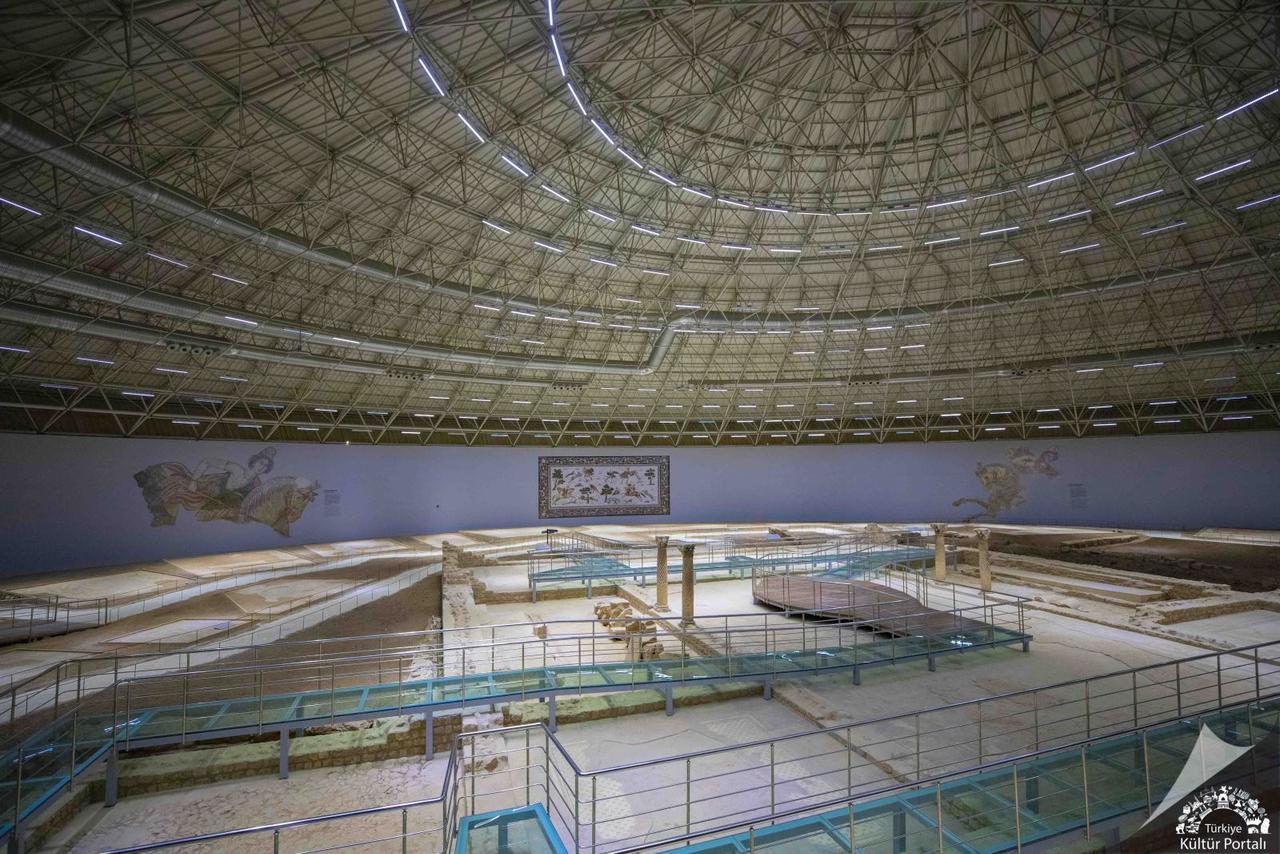
Haleplibahçe Mozaik Müzesi (KültürPortalı)
During archaeological excavations conducted in 2006, fragments of mosaic floors were uncovered. As a result of these discoveries, the area was designated as an archaeological site for preservation. To ensure the in-situ display of these Roman-era remains and to create an accessible space for visitors, the Haleplibahçe Mosaic Museum was established.
The museum is particularly notable for its floor mosaics, distinguished by their thematic content and craftsmanship. Mosaics depicting Amazon warrior women constitute a significant portion of the collection. These mosaics portray mythological figures such as Penthesilea, Hippolyte, Melanippe, and Antiope in hunting and battle scenes. The use of polychrome stone and glass tesserae to create shading and intricate details reflects the technical proficiency of mosaic art during this period.
Another major theme in the museum is scenes based on the myth of Achilles. These scenes visually narrate episodes from Achilles’ childhood, education, and participation in wars. Detailed depictions such as Achilles disguised as a woman on the island of Skyros are rare examples in Roman art.
The museum was constructed with a modern architectural design that enables the preservation of mosaics in their original location. The building’s roof is covered with a glass and steel structure, allowing natural light to enter while ensuring protection. Platforms have been installed to allow visitors to walk above the mosaic floors without causing damage, thereby implementing a visual and protective exhibition strategy.
The Villa of the Amazons derives its name from the Amazon depictions discovered during excavations. The building has a reverse “T” plan oriented east-west. The entrance is on the eastern side and consists of a rectangular hall symmetrically placed between two inner courtyards, surrounded by rooms. Visitors enter from the forecourt through an apsidal corridor leading to the main hall. The floor of the rectangular room opposite the main hall features a mosaic with the theme “Hunted Amazons.”
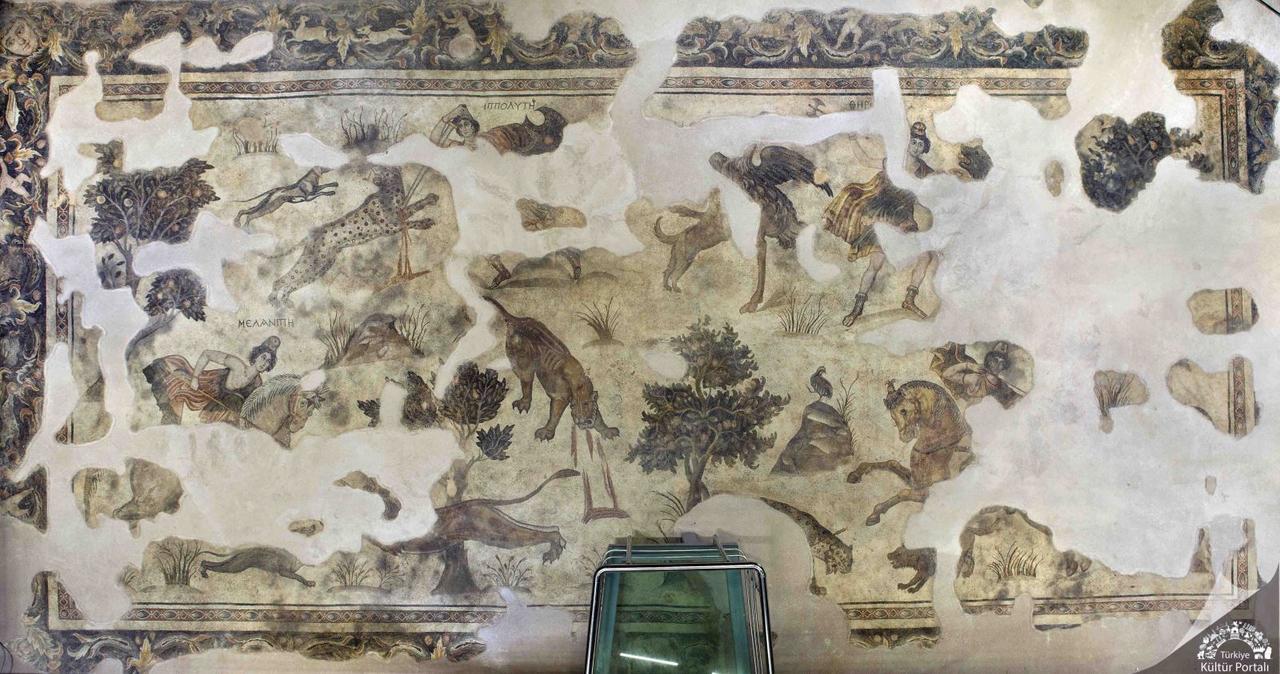
Amazonlar Villası (Kültür Portalı)
The Orpheus Mosaic was previously removed from the country and later returned to Türkiye from the Dallas Museum of Art. The mosaic depicts Orpheus seated facing right, wearing a Phrygian cap and playing the lyre. On his left are carnivorous animals such as a lion, bear, leopard, and boar; on his right are herbivorous animals such as a mountain goat and a horse. In the upper left corner, bird figures are present, and all creatures are shown listening to Orpheus’s music. The rectangular mosaic contains a Syriac inscription. Dated to 194 CE, it is the earliest known mosaic among those from Edessa/Urfa. The artist’s name, Bar Saged, is also inscribed on the mosaic. It is known that the mosaic originally formed the floor of a rock-cut tomb.
The Ktisis Mosaic portrays a bust of Ktisis, a protective figure associated with the Villa of the Amazons. Ktisis wears a crown adorned with pearls and gemstones resembling gold, and pearl-like earrings with gold hoops. Around her neck is a necklace composed of yellow, green, and brown stones. In her hands she holds a gray measuring instrument representing the Roman foot (approximately 29.7 cm) above her chest. Her attire is rendered as a yellow palla and a gray stola. On either side of Ktisis in the mosaic are pillars covered with green drapery.
Rectangular panels on the floor of the main hall of the villa depict mythological scenes from the life of Achilles. The scenes are presented in the following sequence:
Around the border of the panel are figures playing music, rural architectural elements, horses running, standing, and grazing, as well as sheep and bulls. This mosaic is a significant work both for its mythological narrative and its figurative ornamentation.
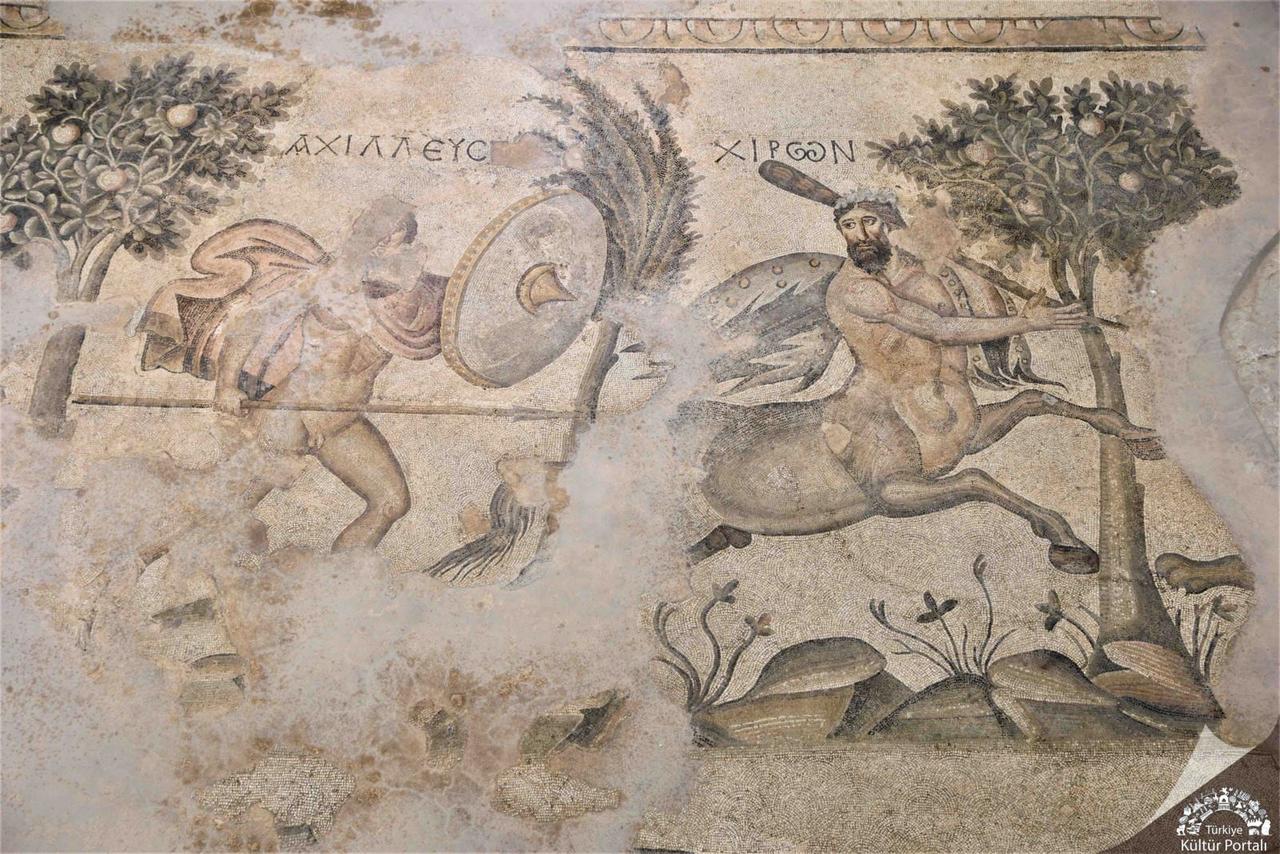
Akilleus’un Hayatı Mozaiği (Kültür Portalı)
The Haleplibahçe Mosaic Museum is a structure dedicated to the in-situ display of Roman-era mosaics. It was designed with an architectural approach aimed at preserving archaeological finds and presenting them to the public. Works such as the Villa of the Amazons, the Orpheus Mosaic, the Ktisis Mosaic, and the Life of Achilles Mosaic provide valuable information on the iconography, production techniques, and thematic arrangements of the period. These artifacts document the cultural and artistic practices of Roman-era settlements in the region.
Ayaydın, Eşber. “Aşil'in Hayatı ve Savaşçı Amazon Kadınlarının Mozaikleri Şanlıurfa'da Sergileniyor.” Anadolu Ajansı. Accessed May 21, 2025.https://www.aa.com.tr/tr/anadolu-mozaigi/asilin-hayati-ve-savasci-amazon-kadinlarinin-mozaikleri-sanliurfada-sergileniyor/2804110
T.C. Kültür ve Turizm Bakanlığı. "Haleplibahçe Mozaik Müzesi." Kültür Portalı. Accessed May 21, 2025.https://www.kulturportali.gov.tr/turkiye/sanliurfa/gezilecekyer/haleplibahce-mozaik-muzesi-
Şanlıurfa Büyükşehir Municipality. "Mozaik Müzesi." Şanlıurfa Metropolitan Municipality. Accessed May 21, 2025.https://www.sanliurfa.bel.tr/icerik/73/28/mozaik-muzesi

Haleplibahçe Mosaic Museum
Location | Şanlıurfa Türkiye | ||||||||
|---|---|---|---|---|---|---|---|---|---|
Mosaic Period | Roman Period | ||||||||
Foundation | after the 2006 excavations | ||||||||
Notable Works | Ktisis Mosaic Mosaic of Achilles' Life Orpheus Mosaic Villa of the Amazons | ||||||||
Architecture | glass-steel canopy protective walkways | ||||||||
No Discussion Added Yet
Start discussion for "Haleplibahçe Mosaic Museum" article
History and Discovery Process
Mosaic Collection and Themes
Architecture and Exhibition
Notable Exhibits
Villa of the Amazons
Orpheus Mosaic
Ktisis Mosaic
Life of Achilles Mosaic
Cultural and Archaeological Significance