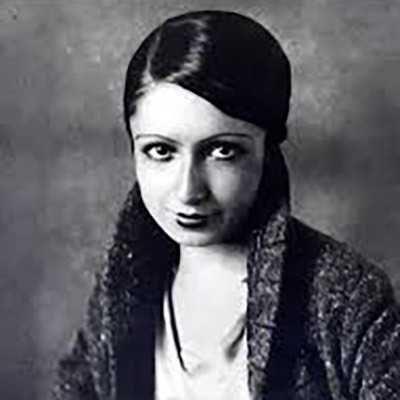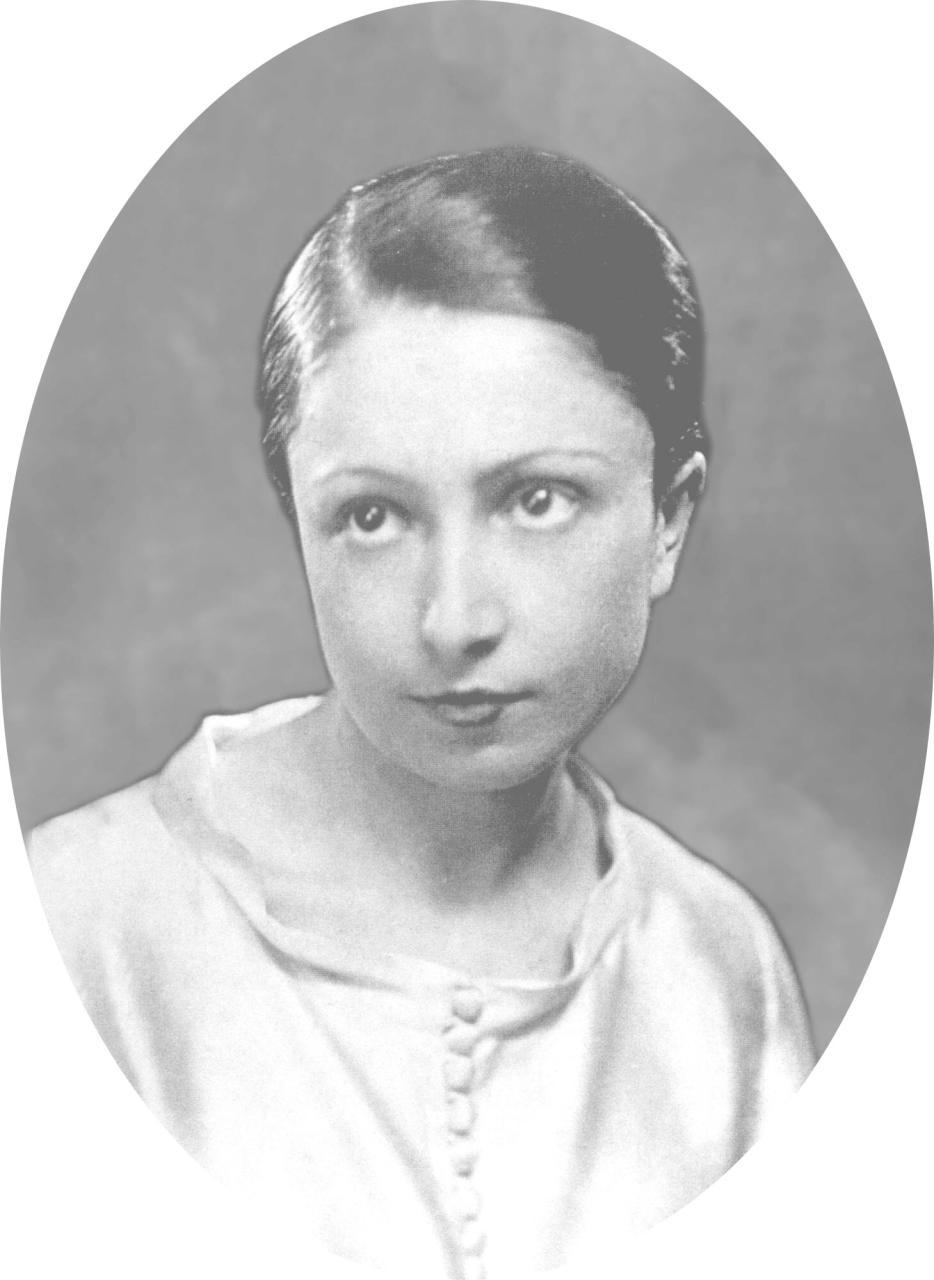

Doğum tarihi | 1905-08-26 | ||||||||
|---|---|---|---|---|---|---|---|---|---|
Ölüm tarihi | 1938-05-31 | ||||||||
Profession(s) | Painter | ||||||||
Field | Painting Art (Still Life, Figurative Painting) | ||||||||
Hale Asaf, one of the female artists of 20th century Turkish painting, emerged during the transition from the Ottoman Empire to the Republic. She is particularly known for her portraits and figurative works. Influenced by her artistic education in Europe, Hale Asaf introduced Western painting concepts to Turkish art and played a significant role in the development of modern Turkish painting. Despite her short life, her original style and productivity left a lasting mark on Turkish art history.
Hale Asaf was born in 1905 and showed an interest in art from an early age. She received the initial stages of her artistic education in Turkey, acquiring foundational knowledge and skills in painting through the art institutions of her time. During this period, she trained in academic design, figurative drawing, and composition, laying the groundwork for her artistic development. Seeking to further her education, Asaf traveled to Europe, particularly residing in Paris. As Paris was one of the major centers of modern art at the time, Asaf had the opportunity to closely observe diverse artistic movements and techniques. During her European education, she did not limit herself to academic methods but also examined the formal and aesthetic approaches of modern art.
During her time in Paris, the artist focused on elements such as simplification, formal order, and compositional balance in her painting. The experiences she gained during this period were decisive in shaping her artistic vision. Her connections with European art circles helped her become familiar with different styles and develop her own artistic language. Her exposure to various cultural and artistic environments during her education is considered one of the main reasons for the formal diversity evident in her works. After returning to Türkiye, she continued to build on this accumulation, reflecting these experiences in both her creative output and her interactions within the art community. Although her life was interrupted by health issues and her short lifespan, the knowledge and experience acquired during her education formed the foundation of her artistic production. She continued her artistic work until her death in 1938, contributing to the development of modern Turkish painting throughout this period.
Hale Asaf’s artistic approach reflects a synthesis of modern painting trends emerging in early Republican Türkiye and contemporary European art movements. In her paintings, she moved away from traditional representational approaches and instead emphasized formal order, compositional balance, and visual unity. One of the most distinctive features of Asaf’s works is the deliberate reduction of detail and the simplification of forms. This simplification was not merely a visual preference but a strategy to highlight the essential elements of composition. By eliminating unnecessary details, she directed the viewer’s attention toward form, color, and structural relationships.
Color usage is also a crucial component of Hale Asaf’s artistic approach. Her works typically feature a limited and controlled palette, with emphasis placed on harmony and balance among colors. This approach is regarded as a key factor in reinforcing compositional unity. Color was often used as a tool to define the volume of objects and their spatial positioning. In her compositional thinking, geometric order is prominent. Objects are not placed randomly on the surface but arranged according to specific proportions and structure. This reveals a deliberate, structured composition in her paintings. Particularly in her still lifes, relationships between objects, the balance between positive and negative space, and surface organization are carefully constructed.
A similar approach is evident in Hale Asaf’s figurative works. Figures are treated with emphasis on formal unity rather than anatomical accuracy, stripped of excessive detail and focused on overall form. This indicates her tendency not to copy reality directly but to reorganize and reinterpret it. The use of light and shadow in her works is also handled with a distinct simplicity. Light is employed not to create dramatic effects but to reveal form and support composition. This approach contributes to a calm and balanced atmosphere in her paintings. Overall, Hale Asaf’s artistic approach is defined by formal simplicity, structured composition, controlled color usage, and the influence of modern art. In this regard, she is regarded as a significant representative in the development of modern painting in Türkiye.
Hale Asaf’s works concretely reflect her artistic approach centered on formal simplicity, compositional balance, and controlled color usage. Her oeuvre primarily focuses on still lifes and figurative paintings, through which her explorations of modern painting are clearly traceable.
Hale Asaf’s most striking body of work consists of her still lifes. In these pieces, she took everyday objects as subjects but restructured them not through direct representation but within a specific formal and compositional framework. Objects are often simplified, details reduced, and forms expressed through clear outlines. Spatial relationships between objects and surface organization are foregrounded in her still lifes. The balance between emptiness and fullness is carefully constructed, with objects arranged to achieve a balanced distribution across the surface. This demonstrates a deliberate, planned composition devoid of chance or randomness.
Her work titled Still Life, held in the Istanbul Modern collection, is a prominent example of this approach. In this piece, objects are rendered in simplified forms and a limited color palette is used to achieve visual unity. The composition presents a regular and balanced structure based on the arrangement of the objects.
A similar formal approach is evident in Hale Asaf’s figurative works. Figures are stripped of detail and the emphasis is placed on overall form. The artist evaluated figures not only in terms of anatomical accuracy but also in relation to their placement and distribution on the surface. In these works, figures are typically positioned against a simple background, directing the viewer’s attention to the form of the figure and its position within the composition. The placement and posture of the figures are arranged to harmonize with the overall balance of the painting.
A distinctive technical feature in Hale Asaf’s works is the orderly and controlled handling of the surface. Brushwork is typically restrained, with no unnecessary detail included. This contributes to a clear and restrained narrative in her paintings. Colors in her works are generally limited, with smooth tonal transitions. This approach strengthens compositional unity while creating a serene atmosphere in her paintings.
Hale Asaf is regarded as one of the representatives of modernization in Turkish painting during the early years of the Republic. Her artistic output is considered part of the new artistic sensibility emerging during the transition from the Ottoman Empire to the Republic, particularly examined within the context of Western-oriented artistic trends in Türkiye. During the Republican period, the orientation toward Western art increased through state art policies and educational institutions, and artists who had studied in Europe played a significant role in shaping modern painting in Türkiye. Hale Asaf is among these artists and stands out as one who brought her European experiences into the Turkish art environment. Her works are evaluated as examples of an approach that moved beyond academic realism and placed formal order at the center. In this sense, Asaf is not only a technical innovator but also an artist who reflects the broader transformation of her era in terms of aesthetic perspective. Her approach, grounded in composition, color, and form relationships, contributed to the emergence of a new visual language in Turkish painting.
Hale Asaf’s tendency toward simplification and her search for geometric order serve as examples of the formal analyses that became central to modern art in Türkiye. This approach elevates her works beyond individual creations, situating them within the broader artistic context of her time. Moreover, Asaf’s production is also recognized as one of the earliest examples of female artists’ presence in the Turkish art world. In this context, the artist holds significance not only for her aesthetic and technical contributions but also for her representation within the art community. Overall, Hale Asaf occupies a prominent position among artists who helped establish modern painting in early Republican Türkiye, interpreted Western artistic influences within a local context, and distinguished themselves through formal experimentation. Her works thus constitute an important example for understanding the transformation of Turkish painting.
Hale Asaf passed away in 1938. The final years of her life were marked by health problems, which disrupted both her creative process and her interactions with the art community. Prolonged health issues made regular artistic work difficult and became one of the primary factors limiting her artistic career. In her later years, while undergoing medical treatment and moving between different locations, Asaf continued to strive to produce art. However, unfavorable health conditions hindered the continuity of her production. This situation is regarded as a significant part of the process that led to her early death.
Hale Asaf’s death in 1938 resulted in a relatively short artistic career during the early Republican period. Despite her relatively brief life, the works she produced were evaluated after her death, and her place in art history was determined through these works. Her early death limited the time span of her artistic production; however, her works continue to be regarded as important examples reflecting the modernization process of her era.
Ankara Resim ve Heykel Müzesi. “Hale Asaf (1905–1938).” T.C. Kültür ve Turizm Bakanlığı. Accessed April 11, 2026. https://arhm.ktb.gov.tr/artists/detail/2014/hale-asaf-1905-1938
Oto, Arzu. “Cumhuriyet Dönemi’nde Yetişmiş İki Öncü Sanatçı: Hale Asaf ve Mihri Rasim.” *Yedi: Sanat, Tasarım ve Bilim Dergisi*, Cumhuriyet Özel Sayısı. (2023): 43–52. Accessed April 11, 2026. https://dergipark.org.tr/tr/download/article-file/3286980
Sakıp Sabancı Museum. "Hale Asaf." Sakıp Sabancı Museum. Accessed April 11, 2026. https://www.sakipsabancimuzesi.org/sanatci/277
Sevindik, Özlem. “Hale Asaf: Hayatı ve Eserleri.” Marmara Üniversitesi / Türkiyat Araştırmaları Enstitüsü / Türk Sanatı Anabilim Dalı, 2003: 1–117. Accessed April 11, 2026. https://tez.yok.gov.tr/UlusalTezMerkezi/tezDetay.jsp?id=bqqsKUsUJ1fVR9Ep6q1BuA&no=m1A0KjGWktDv5K-DSLp72Q
İstanbul Modern. "Natürmort." Accessed April 11, 2026. https://www.istanbulmodern.org/koleksiyon/naturmort-6
Doğum tarihi | 1905-08-26 | ||||||||
|---|---|---|---|---|---|---|---|---|---|
Ölüm tarihi | 1938-05-31 | ||||||||
Profession(s) | Painter | ||||||||
Field | Painting Art (Still Life, Figurative Painting) | ||||||||
Life and Education
Artistic Approach
Works
Still Lifes
Figurative Works
Technical and Formal Characteristics
Place in Turkish Art
Death