


This article was automatically translated from the original Turkish version.
+2 More
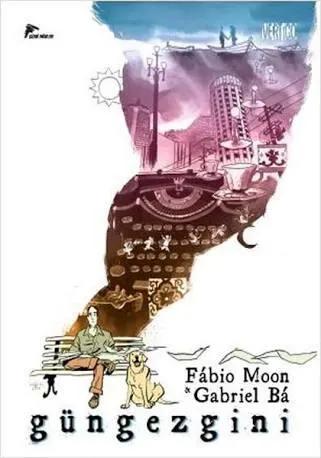
Güngezgini
Author(s) | Fábio Moon Gabriel Bá | ||||||||
|---|---|---|---|---|---|---|---|---|---|
Translator(s) | Cenk Könül | ||||||||
First Publication Date(s) | February 2011 | ||||||||
Number of Pages | 256 pages | ||||||||
Turkish Edition Publisher | Line Dreams | ||||||||
English Edition Publisher | Vertigo | ||||||||
Güngezgini, originally titled Daytripper, is a graphic novel written and illustrated by Brazilian twin brothers Gabriel Bá and Fábio Moon, first published in English in 2010 by Vertigo (DC Comics). In Türkiye, it was published in 2013 by Çizgi Düşler Yayınevi in a translation by Cenk Könül. The work narrates pivotal moments in the life of its protagonist, Brás de Oliva Domingos, through a series of episodes in which he dies at different ages and under different circumstances. Güngezgini explores themes such as the fragility of life, the inevitability of death, and the formation of personal identity through memory. It won the 2011 Eisner Award for Best Limited Series and is widely regarded as a modern classic in the world of graphic novels. Rendered in watercolor techniques and distinguished by its narrative style, the work invites readers to reflect on the defining moments of their own lives. It opens with the question: “What day did your life truly begin?”
Güngezgini is a graphic novel composed of ten chapters, each presenting a fragment from the life of Brás de Oliva Domingos. Each chapter centers on a significant moment in Brás’s life at a different age, culminating in his death. Yet death is not the end of the story but a tool for reflection. Each chapter invites a reevaluation of Brás’s choices, relationships, and dreams. The narrative does not follow a chronological order; instead, it constructs a fragmented mosaic of Brás’s memories. Set in São Paulo, Brazil, the story balances local cultural motifs with universal themes. The visual style, created by Bá and Moon using watercolor techniques, enhances the emotional tone of the narrative and bears traces of the French bande dessinée tradition.
Güngezgini addresses the following key themes:
The novel argues that life cannot be planned and that every moment holds value. Bá and Moon enrich the narrative with metaphors, guiding readers on a journey through their own memories.
Gabriel Bá and Fábio Moon are Brazilian twin brothers and graphic novel artists. Since 1993, they have collaborated on graphic novels and are known for works such as The Umbrella Academy, Casanova, and B.P.R.D. Güngezgini is one of their most personal and critically acclaimed works. Although Bá typically takes the lead in illustration, in Güngezgini both brothers contributed equally to writing and drawing. The duo, who have won the Eisner Award multiple times, have established a significant place in the graphic novel world through their use of watercolor techniques and emotionally resonant storytelling. Bá and Moon live and continue their work in São Paulo, Brazil.
In creating Güngezgini, Bá and Moon drew inspiration from their own life experiences and reflections on the fragility of life. In the book’s foreword, Gabriel Bá notes that telling this story was difficult because the narrative is completed by the reader’s own memories. Choosing to move away from superhero tales, the brothers focused on meaningful moments in the life of an ordinary man. The watercolor technique was selected to reinforce the melancholic and nostalgic tone of the story.
Bá, Gabriel and Fábio Moon. Güngezgini. Trans. Cenk Könül. İstanbul: Çizgi Düşler Yayınevi, 2013.
Güngezgini
Author(s) | Fábio Moon Gabriel Bá | ||||||||
|---|---|---|---|---|---|---|---|---|---|
Translator(s) | Cenk Könül | ||||||||
First Publication Date(s) | February 2011 | ||||||||
Number of Pages | 256 pages | ||||||||
Turkish Edition Publisher | Line Dreams | ||||||||
English Edition Publisher | Vertigo | ||||||||
Content of the Book
Themes and Central Ideas
Authors and Illustrators
The Authors’ Perspective