This article was automatically translated from the original Turkish version.
+1 More
Official Name | Diversity Immigrant Visa (DV) Program | ||||||||
|---|---|---|---|---|---|---|---|---|---|
Country | United States of America | ||||||||
Status | Legal permanent residence (unlimited right to live and work in the United States) | ||||||||
Basic Legal Framework | Permanent residence under the Immigration and Nationality Act and the Diversity Immigrant Visa category under INA §203(c) | ||||||||
Primary Ways to Obtain a Green Card | Family sponsorship, employment-based categories, investment (EB-5), transition from refugee/asylum status, special programs, and the Diversity Visa (DV) lottery | ||||||||
Annual Cap for the Diversity Visa | Legally up to 55,000 diversity visas; due to NACARA and related provisions, the actual upper limit during DV-2025 is approximately 51,350 visas | ||||||||
Total Applications for DV-2024 | More than 22 million valid electronic applications (applicant plus family members) | ||||||||
Total Applications for DV-2025 | 19,927,656 valid electronic applications (applicant plus family members) | ||||||||
Total Selected Individuals for DV-2024 | Approximately 143,000 selectees (principal applicant plus spouse and children) | ||||||||
Total Selected Individuals for DV-2025 | Approximately 131,060 selectees (principal applicant plus spouse and children) | ||||||||
Regional Quota System | Divided into six global geographic regions; no country may receive more than seven percent of the total diversity visa quota | ||||||||
Türkiye – DV-2024 | 3,684 selected persons (selectees); from a country in the upper group within the European region | ||||||||
Türkiye – DV-2025 | 4,194 selected persons (selectees); increase in the number of selectees from Türkiye compared to the previous year | ||||||||
Primary Authorized Institutions | USCIS (U.S. Citizenship and Immigration Services); U.S. Department of State; Kentucky Consular Center (administration of DV files) | ||||||||
Basic Rights of Green Card Holders | Unlimited residence in the United States, nationwide work authorization, access to certain state and federal education and social services, ability to sponsor certain family members | ||||||||
Basic Obligations of Green Card Holders | Compliance with U.S. immigration laws, tax obligations, renewal of the card within its validity period, maintenance of a genuine residence connection with the United States | ||||||||
Application Address (DV Lottery) | Official online application system: dvprogram.state.gov (applications are accepted only through this website and within designated dates) | ||||||||
The Green Card is the official identification card that documents lawful permanent resident status in the United States of America. This status grants the holder indefinite rights to live and work in the United States and, under certain conditions, provides eligibility to apply for U.S. citizenship. Unlike short-term visas, permanent residency enables individuals to establish a permanent life in the United States and make long-term plans. The card itself does not guarantee employment, but because holders are authorized to work, they can seek and obtain jobs in nearly any sector matching their qualifications. Additionally, Green Card holders may, under specific conditions, access certain federal and state-level social assistance and educational support programs.
Although commonly referred to in public discourse as the Green Card, the term legally denotes the permanent residency status under U.S. immigration law. This status allows individuals to live, work, study, and access many public services in the United States without being a U.S. citizen. Green Card holders become tax residents of the United States and are obligated to comply with federal immigration regulations. Although the physical card must be renewed at specific intervals, the status is essentially permanent as long as the holder does not commit serious violations. Due to its role in enabling sponsorship of family members and eventual transition to citizenship, permanent residency has become one of the central instruments of the U.S. immigration system.
The Green Card system operates within the framework of federal laws regulating U.S. immigration and the institutions responsible for their enforcement. In this process, U.S. Citizenship and Immigration Services (USCIS) evaluates the majority of applications, adjudicates requests for status changes, and is responsible for issuing the cards. U.S. Department of State plays a central role in managing immigration applications from outside the United States and administering programs such as the Diversity Visa Program. Visas issued under the Diversity Visa program are legally equivalent to permanent residency status and are therefore categorized as Green Cards. This framework ensures that different pathways to immigration—family-based, employment-based, investment-based, and diversity-based—are all linked to the same fundamental status.
The Green Card is the physical plastic card form of a permanent residency status that has long existed in U.S. immigration law. The modern immigration system was shaped by federal laws enacted in various periods, which introduced quotas, regional allocations, and eligibility criteria for admitting immigrants. Over time, the principle that permanent residency must be obtained before transitioning to citizenship became the foundational backbone of the system. Thus, the Green Card has served as a common reference point for both individuals who entered the United States with an immigrant visa and those who obtained permanent residency through a status adjustment process within the country. Although program details have evolved over the years, the central role of permanent residency in U.S. immigration policy has remained unchanged.
The Diversity Visa Program represents a significant turning point in the historical development of the Green Card system. Designed to promote a more balanced geographic distribution of immigration rather than concentrating admissions in specific countries or regions, the program grants a limited number of Green Cards annually to citizens of countries with relatively low rates of immigration to the United States. The program is grounded in provisions of the Immigration and Nationality Act, specifically Section 203(c). Under this provision, up to 55,000 permanent resident visas are allocated annually for the diversity category. This structure serves to balance historical patterns of high immigration from certain countries with underrepresented nations.【1】
The diversity visa quota has been revised through subsequent legislative changes. The Nicaraguan and Central American Relief Act (NACARA) of 1997 allocated up to 5,000 of the annual quota for applicants under NACARA, effectively reducing the practical limit for the Diversity Visa. New provisions under the National Defense Authorization Act for fiscal year 2024 further expanded this reduction, bringing the number of diversity visas available for the DV-2025 program to approximately 51,350. Thus, the historical upper limit of 55,000 has been gradually reallocated in favor of other legal programs. These developments demonstrate the Green Card system’s adaptability to changing political, humanitarian, and security priorities over time.【2】
One of the most common pathways to obtaining a Green Card is through family sponsorship. Under this category, spouses, unmarried children under 21, and parents of U.S. citizens are given priority. Additionally, U.S. citizens may sponsor their unmarried children over 21, married children, and siblings, subject to specific quotas and waiting periods. Family-based sponsorship is also available for lawful permanent residents (Green Card holders) for their spouses and unmarried children. Family-based categories constitute a permanent pillar of the U.S. immigration system, designed to preserve family unity.
The process for family sponsorship varies depending on the specific familial relationship and whether the applicant is inside or outside the United States. Generally, the process begins when the sponsoring U.S. citizen or Green Card holder submits a petition to U.S. Citizenship and Immigration Services. Once approved, if the applicant is outside the United States, the consular processing procedure for an immigrant visa is initiated; after entry into the United States, the physical Green Card is mailed to the applicant’s address within a specified period. If the applicant is already in the United States, they may apply for a status adjustment to obtain permanent residency. In all these stages, documentation proving the authenticity and sustainability of the family relationship plays a critical role.
Employment-based Green Card categories target individuals with specialized skills, academic qualifications, or specific professional expertise. Managers, professional specialists, researchers holding advanced academic degrees, and workers with particular technical qualifications may apply under these categories. Typically, a U.S.-based employer acts as the sponsor, and depending on the nature of the position, different subcategories are activated—for example, EB-1, EB-2 NIW, and EB-3. In some cases, an applicant may qualify under the “extraordinary ability” classification, reducing or eliminating the need for employer sponsorship. Employment-based categories aim to attract the skilled labor force required by the U.S. economy over the long term.
Investment-based Green Card applications are primarily structured around the EB-5 program. Under EB-5, individuals who invest at least $800,000 in designated targeted employment areas or $1,050,000 in other regions may qualify for a Green Card if they meet specific job creation requirements. During this process, the investor is required to maintain their capital in the project until approval and initially receives conditional permanent residency. After fulfilling the conditions and passing a specified period, this conditional status may be converted into permanent residency. The investment-based category serves as a tool to encourage capital inflow and support job creation.
Other pathways to obtaining a Green Card include categories designated for refugees and asylum seekers, as well as special categories for certain international programs or occupational groups. These groups are generally assessed under frameworks of humanitarian protection, religious ministry, or long-term service contributions to the United States. According to summaries provided by Visamerika, a broad range of applications fall under family, employment, investment, and special circumstances. Thus, the Green Card offers a multifaceted framework that regulates both family reunification and economic and humanitarian migration. This structure enables U.S. immigration policy to serve multiple objectives simultaneously.
The Diversity Visa Program is widely known in public discourse as the “Green Card lottery.” It is a special immigrant visa regime designed to encourage immigration to the United States from countries with relatively low rates of immigration. Officially, applications are accepted only through the Department of State’s online system during designated application periods. The program allocates up to 55,000 diversity visas annually, although the actual number is slightly lower due to allocations for other legal programs. Within this framework, the program offers a unique pathway distinct from traditional family- and employment-based immigration categories, based entirely on random selection.【3】
To be eligible for the Diversity Visa, applicants must meet basic educational and professional experience requirements. They must either have completed at least a high school education or its equivalent, or have two years of work experience within the past five years in an occupation requiring at least two years of training or experience. Additionally, the program is open only to citizens of countries meeting specific geographic criteria; countries with high levels of immigration to the United States are excluded from eligibility. No professional or ethnic preferences are granted among applicants; selection is conducted entirely through a random computerized drawing. This structure aims to ensure compliance with the legal principle of equality and the goal of geographic diversity.
The application process is conducted exclusively online within a specified registration window. For example, applications for DV-2025 were accepted between October 4, 2023, and November 7, 2023, over a 35-day period. The application form is free of charge, and each applicant may submit only one application; multiple submissions within the same period result in disqualification. The form requires basic information such as identity, marital status, education level, and family details. Applicants track their status through the official DV website and check their results using the confirmation number they registered.
Selected applicants must complete a series of additional steps to obtain an immigrant visa. The Kentucky Consular Center (KCC) registers selected individuals and tracks their file progress; applicants complete the DS-260 immigrant visa application form, obtain required documents, and attend an interview at the U.S. embassy or consulate assigned to them. Applicants already lawfully present in the United States may apply for a status adjustment with USCIS if eligible. Diversity visas are valid only within the corresponding fiscal year; therefore, selected individuals must complete all procedures by the designated deadline, or their selection rights are automatically forfeited. In this regard, the program combines the elements of random selection and a limited time frame into a dynamic structure.
Green Card application procedures vary depending on the category pursued. For family-, employment-, or investment-based applications, the initial step typically involves the sponsor—individual or institution—submitting a petition to USCIS. Once approved, if the applicant is outside the United States, immigrant visa processing proceeds through consular offices; after entry into the United States, the card is mailed to the applicant’s address. If the applicant is already in the United States, they may apply for a status adjustment to transition from their current visa to permanent residency. In all these processes, both qualifications and documentation requirements must be fully met for the application to be approved.
The general application process requires preparation of an extensive set of documents. Identity and birth certificates, civil status documents, and official records of prior marriages or divorces form the foundation of the application. Criminal records and court rulings enable assessments regarding security and public order. For investment- or employment-based applications, documents verifying the source of financial resources and evidence confirming the investment amount or employer’s conditions are required. Additionally, medical examination reports and a valid passport are essential components of the application file.
For applicants selected under the Diversity Visa program, implementation procedures follow a specific schedule. Selected individuals complete the DS-260 immigrant visa application form online and prepare supporting documents as directed by the Kentucky Consular Center. Applicants residing outside the United States are interviewed at the U.S. embassy or consulate responsible for their country of residence; during this stage, passports, educational documents, proof of work experience, criminal records, health reports, and financial documentation are reviewed. Selected individuals already lawfully present in the United States may pursue a status adjustment if eligible, triggering USCIS procedures. In both consular and USCIS processes, deadlines for application completion begin to run once the annual quota is filled or the fiscal year ends.【4】
The interview process is one of the most critical stages of the application for both the Diversity Visa and other immigration categories. During the interview, officials evaluate the accuracy of information provided in the application, the authenticity of family relationships, the concrete nature of job offers or investment conditions, and potential security risks. Embassies and consulates apply the same immigration laws to Diversity Visa applications and conduct detailed reviews of applicants’ educational and professional qualifications and immigration history. Being selected does not guarantee visa issuance; applicants found unsuitable during the interview may have their visas denied. Due to annual quotas, applicants who fail to complete the process on time or submit incomplete documentation risk losing their eligibility.
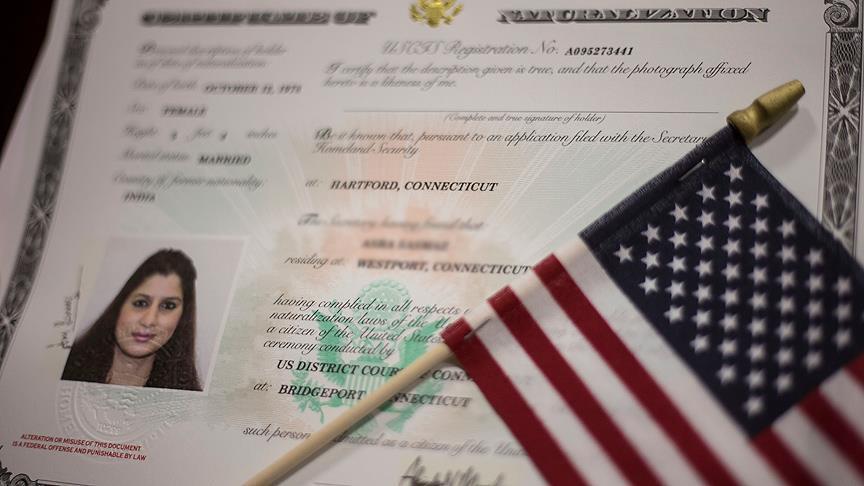
Example document (Anadolu Ajansı)
Green Card holders gain access to a broad range of rights and opportunities in the United States. Permanent residency status means the individual has the right to reside indefinitely in the United States and is authorized to work at the federal level. The cardholder may seek employment in different states and cities, establish their own business, and be employed in numerous fields, provided they meet the necessary qualifications. At the same time, access to public educational institutions and certain forms of higher education support is possible under specific conditions. Unlike short-term visas, the Green Card provides a legal foundation for establishing a settled life in the United States.
The obligations of Green Card holders are equally important and parallel to their rights. Cardholders must comply with U.S. immigration laws, avoid serious criminal offenses, and renew their card upon expiration. Maintaining permanent residency status requires avoiding prolonged continuous absences from the United States; otherwise, authorities may conclude that the individual’s ties to the country have weakened. Although the Green Card is a physical document issued for a specific period, the status is considered permanent as long as no violations occur. Therefore, loss of the card, failure to renew it, or violations may jeopardize the holder’s status.
The Green Card also functions as a mandatory intermediate step toward U.S. citizenship. A lawful permanent resident may generally apply for citizenship after maintaining this status for at least five years. For individuals married to a U.S. citizen, this period may be reduced to three years in most cases. The transition to citizenship involves completing an application form, undergoing fingerprinting and security checks, and passing a naturalization process that includes an English language and U.S. civics examination. Upon completion of this process and participation in the oath ceremony, individuals acquire U.S. citizenship, and the Green Card is replaced by a citizenship certificate and passport.
After transitioning to citizenship, the rights previously granted by the Green Card are expanded to include voting in federal elections, eligibility for election to public office, and appointment to certain government positions. Nevertheless, Green Card holders are protected under U.S. law and receive equal treatment before the judiciary as citizens. Permanent residency, therefore, can be viewed both as an independent final status and as a strategic step toward citizenship. The Green Card system continues to serve as one of the primary tools of U.S. immigration policy by integrating family unity, attraction of skilled labor, investment promotion, and diversity goals.
The Diversity Visa (DV) Program, one of the main pathways to obtaining a Green Card, operates under a quota system that allocates up to 55,000 immigrant visas annually (the actual upper limit in certain years has been adjusted to approximately 51,000–55,000 due to NACARA and related provisions). Applications for the program are collected each year during a one-month online registration period, and selections are made randomly via computer from millions of qualified entries. For example, in the DV-2024 program, approximately 143,000 individuals and their family members were selected from 22,185,619 qualified applications. In the DV-2025 period, approximately 131,060 individuals and their family members were selected from 19,927,656 qualified entries. These figures are set to ensure full utilization of the DV quota, accounting for the likelihood that a significant portion of selected applicants will not proceed to visa issuance or will be eliminated during the process.
In terms of geographic distribution, the world is divided into six regions, and no single country may receive more than seven percent of the total DV quota. Within the European region, Türkiye has emerged as one of the leading countries in terms of the number of selected individuals in recent years. In the DV-2024 program, 3,684 individuals from Türkiye were selected, placing it among the top countries in Europe after Russia (5,514), Uzbekistan (5,555), and Kyrgyzstan (4,464). In the DV-2025 period, the number of selected individuals from Türkiye rose to 4,194, demonstrating continued strong demand for the program and a significant share within it. Since each selected individual may bring their spouse and children, the total number of people migrating from Türkiye to the United States exceeds the official “selectee” figures.
Examining long-term application trends, statistical data from the periods 2007–2009, 2010–2012, and 2013–2015 provide detailed figures categorized by country, distinguishing between “entrants” (applicants) and “derivatives” (spouses and children). These data sets present a structured table format, with separate rows for each program year tracking online applications and family member numbers for all eligible countries, including Türkiye. Tables for the 2013–2015 period maintain the same structure, confirming Türkiye’s consistent participation in DV application flows during those years. Thus, since the program’s inception, Türkiye has become one of the participants in the European region with sustained participation in both application numbers and selected individuals. Nevertheless, those arriving through the DV Program constitute only a portion of the total number of “Lawful Permanent Residents” admitted annually by the United States; when considered alongside other immigration categories such as employment, family reunification, or humanitarian status, Turkish citizens form a much broader legal and demographic presence within the U.S. permanent resident population.
The U.S. Diversity Visa (Green Card) lottery program was suspended on December 18, 2025, by the Department of Homeland Security, following instructions from President Donald Trump. The decision was announced after it was revealed that the perpetrator of armed attacks linked to Brown University and the Massachusetts Institute of Technology had obtained permanent residency status under this program in 2017.【5】
Anadolu Ajansı. "500 Bin Dolar Getiren Yatırımcıya Green Card." Accessed December 19, 2025.https://www.aa.com.tr/tr/dunya/500-bin-dolar-getiren-yatirimciya-green-card/575969
BBC News Türkçe. “Green Card Programı ve Çeşitlilik Vizesi Üzerine Genel Bilgiler.” Accessed December 19, 2025.https://www.bbc.com/turkce/articles/c1dpe1g027eo
Küre Ansiklopedi. "ABD Çeşitlilik Göçmen Vizesi (Green Card) Programının Askıya Alınması (2025)." Accessed December 16, 2025.https://kureansiklopedi.com/tr/detay/abd-cesitlilik-gocmen-vizesi-green-card-programini
TRT Haber. “ABD’deki Green Card Programı Süresiz İptal Edildi.” Accessed December 19, 2025.https://www.trthaber.com/haber/dunya/abddeki-green-card-programi-suresiz-iptal-edildi-929116.html
U.S. Citizenship and Immigration Services. "Green Card." Accessed December 19, 2025.https://www.uscis.gov/green-card
U.S. Citizenship and Immigration Services. “Green Card Eligibility Categories.” Accessed December 19, 2025.https://www.uscis.gov/green-card/green-card-eligibility-categories
U.S. Citizenship and Immigration Services. “Green Card Processes and Procedures.” Accessed December 19, 2025.https://www.uscis.gov/green-card/green-card-processes-and-procedures
U.S. Citizenship and Immigration Services. “How to Apply for a Green Card.” Accessed December 19, 2025.https://www.uscis.gov/green-card/how-to-apply-for-a-green-card
U.S. Department of Homeland Security, Office of Homeland Security Statistics. "Lawful Permanent Residents: Annual Flow Report." Accessed December 19, 2025.
U.S. Department of State. “DV 2024 – Selected Entrants.” Travel.State.Gov. Accessed December 19, 2025.https://travel.state.gov/content/travel/en/us-visas/immigrate/diversity-visa-program-entry/dv-2024-selected-entrants.html
U.S. Department of State. “DV 2025 – Selected Entrants.” Travel.State.Gov. Accessed December 19, 2025.https://travel.state.gov/content/travel/en/us-visas/immigrate/diversity-visa-program-entry/dv-2025-selected-entrants.html
U.S. Department of State. “DV AES Statistics by FSC 2016–2018.” PDF dosyası. Accessed December 19, 2025.https://travel.state.gov/content/dam/visas/Diversity-Visa/DVStatistics/DV%20AES%20statistics%20by%20FSC%202016-2018.pdf
U.S. Department of State. “DV Applicant Entrants by Country 2007–2009.” PDF dosyası. Accessed December 19, 2025.https://travel.state.gov/content/dam/visas/Diversity-Visa/DVStatistics/DVApplicantEntrantsbyCountry%202007-2009.pdf
U.S. Department of State. “DV Applicant Entrants by Country 2010–2012.” PDF dosyası. Accessed December 19, 2025.https://travel.state.gov/content/dam/visas/Diversity-Visa/DVStatistics/DVApplicantEntrantsbyCountry%202010-2012.pdf
U.S. Department of State. “DV Applicant Entrants by Country 2013–2015.” PDF dosyası. Accessed December 19, 2025.https://travel.state.gov/content/dam/visas/Diversity-Visa/DVStatistics/DVApplicantEntrantsbyCountry%202013-2015.pdf
U.S. Department of State. “DV Statistics 2022–2024.” PDF dosyası. Accessed December 19, 2025.https://travel.state.gov/content/dam/visas/Diversity-Visa/DVStatistics/DV-applicants-entrants-by-country-2019-2021-Accessible-7-26-2024.pdf
U.S. Department of State. “Diversity Visa Program Statistics.” Travel.State.Gov. Accessed December 19, 2025.https://travel.state.gov/content/travel/en/us-visas/immigrate/diversity-visa-program-entry/diversity-visa-program-statistics.html
U.S. Department of State. “Diversity Visa Program – DV-2025 Update on Eligibility and NACARA/NDAA Provisions.” Travel.State.Gov. Accessed December 19, 2025.https://travel.state.gov/content/travel/en/News/visas-news/update-on-diversity-visa-program-2025.html
U.S. Department of State. “Diversity Visa Program: If You Are Selected.” Travel.State.Gov. Accessed December 19, 2025.https://travel.state.gov/content/travel/en/us-visas/immigrate/diversity-visa-program-entry/diversity-visa-if-you-are-selected.html
U.S. Department of State. “Submit an Entry (Diversity Visa Program).” Travel.State.Gov. Accessed December 19, 2025.https://travel.state.gov/content/travel/n/us-visas/immigrate/diversity-visa-program-entry/diversity-visa-submit-entry1.html
U.S. Department of State. “Visa Statistics: Table VII, Immigrant and Nonimmigrant Visa Issuances.” PDF file. Accessed December 19, 2025.https://travel.state.gov/content/dam/visas/Statistics/AnnualReports/FY2017AnnualReport/FY17AnnualReport-TableVII.pdf
U.S. Embassy & Consulates in Türkiye. “Diversity Visa (Green Card) – Mülakat ve Süreç Bilgileri.” Accessed December 19, 2025.https://tr.usembassy.gov/tr/diversity-visa/#interview
U.S. General Services Administration. “U.S. Citizenship.” USA.gov. Accessed December 19.
VisAmerika. "Green Card Nedir, Nasıl Alınır?" Visamerika.com. Accessed December 19, 2025.
[1]
U.S. Department of State. “DV 2025 – Selected Entrants.” Travel.State.Gov. Erişim 24 Temmuz 2025. https://travel.state.gov/content/travel/en/us-visas/immigrate/diversity-visa-program-entry/dv-2025-selected-entrants.html
[2]
U.S. Department of State. “DV 2025 – Selected Entrants.” Travel.State.Gov. Erişim 24 Temmuz 2025. https://travel.state.gov/content/travel/en/us-visas/immigrate/diversity-visa-program-entry/dv-2025-selected-entrants.html
[3]
U.S. Department of State. “Diversity Visa Program Statistics.” Travel.State.Gov. Erişim 24 Temmuz 2025. https://travel.state.gov/content/travel/en/us-visas/immigrate/diversity-visa-program-entry/diversity-visa-program-statistics.html
[4]
U.S. Department of State. “Diversity Visa Program: If You Are Selected.” Travel.State.Gov. Erişim 24 Temmuz 2025. https://travel.state.gov/content/travel/en/us-visas/immigrate/diversity-visa-program-entry/diversity-visa-if-you-are-selected.html
[5]
Küre Ansiklopedi. ABD Çeşitlilik Göçmen Vizesi (Green Card) Programının Askıya Alınması (2025). Erişim: 16 Aralık 2025. https://kureansiklopedi.com/tr/detay/abd-cesitlilik-gocmen-vizesi-green-card-programini

Official Name | Diversity Immigrant Visa (DV) Program | ||||||||
|---|---|---|---|---|---|---|---|---|---|
Country | United States of America | ||||||||
Status | Legal permanent residence (unlimited right to live and work in the United States) | ||||||||
Basic Legal Framework | Permanent residence under the Immigration and Nationality Act and the Diversity Immigrant Visa category under INA §203(c) | ||||||||
Primary Ways to Obtain a Green Card | Family sponsorship, employment-based categories, investment (EB-5), transition from refugee/asylum status, special programs, and the Diversity Visa (DV) lottery | ||||||||
Annual Cap for the Diversity Visa | Legally up to 55,000 diversity visas; due to NACARA and related provisions, the actual upper limit during DV-2025 is approximately 51,350 visas | ||||||||
Total Applications for DV-2024 | More than 22 million valid electronic applications (applicant plus family members) | ||||||||
Total Applications for DV-2025 | 19,927,656 valid electronic applications (applicant plus family members) | ||||||||
Total Selected Individuals for DV-2024 | Approximately 143,000 selectees (principal applicant plus spouse and children) | ||||||||
Total Selected Individuals for DV-2025 | Approximately 131,060 selectees (principal applicant plus spouse and children) | ||||||||
Regional Quota System | Divided into six global geographic regions; no country may receive more than seven percent of the total diversity visa quota | ||||||||
Türkiye – DV-2024 | 3,684 selected persons (selectees); from a country in the upper group within the European region | ||||||||
Türkiye – DV-2025 | 4,194 selected persons (selectees); increase in the number of selectees from Türkiye compared to the previous year | ||||||||
Primary Authorized Institutions | USCIS (U.S. Citizenship and Immigration Services); U.S. Department of State; Kentucky Consular Center (administration of DV files) | ||||||||
Basic Rights of Green Card Holders | Unlimited residence in the United States, nationwide work authorization, access to certain state and federal education and social services, ability to sponsor certain family members | ||||||||
Basic Obligations of Green Card Holders | Compliance with U.S. immigration laws, tax obligations, renewal of the card within its validity period, maintenance of a genuine residence connection with the United States | ||||||||
Application Address (DV Lottery) | Official online application system: dvprogram.state.gov (applications are accepted only through this website and within designated dates) | ||||||||
Historical Development and Origins of the Green Card System
Pathways to Obtaining a Green Card and Major Categories
Diversity Visa (Diversity Visa) / Green Card Lottery
Application Process, Interview, and Implementation Procedures
Rights, Obligations, and Transition to Citizenship for Green Card Holders
Statistics, Quotas, and Geographic Distribution
Suspension of the Green Card Program