


This article was automatically translated from the original Turkish version.
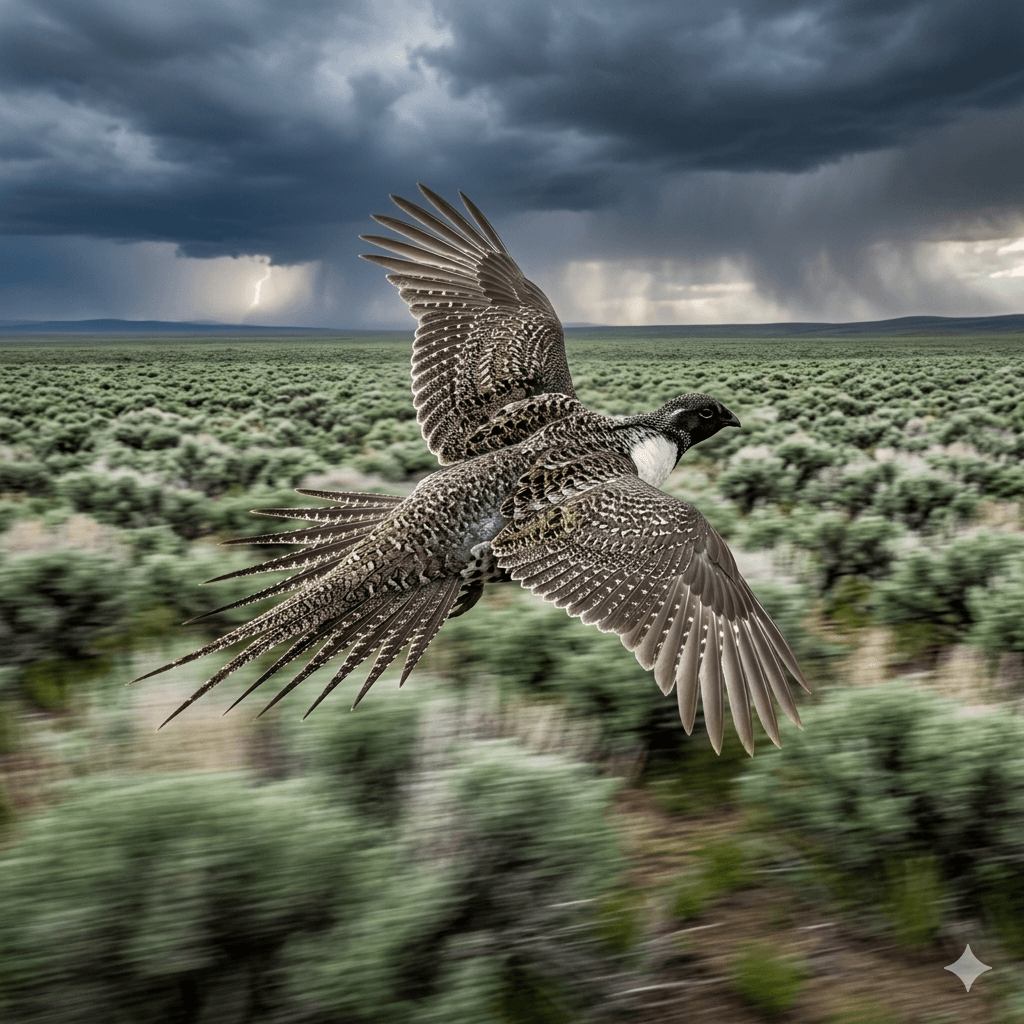
Generated with Visual Artificial Intelligence
Greater Sage-Grouse (Centrocercus urophasianus)
Scientific Name(s) | Centrocercus urophasianus | ||||||||
|---|---|---|---|---|---|---|---|---|---|
Conservation Status | IUCN Red List Vulnerable | ||||||||
Behavioral Pattern | Diurnal and social groups | ||||||||
Number of Eggs | Average of 7 per season | ||||||||
Incubation Period | Approximately 26 to 37 days | ||||||||
Lifespan | Average of 1 to 3 years | ||||||||
Primary Threats | Habitat loss and fragmentation | ||||||||
Geographic Distribution | United States of America and Canada | ||||||||
Primary Habitat | Sagebrush steppe and meadows | ||||||||
Primary Food Source | Sagebrush plant leaves | ||||||||
Average Weight | 2.4 kilograms | ||||||||
Physical Structure | Robust body long tail and small head | ||||||||
Species Category | Birds | ||||||||
Common Name | Greater Sage-Grouse | ||||||||
Greater Sage-Grouse (Centrocercus urophasianus) is the largest species of sage-grouse in North America and belongs to the family Phasianidae within the order Galliformes and the genus Centrocercus. It is endemic to North America and is defined as a keystone and characteristic indicator species of the sagebrush steppe ecosystems known as the “Sagebrush Sea.”
The species exhibits sexual dimorphism. Males have a grayish crown with yellow patches around the eyes and brown and buff-colored feathers on the upper chest. They possess a broad white collar of feathers that conceals two large yellow air sacs on the neck, which inflate during courtship displays, and a large black patch on the belly. Additionally, males have long, pointed, striped tail feathers. Females, in contrast, have a more cryptic plumage of mottled gray and brown tones that aid in camouflage during incubation. Their tails are shorter than those of males, they lack air sacs, and their throat areas are predominantly gray and white. The species weighs between 1 and 3 kilograms, with an average weight of approximately 2.4 kilograms.
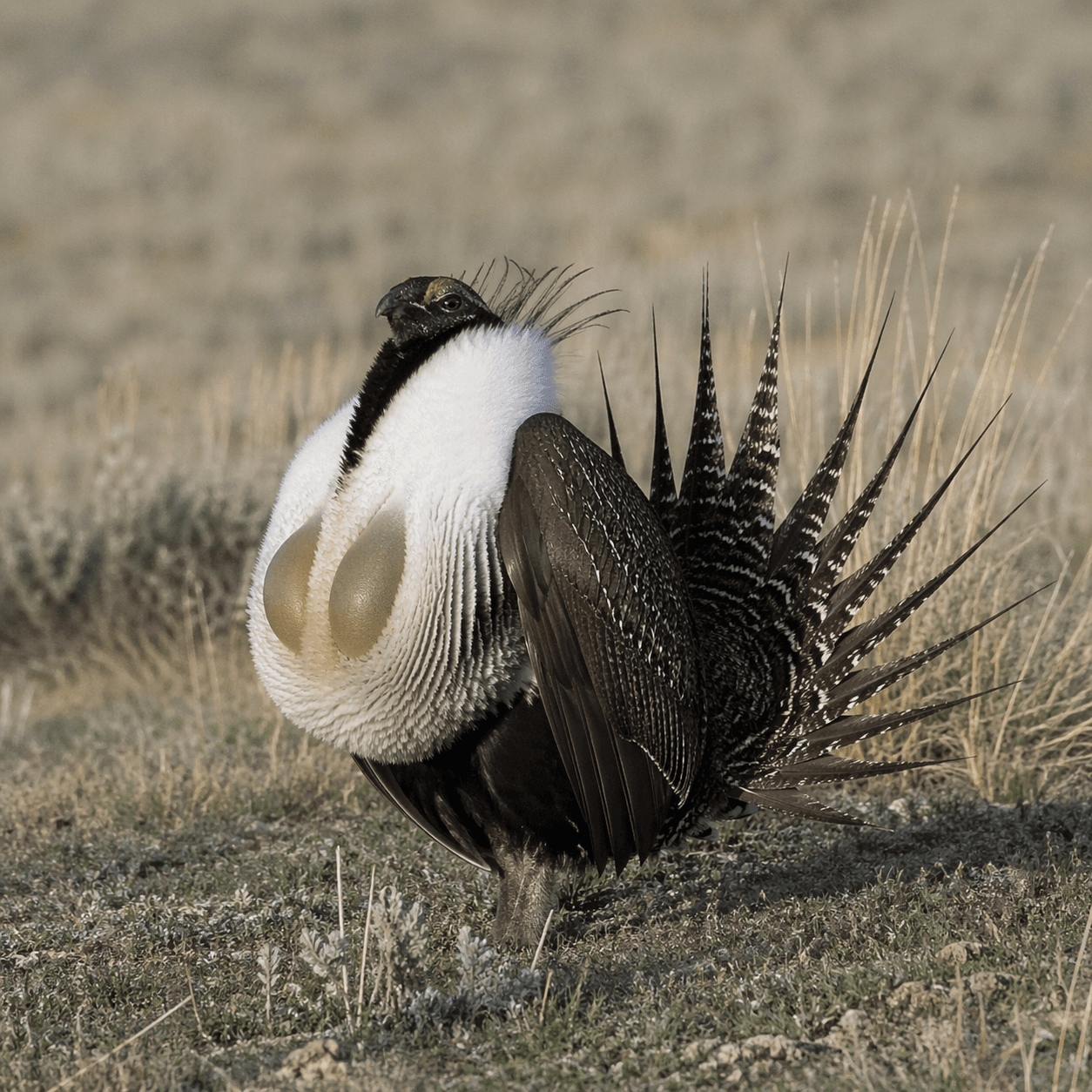
Greater Sage-Grouse (Centrocercus urophasianus) (Image Generated by Artificial Intelligence)
The species’ range extends from southeastern and southwestern Alberta and Saskatchewan in southern Canada southward to Nevada, from northern California, Oregon, and Washington in the west to North and South Dakota in the east. These birds exhibit absolute dependence on sagebrush (Artemisia spp.) throughout all stages of their life cycle, utilizing sagebrush habitats for feeding, nesting, rearing young, shelter, and wintering. They can migrate up to 100 miles between seasonal habitats. During late spring and summer, they require nutrient-rich wetlands, moist meadows, or alfalfa fields for rearing their young.
Greater sage-grouse lack a strong gizzard for grinding food and therefore rely primarily on soft plant material. Their diet changes dramatically with age; chicks under one week old cannot digest sagebrush, and insects such as ants, grasshoppers, and other arthropods make up 60 percent of their diet. As the birds mature, they transition from insectivorous to herbivorous feeding, and by 12 weeks of age, insects constitute only about 5 percent of their diet. Adult birds obtain 60 to 80 percent of their diet from sagebrush leaves during summer and nearly 100 percent during winter, when alternative food sources are scarce. Other plant species consumed include various flowering plants such as dandelion and regional grasses (Koeleria macrantha, Bouteloua gracilis, Agropyron smithii).
The greater sage-grouse is a social species that uses communal display grounds called “leks” for mate selection prior to breeding. During spring months (March to May), males gather on open, flat, elevated areas surrounded by sagebrush stands to establish and defend territories. These leks vary in size from 0.5 hectares to 40 acres. Males perform elaborate courtship displays at dawn and dusk, fanning their tail feathers, fluttering their wings to produce rustling sounds, and inflating their yellow neck air sacs to generate acoustic signals resembling the sound of a rock dropping into water or an explosion.
Females that visit leks mate with a single male and then leave the lek to build a nest 2 to 6 meters away, excavating a shallow depression in the ground and lining it with leaves, grass, and feathers. Females typically lay 7 or 8 eggs; the total incubation period lasts approximately 37 days, with the actual incubation phase averaging 26 days. After hatching, chicks follow their mother to nutrient-rich wetland areas and remain with her until autumn. During winter, they form sex-segregated flocks.
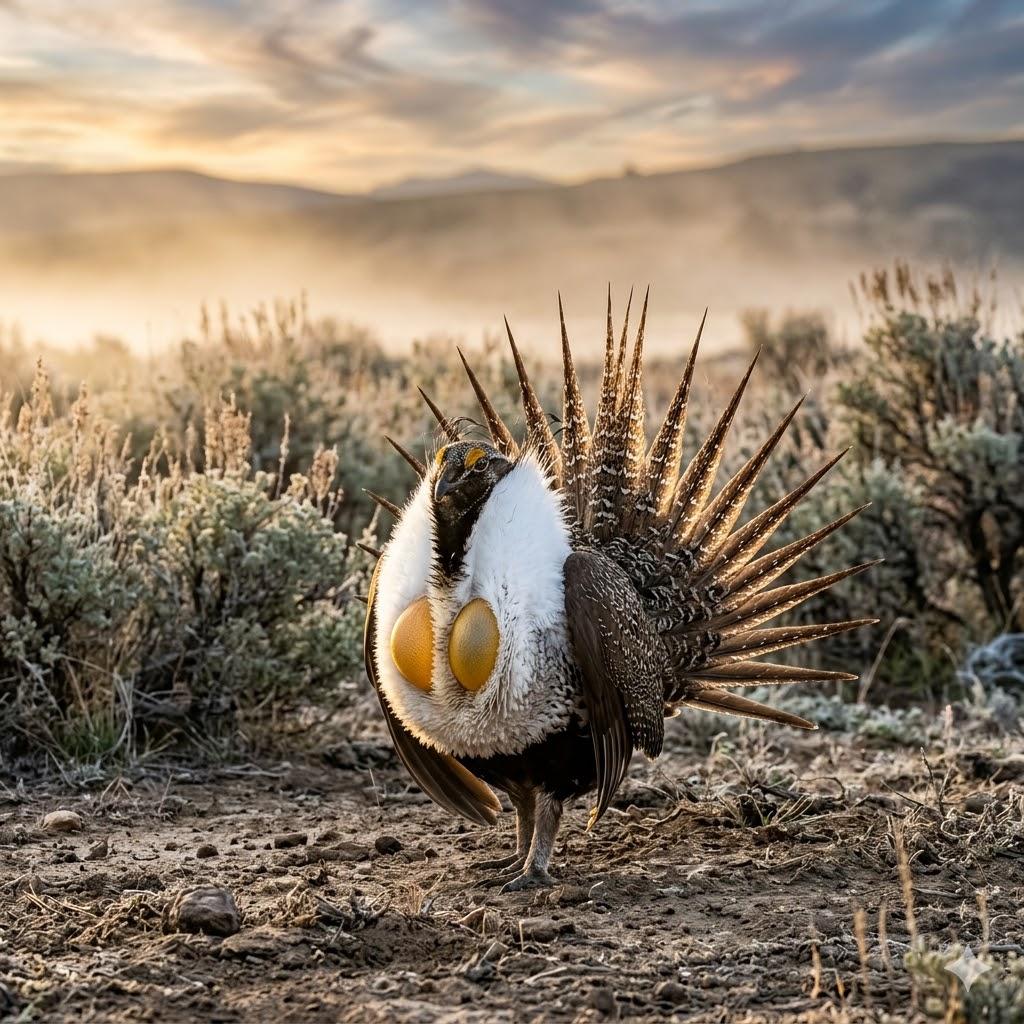
Greater Sage-Grouse (Centrocercus urophasianus) (Image Generated by Artificial Intelligence)
More than half of the historical sagebrush habitat occupied by this species has been destroyed, and only 14 percent of undisturbed habitat remains today. Populations have declined by approximately 80 percent since 1965, with current estimates totaling around 200,000 individuals. Major causes of population decline include energy development (oil and gas), agricultural activities, invasive plant species, altered fire regimes, climate change, and habitat loss and fragmentation due to rural expansion.
In Canada, the species is listed as “Endangered” by the Committee on the Status of Endangered Wildlife in Canada (COSEWIC). On the IUCN Red List, it is classified as “Near Threatened.” In the United States, despite various regional and subspecies-specific legal reviews, it has not yet received a federal endangered or threatened status nationwide.
Defenders of Wildlife. "Sage-Grouse." Defenders of Wildlife. Accessed April 23, 2026. https://defenders.org/wildlife/sage-grouse
Manchak, Jeff. "Centrocercus urophasianus (greater sage grouse)." Animal Diversity Web. Accessed April 23, 2026. https://animaldiversity.org/accounts/Centrocercus_urophasianus/
Schroeder, M. A., J. R. Young, and C. E. Braun. "Greater Sage-Grouse (Centrocercus urophasianus)." Birds of the World, Cornell Lab of Ornithology. Accessed April 23, 2026. https://birdsoftheworld.org/bow/species/saggro/cur/introduction
U.S. Fish & Wildlife Service. "Greater Sage Grouse (Centrocercus urophasianus)." U.S. Fish & Wildlife Service. Accessed April 23, 2026. https://www.fws.gov/species/greater-sage-grouse-centrocercus-urophasianus

Generated with Visual Artificial Intelligence
Greater Sage-Grouse (Centrocercus urophasianus)
Scientific Name(s) | Centrocercus urophasianus | ||||||||
|---|---|---|---|---|---|---|---|---|---|
Conservation Status | IUCN Red List Vulnerable | ||||||||
Behavioral Pattern | Diurnal and social groups | ||||||||
Number of Eggs | Average of 7 per season | ||||||||
Incubation Period | Approximately 26 to 37 days | ||||||||
Lifespan | Average of 1 to 3 years | ||||||||
Primary Threats | Habitat loss and fragmentation | ||||||||
Geographic Distribution | United States of America and Canada | ||||||||
Primary Habitat | Sagebrush steppe and meadows | ||||||||
Primary Food Source | Sagebrush plant leaves | ||||||||
Average Weight | 2.4 kilograms | ||||||||
Physical Structure | Robust body long tail and small head | ||||||||
Species Category | Birds | ||||||||
Common Name | Greater Sage-Grouse | ||||||||
No Discussion Added Yet
Start discussion for "Greater Sage-Grouse (Centrocercus urophasianus)" article
Physical Characteristics
Habitat and Geographic Distribution
Feeding Habits
Reproduction and Behavior
Conservation Status and Threats