


This article was automatically translated from the original Turkish version.
+1 More
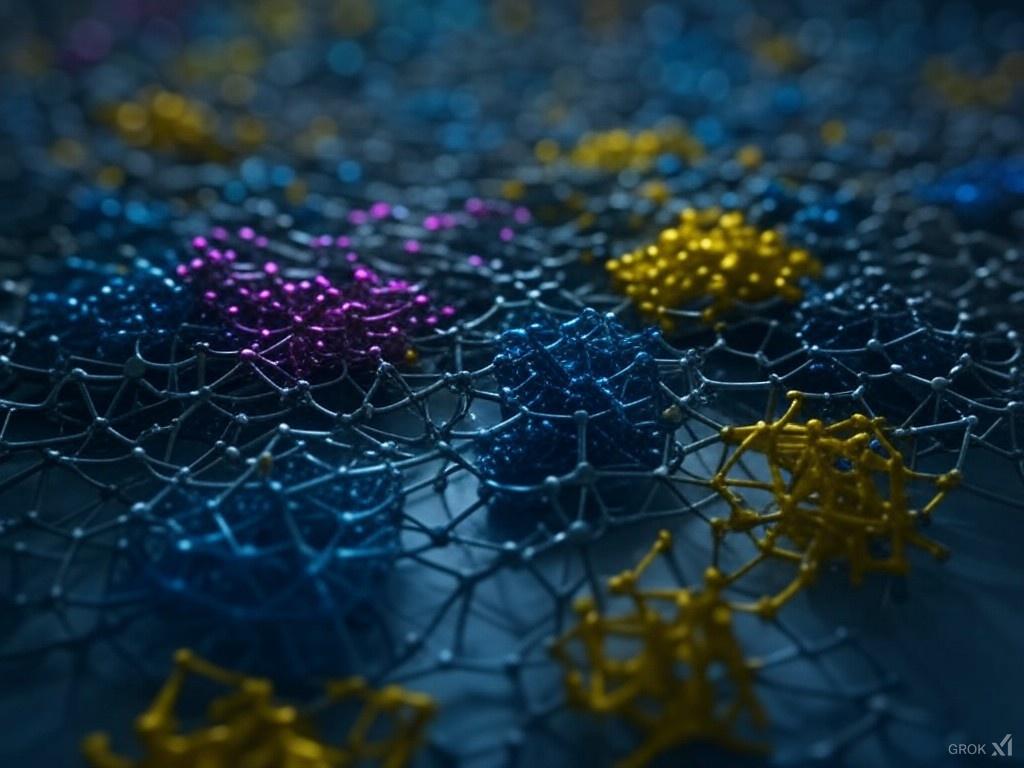
Graphene
What is it? | Carbon is an allotrope | ||||||||
|---|---|---|---|---|---|---|---|---|---|
Properties | Superconductive, Durable, Flexible, Transparent, Biomedical Compatible | ||||||||
Application Area | Medical Industrial fields such as automotive Space research Electronics Energy Biomedical Technology | ||||||||
Graphene is an allotrope of carbon, like diamond, graphite, and coal. It consists of a single layer of carbon atoms arranged in a hexagonal lattice nanoscale structure. The name derives from “graphite,” reflecting the fact that graphite contains many double bonds, and the suffix -ene, commonly used for unsaturated hydrocarbons. Each atom in a graphene layer bonds to its three nearest neighbors via sigma bonds and contributes a delocalized pi bond that extends across the entire layer.
This type of bonding is similar to that found in carbon nanotubes and polycyclic aromatic hydrocarbons, and partially in fullerenes and amorphous carbon. The extraordinary electronic properties of graphene render it a semimetal. The charge carriers in graphene exhibit an energy dependence on momentum that is linear rather than quadratic, making it possible to design field-effect transistors capable of bipolar conduction with graphene.
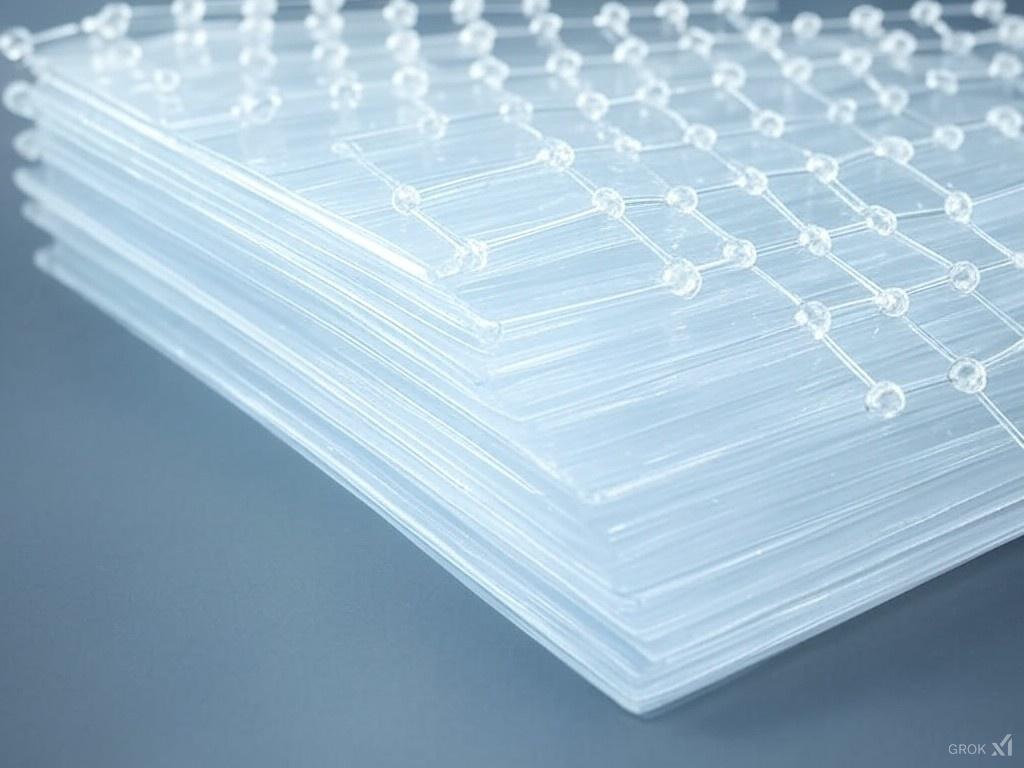
Image generated with AI assistance
Discovered in recent times, graphene is an exceptionally unusual material that has attracted significant interest from researchers since its discovery. Due to its diverse and extraordinary properties, graphene has the potential to be used in many different fields. Considered by scientists as a highly valuable nanomaterial, the applications of graphene are increasing every day, and it continues to serve as a foundational building block for the emergence of numerous new materials.
Research on graphene has explored various changes arising from its impact on products, including their synthesis and physicochemical states. In particular, catalysis studies have observed that graphene-supported catalysts exhibit a significantly high positive and supportive effect on the catalytic interaction levels of the produced nanomaterials.
Graphene is a single-layer structure in which carbon atoms are bonded together in a hexagonal arrangement. It is an extremely thin, lightweight, strong, and conductive material. Its properties make it highly attractive in fields such as nanotechnology and materials science. Below are some important properties of graphene:
Graphene can conduct electricity with nearly zero resistance. This property makes it extremely valuable for electronic devices such as transistors and microchips. It can be used to design faster and more efficient components for electronic circuits and may also inspire technologies such as superconductivity.
Graphene is 100 times stronger than steel yet remains extremely light and thin. This makes it an attractive option in fields requiring durable yet lightweight materials, especially aerospace, automotive, and construction industries.
Despite its extreme thinness, graphene is highly transparent and flexible. These characteristics offer potential applications in flexible displays, wearable technologies, and innovative energy storage solutions. For example, flexible electronic devices or transparent touchscreens may become possible thanks to graphene.
Graphene can conduct heat exceptionally well, making it ideal for components that generate high heat, such as electronic devices and processors. Cooling overheated devices can be made far more efficient with graphene.
Graphene’s biocompatibility makes it useful in biomedical fields such as biosensors, drug delivery systems, and tissue engineering. As part of nanotechnology, graphene can interact with cells without causing harm, thereby enabling more efficient and safer medical devices.
Graphene has the potential to revolutionize energy storage systems such as batteries and supercapacitors. It can enable the development of batteries with faster charging and longer lifespans, as well as more efficient energy storage devices.
Graphene’s potential is also evident in environmental technologies such as renewable energy systems (e.g., solar panels). Graphene-based materials can enable more efficient energy production and more sustainable environmental solutions.
Graphene’s single-layer structure enables it to function as a nanomaterial. This thin structure allows it to exhibit excellent properties even in very small areas, making it suitable for use in miniaturized technologies such as nanoelectronics.
Graphene is a material with revolutionary potential across many technological fields, and as a result, research and applications are rapidly increasing. Scientists and engineers are conducting intensive studies to utilize graphene’s full potential most efficiently. Among its applications in nanotechnology are electronic devices, energy storage systems, sensors, and biomedical devices. In the future, graphene’s applications may extend to even broader areas.
cell biology, 30(7), 499-505.
Outlook for Research and Industry, 9. ECS J. Solid State Sci. Technol.
the delivery of therapeutic nucleic acids. Elsevier; 2017. pp. 43–58.
nanomaterials. NanoImpact, 7, 28–40.
Anal Toxicol, 2, e103.
Environmental
International Journal of Integrated Engineering, 12(4), 241-
Kano, S., Tada, T., & Majima, Y. (2015).Nanoparticle characterization based on STM and STS. Chemical Society Reviews, 44(4), 970-987.
Kartika, A. Madurani, Suprapto, S., Nur, I. M., Setyadi, L. B., Wihda, I., & Fredy, K. (2020).Progress in Graphene Synthesis and its Application: History, Challenge and the Future Outlook for Research and Industry, 9. ECS J. Solid State Sci. Technol.
Kartika, A.Madurani., Suprapto, S., Nur, I.M., Setyadi, L.B., Wihda, I., & Fredy, K., (2020).
Kashanian, S., & Zeidali, S. H. (2011).DNA binding studies of tartrazine food additive. DNA and
Keller, A. A., Adeleye, A. S., Conway, J. R., Garner, K. L., Zhao, L., Cherr, G. N., ... & Zuverza-
Khan I, Saeed K, Khan I.Nanoparticles: properties, applications and toxicities. Arab J Chem.
Kouvaris, P., Delimitis, A., Zaspalis, V., Papadopoulos, D., Tsipas, S. A., & Michailidis, N.Green synthesis
Kumar Reddy, D. H., & Lee, S. M. (2012).Water pollution and treatment technologies. J Environ
Kumar, A., Dixit, C. K.
Lett. 2012;76:18–20.
Lin, X. Z., Liu, P., Yu, J. M., & Yang, G. W. (2009). Synthesis of CuO Nanocrystals and Sequential
Liu, J., Dhungana, B., & Cobb, G. P. (2018).Environmental behavior, potential phytotoxicity, and
Mena, N. (2017).Comparative environmental fate and toxicity of copper
The Journal of Physical Chemistry C, 113(40), 17543-17547.
doi:10.1021/jp907237q
toxicology and chemistry, 37(1), 11-20.

Graphene
What is it? | Carbon is an allotrope | ||||||||
|---|---|---|---|---|---|---|---|---|---|
Properties | Superconductive, Durable, Flexible, Transparent, Biomedical Compatible | ||||||||
Application Area | Medical Industrial fields such as automotive Space research Electronics Energy Biomedical Technology | ||||||||
The Importance of Graphene
Properties of Graphene
1. Excellent Electrical Conductivity
2. High Mechanical Strength
3. Transparency and Flexibility
4. Thermal Conductivity
5. Biomedical Applications
6. Energy Applications
7. Environmentally Friendly and Sustainable
8. High Order and Thin Structure