


This article was automatically translated from the original Turkish version.
+2 More
Glamping (glamorous camping) is an alternative accommodation style born from the fusion of traditional camping and luxury lodging concepts, representing a modern form of tourism. The spirit of camping—close to nature, simple, and full of discovery—is combined with hotel comfort, enabling individuals to escape the stresses of urban life while experiencing a comfortable living environment. Instead of tents, specially designed yurts, bungalows, tree houses, or dome tents are used; these structures incorporate elements such as beds, electricity, bathrooms, heating, and aesthetic decor. With the growing number of individuals seeking a comfortable yet immersive nature-based vacation experience, glamping has become a globally expanding sector.
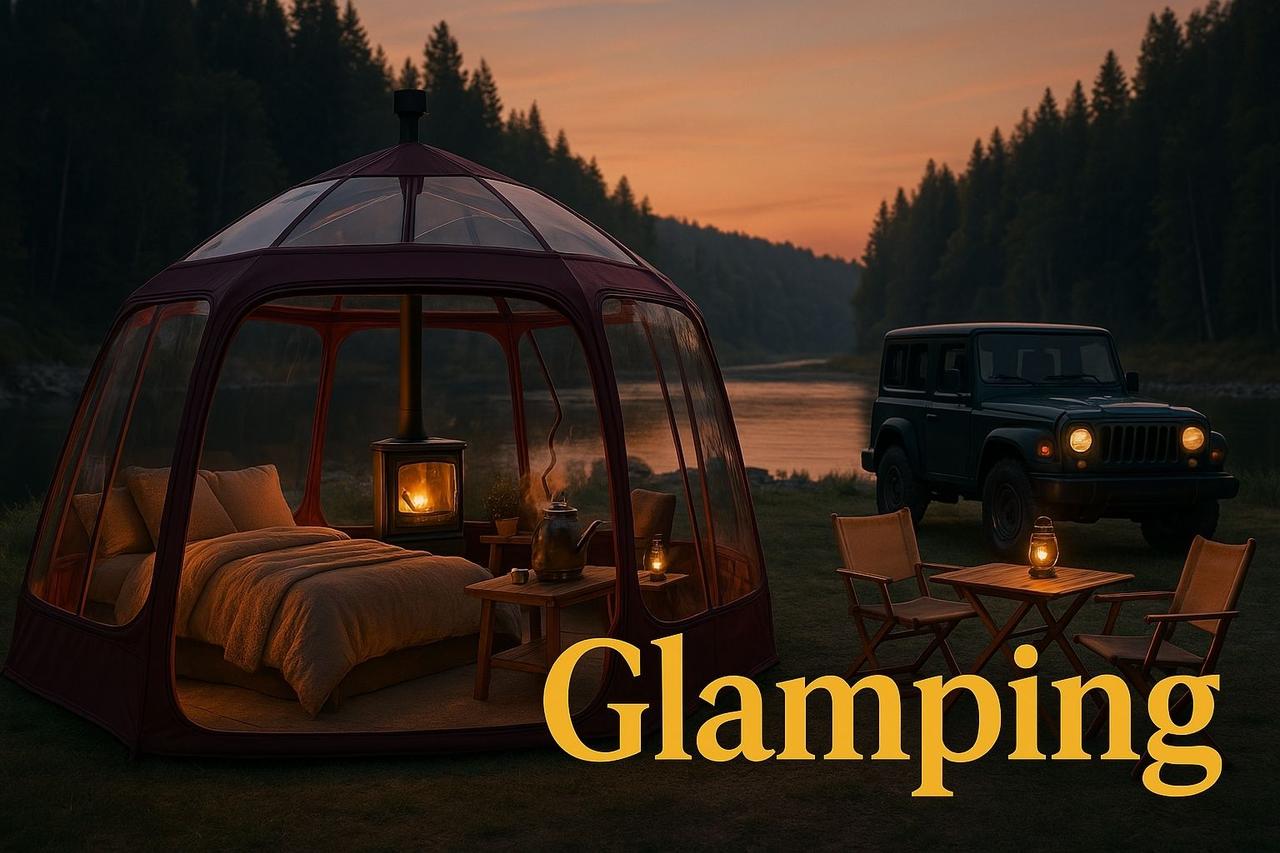
Glamping (Generated by artificial intelligence.)
The term glamping was first used in 2005 in the United Kingdom and quickly spread to North America. However, the concept’s origins date back further. In the early 1900s, British aristocrats and colonial administrators combined classic tent living with luxury furnishings by establishing “luxury safari camps” in Africa. This practice is considered one of the earliest examples of comfortable nature-based accommodation. In its modern sense, glamping entered tourism literature alongside the rise of nature-based tourism, advancements in technological infrastructure, and the growing popularity of sustainable travel.
Glamping accommodations typically feature dome tents, tree houses, campers, yurts, and tiny houses, while interior spaces include amenities such as beds, fireplaces, kitchens, and private bathrooms.
Individuals seeking to experience glamping first choose a location that offers direct contact with nature while remaining accessible and safe in terms of transportation. Glamping accommodation options include:
These sites provide basic services such as electricity, hot water, toilets, and showers, often supplemented by fireplaces, mini kitchens, jacuzzis, outdoor dining areas, and aesthetic interior design elements. Some glamping operators also offer additional services such as meditation spaces, yoga activities, local gastronomy experiences, and nature walks. Hygiene, insulation, and aesthetics are integral components of the glamping experience.
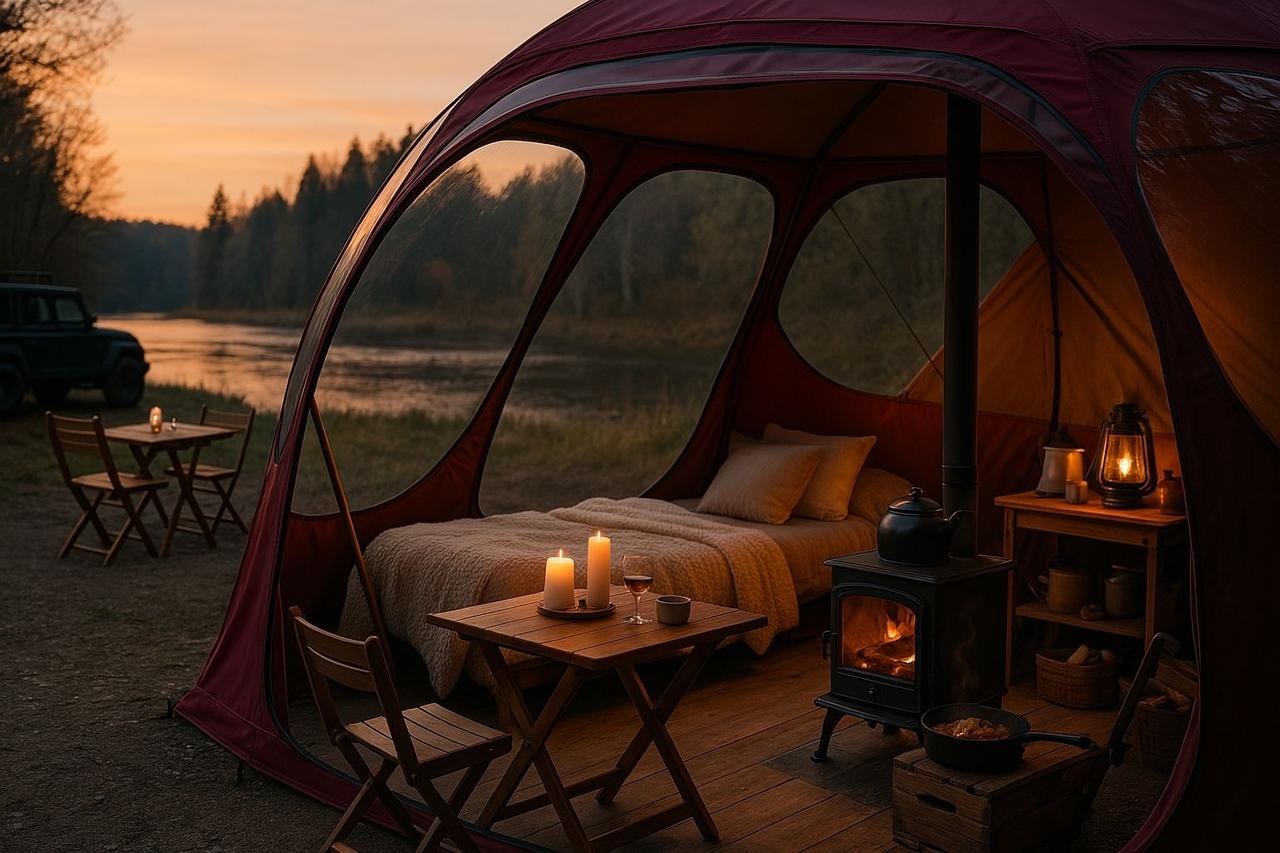
Glamping (Generated by artificial intelligence.)
Prof. Dr. Stacey Dangel, Michelle LaRocca, Ph.D., and Jonathan Jaeger, M.S., hospitality researchers at Boston University, assert that glamping is not merely a luxurious version of traditional camping but also a component of experience-based tourism (2020). Academics such as Assoc. Prof. Dr. Venera Adamovich, Dr. Michal Kot, and Dr. Adnan ul Haque define glamping as a sustainable, eco-friendly, and boutique accommodation model.
Dr. Rasika Shahane, in her published work in India’s Atithya journal, emphasizes that glamping is not only about accommodation but also encompasses integrated dimensions of gastronomy, wellness, and cultural interaction. Dr. Zeynep Yamaç Erdoğan notes that glamping strengthens a destination’s identity when combined with local culinary experiences.
Shahane (2023) highlights that glamping offers more than just overnight stays in nature—it provides gastronomic experiences, wellness practices, and activities integrated with local cultures. Guests in these experiences not only escape the stresses of urban life but also embrace a sustainable vacation philosophy through infrastructure that minimizes environmental impact. Zeynep Erdoğan (2025) argues that glamping, particularly when integrated with culinary tourism, presents a model that enables visitors to experience local flavors in natural settings.
The COVID-19 pandemic transformed glamping into one of the accommodation formats that met the need for social distancing. Dr. Teodora Kiryakova-Dineva, Dr. Ivanka Vasenska, and Dr. Blagovesta Koyundzhiyska-Davidkova note that during the post-pandemic period, glamping provided hygienic, independent, and isolated vacation opportunities for tourists drawn to nature. Moreover, these structures, which support rural development, have been recognized as aligned with sustainable tourism policies. The post-pandemic rediscovery of glamping sites—characterized by immersion in nature, distance from crowds, and emphasis on personal space—demonstrates their growing relevance. This trend supports economic development in rural areas while being viewed as an integral part of sustainable tourism.
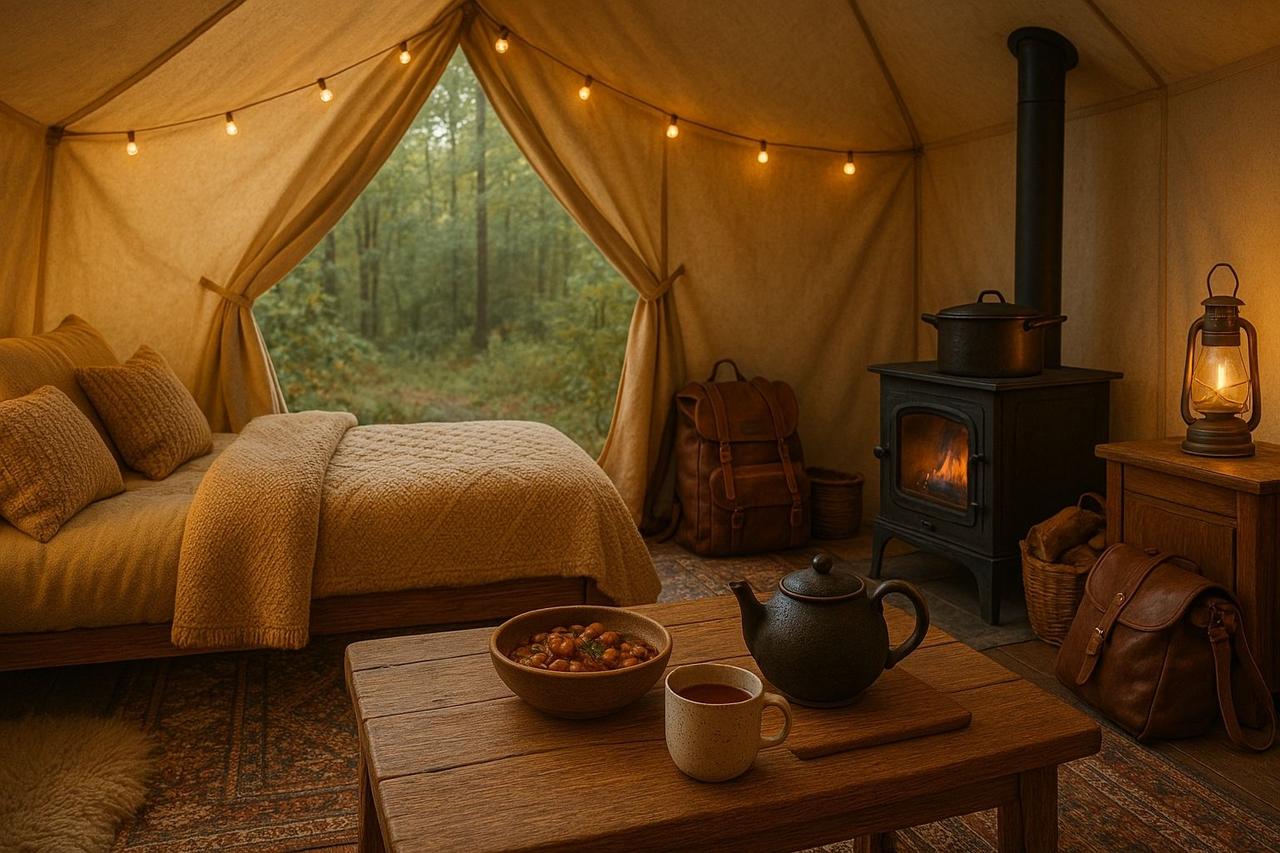
Glamping (Generated by artificial intelligence.)
Adamovich and colleagues’ (2021) research shows that glamping operators position this experience as a “luxury nature accommodation,” with customer satisfaction driven primarily by factors such as comfort, scenery, and cleanliness. It is also noted that glamping businesses adopt eco-friendly practices such as the use of sustainable materials, renewable energy, and waste management systems.
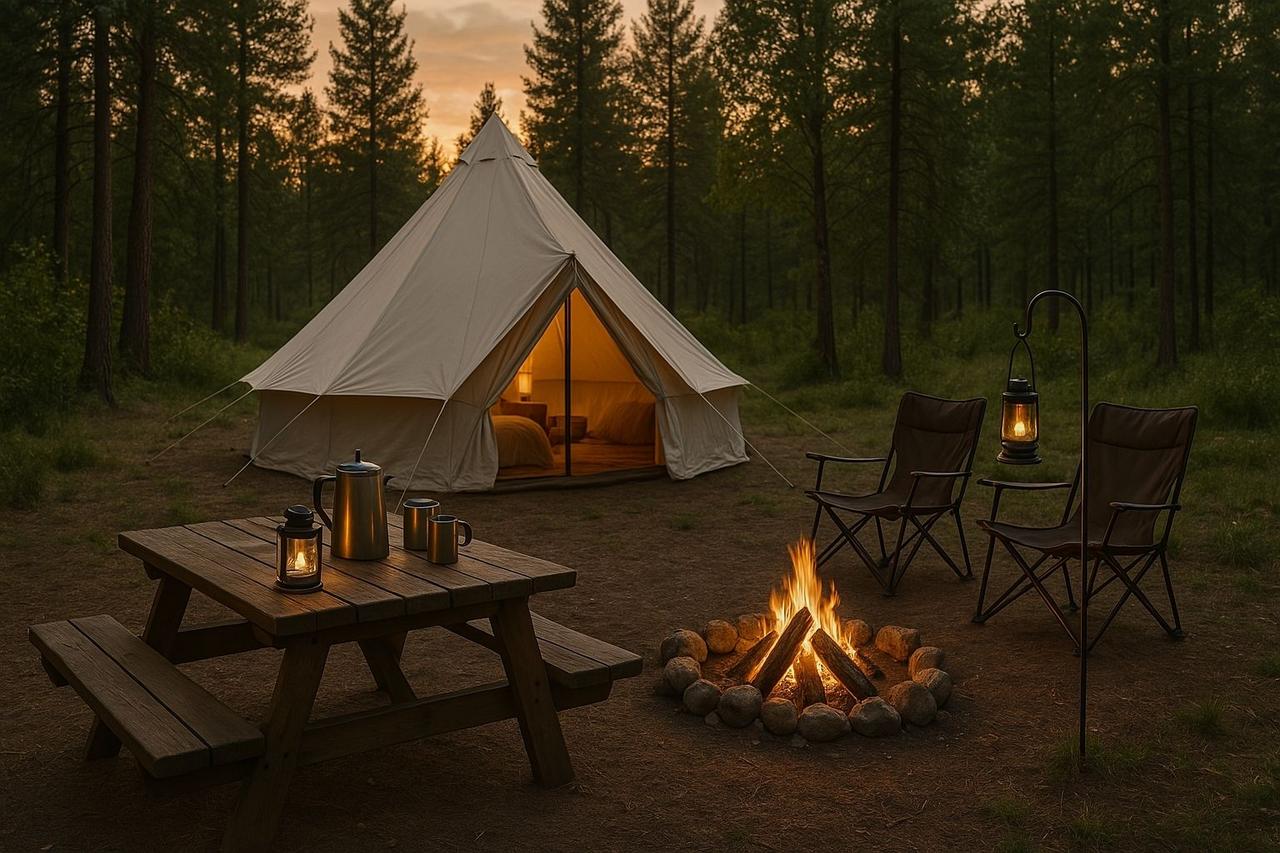
Glamping (Generated by artificial intelligence.)
Glamping appears frequently not only in academic literature but also in media and documentaries. Documentaries and videos continue to introduce this experience across different geographies. For instance, the Banijay Documentaries production World’s Most Incredible Hotels showcases glamping sites at the foot of Mount Fuji in Japan, while YouTube channels such as Glamping Show Americas and Back Forty Glamping visually present examples, accommodation types, and guest reviews from various countries.
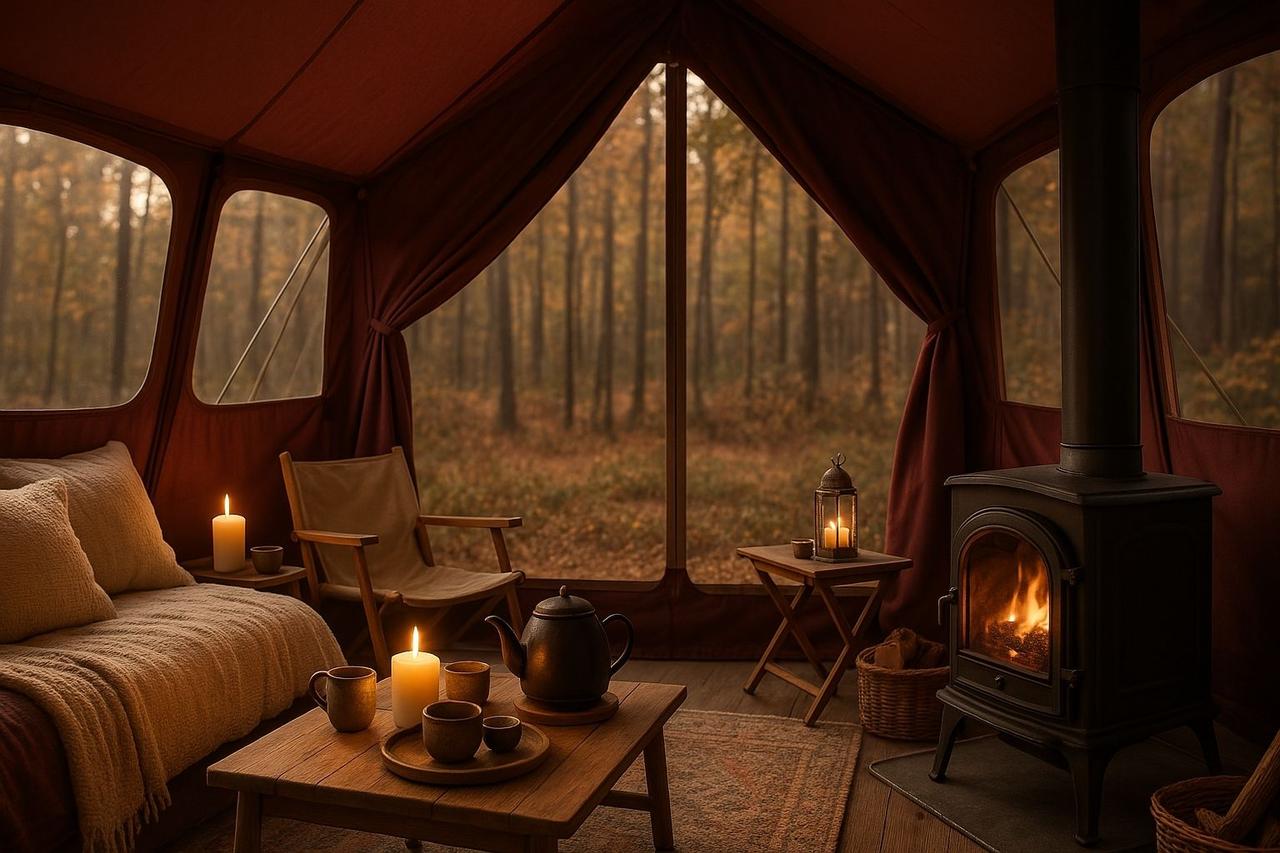
Glamping (Generated by artificial intelligence.)
The YouTube platform hosts numerous practical examples of glamping, offering valuable data for both destination promotion and user experience analysis. For example:
Such content documents how glamping is implemented globally and which core service standards are adopted.
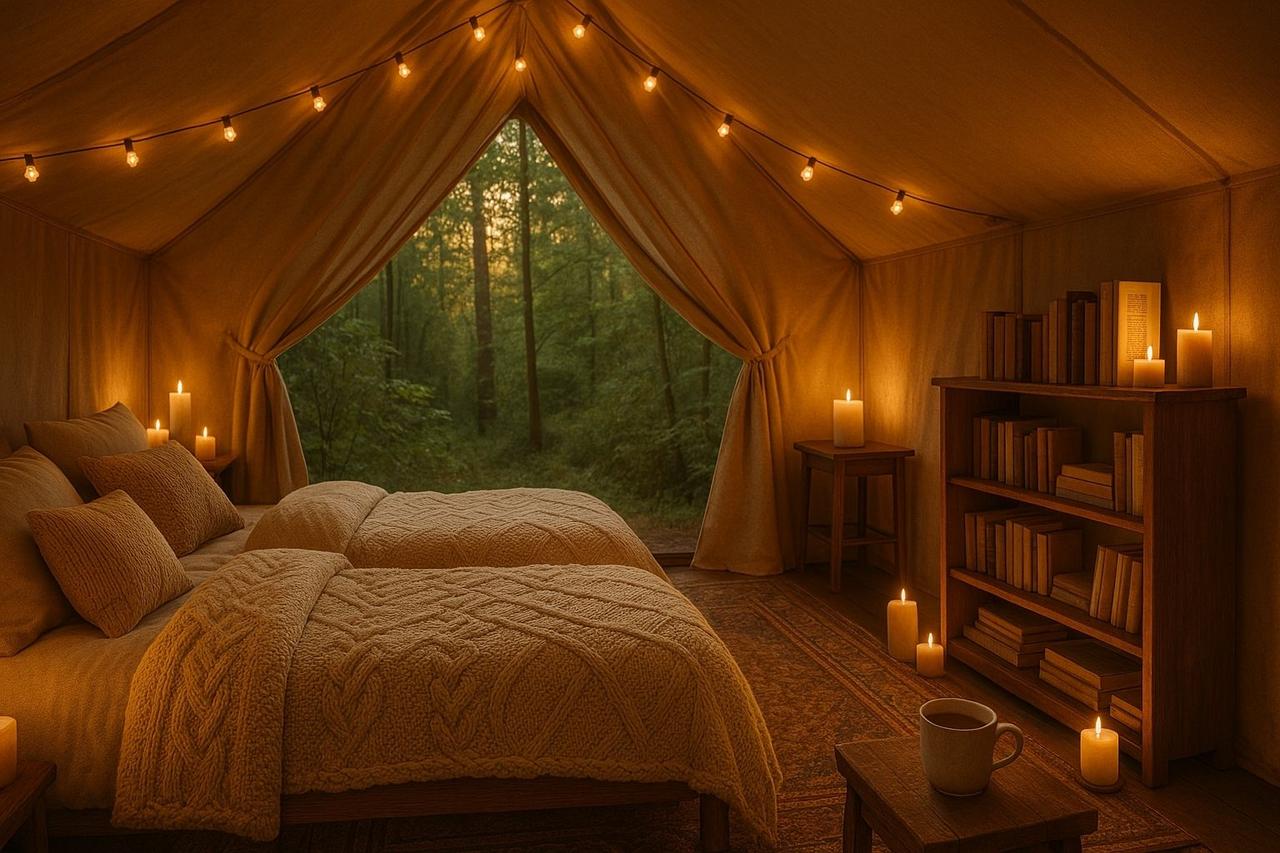
Glamping (Generated by artificial intelligence.)
Glamping sites in Türkiye are increasing, particularly in coastal areas and forested regions. In this context, the Atik Family is one of the individual entrepreneurs who have practically implemented the glamping experience in Türkiye. In their YouTube videos, Atik Family, they create a glamping camp immersed in nature featuring:
offering a space that is both aesthetically pleasing and functionally designed. The Atik Family’s camp also reflects the “hygge” philosophy, reinforcing feelings of warmth, simplicity, and peace indoors. These contents demonstrate growing individual interest in glamping in Türkiye and the development of creative, nature-friendly solutions in this field.
Atik Family (Source: YouTube)
Atik Family (Source: YouTube)
Interior design in glamping structures aims not only to provide comfort but also to deliver emotional tranquility, security, and aesthetic pleasure. In this regard, the Scandinavian philosophy of hygge has become a key reference in the design of glamping spaces. The trinity of “warmth, simplicity, and peace” underpinning the hygge concept goes beyond mere comfort in these temporary nature-based living environments, aiming to foster a calm state of mind and mental relaxation.
The following elements are emphasized in glamping interiors to align with the hygge ethos:
In particular, dome tents and yurt-style structures, with their high ceilings and circular forms, allow for the creation of a central focal point such as a stove or fireplace, enhancing environmental balance. Open shelving systems, wooden tables with camp kettles, pouf chairs, jute rugs, and insulated panels that retain heat are among the primary elements that merge hygge philosophy with the glamping experience.
Examples of this design approach can also be observed in individual implementations such as the Atik Family on YouTube. The family has skillfully designed their campsite with aesthetic simplicity, using jute rugs, soft lighting, and stoves to create a successful hygge atmosphere. This demonstrates that glamping can be satisfying not only physically but also emotionally and sensorially.
The hygge approach provides a minimalist yet effective aesthetic infrastructure that facilitates guests’ connection with nature, while also integrating with the slow living philosophy to prioritize sustainability and mental tranquility in interior design.
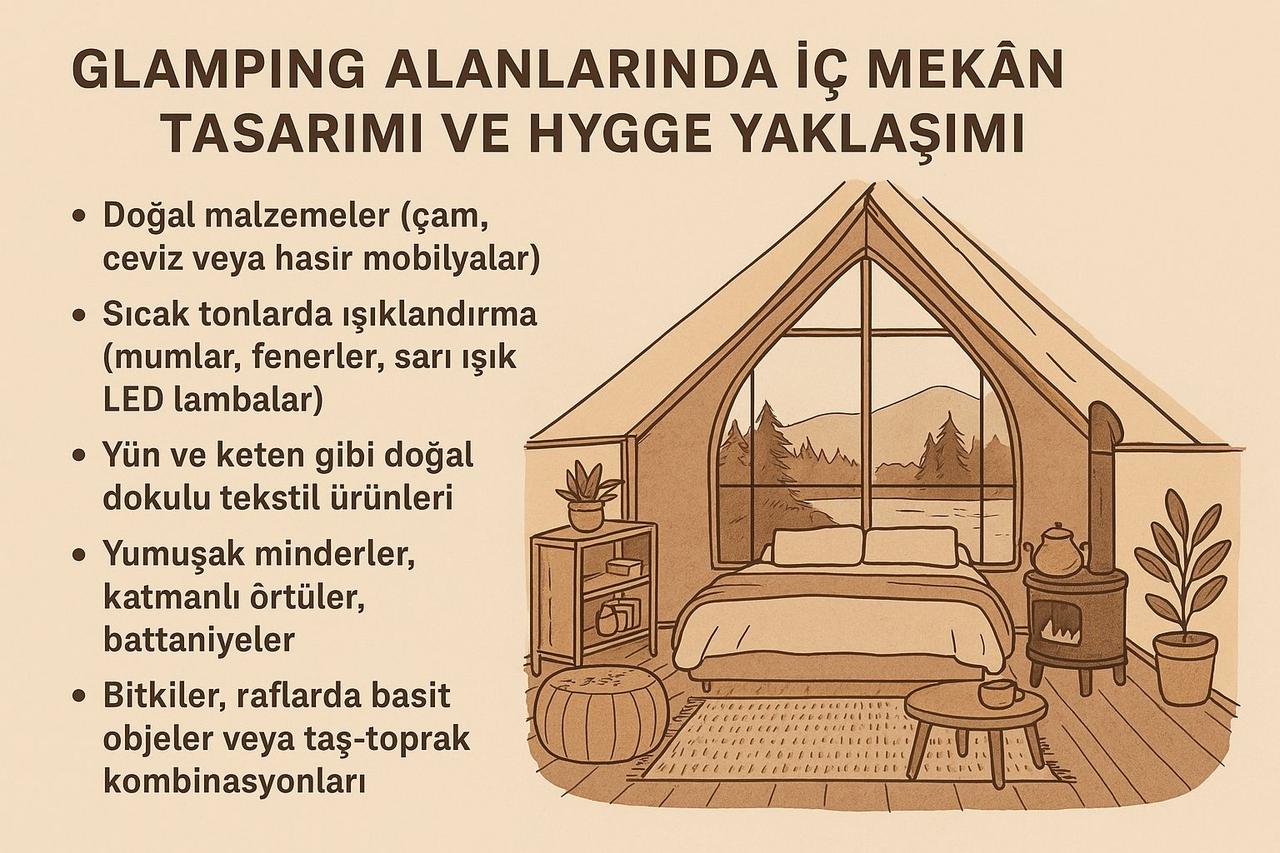
Glamping (Generated by artificial intelligence.)
Ramble Soul, (Source: YouTube)
Glamping is a tourism model emerging at the intersection of nature and luxury accommodation, experiencing global growth. Post-pandemic demand, the rising preference for nature-aligned vacations, technological infrastructure, and experiences integrated with local cultures have made glamping appealing to both individual travelers and investors. Today, it is regarded as a significant alternative tourism form due to its alignment with sustainable tourism policies and its responsiveness to experience-driven accommodation trends.
Glamping Show Americas 2023 - FULL TOUR (Source: YouTube)
Adamovich, Venera, Vipin Nadda, Michal Kot, and Adnan ul Haque. “Camping vs. Glamping Tourism: Providers’ Perspective.” *Journal of Environmental Management and Tourism* 12, no. 6(54) (2021): 1431–1441.https://doi.org/10.14505//jemt.v12.6(54).01.
Atik Ailesi. "YÜZEN ÇADIRIMIZA KIŞ BAHÇESİ YAPTIK ODUN SOBASI YAKTIK." YouTube, March 8, 2024.https://www.youtube.com/watch?v=WA1rOYZsrpo
Atik Ailesi. "–30 DERECENDE EN SOĞUK KAR KAMPIMIZ." YouTube, March 7, 2025.https://www.youtube.com/watch?v=_1sriIYMUKo
Dangel, Stacey, Michelle LaRocca, and Jonathan Jaeger. "Sleeping Under the Stars in Style: An Overview of Glamping." Boston Hospitality Review 8, no. 1 (2020): 1–10.
Kiryakova-Dineva, Teodora, Ivanka Vasenska, and Blagovesta Koyundzhiyska-Davidkova. "Glamping – An Active Back to Nature Trend in the Post-Pandemic Tourism Reality." International Conference on Tourism Research (2022): 1–10.
Ramble Soul. 2024. “ŞİŞME VİLLAMIZ İLE YOĞUN KARDA YENİ YIL KAMPI.” YouTube. December 28, 2024.https://www.youtube.com/watch?v=un3zi8FOVj8
Shahane, Rasika. "Glamping – An Emerging Accommodation Trend, Where Nature Meets Luxury." Atithya: A Journal of Hospitality 9, no. 2 (2023): 39–44.
Yamaç Erdoğan, Zeynep. “The Intersection of Nature and Comfortable Camping: Glamping Tourism and Culinary Experience.” *Journal of Management and Economic Studies* 7, no. 1 (2025): 1–15.https://doi.org/10.26677/TR1010.2025.1523.
“Glamping Bliss at Mount Fuji – World’s Most Incredible Hotels.” Banijay Documentaries. Date Published: 1.6 years ago. Accessedhttps://www.youtube.com/watch?v=aILbVJAi0fM.
“Glamping Show Americas 2023 – FULL TOUR.” Glamping Show Americas. Date Published: 1.5 years ago. Accessedhttps://www.youtube.com/watch?v=0cStZh5sjwI.
“The Story of Back Forty Glamping.” *Back Forty Glamping*. Date Published: 1.2 years ago. Accessedhttps://www.youtube.com/watch?v=IveMOfMci74.
“We Stay In A LUXURY Glamping Tent.” *Our Tiny Adventure*. Date Published: 4 months ago. Accessedhttps://www.youtube.com/watch?v=iym9MU0o5Gc.
“Wild Glamping on the Waters Edge.” *Kent Survival*. Date Published: 10 months ago. Accessedhttps://www.youtube.com/watch?v=JycnCS1RN2o.

Historical Development and Conceptual Framework
How Is Glamping Done?
Conceptual Depth and Academic Evaluation
Experiences Offered and Customer Profile
Post-Pandemic Popularity and Sustainability
Business and Supplier Perspective
Glamping in the Media
YouTube Glamping Camp Applications
Glamping in Türkiye and the Atik Family Example
Interior Design in Glamping Sites and the Hygge Approach
General Evaluation