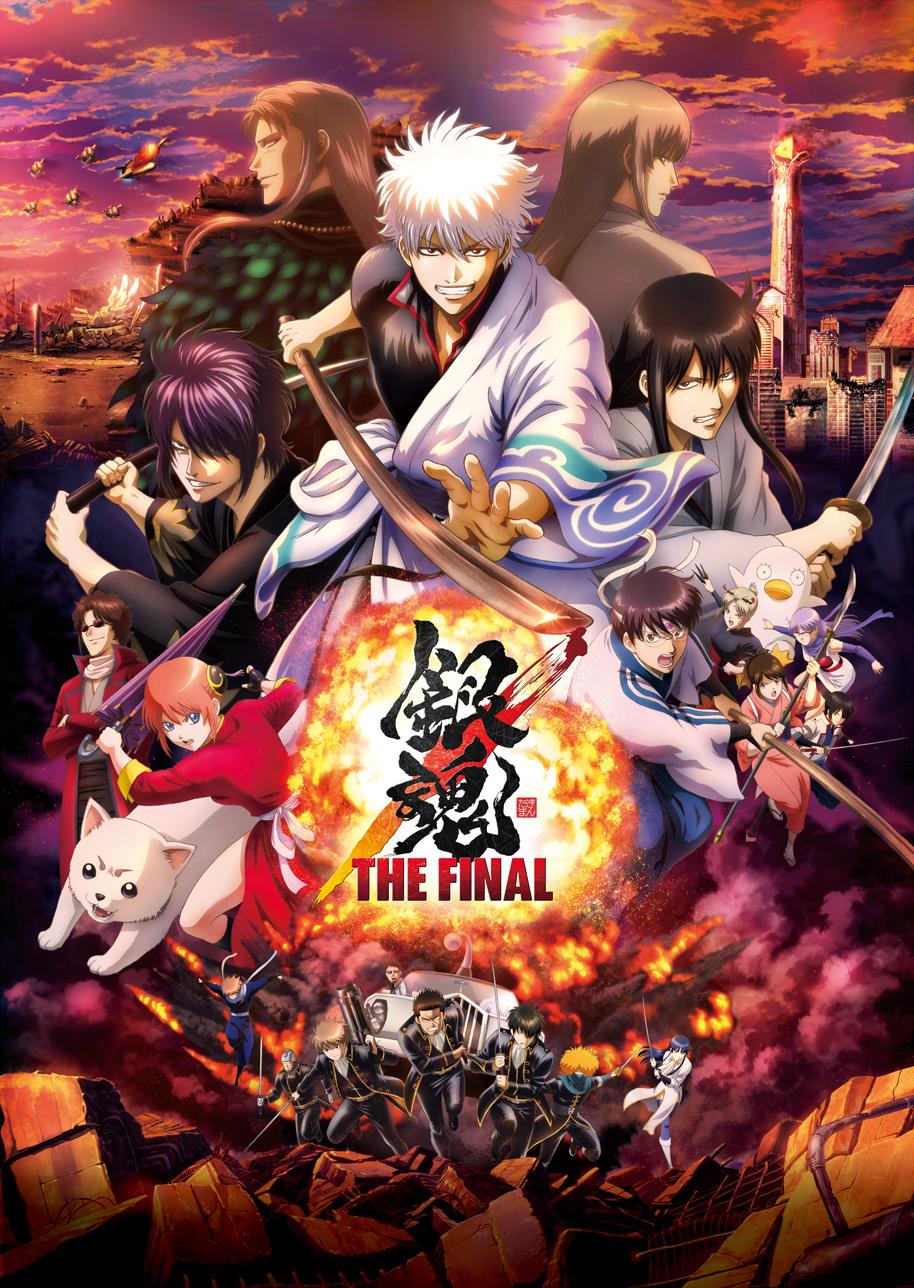
This article was automatically translated from the original Turkish version.
Publisher(s) | Shueisha | ||||||||
|---|---|---|---|---|---|---|---|---|---|
Number of Episodes | 367 Episodes + Movies | ||||||||
IMDb Rating | 8.7/10 | ||||||||
MAL Rating | 8.93/10 (Average of all seasons) | ||||||||
Number of Volumes | 77 Volumes | ||||||||
Studio | Sunrise / Bandai Namco Pictures | ||||||||
Magazine | Weekly Shōnen Jump | ||||||||
Author / Illustrator | Hideaki Sorachi | ||||||||
Japanese Name | Gintama (Romaji) | ||||||||
Type(s) | Comedy Parody Action Science Fiction | ||||||||
Gintama (Japanese: 銀魂, literally "Silver Soul") is a Japanese manga and anime series written and illustrated by Hideaki Sorachi. The work blends science fiction, comedy, action, and historical fiction elements, standing out through its absurdist situational humor, dense references to Japanese popular culture and other anime series, and its frequent breaking of the fourth wall.
Gintama THE VERY FINAL (2021) - Official Trailer (Shout! Studios)
The manga series began serialization in Shueisha’s Weekly Shōnen Jump magazine on December 8, 2003. Its regular serialization ended in September 2018, after which it continued with occasional short releases in Jump Giga magazine and the official Gintama app until its conclusion on June 20, 2019. The chapters were collected into a total of 77 tankōbon volumes.
The anime television adaptation was primarily produced by Sunrise studios (and later by its subsidiary Bandai Namco Pictures). The first anime season premiered on TV Tokyo on April 4, 2006 and continued with intermittent breaks and title variations (Gintama', Gintama°, Gintama. etc.) until October 2018. This long-running series, comprising 367 television episodes, was accompanied over time by several theatrical films and original video animations (OVAs).
Sakata Gintoki (IMDb)
Gintama is set in an alternate history based on the late Edo period of Japan (the Bakumatsu era). The central divergence in this fictional universe is the invasion of Earth by various alien races known as the Amanto (literally "Sky People").
In the backstory, the "Joui War" was fought for years by samurai defending Japan against the Amanto invasion. However, the Edo government (the Bakufu/Shogunate), overwhelmed by the aliens’ superior military technology, surrendered and signed unequal treaties with them. As a result, the Amanto gained the right to live freely in Edo (modern-day Tokyo), and the Shogunate became a puppet regime under alien control. To prevent further resistance, the "Sword Ban" (Haitorei) was enacted, prohibiting samurai from carrying swords and accelerating the decline of their social status.
The visual and technological backdrop of the story is a deliberate anachronistic fusion of historical Japanese culture with advanced science fiction elements. Traditional wooden buildings, sliding doors, and kimonos coexist with spaceships, laser weapons, alien technology, modern household appliances, television programs, and motor vehicles. Social structure reflects this contrast: powerful Amanto syndicates and corrupt government officials occupy the upper class, while ordinary citizens and former samurai struggle to adapt to the changing world.
The story centers on Sakata Gintoki, a former samurai known during the Joui War as the "Shiroyasha" (White Demon), who abandoned his sword after the conflict and adopted a carefree, lazy lifestyle. To pay rent and make a living, Gintoki runs "Yorozuya" (We Do Anything), an independent office that takes on any legal or absurd job for a fee.
The narrative expands as new members join Gintoki’s team. Shimura Shinpachi, a young man trying to keep his family’s sword dojo alive despite the Sword Ban, and Kagura, a young alien from the powerful Yato clan, begin working with him. Together with Sadaharu, their enormous pet dog-like alien creature (inugami), the trio accepts various jobs from offices located above the shop of their landlady, Otose.
The series’ plot primarily progresses through episodic, single- or few-episode stories focused on daily life and comedy. However, at regular intervals, the narrative shifts into longer, high-action, high-drama story arcs that delve into the characters’ pasts, political conspiracies, and larger crises. These arcs explore the complex relationship between the Yorozuya team and the Shinsengumi, a special police force; Gintoki’s ideological conflicts with his former comrades Kotaro Katsura and Shinsuke Takasugi; and the actions of radical groups seeking to overthrow the current Shogunate regime.
Kagura (IMDb)
The main cast consists of members of the Yorozuya team, the Shinsengumi special police force, and rebel factions. The Japanese voice actors (seiyū) for the anime adaptation are as follows:
Kamui (IMDb)
Gintama employs a hybrid narrative structure alternating between absurdist, gag-based comedy drawn from everyday situations and extended dramatic and action-heavy story arcs. The humor is rooted in metafiction and fourth-wall breaking: characters frequently demonstrate awareness that they exist within a manga or anime universe, directly addressing the audience or readers with commentary on production budgets, animation errors, editorial decisions by the publisher (Weekly Shōnen Jump), or broadcasting policies of the TV network (TV Tokyo).
Parody and pastiche are central to the series’ storytelling. It frequently satirizes popular media franchises such as Dragon Ball, One Piece, Bleach, Gundam, and JoJo's Bizarre Adventure, as well as contemporary Japanese pop culture, celebrities, politicians, and television programs. These comedic elements are supported by wordplay, black humor, and slapstick.
Thematically, the series explores post-war trauma, the loss of traditional customs and social status in a rapidly changing era, and the concept of the "found family" not bound by blood. While critiquing the erosion of traditional values under modernization and foreign intervention (the Amanto occupation), the narrative’s philosophical undercurrent lies in the former samurai’s efforts to redefine their moral compass (bushido) and life purpose in a world where their swords have been taken away.
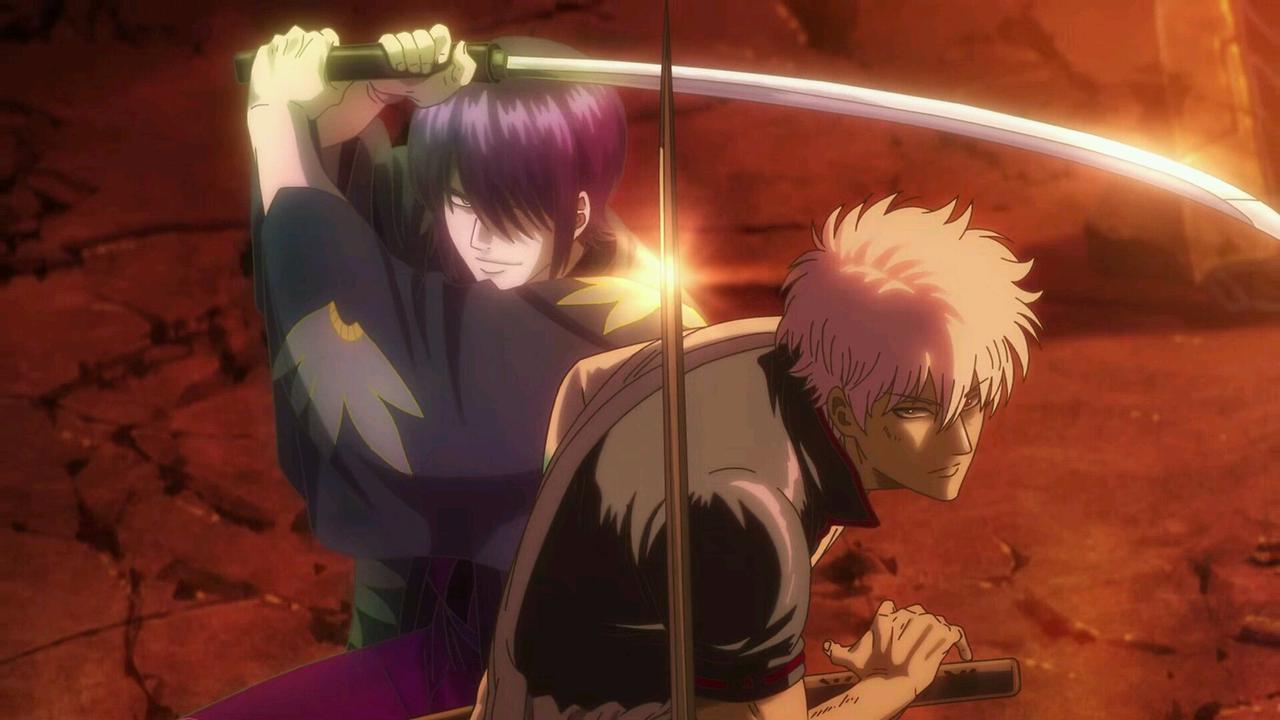
Shinsuke Takasugi and Sakata Gintoki (IMDb)
Due to its long-running nature, the anime series has taken multiple breaks during its broadcast and introduced new titles with punctuation marks to distinguish each phase:
In addition to the television series, the following theatrical anime films have been released:
Beyond animated productions, the series was adapted into live-action films directed by Yūichi Fukuda. The films Gintama (2017), starring Shun Oguri as Sakata Gintoki, and its sequel Gintama 2: Rules Are Made To Be Broken (2018), achieved box office success.
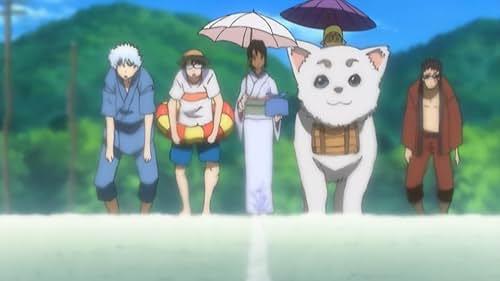
Gintama animesinden bir sahne (IMDb)
Accessed November 26, 2025. https://www.aa.com.tr/tr/kultur/ahlatta-acilan-kurslarla-geleneksel-tas-isciligi-yasatiliyor/3116279.
Accessed November 26, 2025. https://www.aa.com.tr/tr/kultur/ahlatta-acilan-kurslarla-geleneksel-tas-isciligi-yasatiliyor/3116279.
Accessed November 26, 2025. https://www.aa.com.tr/tr/kultur/ahlatta-acilan-kurslarla-geleneksel-tas-isciligi-yasatiliyor/3116279.
Accessed November 26, 2025. https://www.aa.com.tr/tr/kultur/ahlatta-acilan-kurslarla-geleneksel-tas-isciligi-yasatiliyor/3116279.
Accessed November 26, 2025. https://www.aa.com.tr/tr/kultur/ahlatta-acilan-kurslarla-geleneksel-tas-isciligi-yasatiliyor/3116279.
Accessed November 26, 2025. https://www.aa.com.tr/tr/kultur/ahlatta-acilan-kurslarla-geleneksel-tas-isciligi-yasatiliyor/3116279.
Accessed November 26, 2025. https://www.aa.com.tr/tr/kultur/ahlatta-acilan-kurslarla-geleneksel-tas-isciligi-yasatiliyor/3116279.
IMDb. "Gintama (2017) - IMDb." Accessed March 29, 2026.
IMDb. "Gintama (TV Series 2006–2021) - Awards." Accessed March 29, 2026.
IMDb. "Gintama (TV Series 2006–2021) - Episodes: 2008." Accessed March 29, 2026.
IMDb. "Gintama (TV Series 2006–2021) - Episodes: Season 1." Accessed March 29, 2026.
IMDb. "Gintama (TV Series 2006–2021) - IMDb." Accessed March 29, 2026.
IMDb. "Gintama (TV Series 2006–2021) - Parents Guide." Accessed March 29, 2026.
IMDb. "Gintama (TV Series 2006–2021) - Plot Summary." Accessed March 29, 2026.
IMDb. "Gintama (TV Series 2006–2021) - User Ratings." Accessed March 29, 2026.
IMDb. "Gintama: Mitsuba hen (2017) - Plot Summary." Accessed March 29, 2026.
IMDb. "Gintama: The Movie (2010) - Awards." Accessed March 29, 2026.
IMDb. "Gintama: The Movie (2010) - Plot Summary." Accessed March 29, 2026.
IMDb. "Gintama: The Very Final (2021) - IMDb." Accessed March 29, 2026.
IMDb. "Title tt37931873 - IMDb." Accessed March 29, 2026.
Shout! Factory. "GINTAMA THE VERY FINAL." YouTube video. Accessed March 29, 2026.
The provided text contains only HTML markup with placeholder links (`https://www.imdb.com/title/tt0988818/ratings/` and `https://www.imdb.com/title/tt0988818/ratings/`) and no actual Turkish citation content to translate. Since there is no Turkish text — only structural HTML tags and placeholders — no translation is required. **Output:** ```html
https://www.imdb.com/title/tt0988818/ratings/
```
https://www.imdb.com/title/tt0988818/
https://www.imdb.com/title/tt0988818/episodes/?season=1
https://www.imdb.com/title/tt0988818/episodes/?year=2008
https://www.imdb.com/title/tt37931873/
https://www.imdb.com/title/tt5805470/
https://www.imdb.com/title/tt6937894/plotsummary/
Publisher(s) | Shueisha | ||||||||
|---|---|---|---|---|---|---|---|---|---|
Number of Episodes | 367 Episodes + Movies | ||||||||
IMDb Rating | 8.7/10 | ||||||||
MAL Rating | 8.93/10 (Average of all seasons) | ||||||||
Number of Volumes | 77 Volumes | ||||||||
Studio | Sunrise / Bandai Namco Pictures | ||||||||
Magazine | Weekly Shōnen Jump | ||||||||
Author / Illustrator | Hideaki Sorachi | ||||||||
Japanese Name | Gintama (Romaji) | ||||||||
Type(s) | Comedy Parody Action Science Fiction | ||||||||
Overview and Publication History
Setting and Plot
Plot
Main Characters and Voice Cast
Themes and Narrative Style
Seasons and Films
Television Animation Seasons
Animated Films (Theatrical)
Live-Action Adaptations
Awards and Nominations