


This article was automatically translated from the original Turkish version.
Gesamtkunstwerk is a German term that can be translated into Turkish as “total art work” and is regarded as the highest expression of artistic unity. This concept denotes an artistic approach in which multiple art forms come together to form a harmonious whole, with each component complementing the others and various artistic disciplines uniting to create a single aesthetic structure. Gesamtkunstwerk evolved not merely as a description of an artwork’s form but as a profound philosophical concept that also encompasses a social function.
The concept of Gesamtkunstwerk extends back to the Baroque period and beyond. Baroque art, in particular, offers some of the earliest examples of the integration of multiple art forms. Monumental buildings and ornate interior spaces from this era exemplify how different artistic disciplines combined to create an aesthetic whole. Structures such as the Palace of Versailles and Schönbrunn Palace can be considered early manifestations of the Gesamtkunstwerk ideal, integrating interior design, garden layout, sculpture and painting into unified compositions. Such buildings emphasize that an artwork must be conceived not merely within a single medium but as an integrated whole.
However, it is generally accepted that the term Gesamtkunstwerk was definitively articulated in the mid-19th century, where Richard Wagner’s artistic vision played a pivotal role. Wagner argued that the most powerful form of art arises when all its components are combined, and he applied this principle in his operas. The integration of music, drama, dance, stage design and literary elements in Wagner’s operas can be regarded as some of the first concrete manifestations of Gesamtkunstwerk. In works such as Der Ring des Nibelungen, the fusion of music and dramatic narrative became an embodiment of this philosophical ideal.
One of the most important artistic figures of the 19th century, Richard Wagner was among the most forceful proponents of the Gesamtkunstwerk concept. Wagner emphasized the necessity of a creative process that unites all artistic disciplines. In his view, elements such as music, literature, dance, painting and stage design, when combined, could generate a more powerful aesthetic experience.
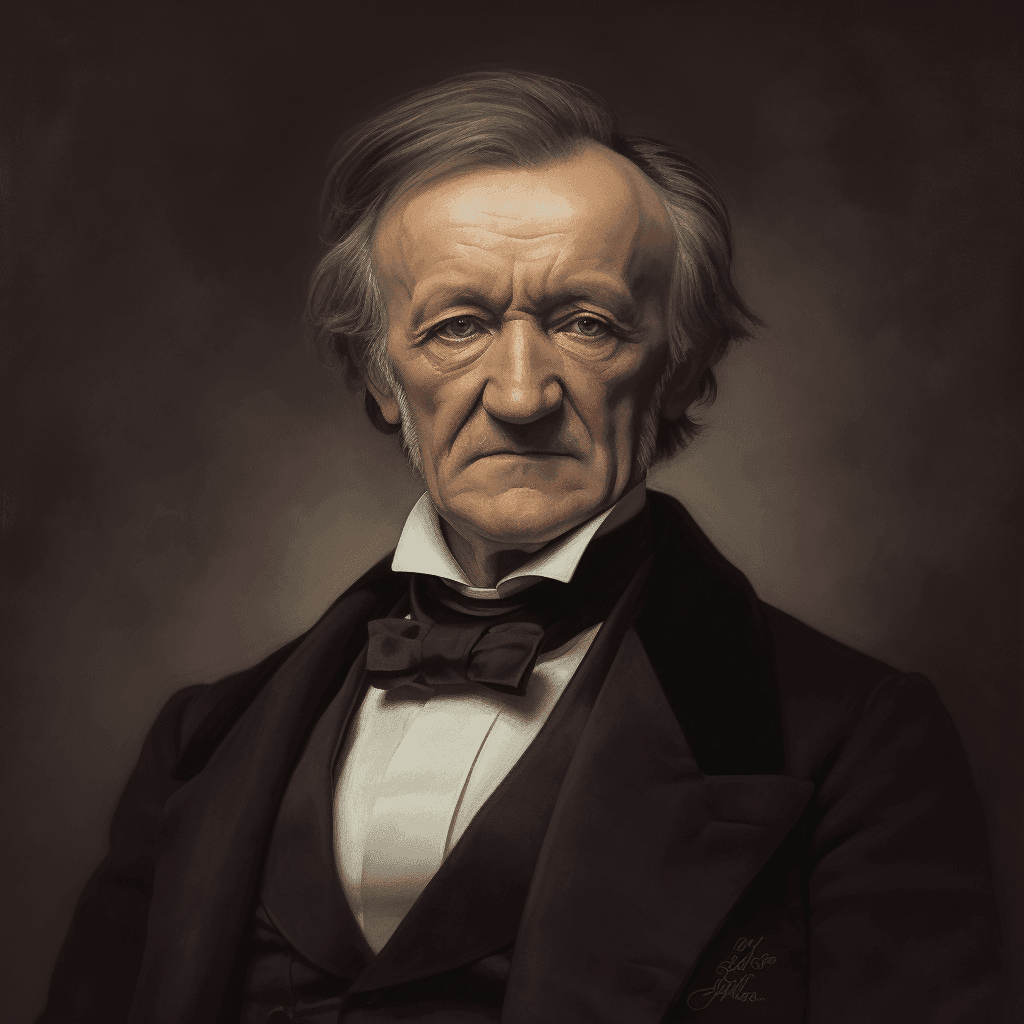
Richard Wagner
Wagner’s design for the Bayreuth Festival Theatre (1876) and his opera Der Ring des Nibelungen are concrete examples of the Gesamtkunstwerk ideal. In these works, music, dramatic structure, stage design and other artistic disciplines were brought together to offer the audience a unique aesthetic experience. Wagner believed in the unifying power of art and shaped his works not only through music but also through stage design and dramatic structure. He viewed the idea of “the unity of art” not merely as a means of creating artistic coherence but as an instrument of social and cultural transformation. Thus, Gesamtkunstwerk is not only an aesthetic approach but also a social project.
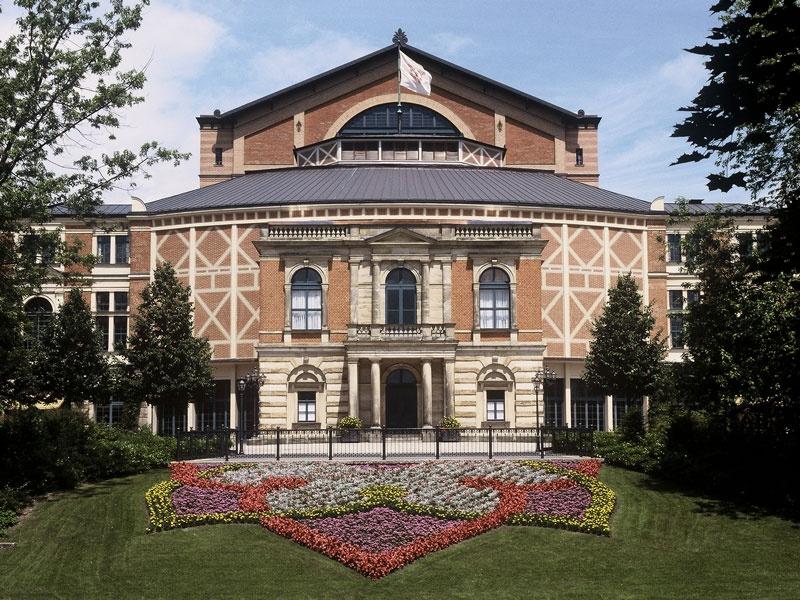
Bayreuth Festival Theatre
Example: Richard Wagner – Der Ring des Nibelungen (1876)
Wagner’s opera Der Ring des Nibelungen is one of the most significant examples of Gesamtkunstwerk. This four-part opera represents the culmination of Wagner’s effort to integrate music, drama, literature and stage design into a single structure. Wagner did not treat the work as music alone but integrated it with stage design and dramatic structure. Particularly in its performances at the Bayreuth Festival Theatre, the Ring opera employed innovative sound systems and visual designs to provide the audience with both auditory and visual experiences. Every aspect of the work functions in harmony to create a total artistic expression. This is the full realization of Wagner’s Gesamtkunstwerk philosophy.
In the 20th century, the influence of Gesamtkunstwerk generated major transformations across diverse artistic fields. Under the impact of modernism, artists began to transcend traditional boundaries and combined different disciplines to produce more innovative forms. During this period, movements such as Art Nouveau, Bauhaus and De Stijl embraced the Gesamtkunstwerk ideal and applied its principle of unified art across various domains.
Example: Victor Horta – Hôtel Tassel (1893–1894)
Victor Horta, a leading figure of the Art Nouveau movement, embodied the Gesamtkunstwerk ideal in his Hôtel Tassel by integrating architecture, interior design and decoration. Horta adorned every surface, from walls to ceilings, with decorative arts and designed each element of the building within an aesthetic unity. Every interior feature, as if crafted by a single artistic hand, coheres in harmonious balance, making this structure one of the clearest examples of all components of an artwork functioning in unified harmony.
Example: Bauhaus School (1919–1933)
One of the most important art schools of the 20th century, the Bauhaus applied the Gesamtkunstwerk concept in the fields of modern design and architecture. Founded by Walter Gropius, the Bauhaus aimed to unify diverse artistic disciplines. Architecture, graphic design, industrial design and painting were integrated to create a functional, aesthetic and modern artistic approach. The Bauhaus produced designs that combined aesthetic and functional qualities by ensuring unity across all artistic domains, demonstrating how Gesamtkunstwerk was transformed under the light of modernism.
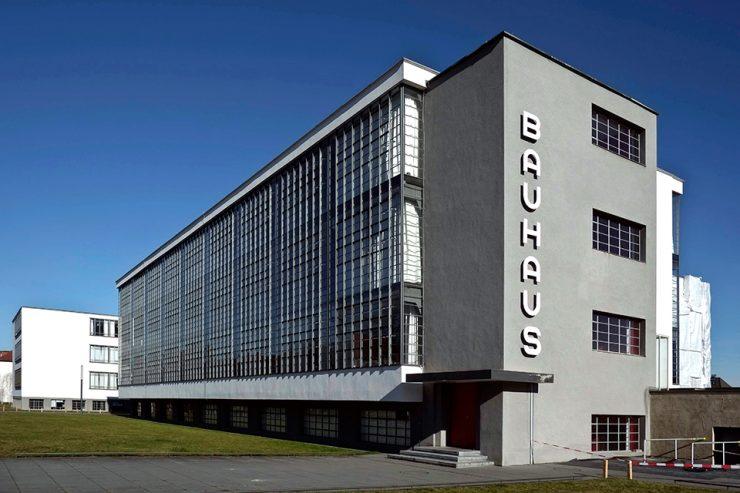
Bauhaus School
Example: Piet Mondrian – Composition No. 10 (1939–1942)
Piet Mondrian, a pioneer of the De Stijl movement, expressed the unified power of art through geometric forms and primary colors. His work Composition No. 10 is a structure in which shapes and colors achieve a perfect harmony. Mondrian applied similar aesthetic principles not only in painting but also in architecture, interior design and graphic design, thereby concretizing the belief that all fields of art must be united. This approach reflects De Stijl’s interpretation of the Gesamtkunstwerk ideal.
Gesamtkunstwerk has had significant effects on various artistic disciplines and has pioneered a interdisciplinary approach. This influence was decisive in breaking down traditional boundaries between art forms and bringing different artistic modes closer together.
Music is one of the most important components of Gesamtkunstwerk. The close relationship between dramatic narrative and music in Wagner’s operas transformed music into an integral part of dramatic structure. Wagner’s innovations in music, such as free forms and the use of leitmotifs, fused musical elements with dramatic storytelling. In works such as Der Ring des Nibelungen, music played a central role in conveying the narrative and establishing an emotional connection with the audience.
The influence of Gesamtkunstwerk on architecture and stage design is most concretely realized in Wagner’s Bayreuth Festival Theatre. Wagner argued that stage design must be in harmony with music and employed it as a language integrated with the musical structure. In the 20th century, movements such as Bauhaus and Art Nouveau undertook efforts to create aesthetic unity in architecture and interior design. These movements sought to generate a total artistic experience by uniting diverse artistic disciplines.
Plastic arts adopted a new aesthetic understanding under the influence of Gesamtkunstwerk. Disciplines such as painting and sculpture were integrated with architecture and stage design, enabling art to exert a broader physical impact. Movements such as De Stijl emphasized the combination of geometric forms and colors, thereby enhancing the social and aesthetic power of the plastic arts.
Literature is a vital component of Gesamtkunstwerk and, when fused with dramatic structures, enabled the creation of a new theatrical language. In Wagner’s operas, the union of literature and stage allowed language to be reinforced by visual and auditory elements, strengthening dramatic structure. This remains a significant influence in modern theatre, where dramatic forms have been redefined through such integrations.
Gesamtkunstwerk continues to exert a strong influence on today’s art world. Contemporary digital arts, video games, multimedia projects and interactive art forms can be seen as modern manifestations of this concept. Contemporary artists are reshaping artistic expression by combining diverse technologies and media, thereby continuing the historical legacy of Gesamtkunstwerk.
Gesamtkunstwerk did not merely create artistic unity; it established a powerful link between aesthetic and social change, enabling art to function as a transformative force. In this context, Gesamtkunstwerk remains a relevant approach in contemporary artistic thought, asserting that art transcends mere visual experience and functions as a cultural power that speaks to the entire society.
https://magazine.artland.com/gesamtkunstwerk-the-total-work-of-art-through-the-ages/
https://www.theartstory.org/definition/gesamtkunstwerk/
https://www.thecollector.com/what-is-a-gesamtkunstwerk-examples/

No Discussion Added Yet
Start discussion for "Gesamtkunstwerk (Total Work of Art)" article
Historical Foundations of Gesamtkunstwerk
Wagner and Gesamtkunstwerk: The Unified Expression of Art
Gesamtkunstwerk in the 20th Century: In the Wake of Modernism
The Impact of Gesamtkunstwerk on the Arts
1. Music
2. Stage Design and Architecture
3. Plastic Arts
4. Literature and Drama
The Place of Gesamtkunstwerk Today