


This article was automatically translated from the original Turkish version.
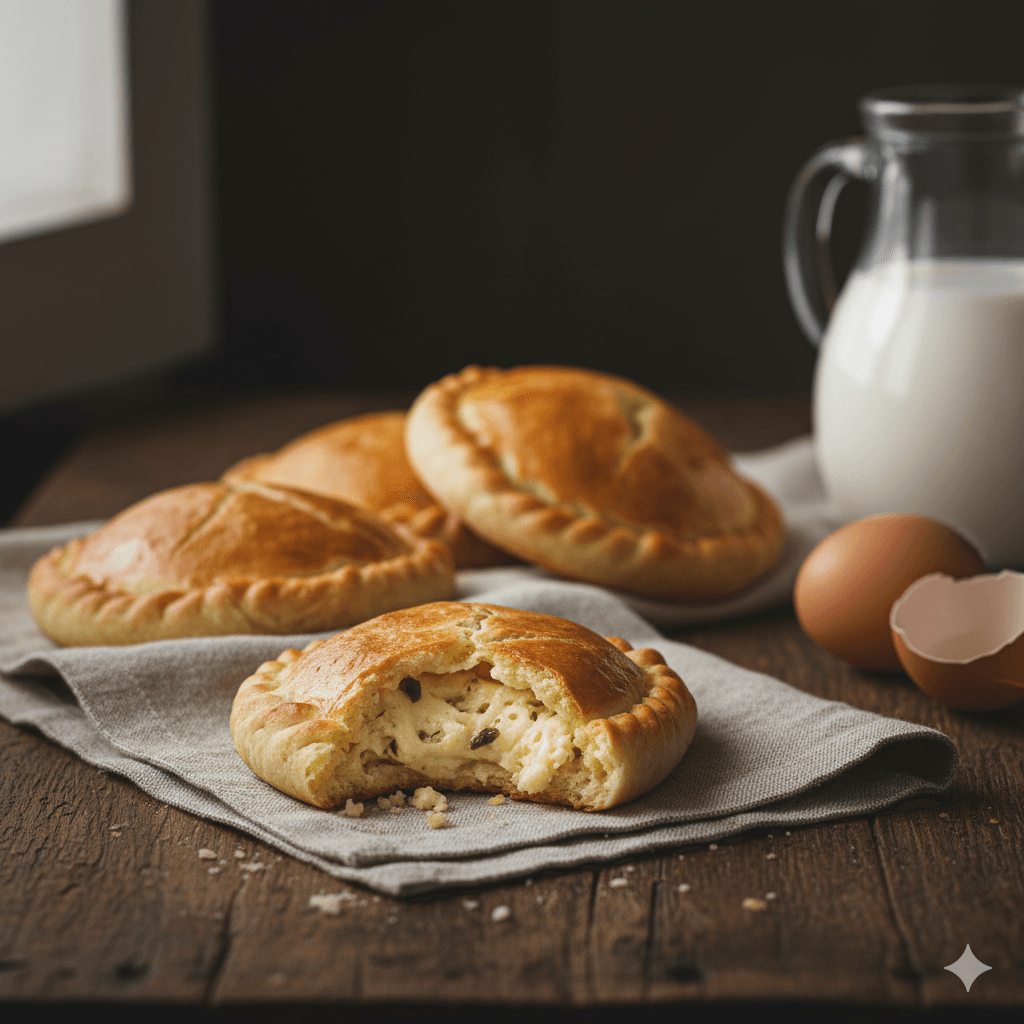
Geraardsbergse Mattentaarten (Generated by Artificial Intelligence)
Type(s) | Protected Geographical Indication (PGI) | ||||||||
|---|---|---|---|---|---|---|---|---|---|
Product Type | Food (Bakery Products - Code 1905) | ||||||||
Country | Belgium | ||||||||
Status | Registered | ||||||||
File Number | PGI-BE-0288 | ||||||||
Registration Date | 16/02/2007 | ||||||||
Geraardsbergse mattentaarten is a traditional bakery product originating from the Flemish region of Belgium and registered with a Protected Geographical Indication (PGI). This PGI status guarantees that at least one stage of production, processing, or preparation takes place within the defined geographical area. The product consists of curd filling enclosed in flaky pastry and develops a dark brown outer crust when baked.
The origins of Geraardsbergse mattentaarten date back to periods before refrigeration technology was widely available. During those times, one method of preserving milk was cheese-making; however, this process left behind a by-product known as "curd" (lor or kesmik). The mattentaarten was developed as a means to both preserve and transform this milk curd into an edible form.
Throughout its recorded history, maintaining quality standards has always been a crucial element. In 1665, the people of Geerardsbergen established new regulations requiring that mattentaarten sold in the town meet a specific quality standard. These quality rules were officially ratified in 1752 by Maria Theresa, Empress of Austria, granting them formal status.
The tradition of preserving quality has continued into the modern era. In 1978, the "Brotherhood of the Geraardsberg mattentaart" was founded to protect this local product. One of the Brotherhood’s primary duties is to oversee the use of only high-quality "mat" (curd) in the production of the tarts.
Since 1980, a special day has been held annually at the end of April to celebrate the unique heritage of the product. During this event, members of the Brotherhood construct a fully functioning bakery on the town square, demonstrating to locals and visitors how the specialty is made and thereby ensuring the continuation of the tradition.
The key ingredient of the Geraardsbergse mattentaart PGI, as indicated by its name, is "mat," or milk curd. The production process is strictly bound by geographical regulations.
The preparation steps are as follows:
European Commission. "EUGI00000013627 (Geraardsbergse Mattentaarten (PGI)) Kaydı." *E-Ambrosia Geographical Indications Register*. Accessed October 24, 2025. https://ec.europa.eu/agriculture/eambrosia/geographical-indications-register/details/EUGI00000013627.
European Commission. "Geraardsbergse Mattentaarten PGI." Accessed October 24, 2025. https://agriculture.ec.europa.eu/farming/geographical-indications-and-quality-schemes/geographical-indications-food-and-drink/geraardsbergse-mattentaarten_en.

Geraardsbergse Mattentaarten (Generated by Artificial Intelligence)
Type(s) | Protected Geographical Indication (PGI) | ||||||||
|---|---|---|---|---|---|---|---|---|---|
Product Type | Food (Bakery Products - Code 1905) | ||||||||
Country | Belgium | ||||||||
Status | Registered | ||||||||
File Number | PGI-BE-0288 | ||||||||
Registration Date | 16/02/2007 | ||||||||
No Discussion Added Yet
Start discussion for "Geraardsbergen Mattentaarten" article
Historical Origins and Protection
Production Methodology and Geographical Area