


This article was automatically translated from the original Turkish version.
+2 More
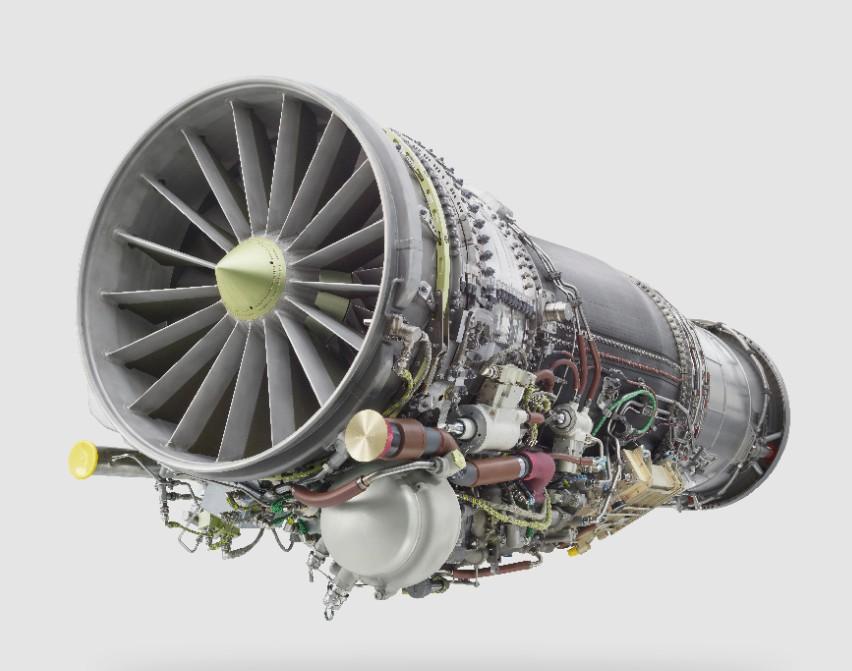
F414-GE-400 Turbofan Engine
Engine Name | F414-GE-400 | ||||||||
|---|---|---|---|---|---|---|---|---|---|
Manufacturer | General Electric Aviation | ||||||||
Type | Low bypass turbofan engine with afterburner | ||||||||
Aircraft Used | F/A-18E/F Super Hornet, EA-18G Growler, Gripen E/F (F414G), Tejas MkII (F414-INS6) | ||||||||
First Flight | 1998 (with F/A-18E) | ||||||||
Maximum Thrust | 22000 lbf (98 kN) – with afterburner engaged | ||||||||
Thrust-to-Weight Ratio | 9:1 | ||||||||
Pressure Ratio | 30:1 | ||||||||
Airflow Rate | 170 lb/s (77.1 kg/s) | ||||||||
Length | 154 in (391 cm) | ||||||||
Air Inlet Diameter | 31–32 in (79–81 cm) | ||||||||
Weight | 109 kg ~2 445 lb (1 | ||||||||
Modular Design | 6 modules: Fan, HPC, Combustor, HPT, LPT, Afterburner | ||||||||
Control System | FADEC (Full Authority Digital Electronic Control) | ||||||||
Primary Maintenance Centers | FRC West (NAS Lemoore), FRC Southeast (NAS Jacksonville) | ||||||||
International Use | India (Tejas MkII), Sweden (Gripen), South Korea (KF-X candidate) | ||||||||
The F414-GE-400 is a turbofan engine developed and manufactured by General Electric (GE). This engine is used in the United States Navy’s F/A-18E/F Super Hornet fighter aircraft and the EA-18G Growler electronic warfare aircraft. Built upon the successful design of the F404 engine family, the F414-GE-400 provides approximately 35 percent more thrust than the F404. This increase significantly enhances the aircraft’s range, payload capacity and survivability, thereby improving its multirole mission capabilities.
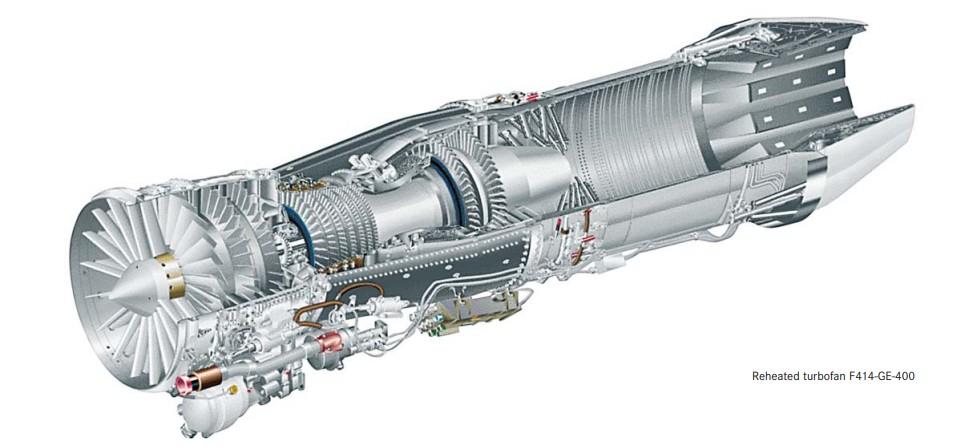
F414-GE-400 Tubofan Motoru (
The F414-GE-400 is a low-bypass ratio, afterburning turbofan engine. Designed with a modular structure, it is optimized for ease of maintenance, interchangeable modules and operational flexibility. Thanks to the Full Authority Digital Electronic Control (FADEC) system, the engine’s operational characteristics are digitally managed, enhancing operational precision and fuel efficiency.
The engine’s key technical specifications are as follows:
The F414-GE-400 engine consists of six distinct modules: the fan module, high-pressure compressor (HPC), combustor, high-pressure turbine (HPT), low-pressure turbine (LPT), and afterburner module. This modular design accelerates maintenance and repair procedures. The modules do not need to be matched to each other, providing flexibility during component replacement.
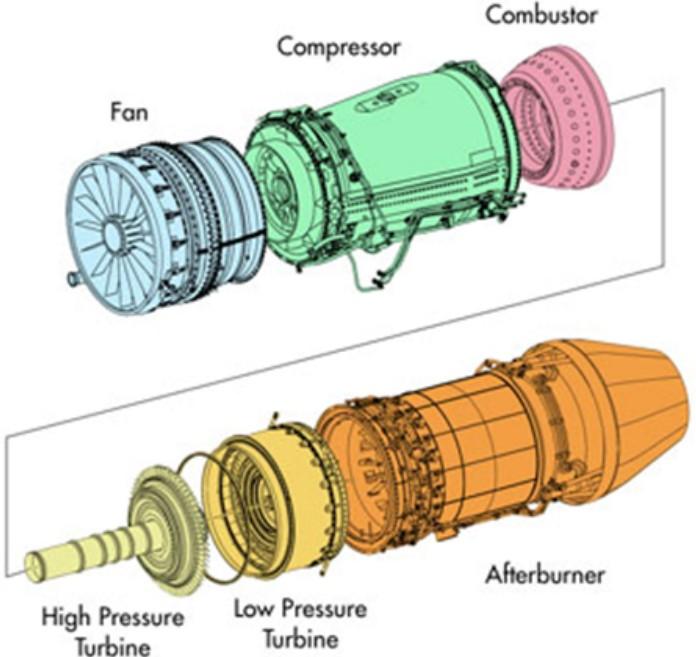
F414-GE-400 Modül Yapısı (NPS)
F414-GE-400 engines are operated by carrier-based air units, with maintenance conducted under a three-level system: organizational level (unit-level maintenance), intermediate level (Intermediate Maintenance Activity – IMA), and depot level (Depot Maintenance). The FRC West at NAS Lemoore, California, serves as the primary maintenance center for this engine. The Lemoore unit is responsible for disassembly, inspection, reassembly and testing of engines. More advanced module-level repairs are performed at the FRC Southeast facility in Jacksonville, Florida.
The maintenance and replacement requirements for F414-GE-400 engines are forecast based on factors such as flight hours, age and operational load. Data such as Engine Operating Time (EOT) and Life Usage Index (LUI) are utilized in this process. These data, collected via the Integrated Engine Condition Assessment and Monitoring System (IECAM) integrated into the aircraft, are analyzed after each flight and fed into logistical decision-making processes.
The F414-GE-400 engine is also employed in several international programs beyond the United States Navy. For India’s Tejas MkII fighter aircraft project, the F414-INS6 variant has been selected. For Saab’s Gripen E/F platform, the single-engine F414G variant has been developed.
GE Aerospace. Accessed May 9, 2025.https://www.geaerospace.com/military-defense/engines/f414.
General Electric Aviation. *F414 Turbofan Engine Datasheet.* Cincinnati, OH: GE Aviation, 2014. PDF.https://example.com/F414-Datasheet.pdf
Hersey, J. Michael, James M. Rowlett, and Shannon P. Thompson. *Forecasting the Demand of the F414-GE-400 Engine at NAS Lemoore.* NPS-AM-08-136. Monterey, CA: Naval Postgraduate School, 2008. PDF.
MTU Aero Engines AG. *F414-GE-400 Turbofan Engine Product Sheet.* Munich: MTU Aero Engines, 2012. PDF.https://example.com/datasheet-F414-GE-39E.pdf

F414-GE-400 Turbofan Engine
Engine Name | F414-GE-400 | ||||||||
|---|---|---|---|---|---|---|---|---|---|
Manufacturer | General Electric Aviation | ||||||||
Type | Low bypass turbofan engine with afterburner | ||||||||
Aircraft Used | F/A-18E/F Super Hornet, EA-18G Growler, Gripen E/F (F414G), Tejas MkII (F414-INS6) | ||||||||
First Flight | 1998 (with F/A-18E) | ||||||||
Maximum Thrust | 22000 lbf (98 kN) – with afterburner engaged | ||||||||
Thrust-to-Weight Ratio | 9:1 | ||||||||
Pressure Ratio | 30:1 | ||||||||
Airflow Rate | 170 lb/s (77.1 kg/s) | ||||||||
Length | 154 in (391 cm) | ||||||||
Air Inlet Diameter | 31–32 in (79–81 cm) | ||||||||
Weight | 109 kg ~2 445 lb (1 | ||||||||
Modular Design | 6 modules: Fan, HPC, Combustor, HPT, LPT, Afterburner | ||||||||
Control System | FADEC (Full Authority Digital Electronic Control) | ||||||||
Primary Maintenance Centers | FRC West (NAS Lemoore), FRC Southeast (NAS Jacksonville) | ||||||||
International Use | India (Tejas MkII), Sweden (Gripen), South Korea (KF-X candidate) | ||||||||
No Discussion Added Yet
Start discussion for "General Electric F414 Engine" article
Design and Performance Characteristics
Modular Structure and Maintenance Process
Usage and Logistical Support
Forecasting and Logistical Planning
International Usage and Development