


This article was automatically translated from the original Turkish version.
+2 More
The GameStop Event refers to the sudden and dramatic surge in the stock price of GameStop, a US-based video game retailer, in January 2021. The event emerged from a financial movement organized by individual investors on the social media platform Reddit, specifically within the r/WallStreetBets (WSB) subreddit, who united to challenge large institutional investors. This phenomenon, unfolding outside traditional market mechanisms, triggered an unprecedented conflict between institutional and retail investors in financial markets and quickly captured global public attention.
GameStop Corporation is a retail company founded in 1984 that sells video games and collectible merchandise. During the 2010s, the rise of digital game sales severely impacted GameStop’s profitability, which was based on physical retail stores. The company’s financial condition further deteriorated during the pandemic, prompting several major hedge funds to take large “short positions” on GameStop shares.
In particular, the hedge fund Melvin Capital established massive short positions on GameStop shares, meaning it borrowed shares expecting their value to decline, sold them immediately, and planned to repurchase them later at a lower price to profit from the difference.
Members of the r/WallStreetBets subreddit argued that these short-selling activities were pressuring GameStop’s stock and threatening its future. In response, they organized and began collectively purchasing GameStop shares. These coordinated buying efforts caused a rapid spike in the stock price, placing hedge funds with short positions under intense financial pressure known as a “short squeeze.”
During this period, GameStop’s stock price rose from under $20 to approximately $483 within a few weeks. As a result, hedge funds such as Melvin Capital incurred billions of dollars in losses, with some funds nearing bankruptcy.
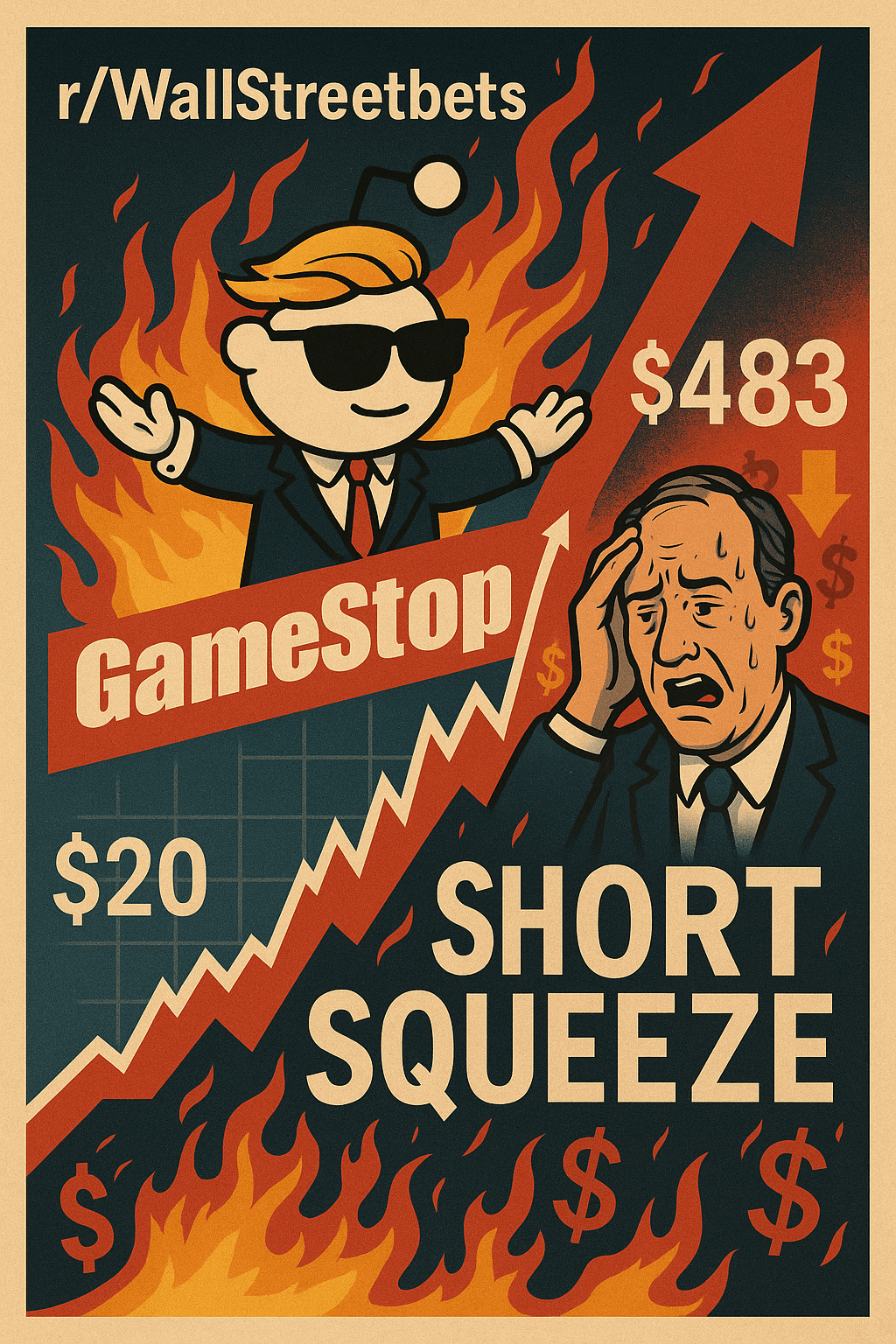
Generated by artificial intelligence.
The event is not merely a financial manipulation but is also regarded as a new example of digital collective action. The r/WallStreetBets subreddit exhibits characteristics of a digital subculture, generating its own internal identity through unique language, jargon (such as “stonks,” “diamond hands,” “tendies”), and visual humor.
Participants created their own forms of communication using memes, images, and satirical content, reinforcing group belonging and collective consciousness. In this sense, the GameStop event is seen as evidence of the potential for digital subcultures to generate social movements.
Group members operated under anonymous accounts, shifting the focus from individual identity to group identity. Within the framework of social identity theory, this demonstrates how individuals align their behavior with group norms to strengthen a sense of belonging.
Deindividuation and anonymity facilitated participation in behaviors that deviated from conventional norms but were accepted by the group. Users were motivated not only by financial gain but also by the goal of achieving a “victory over Wall Street investors.”
Visual communication tools played a decisive role in organizing the GameStop event. User-generated posters, drawings, and memes served a critical function in both spreading the movement and sustaining collective motivation. Unlike traditional media, these visuals created a bottom-up narrative and established a distinct digital memory for the movement.
Research indicates that these visual materials strengthened in-group solidarity while also serving as carriers of messages directed at the outside world. Through symbols and humor, the designs represented the values and objectives of group members.
The global media coverage of the event attracted the attention of political authorities and financial regulators. During the event, some brokerage firms, such as Robinhood, restricted users’ ability to purchase GameStop shares, sparking debates over whether this constituted “market manipulation” or “suppression of retail investor freedom.”
These interventions triggered a new wave of protest on digital platforms, as individuals expressed their distrust toward traditional financial institutions and market mechanisms.
The GameStop event has revealed both the potential and the limitations of digital activism. Some studies argue that such movements struggle to produce long-term change, while others claim the event was merely a short-term manipulation. Conversely, the event has also been viewed as a powerful example demonstrating that “collective digital resistance against large capital groups is possible.”
One of the most significant questions raised by the event is how sustainably individual users in the age of digital communication can influence traditional institutional structures. The GameStop case has become a central part of this debate.
The GameStop event demonstrated that digital communities, subcultural groups, and individual investors, when organized by shared motivation, can temporarily disrupt traditional power structures in financial markets. Supported by visual narratives, this movement constitutes a unique case in the fields of collective action, digital activism, and new media sociology.
The event is a contemporary phenomenon requiring interdisciplinary analysis not only from the perspective of financial history but also within the contexts of media studies, cultural studies, social movements, and social psychology.
Karakus, Onur Şahin. “Storytelling and Visual Designs in Collective Movements: The Case of GameStop 2021.” *OPUS– Journal of Society Research* 20, no. 53 (May 2023): 354–363. https://doi.org/10.26466/opusjsr.1252483
Tanrıverdi, Yağmur, and Bahar Muratoğlu Pehlivan. “GameStop Olayı: Alt Kültür ve Sosyal Kimlik Çerçevesinde Bir İnceleme.” *İstanbul Ticaret Üniversitesi Sosyal Bilimler Dergisi* 23, no. 51 (December 2024): 2281–2318. https://doi.org/10.46928/iticusbe.1558931

Background
Development of the Event
Digital Collective Action and Subcultural Dynamics
Social Identity, Anonymity, and Changing Forms of Participation
Visual Design and Collective Narrative
Media, Political Debates, and Interventions
Critical Debates