


This article was automatically translated from the original Turkish version.
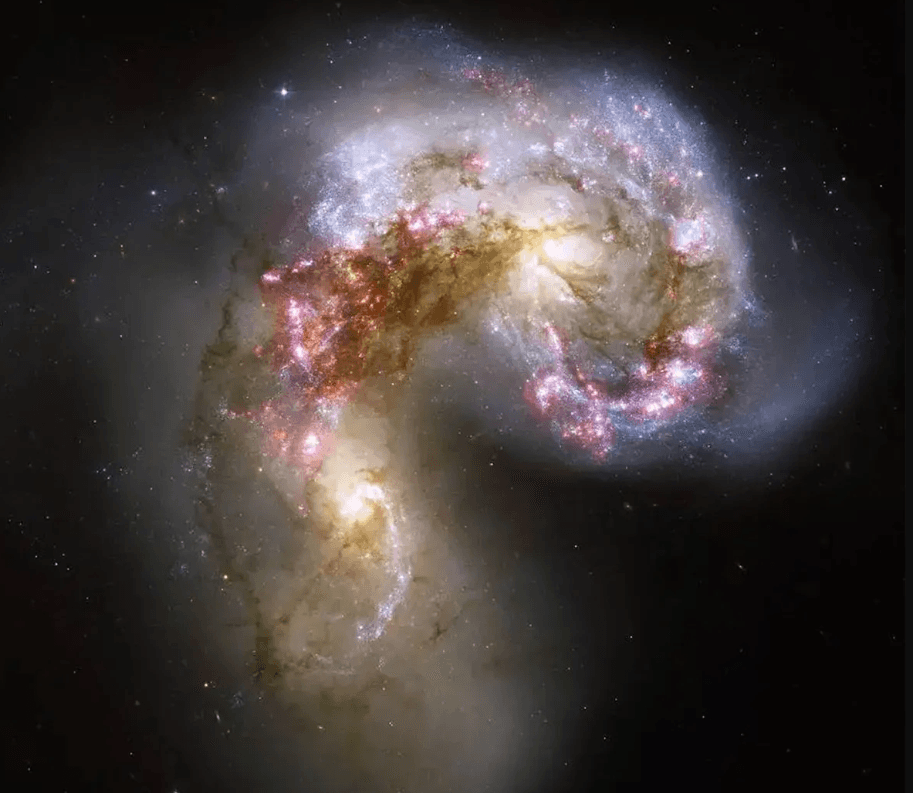
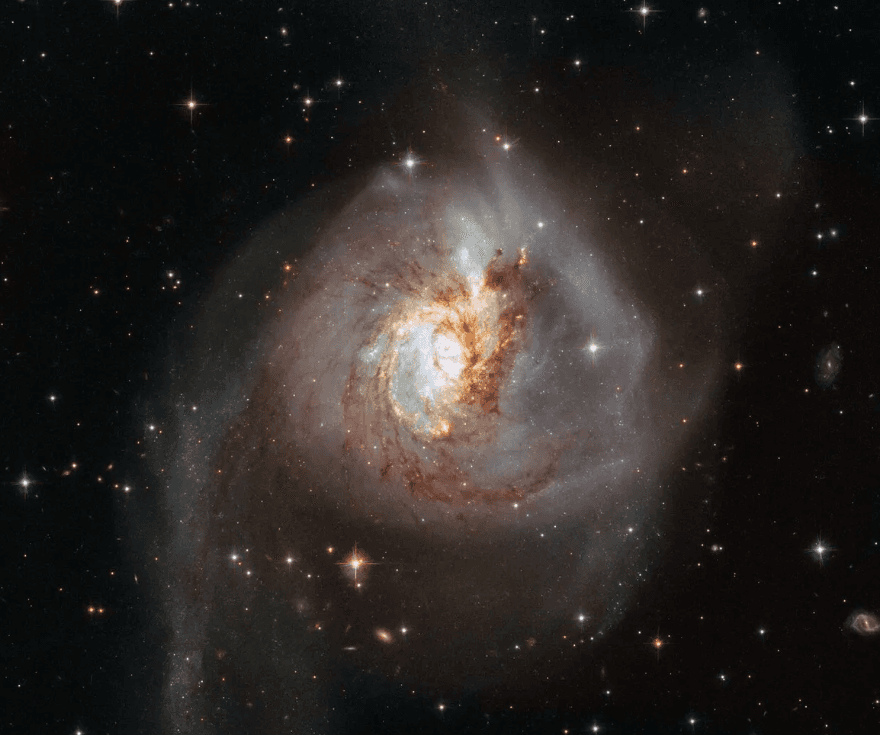
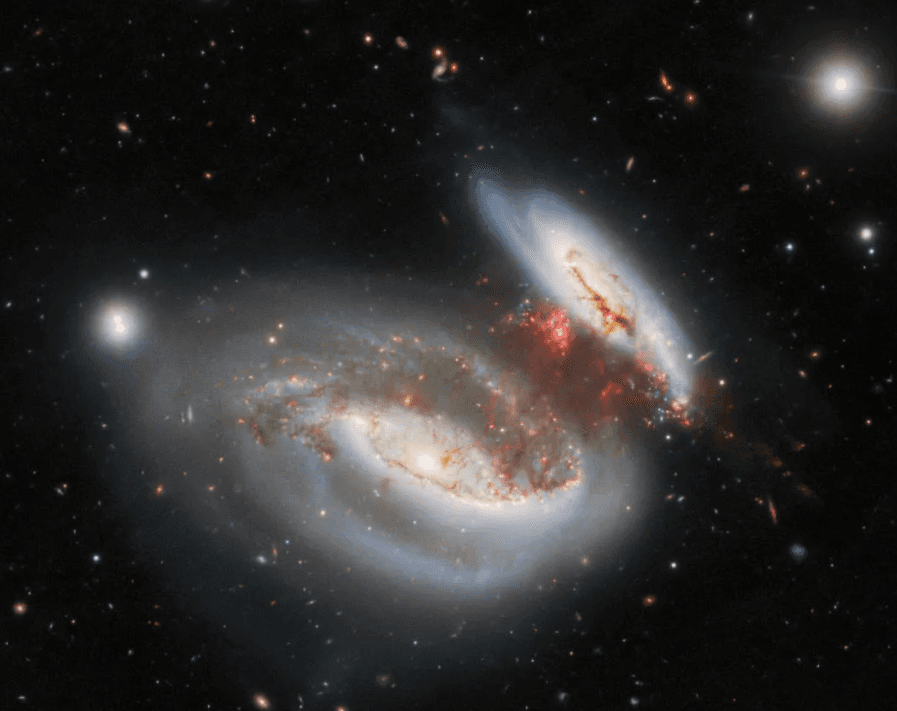
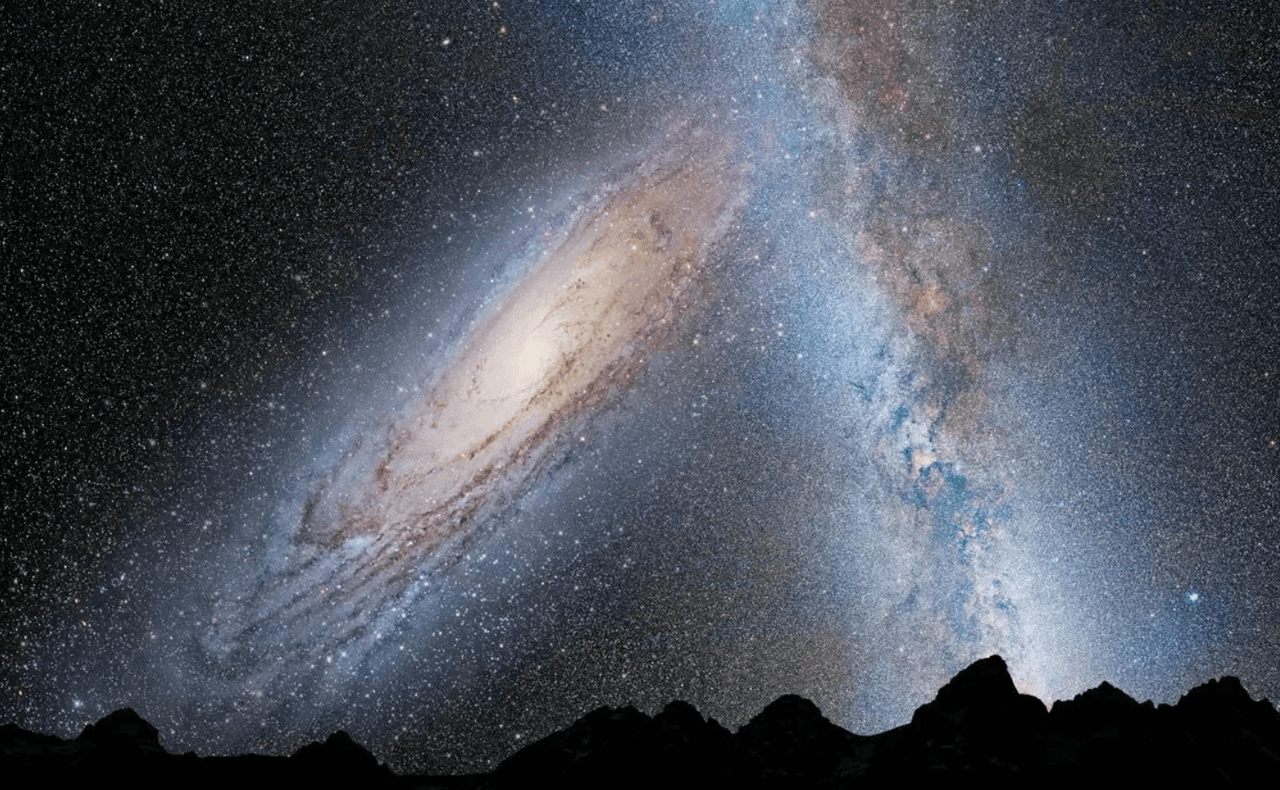
Galaxy mergers can occur when two or more galaxies collide. They represent the most violent type of galaxy interaction. Gravitational interactions between galaxies and friction between their gas and dust have profound effects on the involved galaxies. However, the precise outcomes of such mergers depend on a wide range of parameters including collision angles, velocities, and relative size/composition etc, and remain a highly active area of research today.
Galaxy mergers are important because the merger rate is a fundamental measure of galaxy evolution. They also provide astronomers with clues about how galaxies grew into their current forms over long time scales.
During a merger, stars and dark matter in each galaxy are affected by the approaching galaxy. As the merger approaches its final stages, the gravitational potential changes so rapidly that stellar orbits are significantly altered and lose all memory of their previous paths. This process is called “violent relaxation.” For example, when two disk galaxies collide, stars that originally orbited in two distinct planes begin to move in a more chaotic fashion. During the merger, this ordered motion is converted into random energy and thermalized. The resulting galaxy becomes dominated by stars moving in complex, randomly oriented orbits, as observed in elliptical galaxies.
Mergers are also sites of extreme star formation. During a major merger, the star formation rate (SFR) can reach thousands of solar masses per year, depending on the gas content and redshift of each galaxy. Typical merger SFRs are less than 100 new solar masses per year. This is vastly higher than the Milky Way Galaxy, which produces only a few new stars annually (approximately two). Although stars in merging galaxies rarely collide directly, giant molecular clouds rapidly fall toward the galactic center, where they collide with other molecular clouds. These collisions trigger the clouds to collapse and form new stars. However, this process was more prominent during mergers that formed most elliptical galaxies seen today, which likely occurred 1–10 billion years ago when galaxies contained far more gas and molecular clouds. Additionally, at distances from the galactic center, gas clouds colliding with each other generate shocks that promote new star formation. As a result of all this activity, galaxies that have undergone a merger tend to be left with very little gas for future star formation. Consequently, if a galaxy participates in a major merger and several billion years pass, very few young stars will remain in the galaxy.
This is precisely what is observed in elliptical galaxies today: very little molecular gas and very few young stars. It is believed that elliptical galaxies are the end products of major mergers that consumed most of their gas and therefore shut down further star formation after the merger.
class=\
class=\
class=\
Galaxy mergers are classified into different categories based on characteristics such as the number of merging galaxies, their relative sizes, and their gas content.
Mergers can be categorized by the number of galaxies involved:
Mergers can be classified based on how much the largest galaxy involved changes in size or shape during the merger.
Mergers can be categorized based on the degree of interaction between the gas within and around the merging galaxies:
class=\
Baird, C. S. (2024). *Does everything get smashed to bits when to galaxies collide?* Accessed January 28, 2025.
Center for Astrophysics. "Galaxies - Merging and Interacting." Accessed January 28, 2025.
NASA SCIENCE. (2023). *Galaxy Collision Creates ‘Space Triangle’ in New Hubble Image.* Accessed January 28, 2025.
Stuart, C. (2024). *Galaxy collisions are chaotic but crucial. Without them, humanity might not exist.* Accessed January 28, 2025.
Toprakçı, K. C. Evren genişliyorsa, galaksiler nasıl birleşiyor? Accessed January 28, 2025.https://astrapera.com/evren-genisliyorsa-galaksiler-nasil-birlesiyor/

Galaxy Merger Categories
1- By Number
2- By Size
3- By Gas Richness