


This article was automatically translated from the original Turkish version.
+1 More
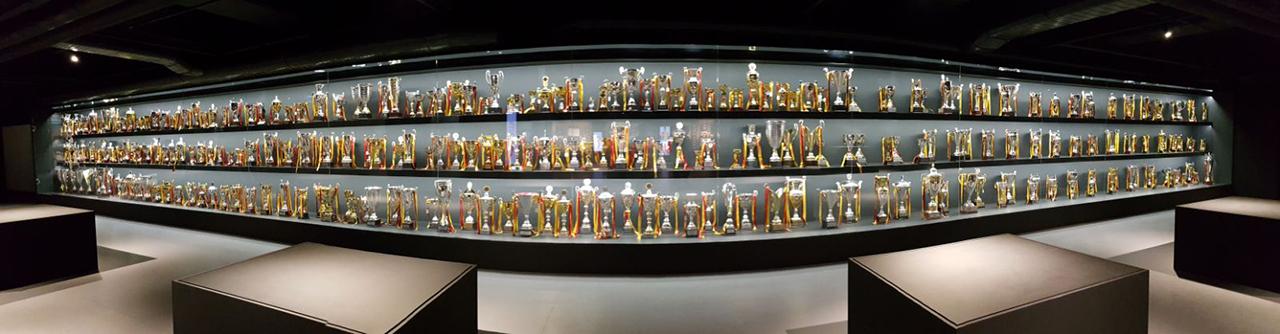
Galatasaray Museum
Foundation Date | 1 October 1905 | ||||||||
|---|---|---|---|---|---|---|---|---|---|
Founder | Ali Sami Yen and friends | ||||||||
Place of Foundation | Galatasaray High School, Istanbul | ||||||||
Colors | Yellow-Red | ||||||||
First Championship | 1908-1909 Istanbul Sunday League | ||||||||
Emblem | Gayın-Sin (1923, design by Ahmet Ayetullah) | ||||||||
Stadium | Ali Sami Yen Stadium (1964-2011) | ||||||||
Galatasaray Spor Kulübü is a sports club founded in 1905 in Istanbul by students of Mekteb-i Sultani (Galatasaray High School). Established under the leadership of Ali Sami Yen, the club has been active in sports including football, basketball, volleyball, swimming, rowing and athletics. Born from Galatasaray High School, a major educational institution during the Ottoman modernization process, the club holds a foundational place in Turkish sports history. Known for its yellow and red colors and the nickname “Cimbom,” Galatasaray became the first Turkish team to win a European trophy when it won the UEFA Cup in 2000.
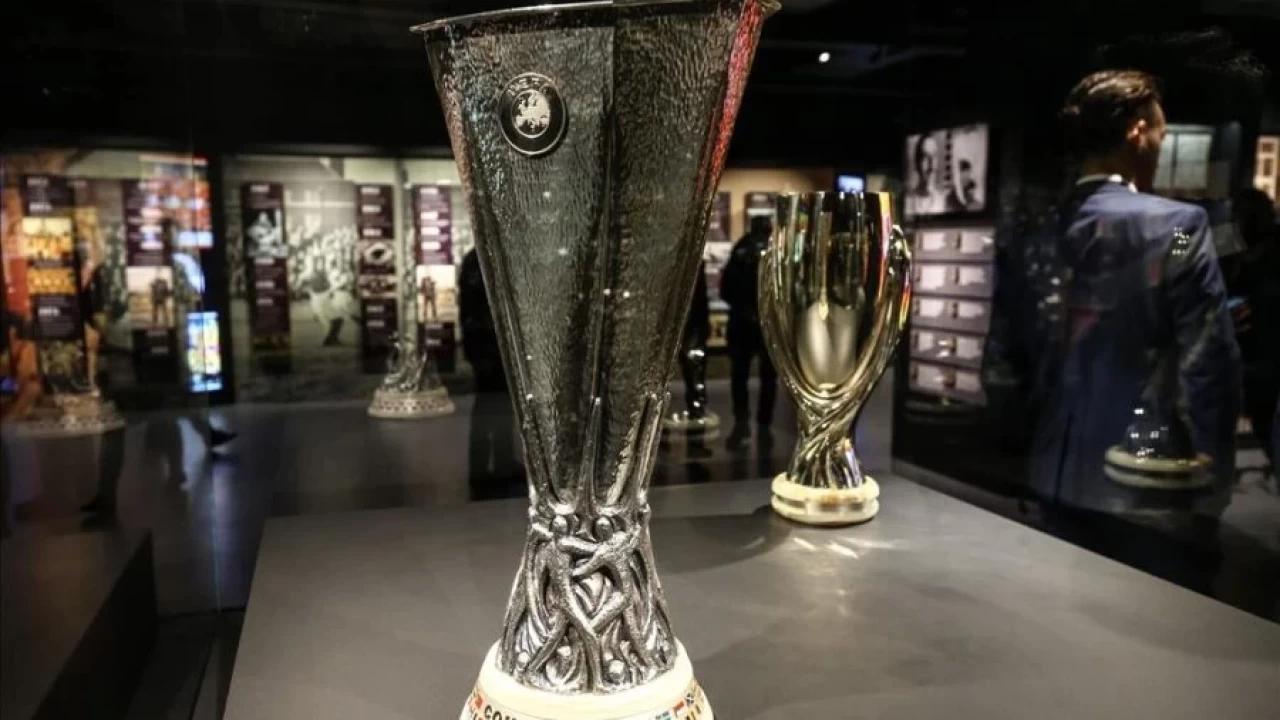
Galatasaray’s UEFA Cup and Super Cup (HaberYazar)
The origins of Galatasaray Spor Kulübü trace back to Galatasaray High School, established in 1481 by Sultan Bayezid II as the Galata Palace Imperial School with the aim of training state officials. According to Evliya Çelebi, the school’s founding was prompted by the request of a gardener named Gül Baba, who inspired the sultan to build a school and a hospital. Reorganized in 1868 under Sultan Abdülaziz as Mekteb-i Sultani, the school became a modern institution offering instruction in both Turkish and French. During this period, physical education was integrated into the curriculum, laying the foundations of modern sports in Turkey.
In 1868, gymnastics instructor Monsieur Curel introduced physical education classes and organized the first İdman Bayramı (Sports Festival) in Kağıthane in 1870. The tradition of serving “kuzulu pilav” (lamb rice) to medal-winning athletes began at this event. Following Curel, instructors such as M. Moiroux, Signor Martinetti and Stangali introduced swimming, rowing and athletics. Swimming and rowing became widespread in 1873, wrestling in 1887, cycling in 1898 and football in 1899. Figures such as Faik Üstünidman, Binbaşı Mazhar Kazancı, Abdurrahman and Ahmet Robenson promoted sports like scouting, tennis and hockey among students. From 1868 onward, Galatasaray High School pioneered gymnastics, athletics, swimming, rowing, boxing, tennis, volleyball and basketball in Turkey.
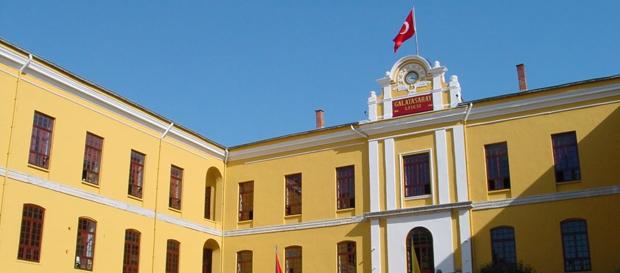
Galatasaray High School (galatasaray.org)
Galatasaray Spor Kulübü was founded on 1 October 1905 by fifth-grade student Ali Sami Yen and his classmates from Galatasaray High School. This decision, made during a literature class taught by Mehmet Ata Bey, marked a turning point in Turkish sports. Ali Sami Yen defined the club’s founding purpose as “playing as a unified team like the English, having a distinct color and name, and defeating non-Turkish teams.” At the first meeting, Asım Tevfik Sonumut was elected treasurer, Refik Cevdet Kalpakçıoğlu vice-president, and Ali Sami Yen president. The club’s initial colors were red and white, but due to political sensitivities of the era, they were changed to yellow and red.
The club’s name was inspired by spectators’ chant of “Galata Sarayı efendileri” (Lords of Galata Palace) during its first match in 1905 against Faure School in Kadıköy, which Galatasaray won 2–0. At the time, there was no law governing associations in the Ottoman Empire, so the club could not be officially registered. Following the enactment of the Associations Law in 1912, the club was officially registered on 14 August 1913 at the Beyoğlu Mutasarrıflığı by Ali Sami Yen (president), Mehmet Rıza Kara (vice-president) and Refik Cevdet Kalpakçıoğlu (secretary). The original founding list included thirteen members; by 1913, it was updated to eight: Ali Sami Yen, Asım Tevfik Sonumut, Emin Bülend Serdaroğlu, Celal İbrahim, Bekir Sıtkı Bircan, Reşat Şirvanizade, Refik Cevdet Kalpakçıoğlu and Abidin Daver.

The Origin of the Galatasaray Logo (galatasaray.org)
Galatasaray’s original colors were red and white, inspired by the Turkish nationalism movement. However, due to political sensitivities under Sultan II. Abdülhamit, yellow and black were briefly considered before yellow and red were ultimately adopted. Ali Sami Yen described the cherry-red and orange-yellow fabrics he found at Şişman Yanko’s shop in Bahçekapı as embodying “the beauty of the saka bird’s plumage” and “the glitter of fire.” These fabrics were sewn into the first uniforms by Ali Sami Yen’s sister, Samiye Erer. The yellow and red colors were first worn in a match against the British ship Barhau on 6 December 1908 and helped the club win its first Istanbul Sunday League title in the 1908–1909 season.
The club’s first emblem, designed in the 1910s by Şevki Ege, featured an eagle holding a ball in its beak. After this design was not adopted, the “Gayın-Sin” emblem, designed by Ahmet Ayetullah in 1923, was accepted. Ayetullah created this emblem by aesthetically combining the letters “G” and “S” from the Ottoman alphabet, originally drawing it for the Kara Kedi magazine. At the 1923 congress, upon the proposal of Şinasi Reşit and Dr. Namık Canko, this emblem was officially adopted and from 1925 onward was used on student envelope seals, caps and athletic uniforms.
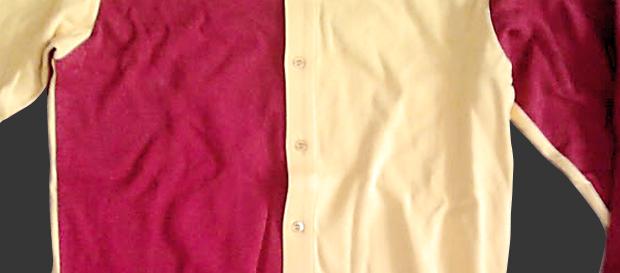
The Formation of the Colors (galatasaray.org)
Galatasaray established early dominance in Turkish football by winning the Istanbul Sunday League titles in the 1908–1909, 1909–1910 and 1910–1911 seasons. However, during the reign of II. Abdülhamit, sporting activities were under strict surveillance. Principal Abdurrahman Şeref Bey banned football, citing incidents such as broken windows, and spies monitored students. Nevertheless, Ali Sami Yen and his companions continued playing football secretly on fields. The appointment of Tevfik Fikret as principal in 1908 supported the club’s development; rather than banning football, Fikret encouraged club organization and contributed to the club as its “hami president.”
During the Balkan Wars and World War I, Galatasaray suffered significant losses. Club member and footballer Hasnun Galip was martyred in Çanakkale in 1915; the street where the club’s building in Beyoğlu stood was named after him. Celal İbrahim, Ahmet Refik, Halid Fuat and other students also lost their lives in the wars. During this period, the club struggled to maintain sporting activities but strengthened its institutional structure by holding its first congress in 1919.
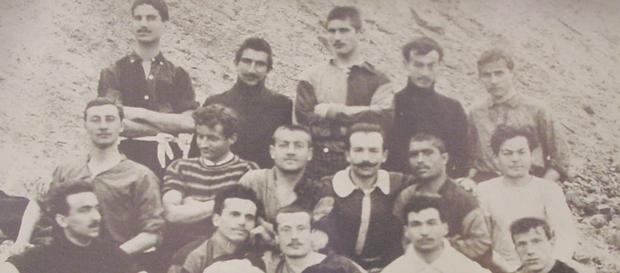
Team Appearance from Early Years (galatasaray.org)
Until the 1930s, Galatasaray lacked a permanent stadium and played matches at Taksim Stadium and other venues. In 1933, president Ali Haydar Barşal allocated land in Mecidiyeköy for a stadium. In 1940, during the tenure of Tevfik Ali Çınar, the land was leased symbolically for 30 years. Construction of a modest stadium began in 1943 under Osman Dardağan. Opened in 1945 under Muslihittin Peykoğlu, the stadium saw limited use due to transportation difficulties and strong winds. In 1961, during Refik Selimoğlu’s presidency, an agreement was signed with the General Directorate of Physical Education, transferring the stadium’s usage rights to Galatasaray. The Ali Sami Yen Stadium was officially inaugurated on 20 December 1964. The opening ceremony resulted in a crowd crush that caused one death and 80 injuries.
The stadium was first illuminated in 1965, received artificial turf in 1981, and transitioned to a seated system in 1993, reaching a capacity of 22,000 spectators. A modern stadium project was proposed in 1997 but was never realized due to financial constraints. After the 1999 Marmara Earthquake, the Eski Açık stand was renovated. The stadium hosted its final match on 11 January 2011 before being replaced by the Ali Sami Yen Sports Complex in Seyrantepe.
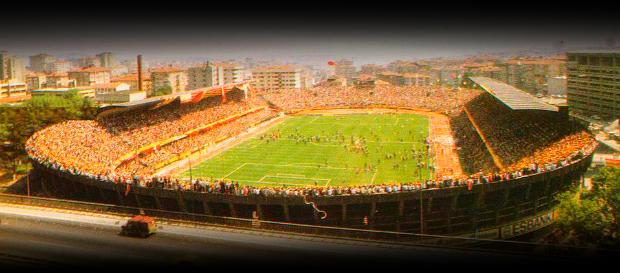
The Old Ali Sami Yen Stadium (galatasaray.org)
Galatasaray High School was visited by Mustafa Kemal Atatürk on 2 December 1930, 28 January 1932 and 1 July 1933. During his 1930 visit, Atatürk signed the library’s commemorative register and discussed the school’s condition with the principal. In 1932, he attended a reception in the Tevfik Fikret Hall. In 1933, he participated in the History, Geography and Homeland Studies baccalaureate examinations, posing questions to students. These visits underscored Galatasaray’s role in secularism and modern education. According to Metin Toker, no other high school received such attention from Atatürk.
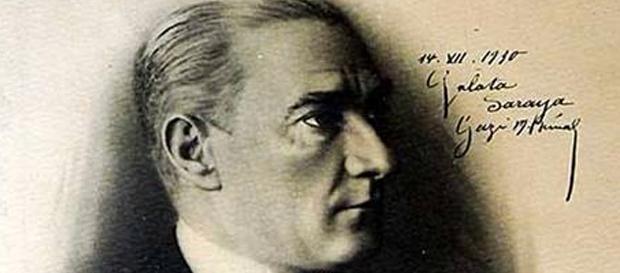
Atatürk’s Letter to Galatasaray (galatasaray.org)
Galatasaray Spor Kulübü has operated since 1905 under the presidency of Ali Sami Yen. In 1919, it held its first congress and democratized its governance. The club was officially registered after the Associations Law of 1909 and drafted its first formal bylaws in 1925. The Galatasaraylılar Derneği was founded in 1908 by Abdurrahman Şeref Efendi under the name “Mekteb-i Sultani Talebe-i Kadimesi” and received official registration in 1909. Throughout its history, the club has been led by figures including Ali Sami Yen, Refik Cevdet Kalpakçıoğlu, Yusuf Ziya Öniş, Selahattin Beyazıt, Faruk Süren, Özhan Canaydın and Dursun Özbek.
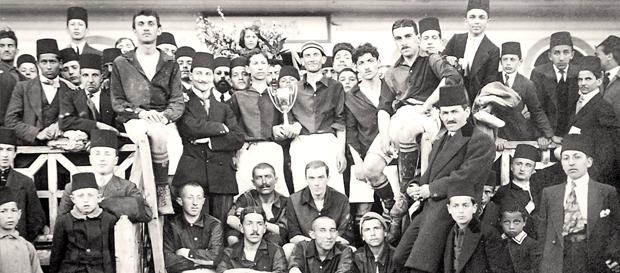
Galatasaray Club’s Trophy Image (galatasaray.org)
Students of Galatasaray High School volunteered for the frontlines during the Balkan Wars, the Italo-Turkish War and World War I, with many losing their lives. Figures such as Ahmet Muhtar Bey (1908, 31 March Incident), İdris Bey (1911, Tripolitania), Fuad Bey (1912, Balkan War), Celal İbrahim (1917, Iraq Front) and Hasnun Galip (1915, Çanakkale) represent the club’s legacy of patriotism. Memorials and panels within Galatasaray High School preserve the memory of these martyrs.
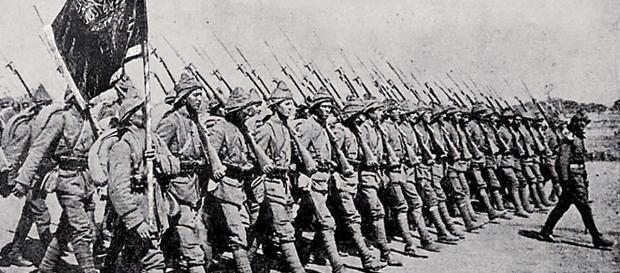
Representative Image Depicting Soldiers Sent by Galatasaray Spor Kulübü to the Wars (galatasaray.org)
Atabeyoğlu, Cem. “Ali Sami Yen Stadı.” *Galatasaray Spor Kulübü Resmi Web Sitesi*, 2025. Accessed May 14, 2025.https://www.galatasaray.org/s/ali-sami-yen-stadi/21
Atabeyoğlu, Cem. “Galatasaray Başkanları.” *Galatasaray Spor Kulübü Resmi Web Sitesi*, 2025. Accessed May 14, 2025.https://www.galatasaray.org/s/galatasaray-baskanlari/139
Atabeyoğlu, Cem. “Galatasaray Lisesi Tarihi.” *Galatasaray Spor Kulübü Resmi Web Sitesi*, 2025. Accessed May 14, 2025.https://www.galatasaray.org/s/galatasaray-lisesi-tarihi/22
Atabeyoğlu, Cem. “Galatasaray Logosunun Doğuşu.” *Galatasaray Spor Kulübü Resmi Web Sitesi*, 2025. Accessed May 14, 2025.https://www.galatasaray.org/s/galatasaray-logosunun-dogusu/17
Atabeyoğlu, Cem. “Galatasaray Nasıl Kuruldu?” *Galatasaray Spor Kulübü Resmi Web Sitesi*, 2025. Accessed May 14, 2025.https://www.galatasaray.org/s/galatasaray-nasil-kuruldu/13
Atabeyoğlu, Cem. “Galatasaray Spor Kulübü Tarihi.” *GS Divan*, 2025. Accessed May 14, 2025.https://gsdivan.com/galatasaray-spor-kulubu/
Atabeyoğlu, Cem. “Galatasaray Spor Kulübü.” *Galatasaraylılar Derneği*, 2025. Accessed May 14, 2025.https://galatasaraylilardernegi.org.tr/galatasaray-spor-kulubu
Atabeyoğlu, Cem. “Hakkımızda.” Galatasaraylılar Derneği, 2025. Accessed May 14, 2025.https://galatasaraylilardernegi.org.tr/hakkimizda
Atabeyoğlu, Cem. “Künye.” *Galatasaray Spor Kulübü Resmi Web Sitesi*, 2025. Accessed May 14, 2025.https://www.galatasaray.org/s/kunye/14
Atabeyoğlu, Cem. “Renklerin Öyküsü.” Galatasaray Spor Kulübü Resmi Web Sitesi, 2025. Accessed May 14, 2025.https://www.galatasaray.org/s/renklerin-oykusu/15
Atabeyoğlu, Cem. “İlk Yıllar.” *Galatasaray Spor Kulübü Resmi Web Sitesi*, 2025. Accessed May 14, 2025.https://www.galatasaray.org/s/ilk-yillar/16
Bayka, Mustafa. “Galatasaray Şehitleri.” *Galatasaray Dergisi*, no. 2, August 2002. Accessed May 14, 2025.https://www.galatasaray.org/s/galatasaray-sehitleri/18
Pınar, Metin, comp. “Atatürk ve Galatasaray.” *Galatasaray Spor Kulübü Resmi Web Sitesi*, 2025. Accessed May 14, 2025.https://www.galatasaray.org/s/ataturk-ve-galatasaray/20.
Galatasaray Museum
Foundation Date | 1 October 1905 | ||||||||
|---|---|---|---|---|---|---|---|---|---|
Founder | Ali Sami Yen and friends | ||||||||
Place of Foundation | Galatasaray High School, Istanbul | ||||||||
Colors | Yellow-Red | ||||||||
First Championship | 1908-1909 Istanbul Sunday League | ||||||||
Emblem | Gayın-Sin (1923, design by Ahmet Ayetullah) | ||||||||
Stadium | Ali Sami Yen Stadium (1964-2011) | ||||||||
No Discussion Added Yet
Start discussion for "Galatasaray Sports Club" article
Galatasaray High School and the Origins of Sports
Foundation and Early Years (1905–1913)
Formation of Colors and Emblem
Early Achievements and Challenges (1908–1923)
Ali Sami Yen Stadium and Infrastructure Development
Atatürk’s Visits to Galatasaray High School
Organizational Structure and Governance
Galatasaray’s Role in the Wars