+2 More

Real Name | Farrokh Bulsara | ||||||||
|---|---|---|---|---|---|---|---|---|---|
Mother | Jer Bulsara | ||||||||
Father | Bomi Bulsara | ||||||||
Date of Birth | 1946-09-05 | ||||||||
Profession | Singer Producer Lyricist | ||||||||
Associated Music Groups | Queen, Montserrat Caballé | ||||||||
Date of Death | 1991-11-24 | ||||||||
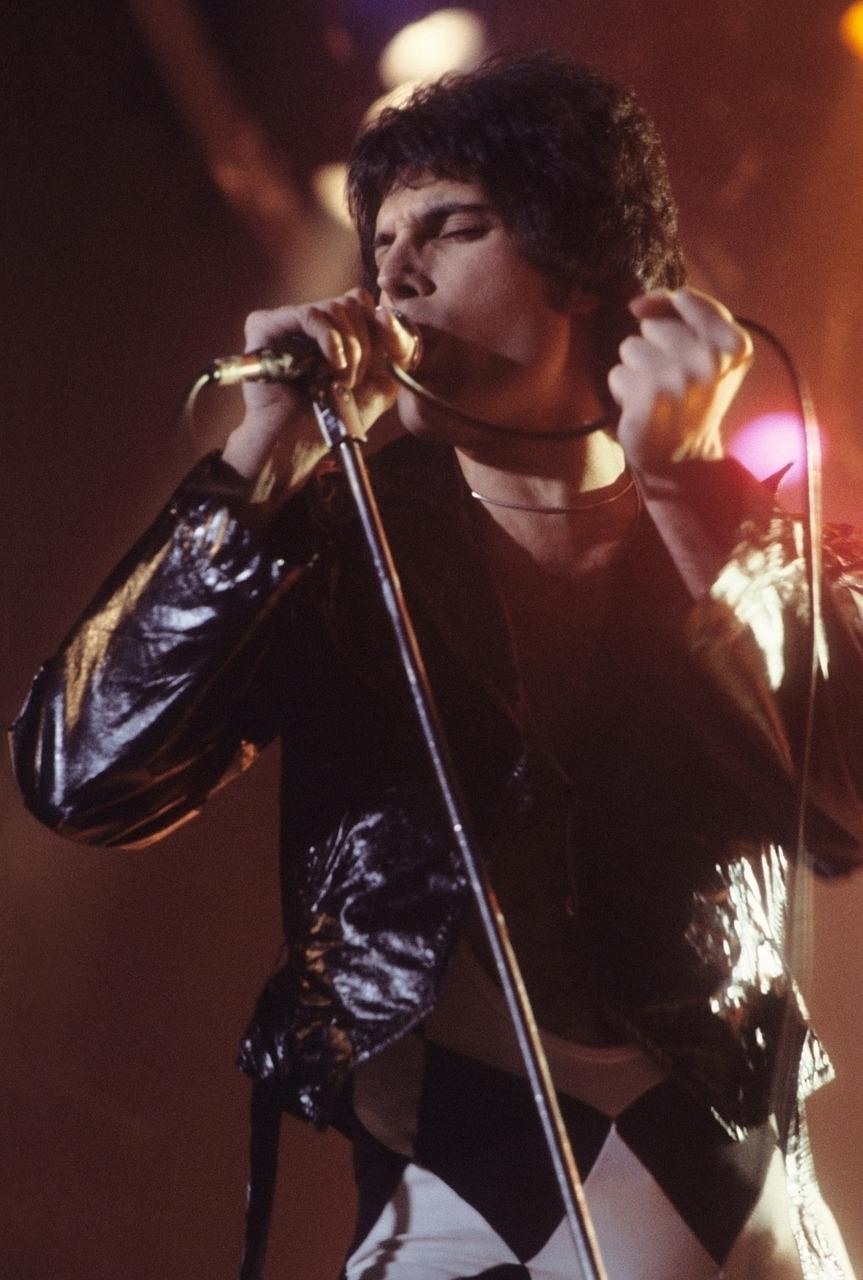
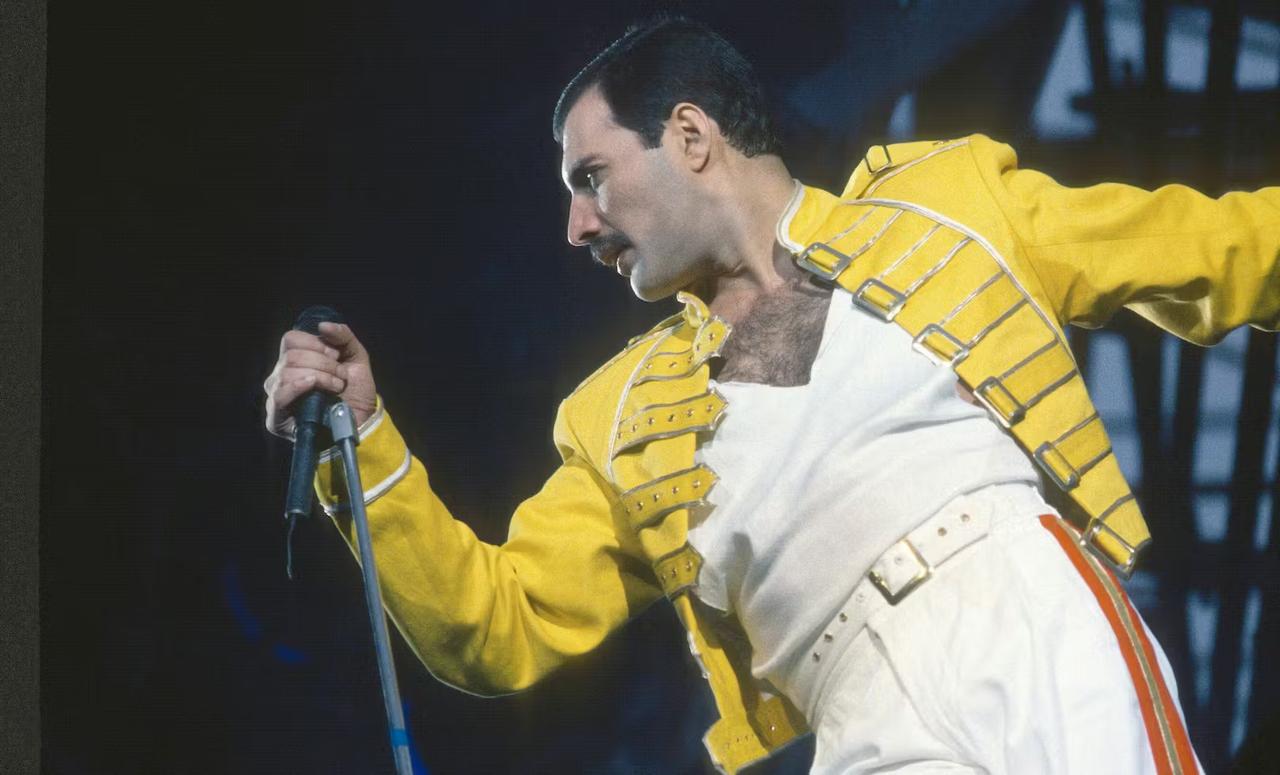
Freddie Mercury, born as Farrokh Bulsara, was a British musician and songwriter born on 5 September 1946 in Zanzibar. He spent much of his childhood in India, where he received his education at St. Peter’s School and first encountered music through piano lessons at an early age.
After relocating with his family to the Middlesex region of England in 1964, he pursued art education and continued his studies in graphic design.
In 1970, he helped form the band Queen alongside Brian May and Roger Taylor; the lineup was completed a year later with the addition of John Deacon.
Mercury’s songwriting activities displayed continuous diversity across rock, pop, opera and other genres from the 1970s to the 1990s, securing him a lasting place in the music industry through works such as “Bohemian Rhapsody”, “We Are the Champions”, “Crazy Little Thing Called Love” and “Don’t Stop Me Now”.
Mercury sustained his career from the 1970s until 1991 through both Queen’s recordings and performances and his occasional solo projects. Throughout his artistic life, he engaged in collaborations across diverse fields including rock, pop, opera and theatre, participating in multidisciplinary projects. He died in London on 24 November 1991.
Freddie Mercury’s birth name was Farrokh Bulsara, and he was born on 5 September 1946 in Zanzibar. His parents, Bomi and Jer Bulsara, lived in this region under British administration at the time. The family’s origins trace back to the Pars community.
Most of his childhood years were spent in India. Mercury was sent at an early age to St. Peter’s, a British boarding school, where he completed his general education and first encountered music. Beginning piano lessons at age seven marked a foundational stage in his musical development. During this period, he participated in school music activities and began to be called “Freddie” by those around him.
He later continued his education at another institution, St. Mary’s. These school years in India are recorded as a time when his interests in both music and art became more pronounced.
In 1964, due to political unrest in Zanzibar, the Bulsara family relocated to Middlesex in England. Mercury continued his education there, studying graphic design at Ealing College of Art. This period was one of intensified engagement with art and music circles and marked the time when he met musicians he would later collaborate with.
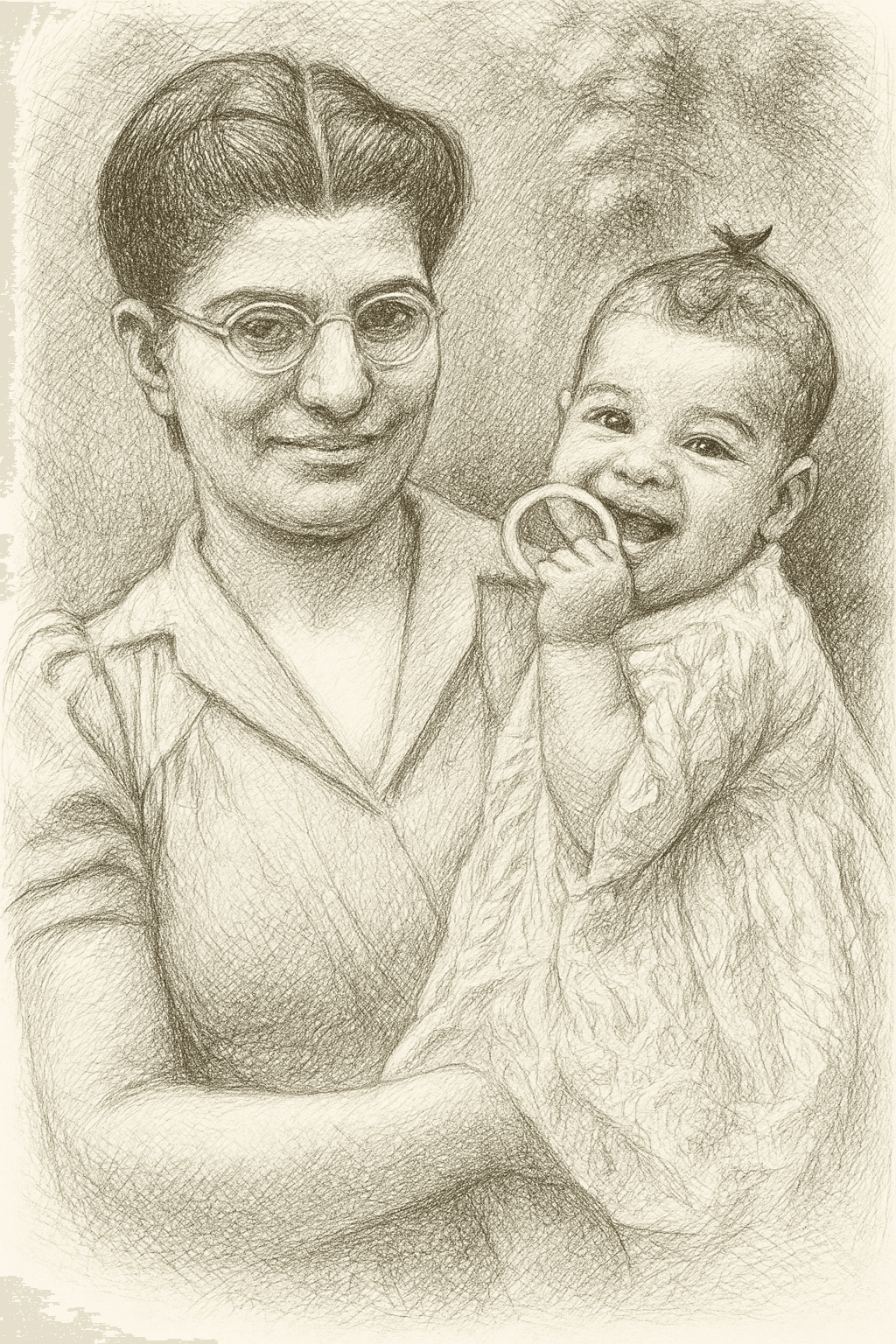
Freddie Mercury, in the arms of his mother Jer Bulsara (generated)
After relocating to England, Freddie Mercury pursued graphic design work at Ealing College of Art while also building closer ties with the music scene. This period marked his first years gaining stage experience through involvement in various musical groups.
In the mid-1960s, Mercury began working with various amateur and semi-professional bands. During this time he continued playing guitar and piano while experimenting with vocals. Sources note brief stints with bands such as Ibex, Wreckage and Sour Milk Sea; notably, Wreckage is recorded as the group in which his voice became more distinctly apparent. While with Wreckage, his stage energy and vocal approach began to attract attention from fellow musicians.
During his time with Wreckage, Mercury’s path crossed with Roger Taylor and Brian May through another student at Ealing College. These two musicians were founding members of a band called Smile. Mercury began attending Smile’s rehearsals and developed close relationships with its members, sharing his ideas about music and performance. During this period, his approach to performance and musical direction became increasingly defined.
Between 1969 and 1970, Mercury continued working with various groups while also supporting himself by running a clothing stall in London with Roger Taylor. This period allowed him to maintain his musical connections while holding temporary jobs to make a living.
By 1970, the departure of Smile’s lead singer Tim Staffell created a vacancy that enabled Mercury, with whom he had been in close contact, to join the group. Thus, the first step in Mercury’s journey toward joining Queen was taken.
1970 was a defining turning point in Freddie Mercury’s musical career. After Tim Staffell’s departure from Smile, Mercury joined forces with Brian May and Roger Taylor to restructure the band. This new formation soon adopted the name Queen. Mercury began using the stage name “Freddie Mercury” during this period and developed ideas regarding the group’s visual and aesthetic identity.
After Mercury’s arrival, Queen’s musical structure began to take shape, with vocal arrangements and stage presentation taking their first form. The band performed at various venues between 1970 and 1971 to develop their repertoire. During this time, they continued searching for a permanent fourth member; this search culminated in the addition of John Deacon on 1 March 1971. Thus, the lineup that would remain unchanged for many years was completed.
Throughout 1972, the band continued studio work and live performances, and after discussions with record labels such as EMI and Elektra, they began preparations for their debut album. These efforts laid the foundation for Queen’s official entry into the music industry.
In 1973, Queen released their self-titled debut album “Queen”, marking the beginning of their professional recording career. The album’s release increased the band’s visibility and established the starting point of the expansive international career that would follow.
The period from 1974 to 1976 was one in which Queen’s international recognition took shape and Freddie Mercury’s creative role within the group became more prominent.
Shortly after the release of their debut album in 1973, Queen completed work on their second album and began extensive tours, introducing their repertoire to international audiences. The band members’ songwriting contributions diversified, and both vocal arrangements and stage presentation became more systematic. This period laid the groundwork for Queen’s international breakthrough.
1975 was a defining milestone in Queen’s career. The song “Bohemian Rhapsody”, composed during this period, represented an innovative example within the band’s musical style, both structurally and in its production approach. With its operatic structure and segmented form, the piece broke from the popular music conventions of the time. Mercury, who managed both the lyrics and music of this work, saw it spend nine weeks at number one on the UK charts after its release.
Mercury avoided explaining the meaning of “Bohemian Rhapsody” in interviews, stating that he preferred to leave its interpretation to listeners. Nevertheless, both musicological studies and certain biographical analyses suggest the piece reflects personal transitions in Mercury’s life. Among these interpretations, the view that the song mirrors Mercury’s search for personal identity in the mid-1970s is particularly prominent.
Queen – Bohemian Rhapsody (Official Video Remastered). (Queen Official)
The commercial success of “Bohemian Rhapsody” made Queen more visible not only in the United Kingdom but also in regions such as Europe, Japan and the United States. Throughout 1976, the band undertook extensive tours that strengthened their position in the music industry, particularly through Mercury’s stage performances.
During this period, Queen’s stage design, use of lighting and multi-layered vocal arrangements became defining characteristics of their concerts. The band’s growing international presence laid the foundation for the “stadium rock” approach they would develop in subsequent years.
The period from 1977 to 1981 was one of expansion for Queen in both recording and live performance, with Freddie Mercury clearly shaping the band’s musical direction as a songwriter, lyricist and vocalist. During these years, Queen became a globally recognized act through international tours, large-scale concerts and numerous hit songs.
In the early part of this period, Queen diversified their repertoire with different musical approaches. Among Mercury’s most notable compositions was “We Are the Champions”, released in 1977 and now considered one of the band’s most iconic songs. Together with “We Will Rock You”, it was frequently performed as a pair and became a staple of Queen’s concert repertoire.
The 1978 album Jazz is regarded as one of the significant recordings of the era. Mercury’s contributions are clearly evident in both composition and vocal arrangements. The track “Don’t Stop Me Now”, written and performed by Mercury, stands out as one of the highlights of this period.
Queen - We Are The Champions (Official Video). (Queen Official)
In 1979, Mercury’s composition “Crazy Little Thing Called Love” reached number one on the charts in the United States. The song became one of the clearest indicators of Queen’s commercial success in the US. Its rock’n’roll style and Mercury’s vocal delivery added diversity to the band’s repertoire.
This year also marked a period of intensified touring activity for Queen. The band’s technical approach to live performance, including lighting and sound systems, began to take shape during this time, enabling them to reach wider audiences.
From the 1980s onward, Queen began performing in massive venues, becoming pioneers of the “stadium rock” performance style. During this period, the band played concerts in stadiums with capacities of up to 70,000 spectators. Mercury’s stage movements, vocal techniques and performance flow became central elements of these large-scale shows.
Queen’s 1981 South American tour holds a special place in the band’s history. The concert in São Paulo, Brazil, was attended by 231,000 people, one of the highest attendance figures for a concert at the time. This tour demonstrated Queen’s capacity to reach massive global audiences.
Queen - Save Me (Live at the Montreal Forum, 1981 Remastered). (Queen Official)
The period from 1982 to 1986 was one in which Freddie Mercury simultaneously pursued both his work with Queen and his solo musical projects. These years marked shifts in the band’s musical direction and the emergence of Mercury’s solo career.
In 1982, Queen released the album Hot Space, which featured a distinct approach toward funk and dance music. This aesthetic direction marked a departure from the band’s earlier hard rock-oriented recordings. Mercury’s vocal style and performance approach evolved to accommodate these more electronic and dance-based arrangements.
Although Hot Space achieved lower commercial success compared to previous Queen albums, it reflected Mercury’s inclination to explore genres beyond rock. This trend also signaled the beginning of his transition toward solo work.
The 1984 album The Works signaled a return to a rock-oriented musical direction for Queen. During this same period, Mercury also turned toward independent projects outside the band.
In 1985, Mercury released his first solo album, “Mr. Bad Guy”. The album features an electronic pop and dance music foundation. Tracks such as “I Was Born to Love You” and “Made in Heaven” appeared on this album and were later reworked by Queen.
13 July 1985 marked the Live Aid concert, a pivotal event for Queen and Mercury’s stage presence. This performance, broadcast live to a global audience from Wembley Stadium, significantly increased Queen’s international visibility in the mid-1980s. Mercury’s performance drew widespread media attention, and the band performed songs from their repertoire including “Bohemian Rhapsody”, “Radio Ga Ga”, “Hammer to Fall”, “Crazy Little Thing Called Love”, “We Will Rock You” and “We Are the Champions”.
In 1986, Queen released the album A Kind of Magic and embarked on a European tour. Mercury’s vocal performance played a prominent role in both the album’s production and its stage arrangements.
By the end of the year, Mercury refocused on projects outside the band and began preparations for the opera collaborations that would follow.
Queen - We Will Rock You (Live Aid 1985). (Live Aid)
In 1986, Mercury signed on for a major collaboration outside Queen, participating in the recording of the London musical Time with Dave Clark. This project reinforced his interest in theatre and large-scale vocal arrangements.
In 1987, Mercury pursued a long-desired project and began working with opera singer Montserrat Caballé. The recordings from this collaboration formed the basis of the 1988 album “Barcelona”. The title track, “Barcelona”, became the official theme for the 1992 Olympic Games in the city of Caballé’s birth.
This collaboration is recognized as an example of Mercury applying his vocal artistry beyond the realm of pop-rock.
After 1988, despite changes in his health, Mercury continued working with Queen. In the 1989 album The Miracle, he actively contributed to songwriting and vocals. The band stated that the album’s production followed a collective authorship principle.
In 1990, Mercury returned to the studio to work with Queen on the album Innuendo. Recording sessions were conducted in stages, with Mercury’s performances planned according to his health condition.
Freddie Mercury & Montserrat Caballé - Barcelona. (Freddie Mercury Solo)
By the late 1980s, media speculation about Mercury’s health had increased. Nevertheless, Mercury continued to avoid public disclosure about his illness and carried on with his work. He had been diagnosed with AIDS but kept this private, revealing it to no one outside his close circle.
On 23 November 1991, the first official statement regarding Mercury’s health was issued, in which the artist publicly announced he had AIDS. Approximately 24 hours later, on 24 November 1991, Mercury died in London.
Following Mercury’s death, the Freddie Mercury Tribute Concert was held at Wembley Stadium on 20 April 1992. The event was organized both to honor the artist and to support initiatives raising awareness about AIDS. Proceeds from the concert led to the creation of the Mercury Phoenix Trust charity.
In 2005, a reader poll by Blender magazine named Mercury “the greatest male vocalist of all time”. In 2008, Rolling Stone magazine ranked him at number 18 on its list of “The 100 Greatest Singers of All Time”.
Freddie Mercury’s life story has been revisited in various disciplines since his death, particularly forming a distinct subject of study in cinema and academic writing. The 2018 film Bohemian Rhapsody dramatized Mercury’s life, the formation of Queen and key turning points in the band’s history. The film centers on Mercury’s personal relationships, stage practices and identity struggles. It highlights specific elements of his biography, including his relationship with Mary Austin, his internal conflicts and group dynamics. Academic evaluations have used the film as a primary source for psychological analysis of Mercury, examining his personality traits, behavioral patterns and orientation through a psychoanalytic lens.
The film also revitalized the popularity of Mercury’s music. The surge in views of the “Bohemian Rhapsody” video after 2018 is regarded as a direct indicator of the film’s cultural impact. According to Universal Music Group, the song surpassed one billion views after the film’s release and became one of the most-watched music videos of the 20th century.
Bohemian Rhapsody | Official Trailer. (20th Century Studios)
20th Century Studios. "Bohemian Rhapsody | Official Trailer [HD] | 20th Century FOX." YouTube, 2:31. July 17, 2018. Accessed November 24, 2025.
AllMusic. "Freddie Mercury Discography." Accessed November 24, 2025.https://www.allmusic.com/artist/freddie-mercury-mn0000130028#discography.
BBC Türkçe. "Freddie Mercury'nin özel eşyaları açık artırmayla satışa çıkıyor." April 26, 2023. Accessed November 24, 2025.https://www.bbc.com/turkce/articles/c3gp3pdz25no
Fouché, Paul J.P., Dewald A. Louw, Pravani Naidoo, and Roelf van Niekerk. "Queen's Great Pretender: A Psychohistorical Sketch of Freddie Mercury." *The Journal of Psychohistory* 46, no. 1 (Summer 2018): 48-64. Accessed November 24, 2025.https://www.researchgate.net/profile/Paul-Fouche-6/publication/329034187_Queens_Great_Pretender_A_psychohistorical_sketch_of_Freddie_Mercury_ARTICLE_Journal_Summer_18_interior_FINAL
Freddie Mercury Solo. "Freddie Mercury & Montserrat Caballé - Barcelona (Original David Mallet Video 1987 Remastered)." YouTube, 4:28. November 23, 2012. Accessed November 24, 2025.https://www.youtube.com/watch?v=Y1fiOJDXA-E
FreddieMercury.com. "Biography." Accessed November 24, 2025.http://www.freddiemercury.com/en/biography.
Herbst, Christian T., Stellan Hertegard, Daniel Zangger-Borch, and Per-Åke Lindestad. "Freddie Mercury—acoustic analysis of speaking fundamental frequency, vibrato, and subharmonics." Logopedics Phoniatrics Vocology 42, no. 1 (2017): 29-38. Accessed November 24, 2025.https://d1wqtxts1xzle7.cloudfront.net/99310748/FreddieMercury_acoustic_analysis_of_speaking_fundamental_frequency_vibrato_and_subharmonics-libre.pdf?1677743546=&response-content-disposition=inline%3B+filename
Heute.at. "Dicke Hintern: Kinder-Plattform zensiert Queen-Song." August 22, 2023. Accessed November 24, 2025.https://www.heute.at/i/dicke-hintern-kinder-plattform-zensiert-queen-song-100287644/doc-1h8cld4qb0
IMDb. "Freddie Mercury." Accessed November 24, 2025.https://www.imdb.com/name/nm0006198.
JELL (Journal of English Language and Literature). "Article View 275 (Analysis of Queen's Song Lyrics)." STIBA-IEC Jakarta. Accessed November 24, 2025.https://journal.stibaiec-jakarta.ac.id/ojs/index.php/jell/article/view/275/233
Pixabay. "Freddie Mercury - Şarkıcı." Stock Photo. Accessed November 24, 2025.https://pixabay.com/tr/photos/freddie-mercury-şarkıcı-şovmen-71848
Q Magazine's 100 Greatest Singers of All Time. Collection. Accessed November 24, 2025.https://web.archive.org/web/20151016053606/http://www.amiannoying.com/(S(gnax3jzhy4aatl3qj33rrsy3))/collection.aspx?collection=534.
Queen Official. "Queen - Save Me (Live at the Montreal Forum, 1981 Remastered)." YouTube, 4:22. May 10, 2024. Accessed November 24, 2025.https://www.youtube.com/watch?v=nHlyCXWhOt8
Queen Official. "Queen - We Are The Champions (Official Video)." YouTube, 3:11. August 1, 2008. Accessed November 24, 2025.https://www.youtube.com/watch?v=04854XqcfCY
Queen Official. "Queen – Bohemian Rhapsody (Official Video Remastered)." YouTube, 6:00. August 1, 2008. Accessed November 24, 2025.https://www.youtube.com/watch?v=fJ9rUzIMcZQ
Queen. "Queen - We Will Rock You (Live Aid 1985)." YouTube, 1:18. May 23, 2019. Accessed November 24, 2025.https://www.youtube.com/watch?v=XvKkIttJLcc
QueenOnline. "Freddie Mercury." Accessed November 24, 2025.https://www.queenonline.com/freddie_mercury.
Sumarwan, Antonius. "Menafsir 'Bohemian Rhapsody': Freddie Mercury." Basis 68, no. 1 (2019): 42-49. Accessed November 24, 2025.https://d1wqtxts1xzle7.cloudfront.net/65067376/Sumarwan_2019_Menafsir_Bohemian_Rhapsody_Freddie_Mercury-libre.pdf?1606769583=&response-content-disposition=inline%3B+filename%3DMenafsir_Bohemian_Rhapsody_Freddie_Mercu.pdf&Expires=1763940986&Signature

Real Name | Farrokh Bulsara | ||||||||
|---|---|---|---|---|---|---|---|---|---|
Mother | Jer Bulsara | ||||||||
Father | Bomi Bulsara | ||||||||
Date of Birth | 1946-09-05 | ||||||||
Profession | Singer Producer Lyricist | ||||||||
Associated Music Groups | Queen, Montserrat Caballé | ||||||||
Date of Death | 1991-11-24 | ||||||||
Early Life and Education
Musical Career and Artistic Identity
Pre-Queen Musical Experiences and Early Bands
Formation of Queen and Early Years (1970–1973)
Bohemian Rhapsody and International Rise (1974–1976)
1974: Albums and Expansion of Musical Structure
1975: Production and Release of “Bohemian Rhapsody”
1976: International Recognition and Tours
Global Growth and Expansion of Stage Performances
1977–1978: New Albums and Mercury’s Compositions
1979: Success in the US and “Crazy Little Thing Called Love”
1980 and 1981: Transition to Stadium Rock and South American Tours
Beginning of Solo Work, Hot Space Era and Live Aid
1982: The Hot Space Album and Musical Shift
1984 and 1985: The The Works Era and Solo Album Mr. Bad Guy
1985: Live Aid Performance
1986: A Kind of Magic and Live Activities
Opera Projects and the Beginning of the Barcelona Project
Mercury’s Final Years, Death and Legacy
Freddie Mercury’s Representation in Film