This article was automatically translated from the original Turkish version.
+1 More
Author(s) | Ahmet Altan | ||||||||
|---|---|---|---|---|---|---|---|---|---|
Number of Pages | 224 | ||||||||
Publisher(s) | Everest Yayınları | ||||||||
Type(s) | Novel | ||||||||
Publication Date | 2013 | ||||||||
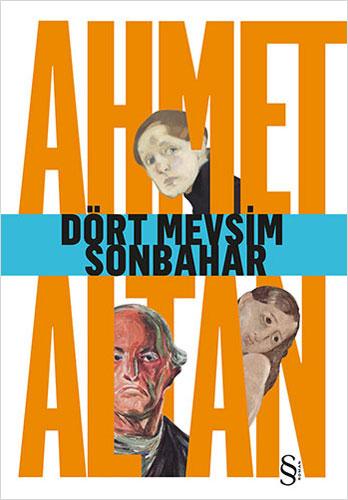
Four Seasons: Autumn is a psychologically rich novel by Ahmet Altan that explores the individual’s inner solitude, the contradictory nature of love, familial conflicts, and the complex relationship between art and life. The novel centers on the love triangles that emerge between a writer and the women in his life, his father, and his friend, as well as the spiritual repercussions of these relationships. It also interrogates the writer’s struggle to understand his inner world, his passion for writing, and how this passion affects his connections with those around him.
The story begins at a cocktail party held in a garden, where the writer meets a young woman named Zeynep. A closeness develops between them, and their relationship deepens over time. However, the writer is married to İnci Hanım, with whom he has a child. This situation creates both emotional and moral dilemmas in his life. While Zeynep harbors profound love for the writer, he does not love her—he loves only writing. This absence of reciprocal affection becomes the first central conflict of the novel.
The writer’s close friend Mehmet notices his emotional detachment and argues that true art must be nourished by genuine love, and that an artist requires heartfelt emotion. This forms one of the novel’s thematic layers, questioning the relationship between art and life.
The relationship between Zeynep and the writer lasts a year. Eventually, the writer distances himself from Zeynep, and their relationship ends. Though saddened by the separation, Zeynep finds a new love—surprisingly, it is the writer’s father, Halit. Halit is an authoritarian, selfish, cold, and powerful man. Zeynep’s relationship with Halit creates not only a biological but also a spiritual conflict between father and son. This conflict points beyond classic jealousy to a collision between generational values and definitions of love.
Zeynep approaches Halit seeking paternal tenderness, yet Halit exploits her youth. Yet reducing this relationship solely to sexuality is misleading; for Zeynep, love is experienced as spiritual fulfillment. When the writer learns of their relationship, he responds not with jealousy or anger but with a strange understanding and acceptance.
One day, Zeynep shows the writer a private photograph taken with Halit. The photograph becomes a symbol of their relationship, and the writer hides it in a place where no one will find it—the bathroom. As the writer transforms love, passion, betrayal, and remorse into his novel, those around him gradually disappear from life. Halit dies in a traffic accident, Zeynep succumbs to tetanus, and İnci Hanım commits suicide. By the end of the novel, only the writer remains.
The Writer: The protagonist and narrator of the novel. He is indecisive, emotionally distant, and devoted solely to writing. He observes his relationship with Zeynep as if it were material for his novel.
Zeynep: A woman who constantly seeks love and needs emotional connection. She falls in love first with the writer, then with his father Halit. Her longing is romantic, not merely sexual. She is conscientious and confesses her relationships openly.
Halit: The writer’s father. A strong, selfish, and harsh-tempered man. He maintains his relationship with Zeynep by exploiting her youth. He has a distant relationship with his son.
Mehmet: The writer’s friend. He recognizes the writer’s emotional emptiness and tries to guide him toward love.
İnci Hanım: The writer’s wife. She is not directly involved in the events but serves as a symbolic character. She commits suicide at the end of the novel.
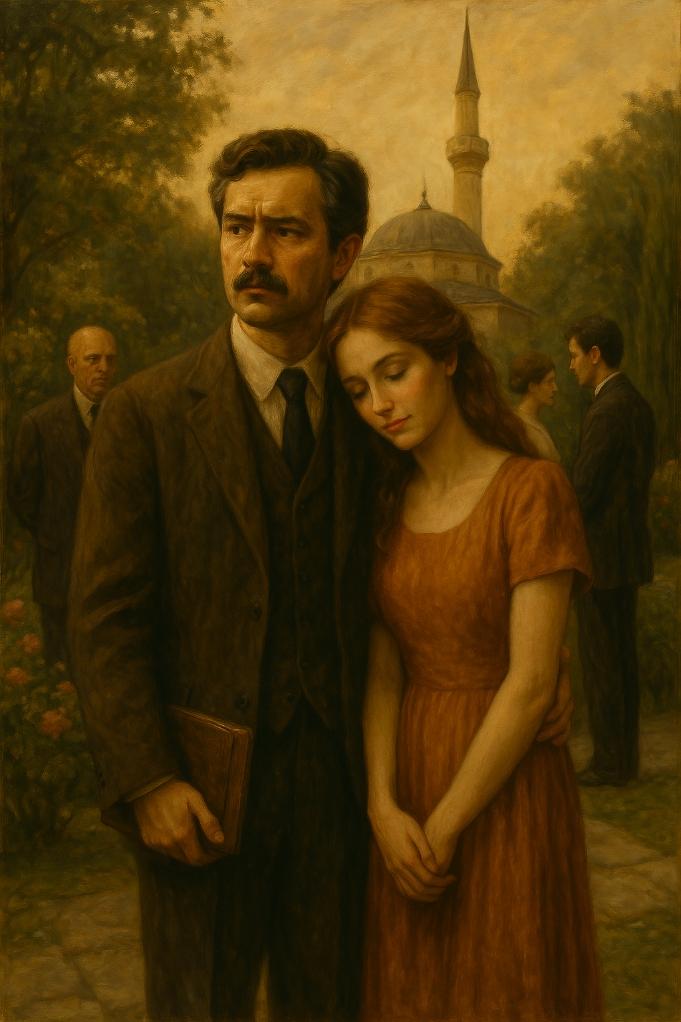
Zeynep and the Writer (Represented by Artificial Intelligence)
The Variability and Contradictory Nature of Love: In the novel, love is not presented as an ideal emotion but as a search individuals undertake to fill their own voids and dissatisfaction. The writer’s relationship with Zeynep is less an emotional bond than a mental and physical experience. Zeynep’s love for the writer, then for his father Halit, reveals that love is not a consistent, fixed, or morally bounded phenomenon. In the novel, love is framed as an attempt to seek meaning, fill emptiness, and establish belonging.
Familial Relationships and Generational Conflict: There is no loving relationship between the writer and his father Halit. Halit embodies an authoritarian and emotionally barren father figure. Zeynep’s involvement with both the writer and Halit deepens the breakdown of family structure and highlights generational value differences. This dynamic questions the traditional father-son bond and signals the collapse of familial ties.
Art versus Life: The writer sees love and human relationships as sources of inspiration. He experiences life and people only to write about them. This reveals how emotions and relationships are instrumentalized for the sake of art. Art becomes a refuge that replaces life. The writer’s emotional detachment is proof that no feeling can surpass the compulsion to write.
Conscience and Confession: The characters’ emotional deviations and moral transgressions are conveyed through confessions and inner reckonings. Zeynep’s confession to the writer about her relationship with Halit serves both as an attempt to achieve inner peace and as a moral focal point of the novel. In this context, the novel exposes the tension between individual truths and societal values.
Loneliness and Existential Emptiness: All characters confront loneliness at some point. Although love relationships appear as “refuges,” they fail to provide true fulfillment. The writer’s solitude at the end of the novel reveals that this loneliness is ontological. Throughout the novel, characters strive to complete themselves, yet each attempt results in a greater void.
Death and Purification: The deaths of Zeynep from tetanus, Halit in an accident, and İnci Hanım by suicide suggest that death functions as a form of reckoning and purification. The fact that only the writer survives and transforms these experiences into a novel confronts the immortality of art with the finitude of individual experience.
Altan, Ahmet. *Dört Mevsim Sonbahar.* Everest Yayınları, 2013.

Author(s) | Ahmet Altan | ||||||||
|---|---|---|---|---|---|---|---|---|---|
Number of Pages | 224 | ||||||||
Publisher(s) | Everest Yayınları | ||||||||
Type(s) | Novel | ||||||||
Publication Date | 2013 | ||||||||
No Discussion Added Yet
Start discussion for "Four Seasons Autumn (Book)" article
Plot
Characters
Themes