


This article was automatically translated from the original Turkish version.

Forrest Gump
Director | Robert Zemeckis | ||||||||
|---|---|---|---|---|---|---|---|---|---|
Producer | Wendy Finerman Charles Newirth Steve Starkey Steve Tisch | ||||||||
Screenwriter | Winston Groom Eric Roth | ||||||||
Actor | Sally Field Mykelti Williamson Gary Sinise Robin Wright Penn Tom Hanks | ||||||||
Studio | Paramount Pictures | ||||||||
Release Date | 1994-07-06 | ||||||||
Duration | 151 minutes | ||||||||
Forrest Gump is a 1994 film directed by Robert Zemeckis and adapted from the novel of the same name by Winston Groom. The production, starring Tom Hanks, portrays the life of an individual who bears witness to key moments in American history. Film addresses themes of social change, fate and success, appealing to a broad audience.
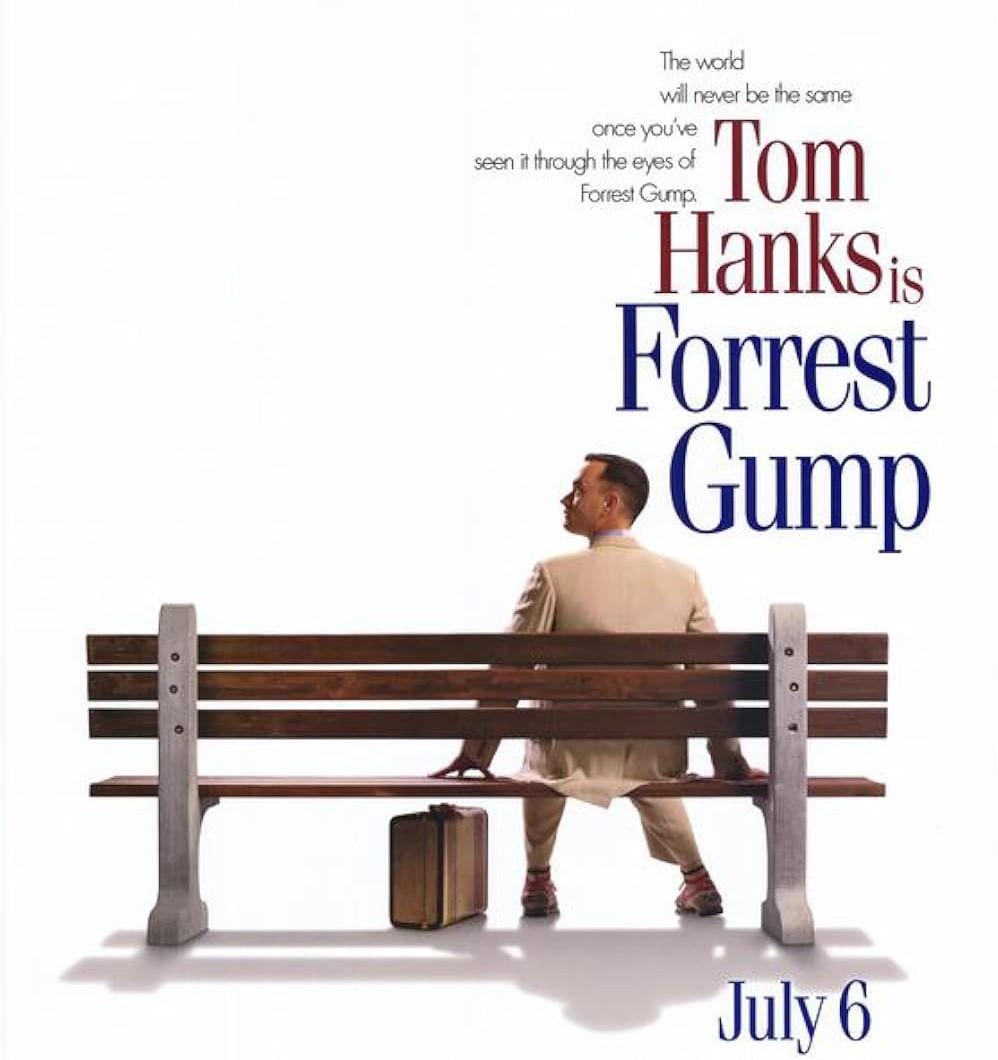
Forrest Gump Film Poster - IMDB
The film tells the story of Forrest Gump, a man with intellectual disabilities born in Alabama. With the support of his mother, Forrest manages to find his place in society and witnesses many historic events. His participation in the Vietnam War, his investment in Apple, his rise to fame as a runner, and his relationship with his childhood love Jenny Curran form the main narrative threads. Forrest’s innocent and well-intentioned approach to life enables him to achieve great success.
Although Forrest responds to events through his own actions, the film emphasizes the decisive role of chance in his life. His mother’s saying, “Life is like a box of chocolate, you never know what you’re going to get,” encapsulates this theme.
Forrest’s life is shaped by major events in America from the 1950s to the 1980s. Developments such as the Vietnam War, the civil rights movement, the Watergate scandal and the hippie movement are integrated into the film.
The film presents the American Dream from a unique perspective. Despite being intellectually different from others, Forrest achieves great success through his hard work and goodness. In this context, the film offers a narrative that questions the very concept of success.
The film addresses many significant developments in recent American history:
Forrest’s enlistment in the military illustrates the war’s impact on individuals, while also touching on the growing anti-war movement.
Forrest witnesses the integration of Black students at the University of Alabama, highlighting the struggle against racism.
Forrest’s observation of a suspicious incident at a hotel provides an ironic narrative that leads to the exposure of one of the largest political scandals of the 1970s, the Watergate affair.
Basinger, J. The World War II Combat Film: Anatomy of a Genre. Wesleyan University Press, 2003.
Dittmar, L., and Michaud, G. (Eds.). From Hanoi to Hollywood: The Vietnam War in American Film. New Brunswick: Rutgers University Press, 1990.
Groom, W. Forrest Gump. New York: Doubleday, 1986.
Zemeckis, R. Forrest Gump. Paramount Pictures, 1994.

Forrest Gump
Director | Robert Zemeckis | ||||||||
|---|---|---|---|---|---|---|---|---|---|
Producer | Wendy Finerman Charles Newirth Steve Starkey Steve Tisch | ||||||||
Screenwriter | Winston Groom Eric Roth | ||||||||
Actor | Sally Field Mykelti Williamson Gary Sinise Robin Wright Penn Tom Hanks | ||||||||
Studio | Paramount Pictures | ||||||||
Release Date | 1994-07-06 | ||||||||
Duration | 151 minutes | ||||||||
Plot
Themes and Narrative Structure
Fate and Chance
Witness to American History
The American Dream and Success
Cinematic Features
Historical Context
Vietnam War
Civil Rights Movement
Watergate Scandal
Cultural and Sociological Impact