

This article was automatically translated from the original Turkish version.
Publisher(s) | İthaki Yayınları | ||||||||
|---|---|---|---|---|---|---|---|---|---|
Award(s) | Hugo Award for Best Novel | ||||||||
Number of Pages(Text) | 712 | ||||||||
ISBN(Text) | 9786053759348 | ||||||||
Category(ies) | Science Fiction | ||||||||
Author(s) | Robert A. Heinlein | ||||||||
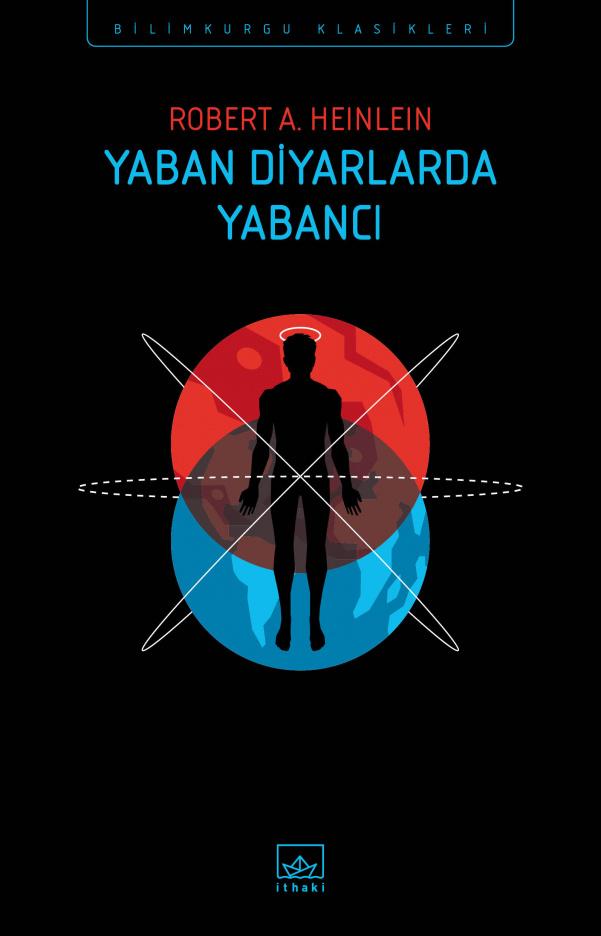
Stranger in a Strange Land is a science fiction novel written by American author Robert A. Heinlein and first published in 1961. The novel has had a significant impact not only within the science fiction genre but also within the counterculture movements of the 1960s, serving as a literary and cultural turning point through its ideas centered on free love, religion, morality, and authority. The book won the 1962 Hugo Award for Best Novel and is widely regarded as one of the classics of modern science fiction.
The novel begins with the story of Valentine Michael Smith (Mike), a human who is raised by Martians after a survey spacecraft crash and returns to Earth many years later. Having been raised according to Martian cultural values, Mike is entirely “foreign” to human society and its norms. He is initially confined to a hospital, where he meets nurse Jill Boardman. With Jill’s help, he gains his freedom and takes refuge in the home of the eccentric intellectual Jubal Harshaw. As Mike confronts Earth’s social, religious, and cultural institutions, he seeks to understand human nature and gradually develops a new belief system centered on the concept of “grokking”—deeply understanding and becoming one with something or someone—based on free love and non-possessive sharing. However, this vision of a “new society” comes into conflict with traditional authorities, and Mike ultimately meets a tragic fate as a Christ-like figure.
Unlike classic science fiction works that focus on technology, this novel offers a critique grounded in social structures. Its major themes include:
Heinlein, Robert A. (2018). Yaban Diyarlarda Yabancı. Çev. Kağan Çam. İstanbul: İthaki Yayınları.
Heinlein, Robert A. *Yaban Diyarlarda Yabancı*. İthaki Yayınları, 2018. Accessed July 9, 2025. https://www.ithakiyayingrubu.com/yaban-diyarlarda-yabanci.aspx.

Publisher(s) | İthaki Yayınları | ||||||||
|---|---|---|---|---|---|---|---|---|---|
Award(s) | Hugo Award for Best Novel | ||||||||
Number of Pages(Text) | 712 | ||||||||
ISBN(Text) | 9786053759348 | ||||||||
Category(ies) | Science Fiction | ||||||||
Author(s) | Robert A. Heinlein | ||||||||
No Discussion Added Yet
Start discussion for "Foreigner in the Wild Lands (Book)" article
Plot
Themes and Conceptual Structure
Main Characters