

+2 More

Date of birth | 1820-05-12 | ||||||||
|---|---|---|---|---|---|---|---|---|---|
Date of death | 1910-08-13 | ||||||||
Place of birth | Florence Italy | ||||||||
Place of death | London England | ||||||||
Occupation | Nurse Statistician writer | ||||||||
Title | Lady with a Lamp Order of Merit | ||||||||
School | Nightingale School of Nursing (1860) | ||||||||
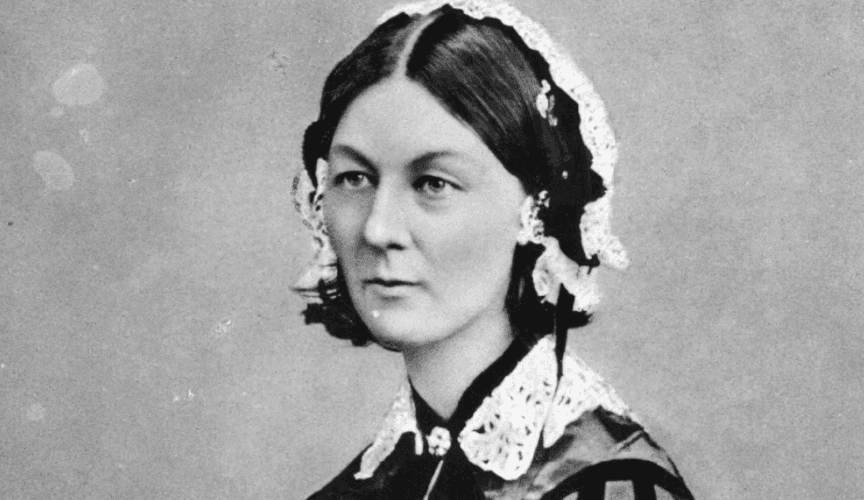
Florence Nightingale was born on 12 May 1820 in Florence Italy and died on 13 August 1910 in London England. Recognized as the founder of modern nursing, Nightingale transformed nursing practices in wartime settings and shaped health reforms through statistical analysis.
Florence Nightingale was born into a wealthy and cultured family. Her father William Edward Nightingale ensured she received an education in classical literature philosophy and mathematics. During the Victorian era when academic education for girls was limited Florence’s broad education introduced her early to statistics and science.
Even as a young girl Nightingale felt a divine calling to serve others and dedicated her life to helping people. Despite her family’s objections she received nursing training in 1850 at a nursing school in Kaiserswerth Germany.
During the Crimean War which began in 1854 Nightingale responded to a call from the British government and traveled with 38 nurses to the Selimiye Barracks on Ottoman territory. The health conditions for wounded British soldiers at this barracks in Üsküdar Istanbul were deplorable. Through improvements in hygiene nutrition and regular care Nightingale reduced the death rate from 60 percent to 2 percent.
She earned the nickname “The Lady with the Lamp” for her habit of visiting wounded soldiers at night carrying a lamp.
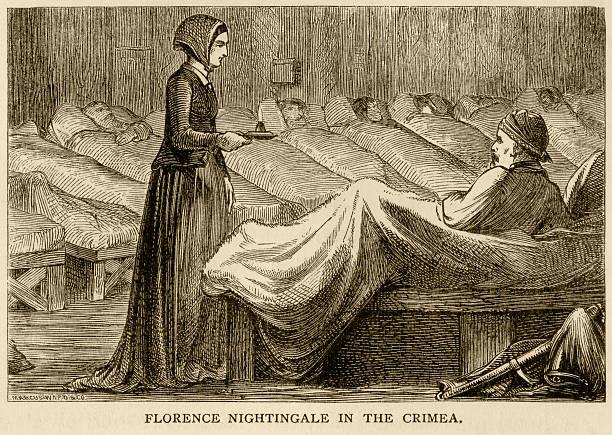
Generated by artificial intelligence
Upon returning to England in 1856 she proposed health reforms based on her wartime observations. In 1860 she founded the Nightingale Training School at St Thomas’s Hospital in London. This school was the first modern civilian institution in the world to provide formal nursing education.
Nightingale’s approach to nursing emphasized that care must be grounded in scientific principles. Newly trained nurses began their careers by taking the Nightingale Pledge affirming their commitment to the profession.
Nightingale was not only a nurse but also a passionate statistician. Influenced particularly by Adolphe Quetelet and William Farr she began examining mortality rates and evaluating health conditions using graphical data.
In 1858 she became the first woman member of the Royal Statistical Society. She developed an innovative graphical type called the polar area diagram or coxcomb chart to visually represent causes of death. These charts proved highly effective in convincing government officials of the need for health reforms.
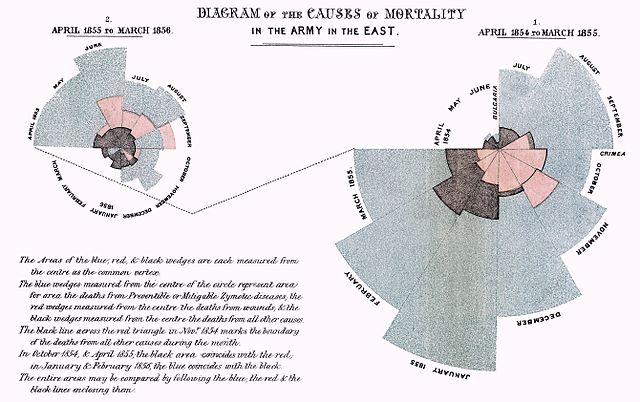
Example of a polar area diagramhttps://plus.maths.org/content/introducing-florence-nightingale
Nightingale emphasized the importance of hygiene ventilation cleanliness and discipline not only in military hospitals but also in civilian ones. She contributed to reforms in the health system under British colonial administration in India. By producing over 200 reports and letters she helped improve health practices across different regions.
Florence Nightingale refused marriage and devoted her entire life to service. A devout Anglican she integrated her religious beliefs with social work to improve people’s living conditions. Although she spent much of her life battling illness she continued her writing and statistical work.
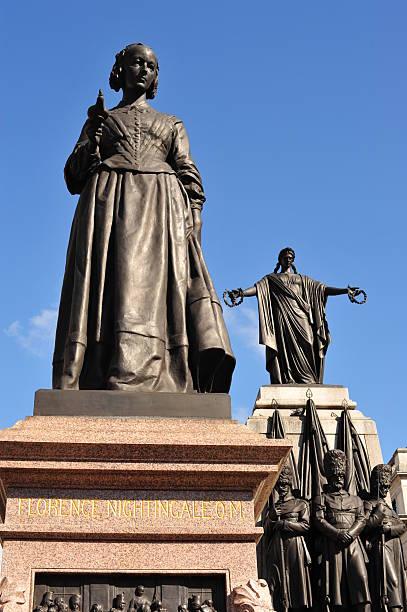
Due to declining health in her later years she rarely appeared in public. In 1907 she became the first woman to receive the Order of Merit from England. She died in 1910 at the age of 90 and was buried in London. At her own request a simple funeral was held instead of a national ceremony.
Florence Nightingale’s birthday 12 May has been celebrated as International Nurses Day since 1974. Her statistical approach contributed to the development of nursing as a scientific discipline and left a lasting mark on health policy. The ethical and scientific dimensions Nightingale brought to the nursing profession have become one of the foundational pillars of modern healthcare systems.
Akbaş, İrem. "Florence Nightingale’in Hayatı, Çalışmaları ve Etkileri." Master's thesis, İstanbul Üniversitesi, 2015.https://nek.istanbul.edu.tr/ekos/TEZ/45713.pdf.
Düzgün, Funda. "Tutkulu İstatistikçi Florence Nightingale." Dokuz Eylül Üniversitesi Hemşirelik Fakültesi Elektronik Dergisi, 2017.https://dergipark.org.tr/tr/pub/deuhfed/issue/46791/586753.
Yıldırım, Başak. "Florence Nightingale ve Modern Hemşireliğin Kuruluşu." Uşak Üniversitesi Sosyal Bilimler Dergisi, 2016.https://dergipark.org.tr/tr/pub/usaksosbil/issue/21654/232806.
Üsküdar Üniversitesi. "Florance Nightingale." Accessed 2025.https://uskudar.edu.tr/tr/bilim-insani/florance-nightingale.
Date of birth | 1820-05-12 | ||||||||
|---|---|---|---|---|---|---|---|---|---|
Date of death | 1910-08-13 | ||||||||
Place of birth | Florence Italy | ||||||||
Place of death | London England | ||||||||
Occupation | Nurse Statistician writer | ||||||||
Title | Lady with a Lamp Order of Merit | ||||||||
School | Nightingale School of Nursing (1860) | ||||||||
No Discussion Added Yet
Start discussion for "Florence Nightingale" article
Youth and Education
Career and Achievements
Nursing Education and Institutionalization
Key Works and Contributions
Contribution to Statistics
Health Reforms
Personal Life
Later Years and Death
Legacy and Impact