


This article was automatically translated from the original Turkish version.
+1 More
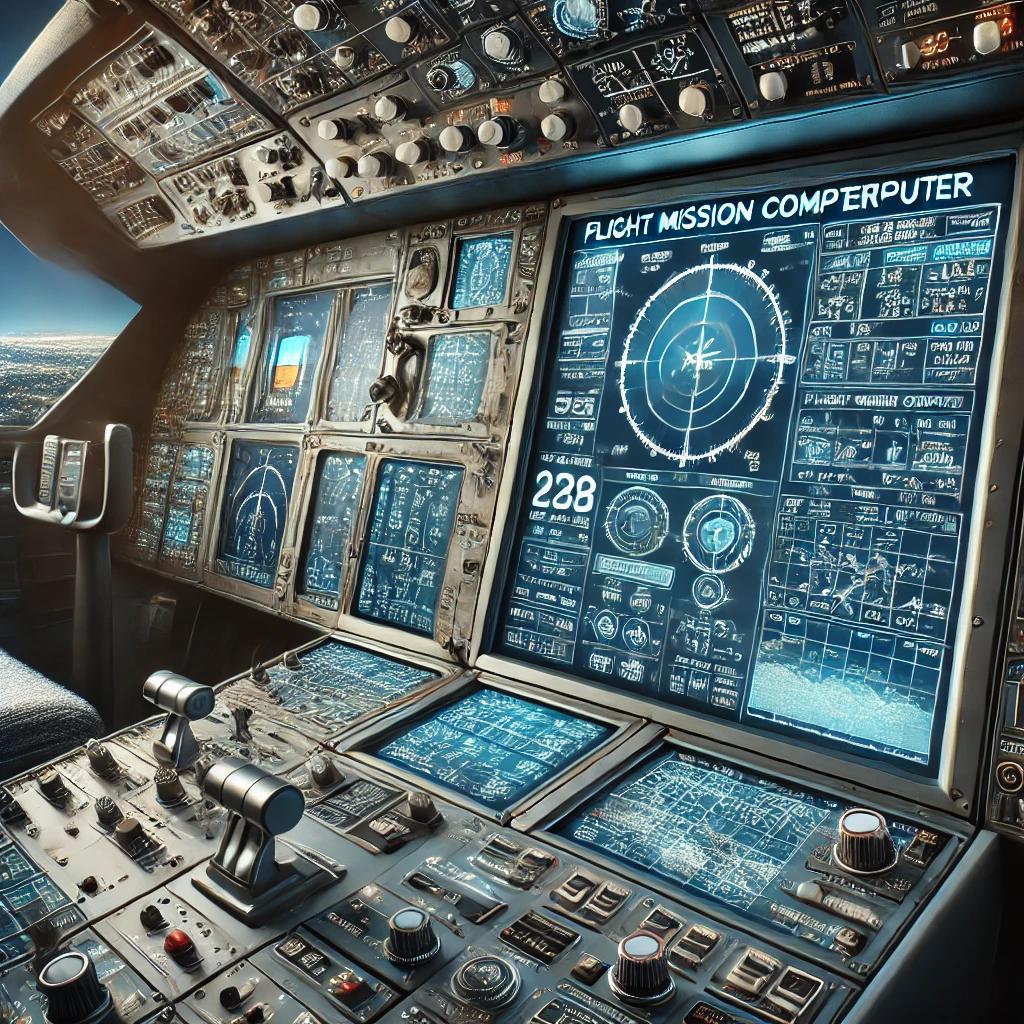
Flight Mission Computer
Description | The flight control computer is a critical system that oversees the operation of flight equipment responsible for flight control and management, navigates flight paths, and manages autonomous flight modes. It analyzes potential in-flight scenarios to make rapid and effective decisions, reducing pilot workload. These systems, developed to enhance flight safety and efficiency, are among the fundamental components of modern aviation technology. | ||||||||
|---|---|---|---|---|---|---|---|---|---|
Basic Tasks | It enhances flight safety by communicating with air traffic control systems. It ensures fuel management and flight optimization. It performs specific operations without pilot intervention by managing autonomous flight modes. It performs navigation and routing operations. It analyzes flight data to ensure the aircraft's stability and safety. | ||||||||
Basic Component | Database Systems: Store flight data to enable operational analyses. Input/Output Units (I/O Units): Manage data exchange with external sensors and pilot interfaces. Central Processing Unit (CPU): Performs all computation and data processing operations. Memory: Stores temporary data to ensure the system operates correctly. | ||||||||
Importance | As a central component in aviation systems, it enables data management and automation. It reduces pilot workload, making flight operations more efficient. It enhances flight safety by enabling rapid responses to emergency situations. | ||||||||
The flight mission computer is a level 3 critical and important system that controls aircraft flight control and management, operates flight equipment, provides navigation, and manages autonomous flight modes. These computers are capable of responding quickly and effectively to any situation that may arise during flight. Additionally, flight mission computers are designed to reduce pilot workload and make the flight process more intuitive and reliable. These systems play an indispensable role in ensuring the aircraft flies safely and efficiently with optimal performance and hold a prominent place in modern air transportation systems. They strive to maximize passenger and cargo safety by making real-time updates according to flight conditions.
The primary purpose of flight mission computers is to assist modern aircraft in performing their flight tasks more efficiently. These computers successfully carry out a wide range of functions including continuously monitoring aircraft performance, detecting issues, and ensuring fuel management. Moreover, efficient and reliable communication with air traffic control systems is also among their key functions. The importance of flight mission computers is evident not only in enhancing flight safety but also in numerous other areas such as providing critical support to pilots and improving overall flight efficiency. The correct and error-free operation of these systems is of vital importance for passenger safety, and managing the process without compromising passenger safety in the event of any malfunction is a major responsibility for the entire aviation industry.
Flight mission computers consist of specialized hardware and software components designed to manage complex aviation systems. These components operate in an integrated manner to ensure reliable and precise data processing.
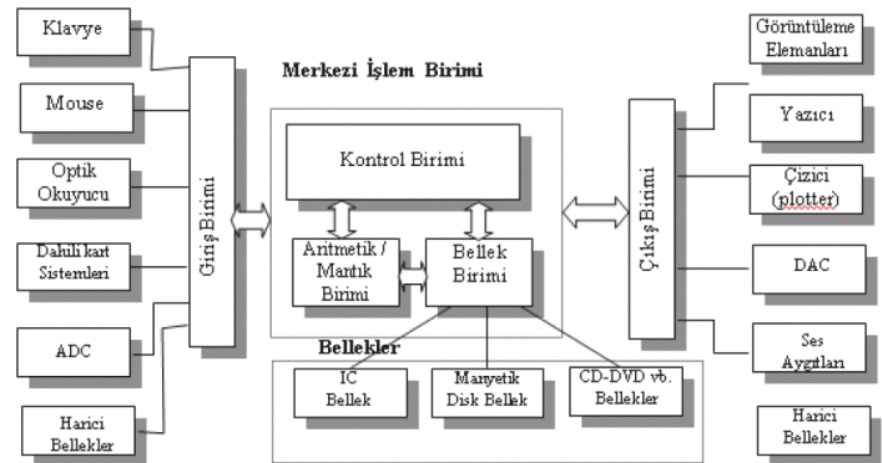
Components constituting the processor (Credit: dijitalders.com)
The central processing unit (CPU) is known as the most fundamental and important processing component in computer systems. The CPU is a critical component responsible for all computations, data processing, and various operations within the computer. Therefore, the speed, memory capacity, number of cores, and many other variable characteristics of CPUs play a decisive role in determining the overall performance of the computer. CPUs produced in different models and brands typically operate at high speeds and feature optimized designs for various tasks and application types. This diversity enables CPUs to operate effectively, efficiently, and rapidly according to user needs. This situation significantly enhances the user experience while simultaneously elevating system performance to high levels. Especially with the increasing demand for processing power today, modern CPUs have gained the ability to perform multiple tasks faster and more efficiently. Consequently, users can now run more complex and demanding applications simultaneously and gain better insight into their system’s performance limits. The evolution of CPUs provides significant advantages both in gaming and professional applications. New-generation CPUs also operate effectively in high-processing-demand fields such as artificial intelligence applications, data analysis, and graphics processing. This enables users to accelerate their operations, improve efficiency, and better handle challenging tasks.
Memory is an important term referring to the computer’s temporary data storage unit. This specialized component contributes significantly to the smooth and efficient operation of the system by holding data associated with programs currently in use. Since the capacity and speed of memory have a decisive impact on the computer’s overall performance, memory components designed and optimized to meet various user needs positively influence the user experience. Different types of memory, for both information storage and fast access, can be used to effectively manage the processing and data load within the computer. When applied in different combinations suited to the computer’s memory requirements, each type offers distinct advantages and features. Different memory types significantly improve the user experience and enhance overall operational performance. It is essential for users to understand which type of memory to choose for various applications and tasks to ensure the system operates at its most efficient and effective level. Therefore, staying informed about memory technologies is of utmost importance for computer users.
Input/Output units (I/O Units) are essential tools and components that enable the computer to communicate effectively with the external world and facilitate efficient information exchange. External devices such as the keyboard, mouse, monitor, and printer rely on these functional units to establish secure communication with the computer. These critical units also play a vital role in successfully managing data transfer operations and simplifying the connection of external devices to the computer through various ports. Input/Output units enable the computer to interact with users while acting as intermediaries that streamline the flow of data exchange. Thanks to these units, users enjoy a more interactive experience with their computers and can effectively process external information and data, organizing it according to their needs. As a result, the overall functionality of the computer is significantly enhanced, providing users with an experience tailored to their requirements. The capabilities offered by Input/Output units, aligned with user expectations and demands, further enrich the computer usage experience and contribute to the more effective utilization of the computer in many aspects.
Database systems are software systems that effectively manage data storage, access, updating, and administration while supporting extensive information processing operations. These systems play a critical role in ensuring data integrity and security by providing fast and efficient access to large volumes of data. Flight mission computer architecture models are generally designed in two main categories: single-core and multi-core architectures. These specially developed models precisely define the processor architecture of the flight mission computer, including its internal structure and operational mechanisms. Each architectural model offers unique advantages while also presenting certain disadvantages. The chosen architecture can significantly influence the computer’s overall performance and its capacity to perform various tasks. Therefore, selecting the appropriate architecture plays a critical role in system efficiency and functionality and holds great importance. This choice is vital not only for ensuring flight safety but also for executing complex operations effectively. The correct selection of the architectural model provides a vital benefit in ensuring the system successfully fulfills its duties.Database systems are considered a fundamental component for data-based applications and therefore hold indispensable importance. In addition, these systems are also used in fields requiring high security and efficiency such as flight mission computers, providing a suitable structure to benefit from the advantages offered by such systems. Thus, data can be managed securely and accessed rapidly when needed, which is of great importance for enhancing operational efficiency.
Flight mission computer architecture models are generally designed in two main categories: single-core and multi-core architectures. These specially developed and designed models not only determine the processor architecture of the flight mission computer but also comprehensively reveal its internal structure and operational mechanisms. Each architectural model offers unique advantages within itself, along with certain disadvantages. The selected architecture can significantly influence and shape the computer’s overall performance and its capacity to perform various tasks. Therefore, selecting the appropriate architecture plays a critical role in system efficiency and functionality and holds great importance. Such a choice is not merely a technical decision but is of vital importance for ensuring flight safety and effectively executing complex operations. In every case, the correct selection of the architectural model provides a vital advantage in ensuring the system successfully performs its duties.
Single-core architectures refer to structures in flight mission computers that contain only one processor core. These architectures are often preferred due to their simpler design and lower cost in specific situations. In particular, for projects with limited budgets and systems requiring less complexity, single-core architectures offer a practical and cost-effective solution. However, these single-core architectures also have significant disadvantages. When it comes to multitasking or parallel operations, these architectures can impose serious limitations, leading to challenges in professional applications. From a performance perspective, these limitations can create significant problems, especially in numerous scenarios requiring complex calculations or simultaneous execution of multiple tasks. Therefore, users are advised to carefully evaluate their requirements and consider alternative solutions before choosing such architectures. In flight mission computers, selecting the most suitable architecture according to system needs and expectations is of great importance.
Multi-core architectures represent a prominent and widely encountered structure in modern processor design. These architectures stand out due to their ability to incorporate multiple processor cores. Their capability to execute multiple operations simultaneously is among their key advantages and generally represents an important goal for enhancing the efficiency of computer systems through higher performance. Multi-core architectures are frequently chosen for data-intensive tasks or applications requiring high performance and are therefore widely used today. Additionally, it must not be forgotten that advantages offered by these architectures include important factors such as energy efficiency, speed, and overall performance; these aspects increase the importance of these architectures in today’s technology and promote their adoption across various industries.
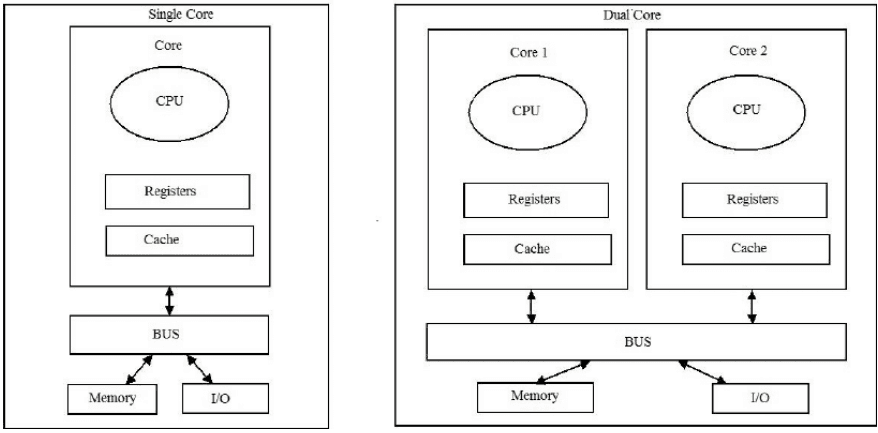
Block diagrams of single-core and multi-core architectures (Credit: Prerna Saini)
Within the flight mission computer architecture, security and reliability mechanisms hold a truly critical position among the most important elements of modern aviation technology. These mechanisms are particularly notable because of their vital importance for the robustness and reliability of aviation systems, especially in the form of dual-redundant systems, which are of great significance. With these systems, each critical function is performed twice on different hardware components. This allows for meticulous comparison of the results of each operation, enabling rapid detection of any error or anomaly. If an unexpected discrepancy is detected, the backup system activates immediately to ensure safety. Thanks to this operation, the negative effects of hardware failures are greatly minimized, and the security of the flight mission computer is strengthened. Thus, potential problems during flight are largely prevented, and passenger safety is maximized. The presence of such mechanisms enables modern flight systems to achieve a more robust and reliable structure while making a significant contribution to flight safety. It must not be forgotten that these security measures are also critically important not only in commercial aviation but also in military aviation. In both fields, the benefits provided by these security mechanisms help make flight operations safer.
Dual-redundant systems form the foundation of security and reliability mechanisms in flight mission computer architecture and play an extremely important role in aviation. Each flight task is performed twice with great care and precision on different hardware components, and the results are carefully compared and analyzed. If any discrepancy is detected during these meticulous comparisons, the backup system immediately activates to implement necessary measures for ensuring safety. These systems minimize the impact of potential hardware failures while significantly enhancing the overall reliability of the flight mission computer. This mechanism is of utmost importance for enhancing flight safety and is critically important for providing rapid and effective solutions during potential crisis situations. Dual-redundant systems have been developed and continuously evolved over time to ensure that all these processes are conducted safely, reliably, and consistently. In the aviation industry, the implementation of these systems constitutes a critical component for achieving high safety standards and contributes to building a solid foundation for aviation safety. In this context, the presence of dual-redundant systems has become essential for modern air transportation, and their broader adoption is regarded as a crucial step that will elevate the entire industry.
Error detection and correction mechanisms within the flight mission computer architecture aim to effectively identify and rectify any possible faults in the system. These important mechanisms are capable of detecting faults occurring both in hardware and software and strive to correct them automatically whenever possible. This process not only significantly enhances the reliability of the flight mission computer but also raises the overall safety level. Error detection mechanisms monitor the system continuously and analyze real-time data to help anticipate and prevent potential errors. This ensures that pilots and operational crews can perform their duties safely. Correction processes activate after errors are detected. At this stage, the identified faulty components are carefully reviewed and appropriate corrections are made with precision. Thus, the system’s stability and integrity are preserved. Additionally, in the event of any malfunction, a rapid response is provided to ensure flight safety, thereby improving the efficiency of aviation operations. Ultimately, these mechanisms are of critical importance in ensuring the safety of both pilots and passengers.
Flight mission computer software is not only a critical component in aviation systems but has also been meticulously developed to successfully manage aircraft missions and operations. This specialized software is equipped with the ability to effectively manage all types of flight scenarios, thereby ensuring the healthy control of automated systems. Additionally, it is designed to provide pilots with guidance whenever needed. The reliability and accuracy of this software are of utmost importance for aviation safety, and therefore such software undergoes rigorous testing and continuous updates. Flight mission computer software forms the central and indispensable part of the flight system architecture and must fully comply with the highest safety standards in the aviation industry. In this context, continuous monitoring and maintenance processes are required to ensure the correct operation of flight mission computers; meticulous review of every detail is of great importance for ensuring the safety of both pilots and passengers. Flight mission software is one of the most critical elements of aviation’s complex structure.
Embedded software is a type of software directly integrated into hardware devices and specifically designed to perform particular tasks. This type of software is widely used in flight mission computers and is typically programmed in great detail to carry out a fixed, customized function. These software programs generally possess important characteristics such as low power consumption, high reliability, and limited resource usage. Moreover, embedded software operates on specific hardware devices and typically does not provide a visual user interface. Embedded software used in flight mission computers is designed to perform highly specialized and critical tasks such as flight control, navigation, autopilot, and management of other flight systems. This software type enables aircraft to fly safely and efficiently while being customized to ensure that critical tasks are performed without any disruption.
Real-time operating systems are a highly important and critical software component used in flight mission computers. These systems are designed to perform functions that are both time-critical and safety-critical. Real-time operating systems are advanced to execute operations within specified time intervals quickly and efficiently and typically feature uninterrupted high performance. These systems have strict and precise requirements regarding parameters such as computation time, input/output time, and response time. Real-time operating systems used in flight mission computers are of critical importance for processing satellite navigation data, effectively controlling autopilot systems, and performing other vital tasks essential for flight safety. Therefore, the reliability and performance of these systems play a vital role in ensuring flights occur safely.
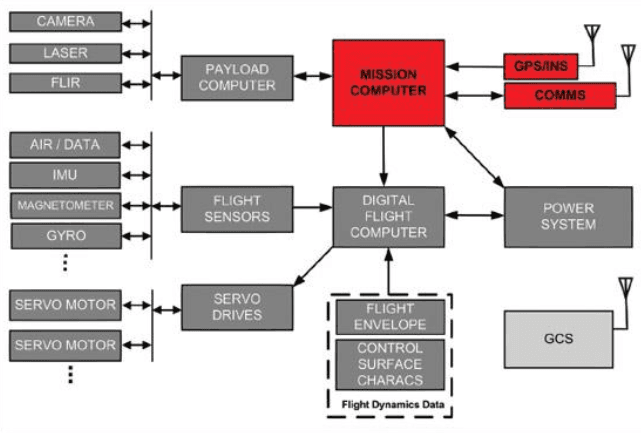
Relationship of the flight mission computer with other flight systems (Credit: adlinktech.com)
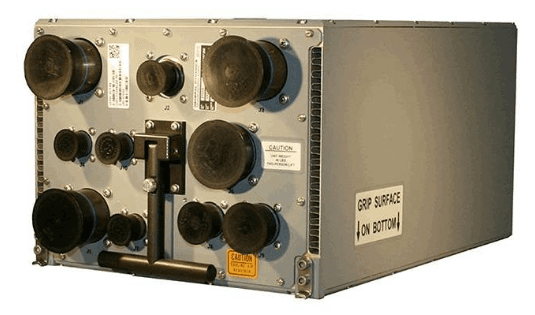
Example of an advanced mission computer (Credit: gdmissionsystems.com)
ADLINK. "UAV Mission Computing."
Booz&Co. "Advanced Mission Operations Concepts & Technologies for Future ESA Missions."
Esenli, E., Özer, A., & Öf, S. (2024). "Yeni Nesil Savaş Uçaklarına Yönelik Görev Planlama Sistemi." Karadeniz Fen Bilimleri Dergisi.Accessed Adresi.
NATO STO. Bloom, J. N. "Principles of Avionics Computer Systems."

Flight Mission Computer
Description | The flight control computer is a critical system that oversees the operation of flight equipment responsible for flight control and management, navigates flight paths, and manages autonomous flight modes. It analyzes potential in-flight scenarios to make rapid and effective decisions, reducing pilot workload. These systems, developed to enhance flight safety and efficiency, are among the fundamental components of modern aviation technology. | ||||||||
|---|---|---|---|---|---|---|---|---|---|
Basic Tasks | It enhances flight safety by communicating with air traffic control systems. It ensures fuel management and flight optimization. It performs specific operations without pilot intervention by managing autonomous flight modes. It performs navigation and routing operations. It analyzes flight data to ensure the aircraft's stability and safety. | ||||||||
Basic Component | Database Systems: Store flight data to enable operational analyses. Input/Output Units (I/O Units): Manage data exchange with external sensors and pilot interfaces. Central Processing Unit (CPU): Performs all computation and data processing operations. Memory: Stores temporary data to ensure the system operates correctly. | ||||||||
Importance | As a central component in aviation systems, it enables data management and automation. It reduces pilot workload, making flight operations more efficient. It enhances flight safety by enabling rapid responses to emergency situations. | ||||||||
No Discussion Added Yet
Start discussion for "Flight Mission Computer" article
Fundamental Components and Technical Architecture of the Flight Mission Computer
Central Processing Unit (CPU)
Memory
Input/Output Units (I/O Units)
Database Systems
Flight Mission Computer Architecture Models
Single-Core Architectures
Multi-Core Architectures
Security and Reliability Mechanisms
Dual-Redundant Systems
Error Detection and Correction Mechanisms
Flight Mission Computer Software
Embedded Software
Real-Time Operating Systems