This article was automatically translated from the original Turkish version.
+2 More
History | 15 December 1900 | ||||||||
|---|---|---|---|---|---|---|---|---|---|
Location | Eilean Mòr, Flannan Islands | ||||||||
Lost Guardians | James Ducat Thomas Marshall Donald McArthur | ||||||||
Findings | Locked doors Stopped clock Extinct hearth | ||||||||
Investigation Responsible | Robert Muirhead | ||||||||
Inspired Works | Wilfrid Wilson Gibson poem The Vanishing (2018) film | ||||||||
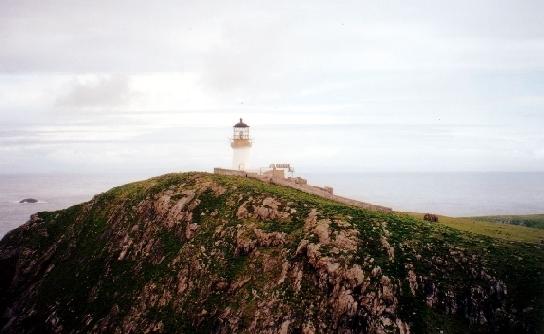
The Flannan Isles Lighthouse Incident is the disappearance of three lighthouse keepers—James Ducat, Thomas Marshall, and Donald McArthur—who vanished without leaving any trace from the lighthouse on Eilean Mòr, an island in the Outer Hebrides of Scotland, in December 1900.
On the morning of 15 December 1900, the three keepers had completed their routine maintenance and cleaning duties. By the afternoon of the same day, their fate had become uncertain.
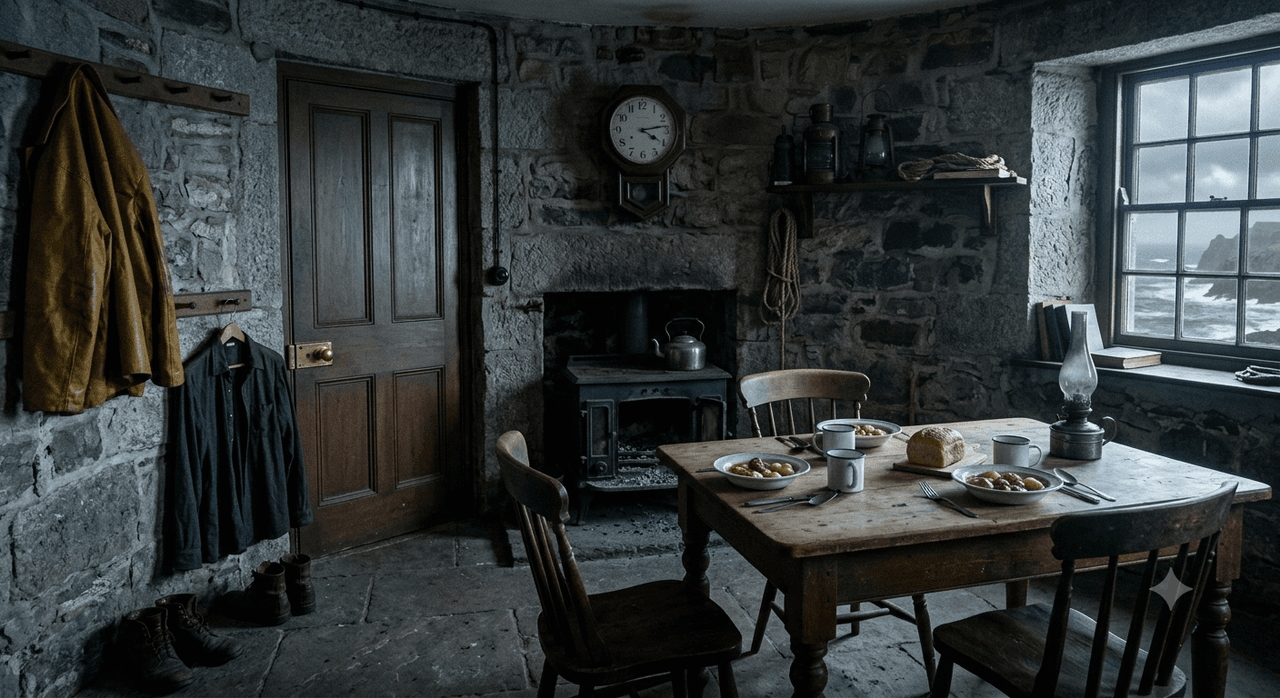
Bekçilerin Ortadan Kayboluşu (Yapay Zeka ile Oluşturulmuştur)
On the relevant date, the steamship SS Archtor, which passed through the area during the night, noticed that the lighthouse light was not functioning. However, due to adverse weather conditions and a storm, the relief and supply vessel Hesperus could not reach the island until 26 December 1900.
When the ship arrived, no response was received from the lighthouse. Consequently, the relief keeper Joseph Moore went ashore to investigate. In his notes dated 28 December, Moore described his initial inspection of the keepers’ living quarters as follows:
I went to the lighthouse and found the front door closed. I proceeded to the entrance leading to the kitchen and store, which was also closed, as was the inner door. But the kitchen door was open. Upon entering, I looked at the fireplace and saw that the fire had not been lit for several days. I walked through the rooms and found the beds empty, just as they had been left early that morning.【1】
The initial inspections by the Hesperus crew officially confirmed that all three keepers were absent from the island and had vanished without leaving any trace. Recognizing the seriousness of the situation, Moore returned to the ship and informed Captain Harvie.
Following the arrival of the relief vessel Hesperus, initial inspections and searches on the island revealed several findings. The lighthouse doors were locked, the clock had stopped, the fireplace was cold, and an uneaten meal remained set on the table. It was also determined that the equipment in the lighthouse had been cleaned and routine maintenance completed on the morning of 15 December. Examination of the keepers’ personal belongings showed that James Ducat and Thomas Marshall had left the lighthouse wearing their waterproof coats, while Donald McArthur had departed in his shirt without a jacket. At the western landing point of the island, a wooden crate and ropes were found scattered by floodwaters, iron railings were bent, and a massive rock weighing over a ton had been dislodged from its original position.【2】
Northern Lighthouse Board Chief Commissioner Robert Muirhead conducted an official investigation into the physical damage and clues on the island. Muirhead determined that the wooden crate and ropes had been carried away by floodwaters, the iron railings had been bent, and a large rock had been displaced. Evaluating these findings, Robert Muirhead concluded in his official report that the keepers had been swept into the sea by a massive wave that overtopped the cliffs while attempting to secure equipment on the western pier during the storm.【3】 In his detailed report dated 8 January 1901, Muirhead described the findings of his comprehensive inspection as follows:
On Thursday and Friday the men thoroughly searched the entire island, and on Saturday I joined them in examining the terrain. Everything at the eastern landing was orderly, and all the ropes that had been coiled and stored there after the rescue operation of 7 December remained in place; everything in the lighthouse buildings and stations was in order. Due to the rough sea, I could not descend to the landing, but I went down to the crane platform located 70 feet above sea level. The original crane installed that winter had been swept away by the flood, but the crane erected this summer was undamaged, its boom lowered and secured to the rock, and the tarpaulin covering the rope on the drum was tightly fastened; there was no evidence that the men had done anything with the crane. Mooring ropes, landing ropes, tower ropes, crane arms, and a wooden box in which they were stored and secured to a crack in the rocks 70 feet above the end of the tramway were also found. This box and the ropes had been washed away from an area approximately 40 feet above the crane platform, or 110 feet above sea level. The ropes were scattered among cracks in the rocks near the crane platform and tangled around the crane legs, but all were neatly coiled; not a single loose rope was found. The iron railings from around the crane platform to the concrete steps leading up from the western landing had been dislodged and bent. A large stone block weighing more than 20 cwt had been torn from its higher position and carried to the concrete path leading up from the end of the tramway, where it was left. A lifebuoy, attached to the railings for emergency use, had disappeared. At first I thought it had been removed for use, but upon examining the ropes to which it was attached, I found they had not been touched and that pieces of canvas were still adhered to them. It was clear that the force of the sea crashing over the railings had been sufficient to tear the lifebuoy from its ropes even at this height—110 feet above sea level.【4】
Although Robert Muirhead’s official report concluded that the three keepers had been swept into the sea by a massive wave, numerous suspicions and alternative theories emerged in the period following the incident.
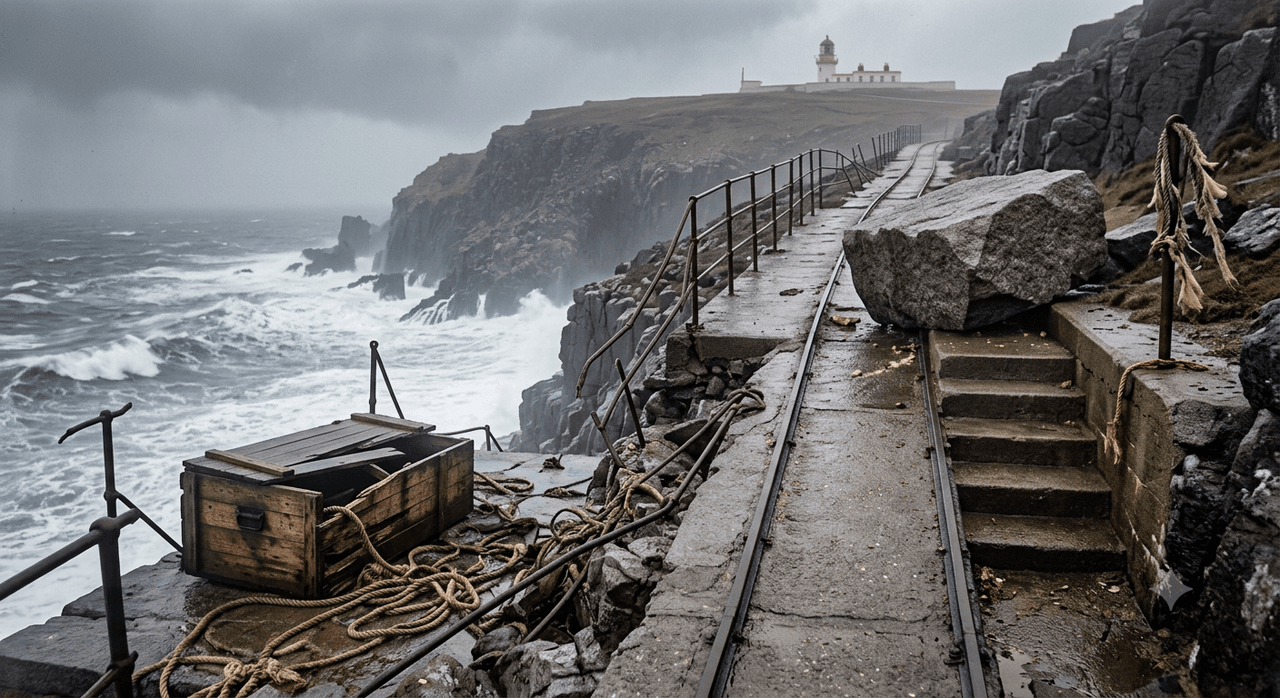
Flannan Adası ve Gizeme Ait Bulgular (Yapay Zeka ile Oluşturulmuştur)
It was suggested that a violent altercation had broken out among the keepers, possibly leading to murder and suicide following a moment of jealousy or madness.【5】 In the aftermath, accounts circulated in the public sphere claiming that the keepers had been heard crying and praying during the storm, and had exhibited strange behavior.【6】 Those who found the official explanation inadequate raised supernatural and conspiracy-based theories, including attacks by giant sea creatures, abduction by foreign spies, or encounters with ghost ships.【7】
The mystery of the Flannan Isles Lighthouse inspired Wilfrid Wilson Gibson’s 1912 poem “Flannan Isle.” The incident also became the subject of Genesis’s song “The Mystery of Flannan Isle Lighthouse,” Peter Maxwell Davies’s opera, Angela J. Elliot’s 2005 novel “Some Strange Scent of Death,” and the 2018–2019 film “The Vanishing.”【8】
BBC News. "Letter on Mystery of Three Missing Lighthouse Keepers to Go on Display." Accessed July 21, 2026.https://www.bbc.com/news/articles/c7942e4gdnpo.
Brooklyn College. "The Flannan Isle Lighthouse." Accessed July 21, 2026.https://userhome.brooklyn.cuny.edu/anthro/jbeatty/scotia/issue38/issue38a.html.
Geograph Britain and Ireland. "The Lighthouse on Eilean Mor of the Flannan Isles." Accessed July 22, 2026.https://www.geograph.org.uk/photo/100454.
National Records of Scotland. "Lighthouses." Accessed July 21, 2026.https://www.nrscotland.gov.uk/learning-and-events/research-guides/lighthouses/?section=the-mystery-of-the-flannan-islands-lighthouse.
Northern Lighthouse Board. "Flannan Isles." Accessed July 21, 2026.https://www.nlb.org.uk/history/flannan-isles/.
Royal Museums Greenwich. "The Flannan Isle Mystery." Accessed July 21, 2026.https://www.rmg.co.uk/stories/maritime-history/what-caused-disappearance-flannan-isle-lighthouse-keepers.
Sky History. "The Flannan Isle Mystery: The Three Lighthouse Keepers Who Vanished." Accessed July 21, 2026.https://www.history.co.uk/articles/the-flannan-isle-mystery-the-three-lighthouse-keepers-who-vanished.
[1]
Brooklyn Cuny Edu, "The Flannan Isle Lighthouse", erişim 21 Temmuz 2026, https://userhome.brooklyn.cuny.edu/anthro/jbeatty/scotia/issue38/issue38a.html.
[2]
Brooklyn Cuny Edu, "The Flannan Isle Lighthouse".
[3]
Brooklyn Cuny Edu, "The Flannan Isle Lighthouse".
[4]
Brooklyn Cuny Edu, "The Flannan Isle Lighthouse".
[5]
SKY History, "The Flannan Isle mystery: The three lighthouse keepers who vanished", erişim 21 Temmuz 2026, https://www.history.co.uk/articles/the-flannan-isle-mystery-the-three-lighthouse-keepers-who-vanished.
[6]
SKY History, "The Flannan Isle mystery: The three lighthouse keepers who vanished".
[7]
SKY History, "The Flannan Isle mystery: The three lighthouse keepers who vanished".
[8]
Brooklyn Cuny Edu, "The Flannan Isle Lighthouse".

History | 15 December 1900 | ||||||||
|---|---|---|---|---|---|---|---|---|---|
Location | Eilean Mòr, Flannan Islands | ||||||||
Lost Guardians | James Ducat Thomas Marshall Donald McArthur | ||||||||
Findings | Locked doors Stopped clock Extinct hearth | ||||||||
Investigation Responsible | Robert Muirhead | ||||||||
Inspired Works | Wilfrid Wilson Gibson poem The Vanishing (2018) film | ||||||||
No Discussion Added Yet
Start discussion for "Flannan Isles Lighthouse Incident" article
The Disappearance of the Keepers
Findings on the Island
Robert Muirhead’s Investigation
Doubts Regarding the Official Explanation
Cultural Impact