


This article was automatically translated from the original Turkish version.
+2 More
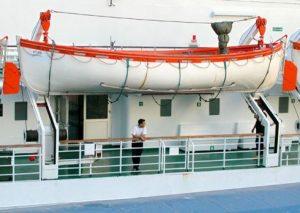
Fishing boat
Main Title | Filika | ||||||||
|---|---|---|---|---|---|---|---|---|---|
Category | Maritime / Security | ||||||||
Subcategory | Life Saving Appliances | ||||||||
Definition | A motorized or non-motorized lifeboat used for the emergency evacuation of ship crew and passengers. | ||||||||
Application Area | Passenger ships Cargo ships Military and civilian maritime vessels Tankers | ||||||||
International Standards | SOLAS (Safety of Life at Sea), LSA (Life Saving Appliances) | ||||||||
Main Types | - Open Lifeboat - Partially Enclosed Lifeboat - Fully Enclosed Lifeboat - Free Fall Lifeboat | ||||||||
Equipment and Materials | - Navigation: Compass, Hand flare, Signal flare - Life support: Water, Food, First aid - Maneuvering: Oar, Rudder, Auxiliary engine - Protection: Life jacket, TPA, Immersion suit - Firefighting: Fire extinguisher | ||||||||
Download Systems | - Davit launch (lowered by crane) - Free fall ramp | ||||||||
Educational Requirements | Training in 'Use of Life Saving Appliances' is mandatory under STCW | ||||||||
Maintenance and Control | Annual inspection, Weekly engine test, Material inspection, Certification | ||||||||
Related Contracts | SOLAS (1974), STCW (1978) | ||||||||
A lifeboat is a small sea vessel, either motorized or motor-assisted, with an open or enclosed structure, used to ensure the safety of crew and passengers in exceptional circumstances. Under international maritime regulations, particularly the SOLAS (Safety of Life at Sea) and LSA (Life Saving Appliances) conventions, lifeboats are mandatory collective rescue vessels.
Lifeboats are primarily designed to rapidly and safely evacuate all personnel and passengers from a ship in emergencies such as fire sinking or collision. These vessels are equipped to provide essential life support during survival situations.
Open lifeboats are fully exposed vessels without a deck. They were commonly found on ships built before 1986. Some models are powered by engines while others are designed to be propelled by oars or sails. However, these lifeboats cannot adequately protect occupants from rain waves and cold weather in adverse sea conditions. As a result they have been largely replaced by partially enclosed and fully enclosed models in modern vessels.
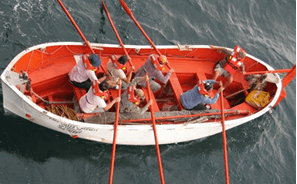
Açık Can Filikası Örneğine Ait Görsel (MEB)
Partially enclosed lifeboats offer partial protection against weather conditions and provide greater safety than open lifeboats. However their use has gradually declined and they have been superseded by fully enclosed lifeboats on newly constructed ships.
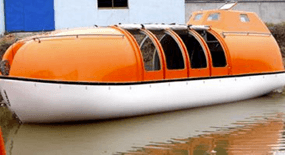
Yarı Kapalı Filikalar Örneğine Ait Görsel (MEB)
These lifeboats have become standard on modern ships. They feature a completely sealed and watertight structure with an engine seating belts lighting systems and ventilation equipment. Their hatches can be opened from both inside and outside and they are self-righting. This design ensures the safety of occupants even in stormy seas.
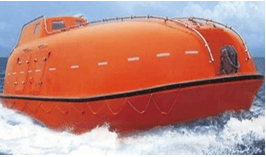
Tam Kapalı Filikalar Örneğine Ait Görsel (MEB)
These specially designed lifeboats are positioned on a sloped ramp at the stern of the ship and are released directly into the water with full crew aboard. These lifeboats reach the sea at high speed and are preferred on vessels carrying hazardous cargo such as tankers. Their hulls are constructed from specially reinforced materials to withstand the intense impact forces during free fall.
Lifeboats are distributed evenly on the port and starboard sides of the ship’s open decks. Access routes and lighting systems are specifically arranged during placement. Markings follow IMO (International Maritime Organization) symbols and operational instructions are displayed in visible locations.
Lifeboats are not merely transport vessels but also survival environments. Therefore their equipment is designed to address various emergency scenarios:
The quantity and capacity of all these items are scaled according to the number of people the lifeboat can carry.
Lifeboats are lowered into the water using winch systems called matafora. These systems consist of mechanical components including rope drums lifting hooks and brakes. Free-fall lifeboats are released directly from a ramp along with their load.
Before boarding the lifeboat all passengers must fasten their safety belts interior lighting is checked and the engine system is prepared. The launching procedure is carried out in accordance with specific protocols practiced weekly by the ship’s crew.
To ensure reliable operation lifeboats must undergo regular maintenance as follows:
In addition launching systems (matafora ropes hooks) must be regularly lubricated and all ropes must be replaced every five years.
Under the STCW Convention ship personnel are required to participate in practical training on the use of life-saving appliances at specified intervals each year. During these drills the lifeboat engine is operated and embarkation and disembarkation scenarios are simulated. The goal is to ensure that crew members are prepared for emergency situations.
The lifeboat is a critical asset in maritime transport for the protection of human life. A lifeboat selected according to vessel type designed in compliance with international safety standards and properly equipped can make the difference between life and death during a crisis. Therefore its design placement equipment maintenance and training processes must never be neglected.
Accessed June 12, 2025.
Accessed June 12, 2025.
Can Kurtarma Araçlarını Kullanma. Ankara: T.C. Millî Eğitim Bakanlığı, 2018.
Denizde Kişisel Canlı Kalma Teknikleri. Ankara: T.C. Millî Eğitim Bakanlığı, 2015.
Mesleki ve teknik eğitim modülü.
“Can Kurtarma Vasıtaları.” Dargeb Denizcilik Eğitim Platformu. Accessed June 12, 2025.
“Filika Malzemeleri.” Scribd Sunumları. Accessed June 12, 2025.
“Filika Nedir.” Scribd Sunumları. Accessed June 12, 2025.

Fishing boat
Main Title | Filika | ||||||||
|---|---|---|---|---|---|---|---|---|---|
Category | Maritime / Security | ||||||||
Subcategory | Life Saving Appliances | ||||||||
Definition | A motorized or non-motorized lifeboat used for the emergency evacuation of ship crew and passengers. | ||||||||
Application Area | Passenger ships Cargo ships Military and civilian maritime vessels Tankers | ||||||||
International Standards | SOLAS (Safety of Life at Sea), LSA (Life Saving Appliances) | ||||||||
Main Types | - Open Lifeboat - Partially Enclosed Lifeboat - Fully Enclosed Lifeboat - Free Fall Lifeboat | ||||||||
Equipment and Materials | - Navigation: Compass, Hand flare, Signal flare - Life support: Water, Food, First aid - Maneuvering: Oar, Rudder, Auxiliary engine - Protection: Life jacket, TPA, Immersion suit - Firefighting: Fire extinguisher | ||||||||
Download Systems | - Davit launch (lowered by crane) - Free fall ramp | ||||||||
Educational Requirements | Training in 'Use of Life Saving Appliances' is mandatory under STCW | ||||||||
Maintenance and Control | Annual inspection, Weekly engine test, Material inspection, Certification | ||||||||
Related Contracts | SOLAS (1974), STCW (1978) | ||||||||
Types of Lifeboats
Open Lifeboats
Partially Enclosed Lifeboats
Fully Enclosed Lifeboats
Free-Fall Lifeboats
Placement and Capacity Criteria
Lifeboat Equipment and Supplies
Navigation and Direction Finding Equipment
Life Support Supplies
Propulsion and Oars
Firefighting and Evacuation Equipment
Launching and Operation of Lifeboats
Maintenance Inspection and Certification
Training and Drills