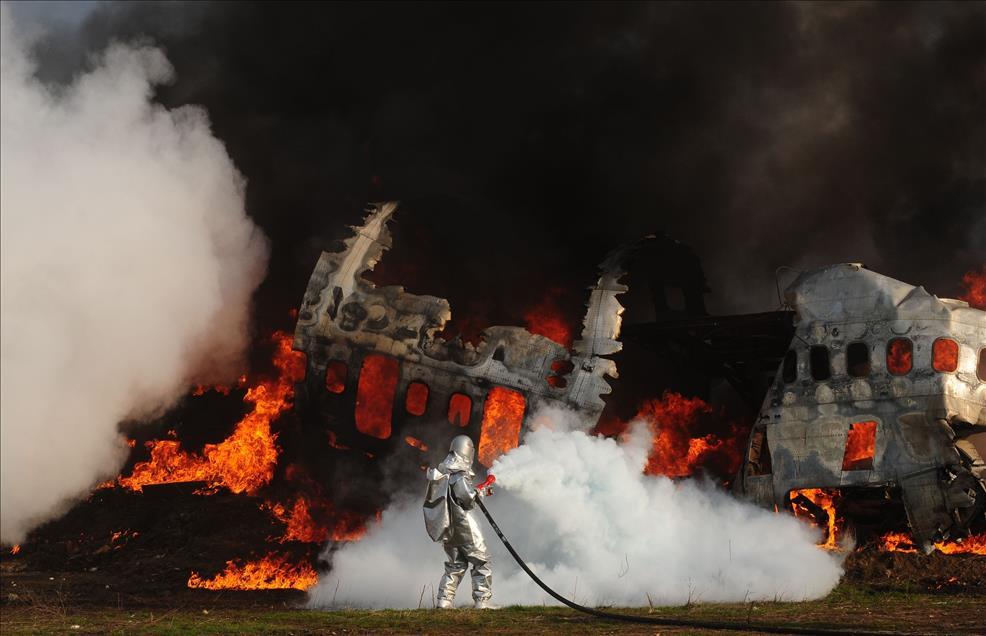
This article was automatically translated from the original Turkish version.
+2 More
Names | Firefighting Week Firefighters Week Fire Prevention Week | ||||||||
|---|---|---|---|---|---|---|---|---|---|
Date | 25 September–1 October | ||||||||
Purpose | Increasing preparedness levels for potential fires Promotion of fire safety culture Prevention of fires | ||||||||
Target Audience | Elderly people Public institutions Persons with disabilities Adults Youth Students Private sector | ||||||||
Activities | Fire and evacuation drills Station open house days Workshops and exhibitions in schools | ||||||||
Expected Outcomes | Development of annual maintenance and training schedules Strengthening inter-institutional coordination Continuous improvement through measurement and evaluation reports | ||||||||
Firefighting Week (Fire Prevention Week) is a national awareness week held annually in Türkiye between September 25 and October 1, aimed at strengthening a culture of fire safety, enhancing preparedness before disasters, and increasing public visibility of the firefighting organization’s duties, authorities, and responsibilities.
Interviews on Firefighting Week (Lüleburgaz Municipality)
The week focuses on preventing fires and promoting appropriate behavior during fire emergencies; therefore, public institutions, local governments, educational institutions, civil society organizations, and the media coordinate their outreach and educational activities. The scope is not limited to schools alone; measures for homes, workplaces, public buildings, and communal spaces are addressed within a comprehensive framework.
The central focus of activities during the week is to strengthen the first two stages of the prevention–preparedness–response cycle. Within this framework, emphasis is placed on the use of smoke detection and alarm systems, developing and testing fire evacuation plans for homes and institutions, knowledge of fire classes and extinguishing agents, understanding critical phenomena such as the fire triangle, flashover, and backdraft, reducing fire risks from kitchens and electrical sources, and planning for differentiated safety needs of the elderly, children, persons with disabilities, and pets.
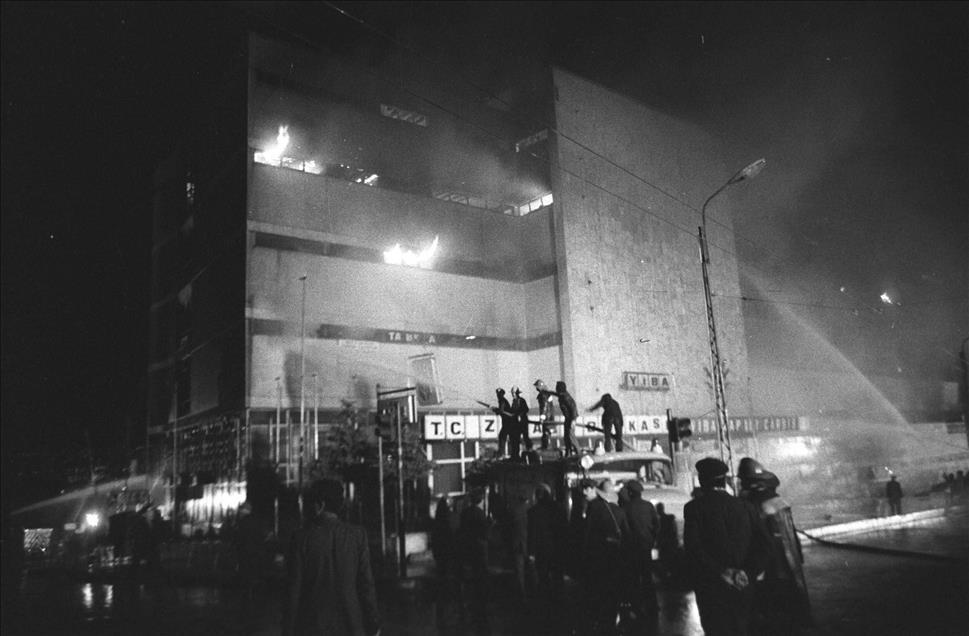
Firefighting Teams Responding to a Fire at YIBA Market (Anadolu Ajansı)
While municipal firefighting units organize training sessions, open-air demonstrations, station visits, and information booths, vocational and technical schools and universities produce content through seminars, workshops, and practical training. Civil society organizations contribute to the process by providing guidance materials and public awareness campaigns on building safety, insulation, and regulatory compliance.
Firefighting Week is designed to respond to evolving risk perceptions and societal needs through annual thematic focuses. This thematic approach supports increased individual and institutional preparedness, promotes correct equipment usage, encourages the principle that “prevention is easier than suppression,” and contributes to the institutionalization of disaster management at the local level. Thus, the week provides an educational and practical framework that goes beyond showcasing the operational capacity of firefighting organizations, aiming instead to build a sustainable culture of fire safety across society.
The institutional roots of firefighting, one of the components of urban security in the Ottoman period, are traced back to the Tulumbacılar Ocağı, which is recognized in literature as having been formally established in 1714. The exact date of establishment of the first modern firefighting unit in the Republic era has not been definitively determined. Therefore, September 25, 1923—the founding date of Republican-era municipal fire departments—has been adopted as the basis for commemorative and awareness activities. Consequently, the last week of September was adopted as “Firefighting Week.” However, this practice experienced interruptions after the 1960s.
In the early 1970s, Ankara Fire Chief Baki Akansel, in cooperation with the Commission for Protection Against Accidents and Fires under the Council of Ministers, revived the week under the name “Fire Prevention Week.” Proposals to align the observance with the founding date of the Istanbul Fire Department and rename it “Firefighting Week” were also introduced. These commemorations in Ankara lasted approximately thirteen years but did not achieve the same continuity nationwide.
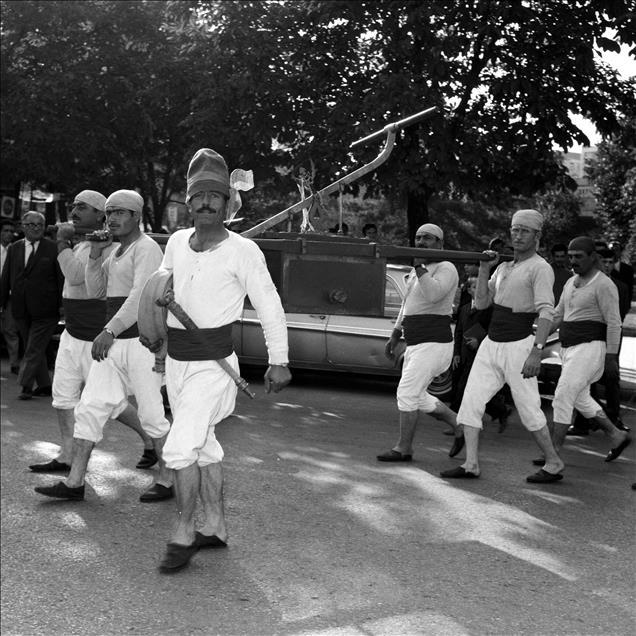
Tulumbacılar Team Demonstration in 1970 (Anadolu Ajansı)
In the modern era, the institutional framework of the week was reestablished in Istanbul in 1990. Within this framework, a broad program was implemented between September 24 and October 1, 1990, including exhibitions, panels, open-air demonstrations, the “Tulumbacılar Team Demonstration,” station events, and school visits. The public was made aware that firefighting services extend beyond fire suppression to include rescue and educational functions.
In subsequent years, through the regular activities of municipalities and professional organizations, the week evolved into a collaborative awareness platform involving local governments and educational institutions. In current practice, celebrations held between September 25 and October 1 continue annually, accompanied by thematic educational programs that change each year.
The primary objective of Firefighting Week is to prevent fires and enhance preparedness for potential fire incidents. Within this framework, the week aims to enable individuals and institutions to identify risks, learn the correct use of equipment, and practice appropriate behavioral responses during fire emergencies.
İzmir Municipality Fire Drill (İzmir Fire Department)
The target audience is not limited to students; it encompasses all segments of society, including youth, adults, the elderly, persons with disabilities, and households with pets. The broad scope requires a multi-stakeholder approach that addresses fire safety culture from education and home safety to workplace practices and public space management. Activities during the week are organized around three pillars:
1. Awareness and Education: In schools, public institutions, and open-air events, the fire triangle, stages of fire (ignition, development, extinction), and critical phenomena such as flashover and backdraft are introduced. Participants are taught how to develop fire evacuation plans for homes and workplaces, and how to correctly position and periodically inspect smoke detection and alarm systems.
2. Drills and Practice: Evacuation drills are conducted in buildings; fire extinguisher classes and proper usage techniques are demonstrated practically. Routine practices to reduce fire risks from kitchens, electricity, and natural gas—such as cleaning, maintenance, and adherence to appliance instructions—are reinforced.
3. Institutional Collaboration and Outreach: Municipal firefighting units, vocational and technical schools, universities, and civil society organizations jointly implement programs. Public demonstrations, station visits, exhibitions, and panels translate technical knowledge into everyday practice. Guidance materials are produced on building safety, thermal, acoustic, and fire insulation; informative campaigns are conducted through media channels.
Fundamentally, all these educational efforts converge around the principle that “prevention is easier than suppression.” The goal is to reduce risks at their source, standardize preparations for early warning and rapid, safe evacuation, and translate personal and institutional responsibilities into concrete actions. Thus, the week aims not only to increase the operational visibility of firefighting organizations but also to build a lasting culture of fire safety across society.
Activities held during Firefighting Week encompass public awareness and informational events as well as institutional and inter-institutional practical training and drills. Joint programs organized by municipal firefighting units, educational institutions, and civil society organizations highlight station visits, equipment demonstrations, open-air displays, and workshops for children. During school visits, students are educated on personal safety, the dangers of smoke, and proper evacuation behavior. For adults, sessions address fire risks in homes and workplaces, fire extinguisher classes and correct usage techniques, and methods to reduce risks from electricity and natural gas.
Firefighting Week Brochure Distribution Event (Hudut Gazetesi)
Fire and evacuation drills are conducted in numerous institutions during the week. These drills implement the sequence of alarm–evacuation–assembly–roll call; fundamental principles such as the use of staircases and corridors, accessibility of emergency exits, and the prohibition of elevator use are reinforced. In practical sessions, principles of safe intervention during initial-stage fires, the fire triangle, flashover, and backdraft are explained, along with warning signs and the logic of ventilation and gas cooling in confined spaces. Technical reminders are provided to health and safety personnel regarding the effects of smoke, the limitations of personal protective equipment (masks, gloves, clothing), and their correct usage.
During public events, sample diagrams and simple checklists for developing fire evacuation plans are shared: placement and testing intervals of smoke detection and alarm systems, types, locations, and maintenance of extinguishers, marking of electrical panels and gas shut-off valves, and designation of assembly points are made concrete. Demonstrations on kitchen-related risks emphasize the dangers of using water on grease fires, the practice of smothering with a lid and cutting off energy, and the creation of “risk-free cooking zones” in homes with young children.
Firefighting Week Celebrations (Yalova Municipality)
Civil society organizations and professional associations contribute to the process by providing guidance documents, brochures, and information booths on building safety and insulation; local governments run public awareness campaigns through media and social media aligned with the annual theme. Some programs feature representative demonstrations highlighting historical continuity, such as reenactments of early firefighting methods. Museums and exhibitions present the evolution of firefighting organizations, equipment development, and their role in urban life through visual materials.
At the local level, the week is typically planned around daily themes: home safety and family action plans, drills and awareness campaigns in educational institutions, risk assessments and extinguisher training in workplaces, evacuation trials in public buildings, open-air demonstrations, and “open house” days at fire stations. This framework aims to generate accessible content tailored to diverse groups, including children, the elderly, and persons with disabilities, thereby broadening participant profiles.
Education and awareness form the backbone of the week, aiming to drive behavioral change along the prevention–preparedness axis. Programs are designed across a wide spectrum—from preschool to high school, from public institutions to the private sector and households—with content tailored to age and risk groups. Core learning outcomes include understanding the physical basis of fire (the fire triangle), recognizing fire stages and warning signs (particularly flashover and backdraft risks), knowing safe intervention principles for initial-stage fires, correctly installing and periodically testing smoke detection and alarm systems, developing and testing fire evacuation plans, and reducing risks from electricity, natural gas, and kitchens.
Sample Awareness Seminar for Firefighting Week (Şanlıurfa Metropolitan Municipality)
Activities in schools combine short classroom presentations with practical workshops. Rules such as the behavior of smoke, crouching during evacuation, reaching assembly points, and conducting roll calls, the prohibition of elevator use, and following emergency exit signs are reinforced through visual materials. Checklists for a “home safety action plan” are prepared for students and parents. Concrete steps such as identifying two escape routes from each room, designating an assembly point, marking the locations of electrical circuit breakers, gas shut-off valves, and fire extinguishers, and noting testing intervals and battery replacement dates for smoke detectors are implemented as classroom activities. Children are repeatedly reminded not to hide under beds or in closets during fires, not to return for toys, to check door handles and surfaces for heat, and to stay low in smoky environments.
Training in institutions and workplaces begins with risk assessments and equipment competency. Appropriate selection and practical use of fire extinguishers for initial-stage fires are demonstrated, including pulling the safety pin, directing the nozzle, using short sweeping motions, and maintaining a safe approach distance. Periodic maintenance records for electrical panels, extension cords and outlet loads, cleaning of greasy kitchen surfaces, thermostat use in deep fryers, permit and supervision procedures for hot work, and ensuring clear storage areas and unobstructed escape routes are integrated into institutional guidelines. Drill scenarios are diversified to reflect different floor plans, working hours, and accessibility needs for persons with disabilities.
In household-focused communication, accessible solutions are prioritized for high-risk groups. For the elderly and persons with hearing or visual impairments, visual or vibration-based alarm devices are promoted; “assistant persons” are assigned for those unable to evacuate alone; spare keys and medication kits are strategically placed; and practical methods for pet evacuation and nighttime drills are introduced. Kitchen safety is treated as a separate module. Principles such as never using water on grease fires, smothering with a lid, cutting off energy, monitoring oil levels in pans and fryers, positioning flammable materials away from heat sources, and creating a one-meter “safe cooking zone” for young children are demonstrated practically.
Education Program for Children (İzmir35 News)
Civil society organizations and professional associations contribute to the process by providing guidance documents and information booths on building safety and insulation; municipal firefighting units explain equipment and intervention procedures to the public through station visits and open-air demonstrations. Communication materials (brochures, posters, short videos, radio and social media spots) are developed with simple, repeatable messages aligned to a single annual theme, taking into account different languages and literacy levels.
Finally, the measurement and evaluation dimension of education is not overlooked. Reports are generated after drills using criteria such as timing, organization, and accessibility; corrective actions for deficiencies—such as locked emergency exits, blocked staircases, or non-functional alarms—are scheduled. An “annual maintenance and drill calendar” is created for households and institutions, standardizing intervals for extinguisher maintenance, detector battery replacement, evacuation plan updates, and personnel/student training. Thus, the activities of the week are intended to transform from one-time campaigns into a sustained culture of safety.
Abdurrahim Tırsı İHO. “Yangından Korunma Haftası / İtfaiyecilik Haftası (25 Eylül – 1 Ekim).” Accessed September 24, 2025.https://abdurrahimtirsiiho.meb.k12.tr/icerikler/yangindan-korunma-haftasi-itfaiyecilik-haftasi-25-eylul-1-ekim_15440163.html.
Anadolu Ajansı. “Ateşle savaşanlar: İtfaiyeciler.” *Anadolu Ajansı Foto Galeri*, September 25, 2014. Accessed September 24, 2025.https://www.aa.com.tr/tr/pg/foto-galeri/atesle-savasanlar-itfaiyeciler/0/52241
Hudut Gazetesi. "İtfaiye'den 'İtfaiye Haftası' Bilinci." YouTube. Accessed September 24, 2025.https://www.youtube.com/watch?v=gdkmGMFRmQ4.
Istanbul Metropolitan Municipality, Directorate of Health, Branch of Occupational Health and Safety. *İtfaiye Çalışmalarında İş Sağlığı veGüvenliği Rehberi. Istanbul, 2024. Accessed September 24, 2025.https://isg.ibb.istanbul/wp-content/uploads/2024/07/itfaiye-rehber-revize-baski-26_06_2024_240626_161503-1.pdf
Kılıç, Abdurrahman. “İtfaiye Haftası.” *Ateşi Tutan Eller – Ateş Kahramanları*. 2010. Accessed September 24, 2025.https://yangin.org/dosyalar/itfaiye_haftasi.pdf.
Lüleburgaz Belediyesi. "İtfaiye Haftası Kutlu Olsun!" YouTube. Accessed September 24, 2025.https://www.youtube.com/watch?v=Z8-vkfoRxss.
NTV. "Yangından Korunma Haftası / İtfaiyecilik Haftası İçin Hazırlıklar Başladı." NTV Galeri. Accessed September 24, 2025.https://www.ntv.com.tr/galeri/turkiye/yangindan-korunma-haftasi-itfaiyecilik-haftasi-icin-hazirliklar-basladi,V6LQv8IOI0aV1qIvomxXFw/6rA3SfUkfECS2I_y0yjs_w.
Uzun Mehmet TML. "Yangından Korunma ve İtfaiyecilik Haftası (25 Eylül – 1 Ekim)." Uzun Mehmet TML / MEB. Accessed September 24, 2025.https://ereglitml.meb.k12.tr/icerikler/yangindan-korunma-ve-itfaiyecilik-haftasi-25-eylul-1-ekim_7746702.html.
Yalova Belediyesi. "İtfaiye Haftasında Çocuklara Survivor Tadında Etkinlik." YouTube. Accessed September 24, 2025.https://www.youtube.com/watch?v=IV3UO1aFpl8.
Özdil, Levent. “Yangından Korunma Haftası ve İtfaiyecilik Haftası Üzerine.” *Bizkandirayız*. Accessed September 24, 2025.https://bizkandirayiz.com/2022/09/29/yangindan-korunma-haftasi-ve-itfaiyecilik-haftasi-uzerine-levent-ozdil/.
İZODER. "İZODER’den Yangından Korunma Haftası Mesajı: İZODER Yangın Yalıtımının Hayati Önemine Dikkat Çekiyor." İZODER. Accessed September 24, 2025.https://www.izoder.org.tr/dosyalar/yangindan-korunma-haftasi-basin-bulteni.pdf.
İzmir İtfaiyesi. "İtfaiye Haftası Tatbikat 2019." YouTube. Accessed September 24, 2025.https://www.youtube.com/watch?v=usfJj9Rb7zw
İzmir35Haber. "0 6 Yaş İtfaiye Eğitim Programı." YouTube. Accessed September 24, 2025.https://www.youtube.com/watch?v=-x16epUK5zQ.
Şanlıurfa Büyükşehir. "İtfaiye’den 'Hayat Kurtaran' Eğitim Semineri." YouTube. Accessed September 24, 2025.https://www.youtube.com/watch?v=6x0Jjd1TZ48.

Names | Firefighting Week Firefighters Week Fire Prevention Week | ||||||||
|---|---|---|---|---|---|---|---|---|---|
Date | 25 September–1 October | ||||||||
Purpose | Increasing preparedness levels for potential fires Promotion of fire safety culture Prevention of fires | ||||||||
Target Audience | Elderly people Public institutions Persons with disabilities Adults Youth Students Private sector | ||||||||
Activities | Fire and evacuation drills Station open house days Workshops and exhibitions in schools | ||||||||
Expected Outcomes | Development of annual maintenance and training schedules Strengthening inter-institutional coordination Continuous improvement through measurement and evaluation reports | ||||||||
No Discussion Added Yet
Start discussion for "Firefighting Week (Fire Prevention Week)" article
History
Purpose and Scope
Celebrations and Activities
Current Educational and Awareness Initiatives