This article was automatically translated from the original Turkish version.
Realm | Animalia | ||||||||
|---|---|---|---|---|---|---|---|---|---|
Branch | Chordata | ||||||||
Class | Aves | ||||||||
Team(s) | Passeriformes | ||||||||
Family | Motacillidae | ||||||||
Genus | Anthus | ||||||||
Specie(s) | A. campestris | ||||||||
Conservation Status | Least Concern | ||||||||
Wheatear is an insectivorous bird species belonging to the family Motacillidae, exhibiting migratory behavior. It has a wide distribution across Europe, Asia, and North Africa.
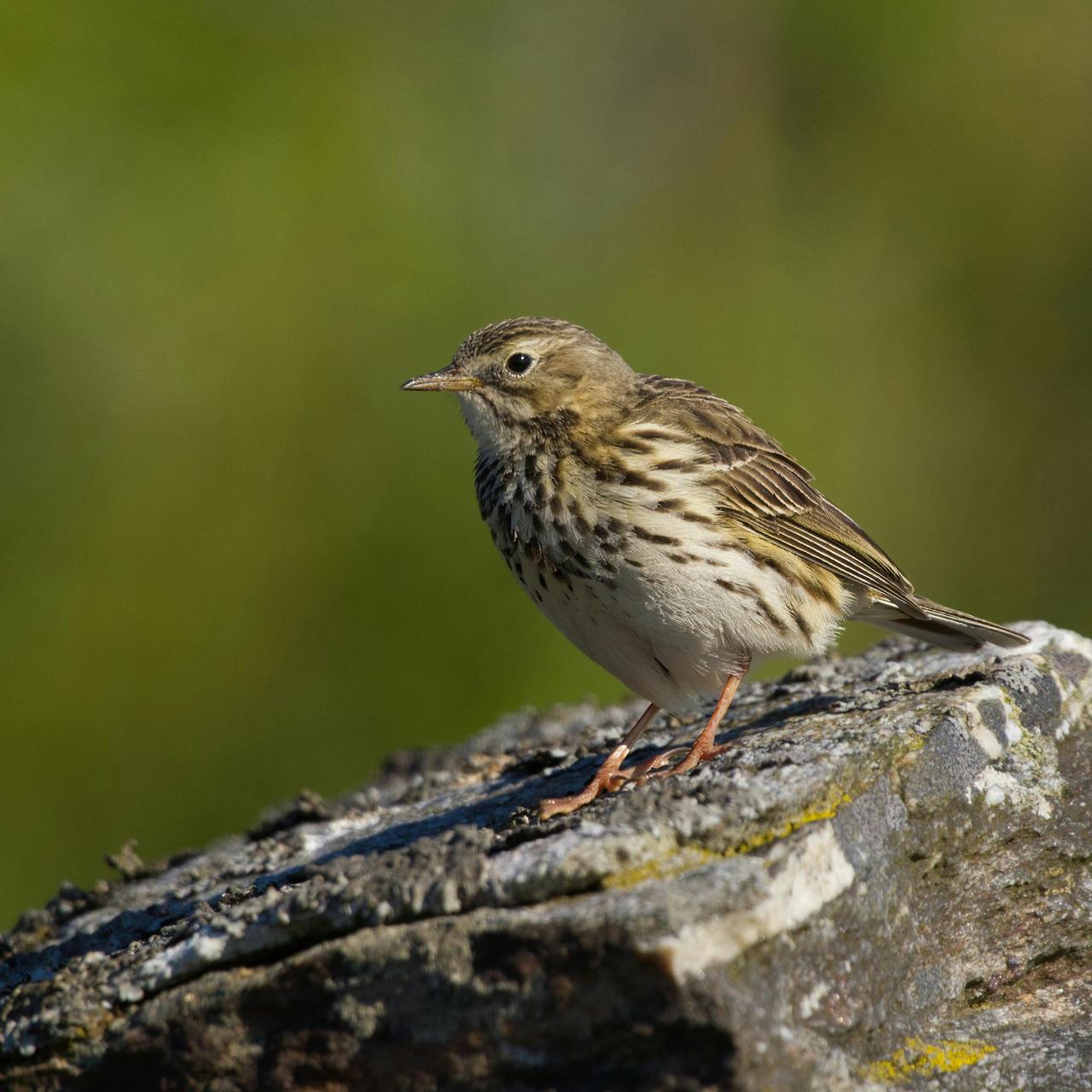
The wheatear is distinguished from other pipits by its larger size, lack of streaking on the underparts, prominent white supercilium, and black feathers on the median wing coverts. Adults have gray-brown upperparts with pale streaks. A thin dark line extends from the base of the bill, passing through the eye and toward the cheek. The rump is gray, and the tail feathers are brown. The underparts are typically unstreaked.
The legs range from pale yellow to light brown, and the hind claw is about half the length of the toe. The pale edges of the greater wing coverts form a distinct white wing bar. The bill is long, slender, and conspicuous. Juveniles have more pronounced streaking on the breast and resemble the rock thrush in appearance, but are more slenderly built.
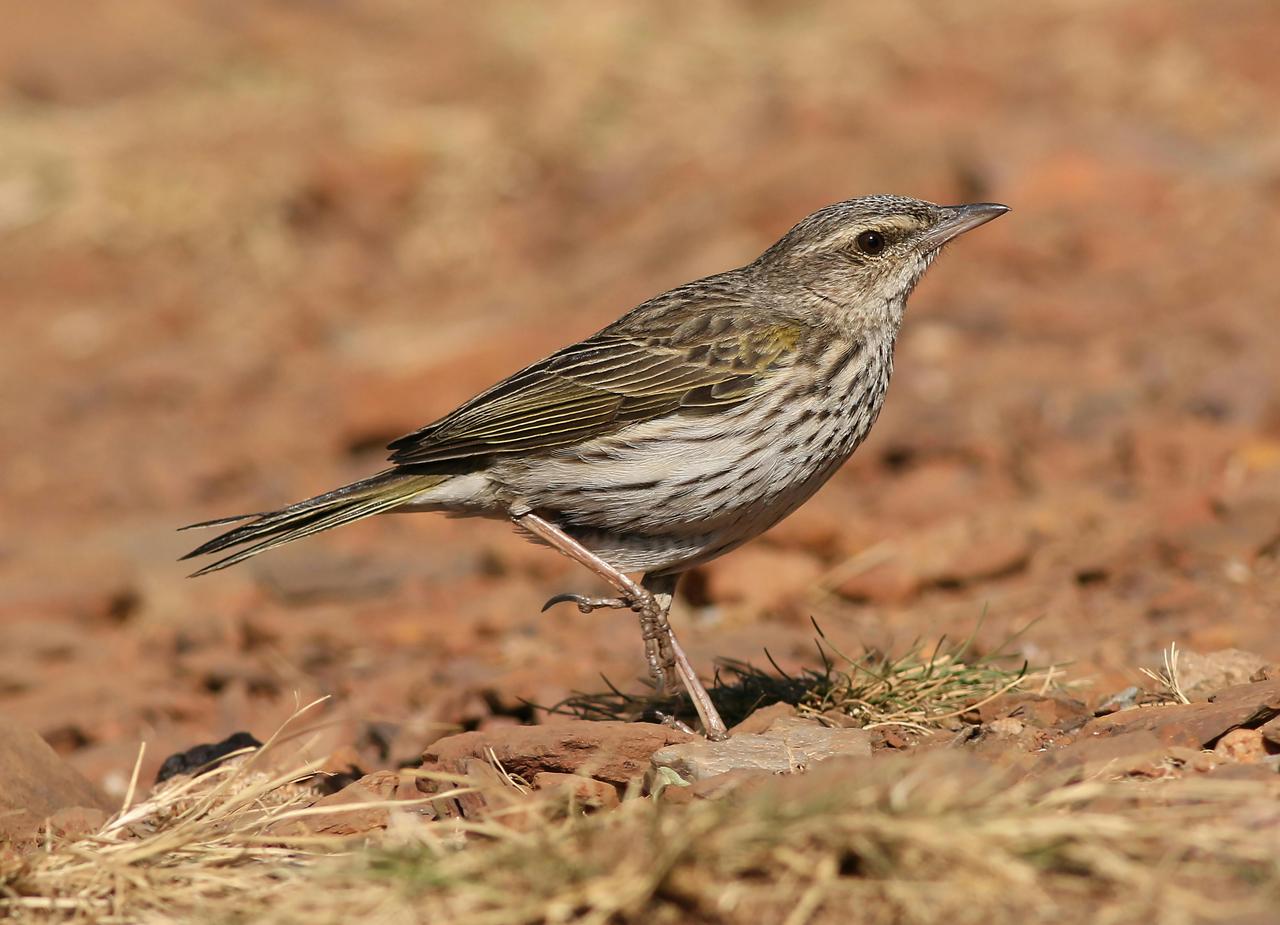
Wheatear (pexels)
The wheatear inhabits stony, dry, and open areas, including grasslands, agricultural fields, sparse shrublands, scrub, and sand dunes. It prefers open and sunny habitats and can be observed at elevations up to 2,500 meters. Breeding areas are typically dry and open. The nest is built in a shallow ground depression, lined with moss and concealed with dry leaves or plant material.
In most of Türkiye, it is observed as a summer migrant or passage migrant. Along the Black Sea coast, it is primarily a passage migrant. One of the most frequently observed locations is the Büyük Menderes Delta. In Europe, its range extends from Spain and Hungary to Bulgaria, and as far north as France, Sweden, and Denmark.
Its wintering grounds extend to West Africa, the Arabian Peninsula, southern Afghanistan, and India. Individuals wintering in the Mediterranean basin and in Türkiye have also been recorded.
It is an insectivorous species. It primarily feeds on the ground, chasing flies on foot and then making short pauses to spot prey. Occasionally, it catches insects by hopping or making short flights. It may also consume small seeds.
Males are primarily responsible for nest construction. The open side of the nest is usually oriented toward the east or north. Eggs are white, yellowish, or grayish, heavily spotted with dark markings. Incubation is carried out solely by the female.
The wheatear forages mostly on the ground in open areas. While feeding, it runs short distances and occasionally hops or makes brief flights to catch insects. Its flight is direct and strong; when landing, it rapidly descends with closed wings. It is often detected by its distinctive, low-pitched song in open and low-lying terrain.
It is estimated that between 2.1 and 3.9 million individuals breed in Europe. Due to its extensive range and large population size, the International Union for Conservation of Nature (IUCN) Red List classifies it as Least Concern. However, local declines have been observed in some regions due to habitat loss and agricultural activities.
Ornito. "Kır İncirkuşu." ORNITO.ORG. Accessed August 16, 2025. https://ornito.org/Bird/Detail/273
Pexels. "Güney Afrika'daki Kayalık Zeminde Yürüyen çizgili çalıkuşu JPG." Pexels. Accessed August 16, 2025. https://www.pexels.com/tr-tr/fotograf/guney-afrika-daki-kayalik-zeminde-yuruyen-cizgili-calikusu-33488995/
Pexels. “Kaya Üzerinde Tüneyen Bir Otücü Kuşun Yakın Çekim Görüntüsü JPG.” Accessed August 16, 2025. https://www.pexels.com/tr-tr/fotograf/kaya-uzerinde-tuneyen-bir-otucu-kusun-yakin-cekim-goruntusu-12399852/
İzmir Kuş Cenneti Koruma ve Geliştirme Birliği. "Kır İncirkuşu." İZKUŞ. Accessed August 16, 2025. https://izmirkuscenneti.gov.tr/2022/12/02/kir-incirkusu/

Realm | Animalia | ||||||||
|---|---|---|---|---|---|---|---|---|---|
Branch | Chordata | ||||||||
Class | Aves | ||||||||
Team(s) | Passeriformes | ||||||||
Family | Motacillidae | ||||||||
Genus | Anthus | ||||||||
Specie(s) | A. campestris | ||||||||
Conservation Status | Least Concern | ||||||||
No Discussion Added Yet
Start discussion for "Field Pipit (Anthus campestris)" article
Description and Physical Characteristics
Habitat
Distribution
Diet
Biology and Reproduction
Behavior
Population