

This article was automatically translated from the original Turkish version.
Most Prominent Area Seen | Ferhatarası Site (approximately 2 km section parallel to the highway) | ||||||||
|---|---|---|---|---|---|---|---|---|---|
Total Length | Approximately 20-25 kilometers | ||||||||
End Point | Amasya Mehmet Paşa Neighborhood | ||||||||
Starting Point | Amasya Central Meşeli Çiftliği Village, Kırkgöz Site | ||||||||
Intra-Urban Length | 6 kilometers | ||||||||
Related Legend | Ferhat and Shirin | ||||||||
Construction Period | Late Hellenistic - Early Roman Period | ||||||||
Location | Amasya Türkiye (Ferhatarası Site) | ||||||||
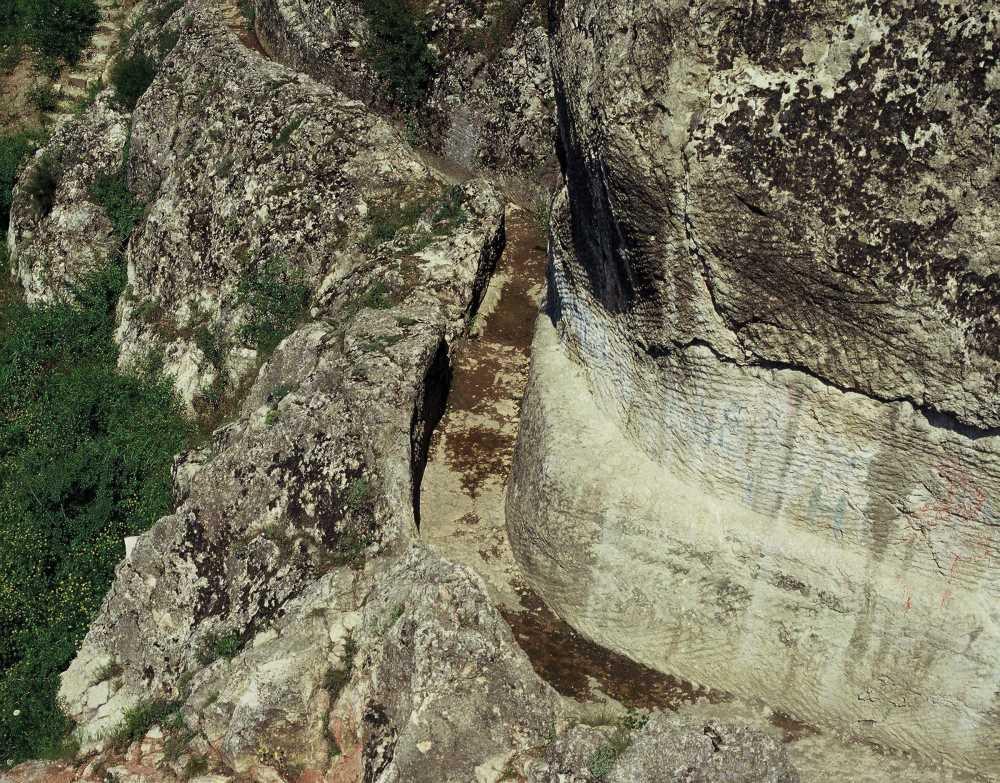
The Ferhat Water Channel is an ancient aqueduct constructed during the Late Hellenistic to Early Roman period to meet the water needs of the city of Amasya. The channel was created by carving into rock, excavating tunnels, and constructing walls where necessary. This structure, located along the southern slope of the Yeşilırmak Valley, represents an original example of ancient engineering techniques.
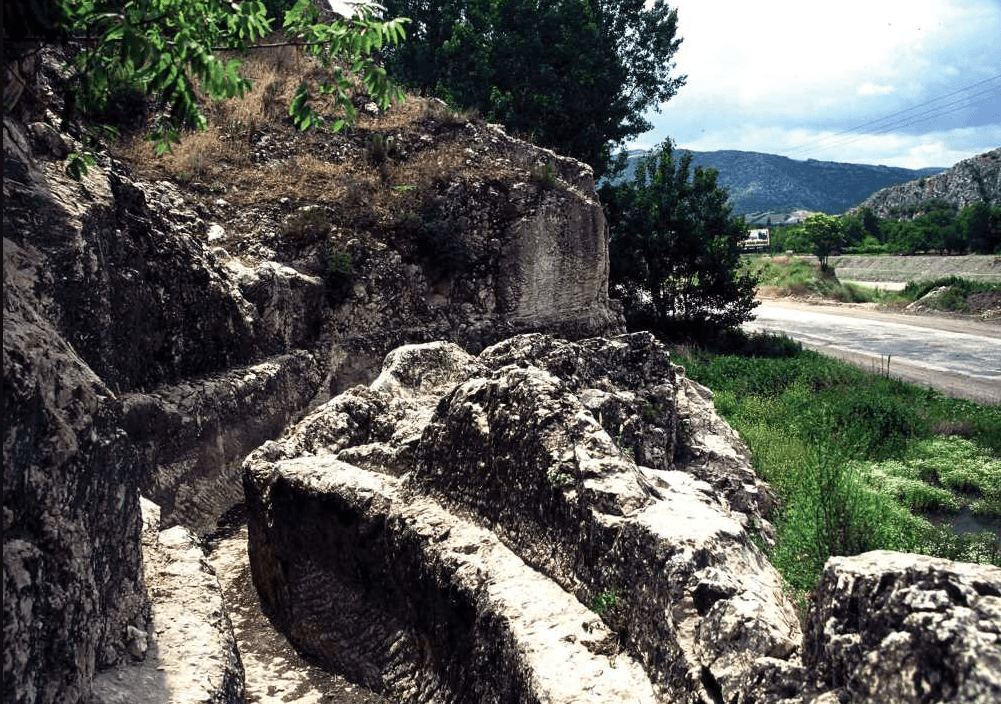
Ferhat Water Channel (Culture Portal)
The source of the channel is a spring located at the Kırkgöz locality within the boundaries of Meşeli Çiftliği Village in central Amasya. The water line extends from this point to the Mehmet Paşa Neighborhood of Amasya. The route of the channel was designed according to a specific leveling system that follows the natural slope of the terrain.
The section of the ancient channel that lies within the modern urban settlement is approximately six kilometers long. The most visible portion of the structure is found at the Ferhatarası locality, the western entrance to the city of Amasya. Here, a stretch of about two kilometers runs parallel to the Amasya-Tokat highway, while a further 675-meter section winds along the mountain slope toward the city, remaining visible above ground.
The Ferhat Water Channel was constructed using techniques such as carving directly into steep bedrock, excavating tunnels where rock obstacles could not be bypassed, and building stone arches over stream beds. The structure reflects the water engineering characteristics of its time in terms of materials and construction methods. The total length of the channel is approximately 25 kilometers, with a vertical drop of 75 meters between its source and endpoint. Some sources, however, report its length as 18 kilometers.
The structure is popularly known as the Ferhat Water Channel due to its location at the foot of Ferhat Mountain. This name associates the aqueduct with the famous folk tale of “Ferhat and Shirin.” According to the legend, the artisan Ferhat fell in love with Shirin, the sister of Sultan Mehmed. The sultan, unwilling to give his sister in marriage, set Ferhat the condition that he must tunnel through Elma Mountain to bring water to the city.
In the folk narrative, as Ferhat was nearing completion of the channel, he received false news through an old nurse sent by the sultan that Shirin had died. Upon hearing this, Ferhat threw his pickaxe into the air, and it fell back onto his head, killing him. When Shirin learned of his death, she threw herself from the cliffs and perished. It is believed that their graves lie side by side and that two roses bloom beside them each spring.
The Ferhat Water Channel is a protected immovable cultural heritage site. In collaboration with the Amasya Governorship, the Amasya Museum Directorate, and Gazi University, the “Ferhat Water Channel Conservation and Environmental Regulation Project” was implemented for the section of the channel located at Ferhatarası. As part of this project, documentation of the structure, damage assessment, geological surveys, and rock mechanics analyses were carried out.
Ministry of Culture and Tourism of the Republic of Türkiye. "Ferhat Su Kanalı." *Kültür Portalı*. Accessed January 13, 2026. https://kulturportali.gov.tr/turkiye/amasya/gezilecekyer/ferhat-su-kanali
Urak, Gediz, and Aksulu, Işık. "Documentation for Preservation of the Ferhat Water Canal in Amasya." *ODTÜ Mimarlık Fakültesi Dergisi* 23, no. 2: 93–112. https://jfa.arch.metu.edu.tr/uploads/docs/sayilar/sayi-23-2/93-112.pdf
Most Prominent Area Seen | Ferhatarası Site (approximately 2 km section parallel to the highway) | ||||||||
|---|---|---|---|---|---|---|---|---|---|
Total Length | Approximately 20-25 kilometers | ||||||||
End Point | Amasya Mehmet Paşa Neighborhood | ||||||||
Starting Point | Amasya Central Meşeli Çiftliği Village, Kırkgöz Site | ||||||||
Intra-Urban Length | 6 kilometers | ||||||||
Related Legend | Ferhat and Shirin | ||||||||
Construction Period | Late Hellenistic - Early Roman Period | ||||||||
Location | Amasya Türkiye (Ferhatarası Site) | ||||||||
Location and Route
Architectural and Technical Features
Historical and Cultural Context
Conservation Efforts