


This article was automatically translated from the original Turkish version.
February Bride is a malevolent entity frequently encountered in folk narratives of Southeastern Anatolia, particularly in parts of Eastern Anatolia and the Eastern Black Sea region, associated with the month of February. The areas where these narratives are most concentrated include Şanlıurfa, Mardin, Diyarbakır, and the surrounding regions of Bitlis/Ahlat. In these regions, February Bride is conceived as a seasonal female entity believed to cause harm to people, especially children and postpartum women.【1】
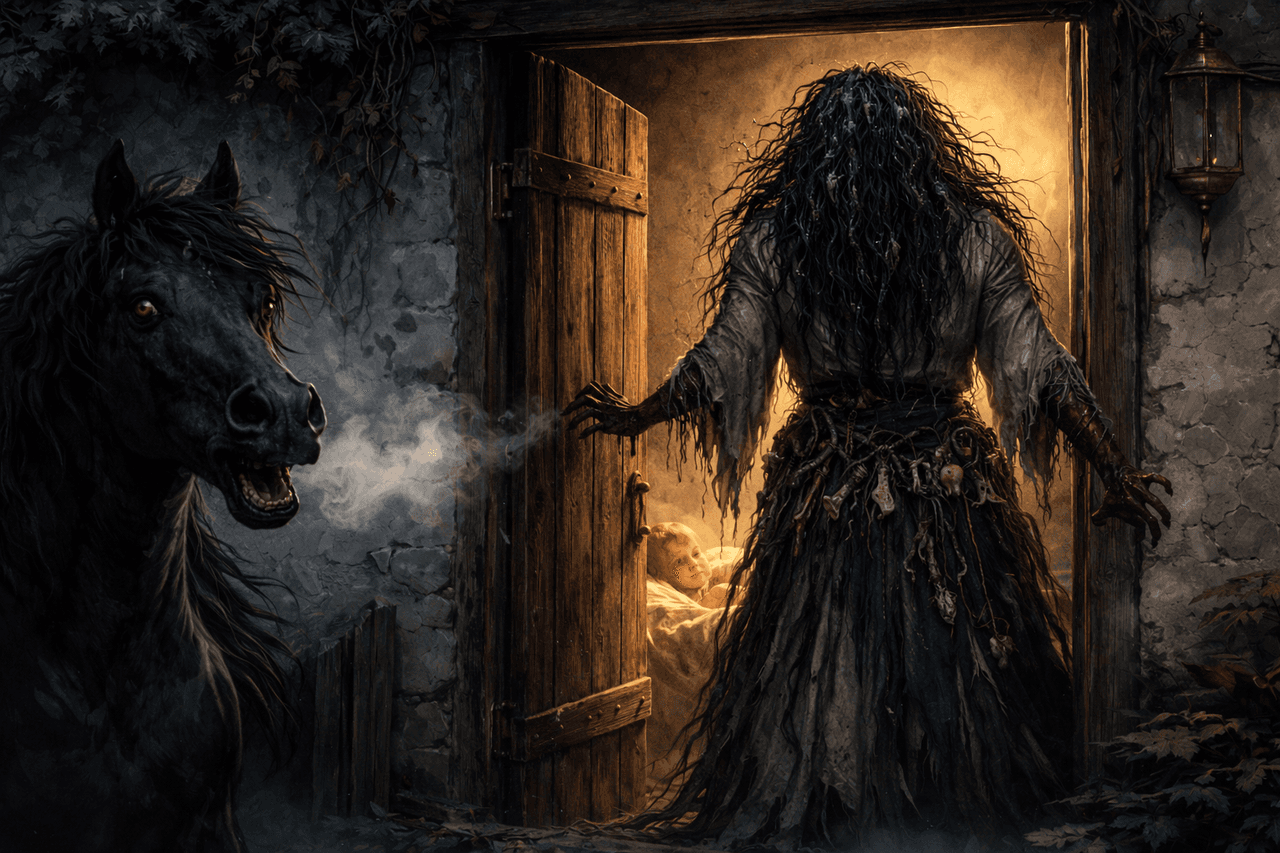
February Bride (Generated by Artificial Intelligence)
The name February Bride derives from the belief that the entity’s activity is confined to the month of February. February is regarded in these regions as an unlucky period associated with illness, death, and danger. The Middle Eastern cultural context includes the ritualized “Sabbath/February” month, which in Jewish tradition is linked to the term “shevat” and interpreted with meanings such as “striking” or “blowing,” indicating that this month was perceived as harsh and threatening.【2】 Similar conceptions known as “February Mother” in the Eastern Black Sea region and “Şıvat” around Elazığ suggest regional variations in naming and pronunciation of the February Bride belief.【3】
February Bride narratives cluster around specific locations: water wells, stables, chests where fine clothing forbidden to be worn are stored, postpartum rooms, and wedding ceremonies.【4】 These spaces are regarded in folk belief as threshold areas requiring protection. The emergence of February Bride in these locations indicates that she is perceived as a threat targeting socially sensitive domains such as childbirth, childhood, domestic order, and animal life.
February Bride is generally depicted with a human-like form. One of her most dangerous traits is her ability to appear before people in the guise of someone familiar. As a distinguishing feature, it is emphasized that her heels are positioned forward and her toes backward. In most narratives she is portrayed as a woman: naked, with long disheveled hair, and her large breasts thrown backward over her shoulders.
The primary behavior of February Bride is deception. It is believed she can mimic the voices of known individuals and assume their appearances. Using this method, she lures children toward her, leads them to wells, and drowns them in water. Some accounts state that she abducts young children from their families and kills them in the same manner.【5】
Additionally, February Bride is described as a spirit that possesses animals and can be encountered in stables and other places associated with livestock. It is believed she wears clothing that women are forbidden to wear, and she haunts chests and stored belongings. She is also portrayed as an entity that can appear during crowded social events such as weddings. All these contexts demonstrate that February Bride manifests not only within the domestic sphere but also at thresholds beyond it.【6】
Şanlıurfa is the center where February Bride narratives are most prominently recorded. Here it is believed that the entity emerges from wells every February. Similar narratives exist around Mardin and Diyarbakır, where it is accepted that February Bride resides in the well during the rest of the year and only appears on earth during February.
In the Ahlat district of Bitlis, however, the belief in February Bride takes on a different context. In this variant, the entity is perceived as a threat specifically to postpartum women who give birth in February. In this way, the Ahlat narratives diverge from the well-centered tales targeting children and instead form a belief system centered on childbirth and postpartum vulnerability.
The manner in which February Bride possesses humans and animals resembles aspects of the albastı narratives. However, this similarity is considered limited because February Bride does not target postpartum women, unlike albastı. In some variants, February Bride takes on a form resembling albastı; in certain accounts she is described by the public as a terrifying evil spirit known as “cin,” and at times she is likened to malevolent water spirits.【7】 The presence of similar capture motifs—such as being trapped with a hooked needle and made to serve as a household spirit, as in the cases of karabasan and albastı—suggests that February Bride occupies a transitional position within local demonological conceptions.【8】 Like such entities, her aim is not to kill directly but through seemingly natural means.
Protective practices against February Bride are widely described in the narratives. The most frequently recurring element is the use of iron as a protective substance. Attaching a hooked needle to clothing and placing iron objects on chests are common practices. It is believed that February Bride can be captured by driving a hooked needle into her when she possesses an animal. The entity is also thought to vanish when prayers are recited.
In the Ahlat region, protective measures for postpartum women are more varied. A scythe, knife, or metal tool is placed under the woman’s pillow, and weapons are hung on the walls of the room. It is believed that February Bride appears only to the eyes of the postpartum woman, who then calls her husband and makes him fire a weapon; the sound of the gunshot frightens the entity into fleeing. Additionally, a male horse is made to neigh at the door of the postpartum room, based on the belief that only a male horse can see February Bride and that the entity fears horses.【9】
Ayaz, Sema, and Murat Aydın. “Geçmişten Günümüze Anadolu’da ‘Geçiş/Sınır Geçme Ritüelleri’nde Kapı ve Eşik.” *Türk Kültürü ve Hacı Bektaş Velî Araştırma Dergisi*, no. 114 (June 2025): 467–477. Accessed December 27, 2025. https://dergipark.org.tr/en/pub/tkhcbva/issue/92550/1656119
Duman, Elif. *Türk Mitolojisinde Kötü Dişil Varlıklar*. Master's thesis, İstanbul Kültür Üniversitesi Lisansüstü Eğitim Enstitüsü, 2023. Accessed December 27, 2025. https://openaccess.iku.edu.tr/items/784cbdf1-becf-41e0-b078-37a2f7767f84
Ergöz, Ramazan. “Van Gölü Havzası Halk İnanışlarında Kapı ve Eşik.” *Folklor Akademi Dergisi* 6, no. 3 (2023): 1208–1230. Accessed December 27, 2025. https://dergipark.org.tr/tr/pub/folklor/article/1383977
Kalafat, Yaşar. “Orta Doğu Örneklemeleri ile Türk Kültürlü Halklarda Mitolojik Dişil İyeler ve Ruhlar.” Fırat Üniversitesi Orta Doğu Araştırmaları Merkezi Uluslararası Dördüncü Orta Doğu Semineri (İlkçağlardan İslamiyetin Doğuşuna Kadar Orta Doğu). Elazığ, May 29–31, 2009. Accessed December 27, 2025. https://isamveri.org/pdfdrg/D194950/2011/2011_KALAFATY.pdf
Sancak, Nuriye. *Mardin Efsaneleri*. Master's thesis,Sakarya Üniversitesi Institute of Social Sciences, 2008. Accessed December 27, 2025. https://acikerisim.sakarya.edu.tr/bitstream/handle/20.500.12619/92830/T03837.pdf?sequence=1
[1]
Elif Duman, “Türk Mitolojisinde Kötü Dişil Varlıklar” (Yüksek Lisans Tezi, İstanbul Kültür Üniversitesi Lisansüstü Eğitim Enstitüsü, 2023), s. 130.
[2]
Elif Duman. (a.g.e), s. 130.
[3]
Yaşar Kalafat, “Orta Doğu Örneklemeleri ile Türk Kültürlü Halklarda Mitolojik Dişil İyeler ve Ruhlar” (Fırat Üniversitesi Orta Doğu Araştırmaları Merkezi Uluslararası Dördüncü Orta Doğu Semineri’nde sunulan bildiri, Elazığ, 29–31 Mayıs 2009), s. 396.
[4]
Elif Duman. (a.g.e), s. 131.
[5]
Nuriye Sancak, “Mardin Efsaneleri” (Yüksek Lisans Tezi, Sakarya Üniversitesi Sosyal Bilimler Enstitüsü, 2008), s. 92.
[6]
Ramazan Ergöz, “Van Gölü Havzası Halk İnanışlarında Kapı ve Eşik,” Folklor Akademi Dergisi 6, sy. 3 (2023), s. 1218-1219.
[7]
Nuriye Sancak. (a.g.e), s. 92.
[8]
Elif Duman. (a.g.e), s. 131.
[9]
Sema Ayaz ve Murat Aydın, “Geçmişten Günümüze Anadolu’da ‘Geçiş/Sınır Geçme Ritüelleri’nde Kapı ve Eşik,” Türk Kültürü ve Hacı Bektaş Velî Araştırma Dergisi, sy. 114 (Haziran 2025), s. 472.


Naming and Temporal Context
Geographical Context
Physical Appearance
Behavior and Function
Geographical Spread and Regional Variants
Relationship with Other Malevolent Entities
Protective Measures