


This article was automatically translated from the original Turkish version.
Additive manufacturing technologies are systems developed as alternatives to traditional manufacturing methods, producing objects in three dimensions from digital models. Among these technologies, FDM (Fused Deposition Modeling) is a widely used additive manufacturing technique that works by melting and depositing material layer by layer. Due to features such as low cost, system simplicity, and a broad range of compatible materials, it is preferred across various industries.
FDM distinguishes itself from other additive manufacturing methods such as SLS, SLA, and DMLS primarily due to its low investment cost and ease of use. FDM printers can be used in prototyping workshops, schools, and even homes. However, they have certain limitations in terms of surface quality and mechanical properties. Parts produced via FDM may exhibit lower mechanical strength compared to those produced by methods such as laser sintering. Nevertheless, the ease of process control and the continuous expansion of material options are enhancing the advantages of this method.
FDM was first developed by Scott Crump in 1988 and later commercialized by Stratasys. According to ASTM standards, the FDM process is classified under the title “Material Extrusion” and is based on the principle of melting thermoplastic materials and depositing them layer by layer through a nozzle. Although initially developed for prototyping, today FDM is also used for the production of end-use parts.
An FDM system consists fundamentally of three main components: a filament feeding system, a heating unit (nozzle), and a build platform. The process begins when a polymer-based filament is fed by a motor into the heating zone. The material is melted and extruded as a fine filament, which is deposited onto the build platform according to the predetermined geometry. After each layer cools and solidifies, the next layer is added on top until the object is fully formed in three dimensions.
The primary materials used in FDM production are thermoplastic polymers. These polymers are suitable for layer-by-layer manufacturing processes due to their low melting temperatures and viscosity characteristics. The most commonly used materials include polylactic acid (PLA), acrylonitrile butadiene styrene (ABS), polycarbonate (PC), polyethylene terephthalate glycol (PETG), and nylon.
PLA is particularly favored for prototyping and educational applications due to its biodegradable nature and ability to be processed at low temperatures. ABS, on the other hand, is used in functional prototypes and engineering applications because of its higher impact resistance and heat resistance.
In recent years, composite filaments and polymers with functional additives designed specifically for the FDM process have attracted attention. For example, PLA and ABS filaments reinforced with carbon fiber, glass fiber, or graphene are used to enhance mechanical strength and thermal conductivity. Additionally, specialized filament types containing conductive polymers, antimicrobial additives, and flame retardants have also been developed.
The properties of materials used in FDM are not only influenced by printing parameters but also by physical characteristics such as crystallization behavior, cooling rate, and coefficient of thermal expansion. Controlling these parameters directly affects the quality of interlayer adhesion and, consequently, the mechanical properties of the part.
Meanwhile, research into the use of recycled polymers in FDM processes is increasing from the perspective of environmental sustainability. Studies on the processability and performance of materials such as recycled PET, HDPE, and PLA have demonstrated their potential to reduce environmental impact.
FDM technology is widely used in diverse sectors such as automotive, aerospace, medical, education, and consumer electronics. In the automotive industry, it is employed for prototyping and part validation; in the medical sector, it is used for producing customized implants, orthoses, and prostheses. Additionally, in educational institutions, it serves as a supportive tool for teaching engineering design processes. Thanks to advancing material technologies, it is now possible to produce parts with conductive, heat-resistant, or biodegradable properties using FDM.
FDM technology offers a broad range of applications in the medical field. It is particularly utilized for customized implants, prostheses, and in the field of biological tissue engineering. FDM-produced biomimetic structures enable the development of organic tissue production and medical devices compatible with the human body. Moreover, personalization and manufacturing of medical devices such as dental prostheses have become more efficient thanks to this technology.
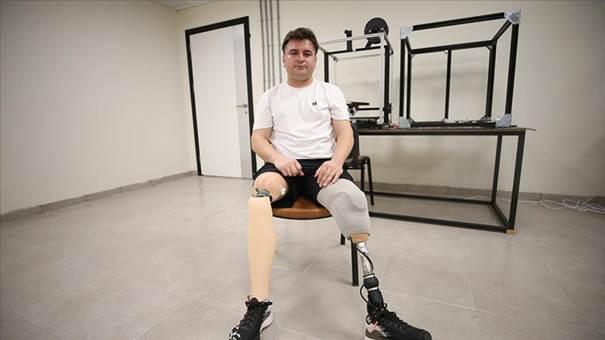
Prosthetic protector produced via additive manufacturing (AA)
FDM plays a significant role in the production of electronic devices and sensors. Integrated circuits and sensor elements can be manufactured using electrically conductive filaments and polymer-matrix sensors, offering alternative solutions to conventional electronic manufacturing methods. Additionally, FDM enables the production of lighter and more flexible electronic devices. These characteristics are particularly important for wearable technology and medical device manufacturing.
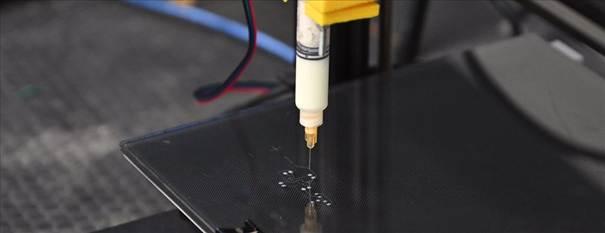
Circuit boards produced via additive manufacturing (AA)
In the automotive and aerospace industries, FDM has a wide range of applications from prototyping to functional part production. Aircraft and automobile components are manufactured using high-temperature-resistant materials and composites. FDM-produced prototypes are used in design validation processes, enabling faster production cycles and reduced costs. Furthermore, this technology provides efficient solutions in industrial part manufacturing by considering critical factors such as lightweighting and durability.
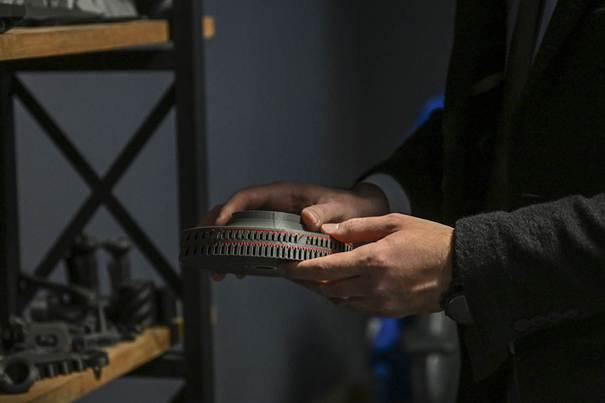
Automotive components produced via additive manufacturing (AA)
In educational institutions and research laboratories, FDM technology provides students and researchers with the ability to rapidly produce prototypes and conduct design tests. FDM printers enable the simple and low-cost production of complex geometries. Moreover, in academic research and experimental studies, models produced via FDM technology facilitate the visualization and testing of concepts.
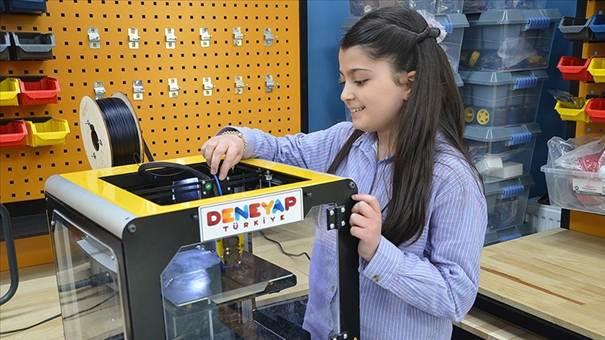
FDM printers used in Deneyap workshops established for students (AA)
FDM is transforming the fashion industry. Customized jewelry, accessories, and garments can be produced quickly and at low cost using FDM printers. Complex geometries and personalized designs are achievable through this technology. It supports more sustainable production processes in fashion by enabling the creation of individualized designs.
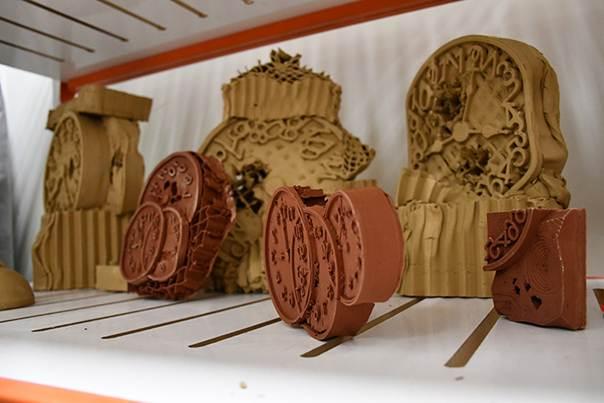
Biblos produced via additive manufacturing (AA)
In food production, food inkjet printing has been developed to optimize nutritional content on an individual basis. This technology enables the production of food products tailored to individual dietary needs, offering personalized nutrition solutions in the food industry.
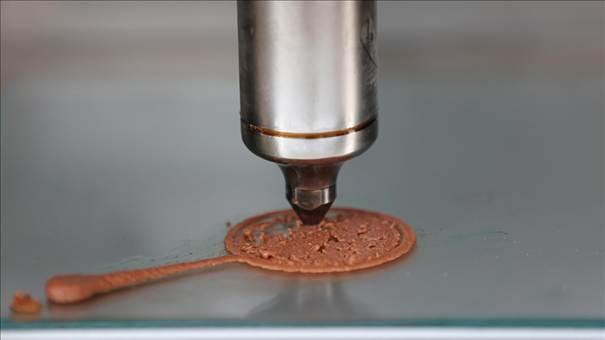
Food production via additive manufacturing (AA)
In the construction industry, structures are built using concrete and cement-based materials. FDM-based construction offers environmentally friendly and low-cost solutions. Moreover, thanks to the layer-by-layer production method, building components can be manufactured more rapidly and with less labor.
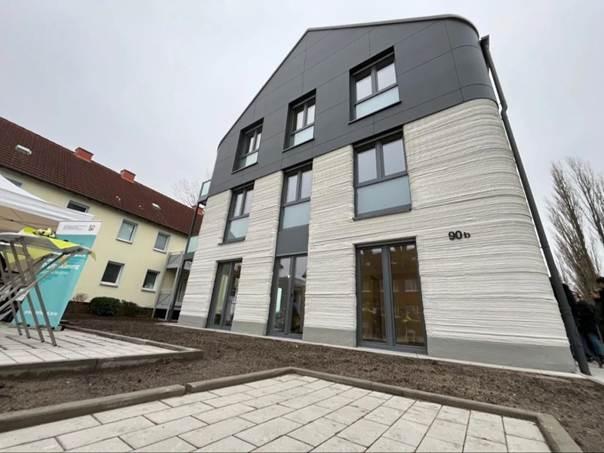
Structure built via additive manufacturing (AA)
Aisyah, S. N., & Widodo, A. (2021). Optimization of 3D printing process parameters on the FDM method using the Taguchi method. *ASSET: Journal of Technology and Vocational Education*, *1*(2), 99–106.https://journal2.upgris.ac.id/index.php/asset/article/view/1215/655
Aksöz, E. Ö., & Kıvak, T. (2023). Investigation of the mechanical and tribological properties of PLA/wood filament printed by fused deposition modeling (FDM) method. *Lubricants*, *13*(3), 98.https://www.mdpi.com/2075-4442/13/3/98
Arslan, E. (2021). Farklı nozul çapı ve baskı hızının FDM yöntemi ile üretilmiş polimer parça üzerindeki etkisinin araştırılması. *Journal of Innovative Science and Engineering Technologies*, *4*(2), 49–56.https://dergipark.org.tr/tr/pub/jist/issue/61423/772977
Asiltürk, I., & Aslan, R. (2021). FDM tipi 3D yazıcılarla üretilen parçalarda farklı baskı parametrelerinin mekanik özelliklere etkilerinin incelenmesi. *Engineering Sciences (GMB Dergisi)*, *16*(1), 60–70.https://dergipark.org.tr/en/pub/gmbd/issue/81757/1392697
Gok, A., & Uzun, H. (2023). Dimensional accuracy improvement in fused deposition modeling (FDM) using statistical modeling and optimization. *The International Journal of Advanced Manufacturing Technology*, *125*, 3899–3918.https://link.springer.com/article/10.1007/s12008-023-01354-0
Mahapatra, S. S., & Sood, A. K. (2024). Mechanical characterization and dimensional precision in FDM printed parts. In A. K. Sood & S. S. Mahapatra (Eds.), *Additive Manufacturing Technologies From 3D Printing to Industry 4.0* (pp. 91–110). Springer.https://link.springer.com/chapter/10.1007/978-981-96-1274-1_5
Molla, M. K., & Mollick, M. M. R. (2023). Comprehensive review on advanced fused deposition modeling (FDM) printing process: Challenges and future directions. *Additive Manufacturing Letters*, *5*, 100228.https://www.sciencedirect.com/science/article/pii/S2590123025010175
Petry, L. A., Oliveira, M. M., Azambuja, D. S., and Amico, S. C. (2023). Effect of printing parameters on FDM 3D printed polylactic acid reinforced with graphene nanoplatelets. *Polymers*, *17*(2), 191.https://www.mdpi.com/2073-4360/17/2/191
Yücel, A., & Temiz, Ş. (2020). FDM ile üretilen kompozit yapıların mekanik özelliklerinin karşılaştırılması. *International Journal of 3D Printing Technologies and Digital Industry*, *4*(2), 99–110.https://dergipark.org.tr/tr/pub/ij3dptdi/issue/63100/838281
Çevik, S., & Tunçay, R. (2021). 3D baskı teknolojisiyle gıda üretimi ve uygulama alanları. *Eurasian Journal of Food Science and Technology*, *1*(2), 44–51.https://dergipark.org.tr/tr/pub/etoxec/issue/72705/1166445

No Discussion Added Yet
Start discussion for "FDM (Fused Deposition Modeling)" article
Definition and History of the FDM System
Working Principle of the FDM Method
Materials Used in FDM Technology
Application Areas
Medical and Biomedical Applications
Electronics and Sensor Technologies
Automotive and Aerospace Industries
Education and Research Areas
Art, Fashion, and Jewelry Design
Food Production
Construction Industry