


This article was automatically translated from the original Turkish version.
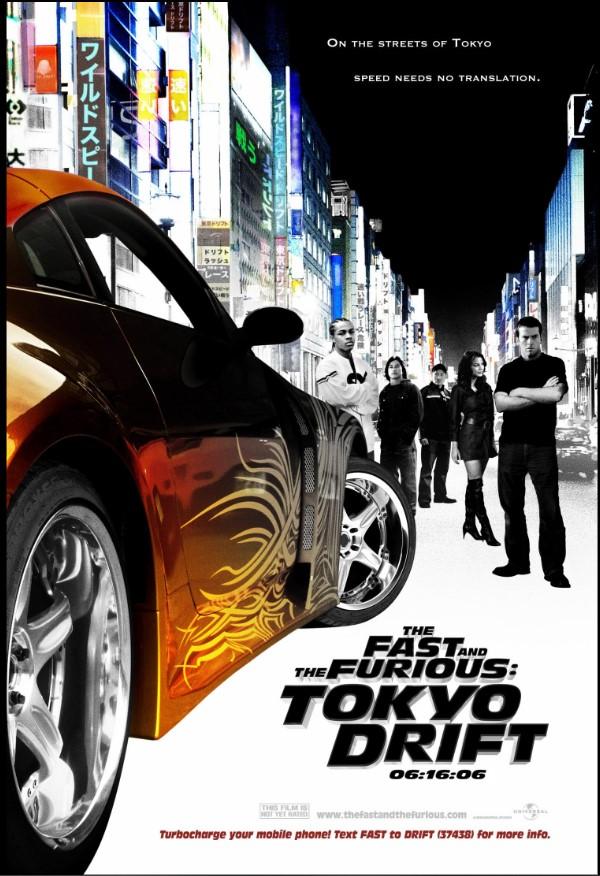
Fast and Furious: Tokyo Race
Director | Justin Lin | ||||||||
|---|---|---|---|---|---|---|---|---|---|
Release Date(s) | 2006 | ||||||||
Actor | Nathalie Kelley Brian Tee Sung Kang Bow Wow Lucas Black | ||||||||
Screenwriter | Chris Morgan | ||||||||
Fast & Furious: Tokyo Drift is an American action film released in 2006 and positioned as the third installment in the Fast & Furious series. Unlike the first two films it does not directly continue their narrative but instead presents an independent side story within the series’ fictional universe. Directed by Justin Lin and produced by Neal H. Moritz the film gains an international dimension through its plot set in Japan.
The film centers on Sean Boswell played by Lucas Black a teenage high school student who is sent to Tokyo after getting involved in street racing in the United States. In Japan Sean encounters a completely different culture where street racing is based on a specialized technique known as drifting. He becomes entangled with members of a mafia-linked gang and master drifters ultimately reconstructing his identity as a racer and his personal ethical values.
The film progresses through themes such as identity search cultural difference conflict with established order and personal transformation like. It also offers various subtexts within the context of Japanese underground culture youth sociology and technological vehicle modifications.
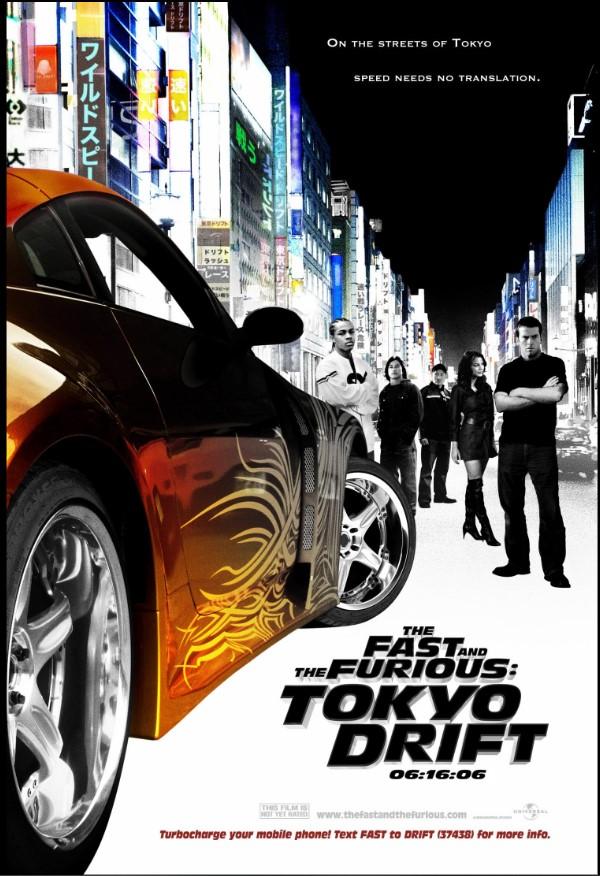
Fast & Furious: Tokyo Drift (IMDb)
Lucas Black takes the lead role as Sean Boswell. Key supporting characters include Sung Kang as Han Lue Nathalie Kelley as Neela Brian Tee as Takashi DK and Bow Wow as Twinkie. In particular the character of Han portrayed by Sung Kang is structured to become a significant figure in later films of the series. Vin Diesel appears in a short but critical scene establishing a structural connection to maintain narrative continuity within the series.
The film is directed by Justin Lin who would go on to become a permanent figure in the series. Lin integrates diverse cultures into the franchise bringing an international dynamism and blending the action-driven narrative with a more sophisticated visual storytelling. The screenplay written by Chris Morgan for the first time in the series focuses on a character’s transformation through physical space. The story synthesizes the classic American street racing narrative with Asian culture aiming for a more universal narrative level.
Photographed by Stephen F. Windon the film visually captures Tokyo’s nightlife and dense urban texture with great intensity. In keeping with the nature of drifting the camera movements are designed as controlled slippery and long tracking shots. Additionally scenes filmed on real locations and minimal use of CGI lend the film a sense of realism. Interior vehicle shots are combined with wide-angle lenses to convey the dynamics within the car.
The film was shot largely in Tokyo Japan and to a limited extent in Los Angeles. Filming on real city streets particularly on narrow and sloped roads used for drifting enhances the sense of spatial authenticity. Vehicle modifications emphasize aesthetics specific to Japanese automobile culture. In production design a balance is established between neon lighting narrow alleys Japan-specific infrastructure systems and the contrast between traditional and modern elements.
Although Fast & Furious: Tokyo Drift was initially regarded as the weakest link in the series at the box office it has since become a cult classic. Made on a budget of approximately 85 million dollars the film earned 158 million dollars worldwide. However its true impact lies in the transformation it brought to the series’ narrative structure. It contributed significantly to the global recognition of drifting culture and notably increased the franchise’s popularity in Asian markets. The character of Han portrayed by Sung Kang received great audience acclaim and was later reintroduced in subsequent films.
Beyazperde. “Hızlı ve Öfkeli: Tokyo Yarışı – Fragman.” Accessed April 15, 2025.https://www.beyazperde.com/filmler/film-61256/fragman-18630767/.
IMDb. “The Fast and the Furious: Tokyo Drift (2006) – IMDb.” Accessed April 15, 2025.https://www.imdb.com/title/tt0463985/?ref_=vp_ov_t.
YouTube. “The Fast and the Furious: Tokyo Drift – Official Trailer [HD].” Uploaded by Universal Pictures, June 2006. Accessed April 15, 2025.https://www.youtube.com/watch?v=GEa2GtCNolU.

Fast and Furious: Tokyo Race
Director | Justin Lin | ||||||||
|---|---|---|---|---|---|---|---|---|---|
Release Date(s) | 2006 | ||||||||
Actor | Nathalie Kelley Brian Tee Sung Kang Bow Wow Lucas Black | ||||||||
Screenwriter | Chris Morgan | ||||||||
No Discussion Added Yet
Start discussion for "Fast and Furious: Tokyo Drift (Film)" article
Plot and Thematic Structure
Cast
Director and Screenplay
Cinematography and Visual Storytelling
Setting and Production Design
Cultural Impact and Box Office Performance