


This article was automatically translated from the original Turkish version.
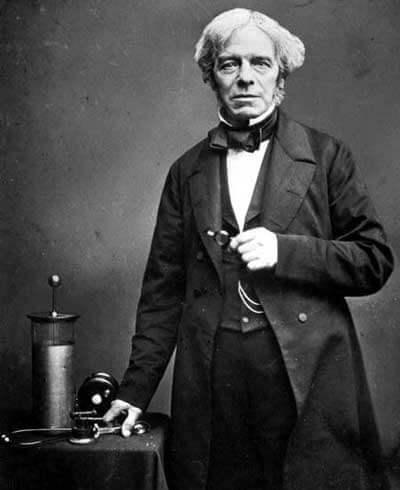
Faraday's Law
Discoverer | Michael Faraday | ||||||||
|---|---|---|---|---|---|---|---|---|---|
Date | 1830 | ||||||||
Faraday's Law is one of the foundational principles of electromagnetic field theory, explaining how time-varying magnetic fields generate electric fields. This law mathematically defines the relationship between electricity and magnetism and determines how a changing magnetic field induces an electrical effect in a circuit.
class=\
Faraday's Law states that a time-varying magnetic field induces an electric field along a closed loop. This law explains the interaction between electric and magnetic fields and enables the conversion of magnetic energy into electrical energy. The general formulation of Faraday's Law is as follows:
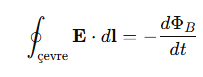
Where:

The term on the right side of the mathematical equation represents the rate of change of magnetic flux over time, and this change generates an electric field. According to Faraday's Law, the electric field induced by the changing magnetic flux opposes the change in magnetic flux at every moment. This property is consistent with the principle of energy conservation and forms the basis of electromagnetic induction.
Faraday's Law states that a change in magnetic field induces an electrical force (electromotive force or emf). This force typically arises around a wire loop or coil and can drive an electric current. Electromotive force (emf) is measured in volts and represents the work done per unit charge.
On a wire loop, a change in the magnetic field induces an electric current in the wire. This current can convert electrical energy into mechanical energy. According to Faraday's Law, the magnitude of this electromotive force depends on the rate of change of the magnetic field and the characteristics of the wire loop. One of the most important consequences of Faraday's Law is that changing magnetic fields can generate electrical energy without an external energy source.
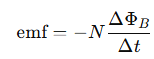
According to Faraday's Law, the electromotive force (emf) in a circuit is proportional to the rate of change of magnetic flux. This rate can be calculated as follows:
class=\
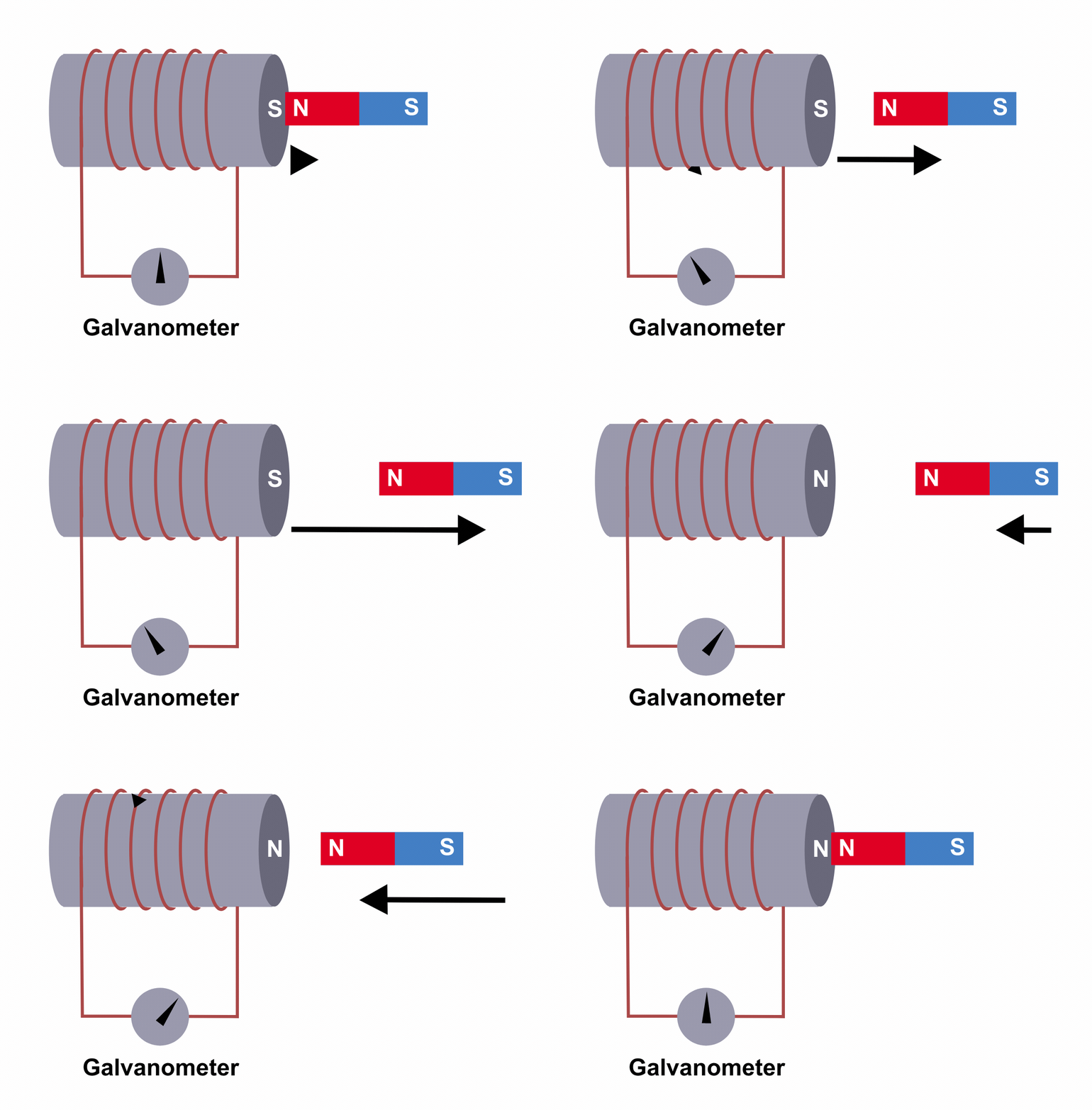
The negative sign in Faraday's Law indicates the direction of the dynamic (induced) field. According to Lenz's Law, the electromotive force induced to produce a current will oppose the change in magnetic flux. This principle implies that a current is generated to resist the change in the magnetic field. For example, when a magnet is rapidly moved toward a wire loop, a current is induced in the wire. This current generates a magnetic field that opposes the increase in the external magnetic field.
As the speed of the magnet increases, the magnetic flux through the wire loop also increases. In this case, a current is induced in the loop. According to Lenz's Law, this current produces a magnetic field that opposes the motion of the magnet. As a result, the motion of the magnet is slowed by the wire loop.
Faraday's Law forms the basis of many technological applications in daily life. Devices such as electric generators, transformers, and electric motors operate on the principles of Faraday's Law. Electric generators produce electrical energy by moving a magnetic field. Transformers change the voltage level of alternating current by altering its magnetic field.
In electric motors, an electric current is made to move within a magnetic field to produce mechanical energy. Faraday's Law explains the relationship between changing magnetic fields and electric currents in these applications, making it a cornerstone of engineering and physics.
Faraday's Law explains how magnetic fields generate electric fields and establishes the foundation of electromagnetic induction. As part of Maxwell's equations, it enables the understanding of interactions between electricity and magnetism. Lenz's Law determines the direction of these interactions and supports the conservation of energy.
Faraday's Law and Lenz's Law form the foundation of modern electrical devices and electromagnetic technologies and have played a crucial role in the development of widely used technologies such as electric generators, motors, and transformers in everyday life.
"Joseph Henry." Member Directory, National Academy of Sciences, Accessed December 30, 2016.
Clerk Maxwell, James. A Treatise on Electricity and Magnetism. Vol. 2, 3rd ed., Oxford University Press, 1904, pp. 178–179, 189.
Faraday, Michael, and P. Day. The Philosopher's Tree: A Selection of Michael Faraday's Writings. CRC Press, February 1, 1999, p. 71. ISBN 978-0-7503-0570-9. Accessed August 28, 2011.
Williams, L. Pearce. Michael Faraday. Basic Books, 1965.

Faraday's Law
Discoverer | Michael Faraday | ||||||||
|---|---|---|---|---|---|---|---|---|---|
Date | 1830 | ||||||||
The Fundamental Principle of Faraday's Law
Induced Electromotive Force (emf)
Direction of the Induced Field
Applications of Faraday's Law