+1 More

Birth Name | Fahrünnisa Şakir | ||||||||
|---|---|---|---|---|---|---|---|---|---|
Spouse | İzzet Melih Devrim (1920-1934) Emir Zeyd (1934-1970) | ||||||||
Other Name | Fahrelnissa Zeid | ||||||||
Date of Birth | 1901-12-06 | ||||||||
Place of Birth | Büyükada Istanbul Ottoman Empire | ||||||||
Date of Death | 1991-09-05 | ||||||||
Place of Death | Amman Jordan | ||||||||
Father | Mehmed Şakir Pasha | ||||||||
Mother | Sare İsmet Hanım | ||||||||
Siblings | Cevat Şakir Kabaağaçlı Aliye Berger | ||||||||
Child | Raad bin Zeyd Faruk Devrim Nejad Melih Devrim Şirin Devrim | ||||||||
Occupation | Painter | ||||||||
Art Movement | Abstract Expressionism | ||||||||
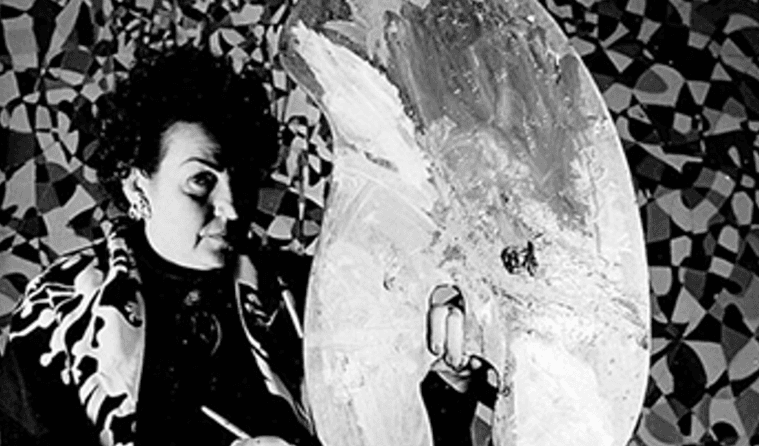
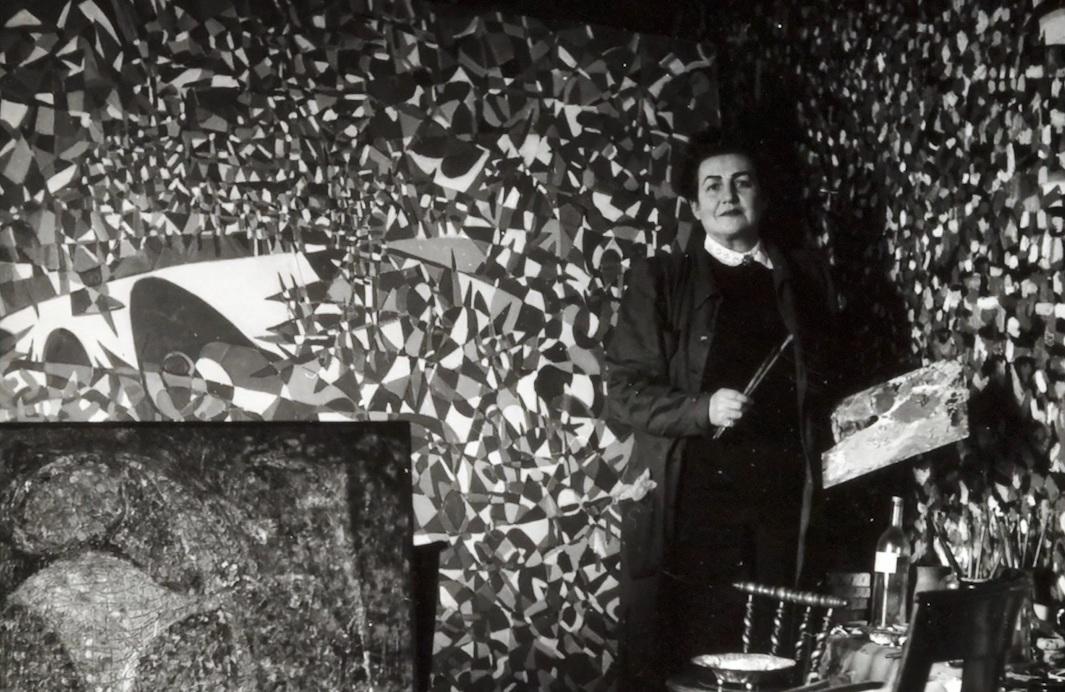
Fahrünnisa Zeid (1901–1991) was one of the first female artists to play a significant role in the development of modern painting in Türkiye. Her artistic career unfolded in parallel with the social and cultural transformations of the 20th century, reflecting a formal quest for innovation through a style that evolved from figuration to abstraction. Her works attracted attention in both national and international art circles.
The Life and Works of Fahrünnisa Zeid (TRT 2)
Fahrünnisa Zeid was born as Fahrünnisa Şakir in 1901 on Büyükada, Istanbul. She was a member of an intellectual and aristocratic family. Her father was the soldier, diplomat, and historian Kabaağaçlı Mehmed Şakir Paşa, and her mother was Sare İsmet Hanım. Her uncle, Cevad Paşa, served as a grand vizier during the reign of Sultan Abdülhamid II. Her siblings were the writer known as Cevat Şakir Kabaağaçlı, “The Fisherman of Halicarnassus,” and the engraver Aliye Berger.【1】
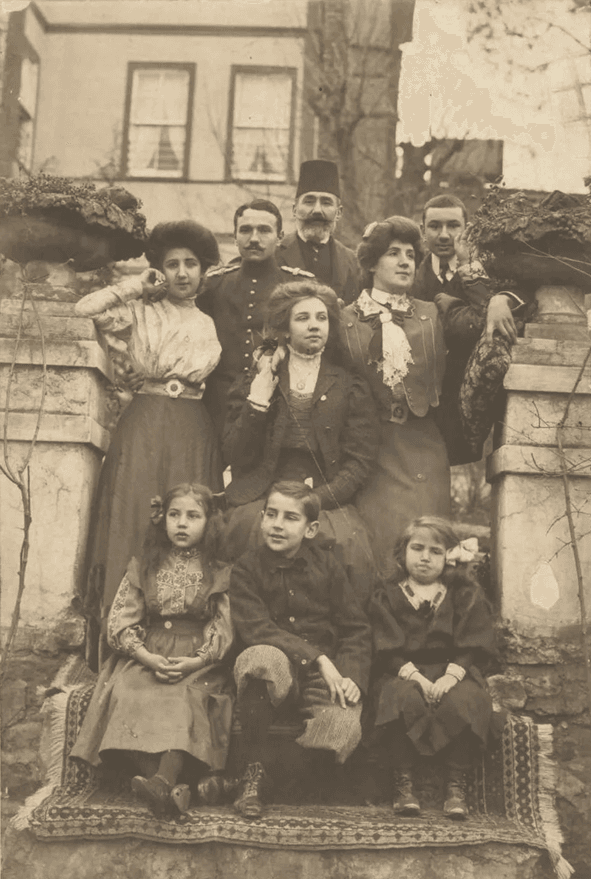
Fahrünnisa Zeid and Her Family, Sitting in the Front Row, Büyükada, 1910 (Adila Laïdi-Hanieh)
Fahrünnisa Şakir’s interest in art began at an early age. Sustained throughout her youth, this passion led her in 1919 to enroll at the İnas Sanayi-i Nefise Mektebi in Istanbul, making her one of the first women in Türkiye to receive formal painting education. However, due to her first marriage, she interrupted her studies and traveled to Europe in the 1920s, continuing her artistic work there. With her first husband, İzzet Melih Devrim, she had two children: the renowned painter Nejat Devrim and the theater artist Şirin Devrim.
In 1928, she studied at the Stalbach Atelier of the Ranson Academy in Paris and took lessons from the painter Roger Bissière for a year. Upon returning to Türkiye, she continued her painting education and participated in the Namık İsmail Atelier of the Academy of Fine Arts until 1930.
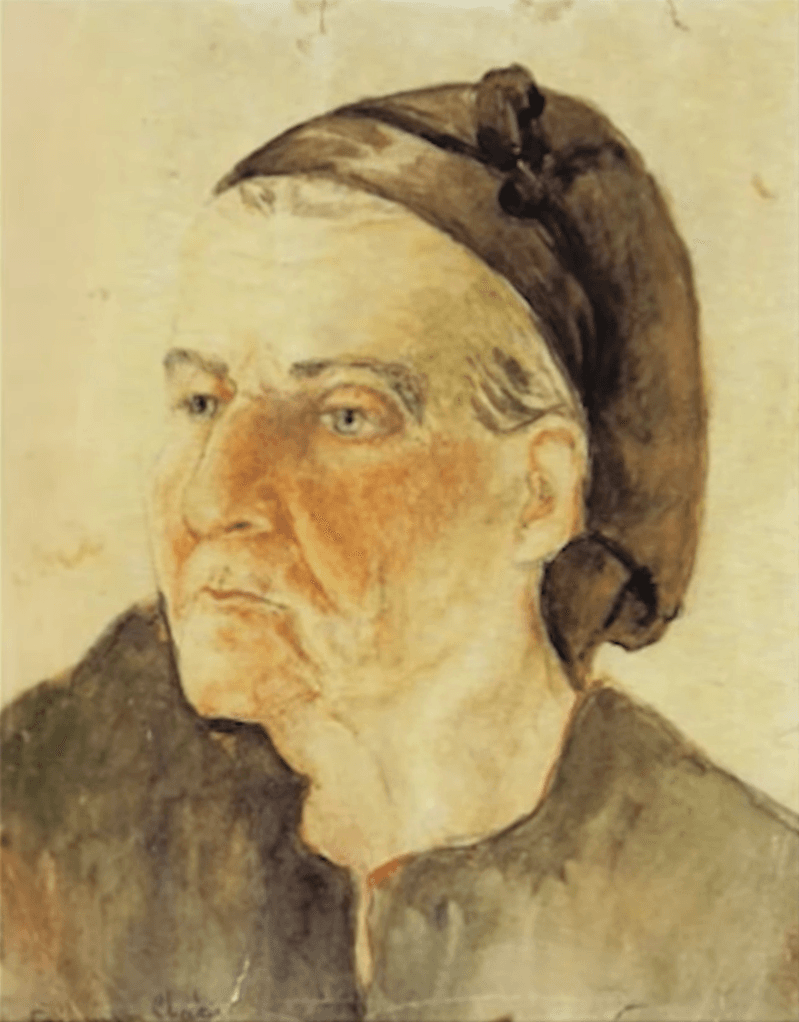
Fahrünnisa Zeid’s Oil Portrait of Her Grandmother, 1915 (Acar ve Alp)
In 1934, Fahrünnisa married Emir Zeyd bin Hussein, the ambassador of the Kingdom of Iraq to Ankara and brother of King Faisal I of Iraq, and assumed the title of princess. Following this marriage, she began using the name Fahrelnissa Zeid, which was more suitable in Arabic. Due to her husband’s diplomatic postings, she spent many years in Berlin, London, and Paris. Their son, Raad, was born from this marriage.
After her time in Paris in 1928 and the education she received there, her works were observed to move away from classical academic painting toward expressionist tendencies.【2】
During the Second World War, Zeid lived in Istanbul and joined the D Group artists in 1941. Her figural works from this period were large-scale canvases marked by intense symbolism, interior scenes, and portraits. Fahrünnisa Zeid, who participated in group exhibitions with the D Group, held her first solo exhibition in 1945 in her home in the Maçka neighborhood of Istanbul. With this exhibition, Zeid became the first artist in Türkiye to hold a solo show in her own residence.【3】
In the late 1940s, Fahrünnisa Zeid’s works began to show a clear shift toward abstraction. In 1946, due to her husband’s diplomatic assignment, the family moved to London. Zeid held her first exhibition in London in 1947 at the St. George’s Gallery, where she hosted Queen Elizabeth of England at the opening.【4】
During this period, Zeid carried out her artistic activities in studios in both London and Paris. Her works were exhibited in 1949 at the Colette Allendy Gallery in Paris. Under the guidance of Charles Estienne, she became associated with the Nouvelle École de Paris. She participated in numerous solo and group exhibitions during these years and exhibited alongside artists such as Chagall, Léger, and Picabia.【5】
In 1950, Fahrünnisa Zeid sustained her international success with a solo exhibition in New York. She held over forty exhibitions in European capitals and the United States, becoming the first Turkish woman painter to exhibit most frequently abroad during her time.【6】
Zeid’s works are recognized for their high-energy brushstrokes, vivid colors, and monumental canvases. Her artistic style presents a layered structure that began with figural expression and gradually evolved into abstract expressionism.
In the early phase of her career, she adopted a figural approach through portraits, interior scenes, and symbolic compositions. This period is characterized by intense color usage, thick brushwork, and dynamic compositions that radiate energy across the surface.
From 1949 onward, Zeid turned decisively toward abstraction. Her earliest works in this mode featured compositions divided into geometric fragments. Over time, these structures transformed into a universal visual language marked by dynamic lines, strong color contrasts, and complex spatial arrangements. Rhythmic repetitions, spiral forms, and fragmented surfaces became central to her work. Her application of bold lines was accompanied by an expressionist use of color and light.
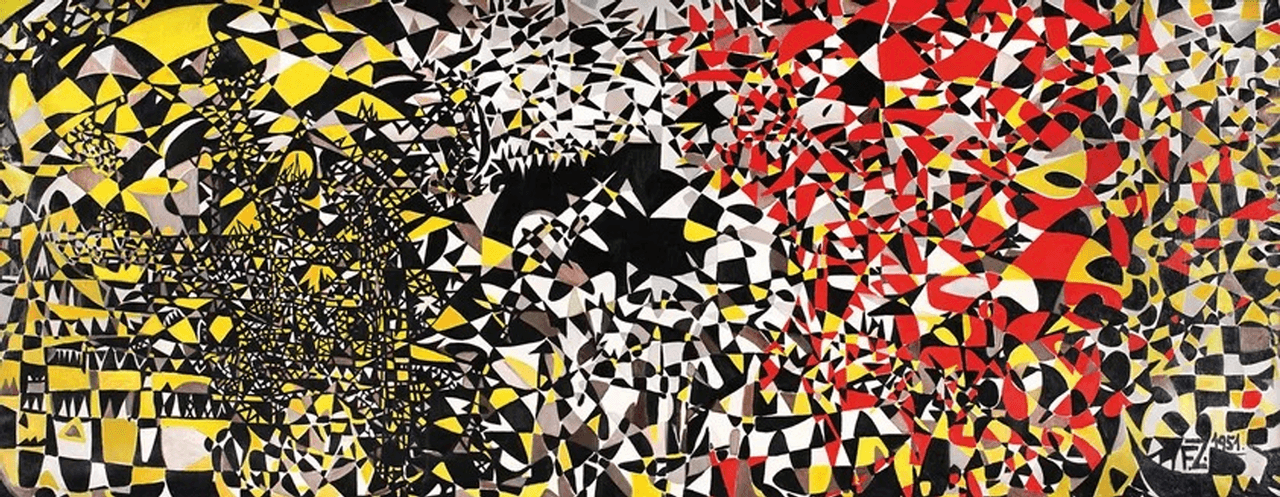
Fahrünnisa Zeid, "Cehennemim", 1951 (Adila Laïdi-Hanieh)
After the 1958 regime change in Iraq, Fahrünnisa Zeid, together with her husband, began a life in exile in Europe. In the 1960s, she returned to figuration, with portraits becoming central to her artistic output. The influence of abstraction remained evident in these portraits, which gained psychological depth through sharp facial contours and eyes rendered larger than life.【7】
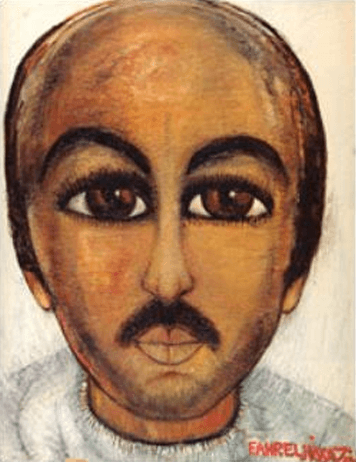
Fahrünnisa Zeid, Portrait of Her Husband Emir Zeyd, 1967 (Acar ve Alp)
In the 1960s, Fahrünnisa Zeid developed a new artistic form she called “Paleokrystal,” incorporating a variety of materials such as chicken bones, resin, polyester, and glass into her works. After this transitional phase, she began working on three-dimensional sculptures.
After her husband’s death, Zeid moved to Amman in 1976 to live with her son, where she founded an institute bearing her name and trained students. In the mid-1980s, she created works using the stained-glass technique, producing pieces with an original character distinct from traditional stained-glass conventions. Alongside these, she continued her work on portraits in her later years. The artist passed away in Amman in 1991.
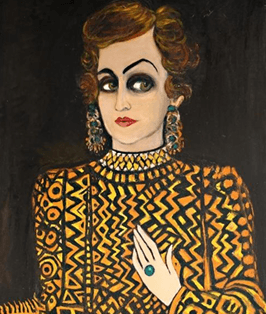
Fahrünnisa Zeid, Self-Portrait titled "One from the Past", 1980 (Acar ve Alp)
Zeid’s style never remained confined to the influence of Western modernism alone; rather, it emerged as the product of a personal, intuitive, and boundary-defying creative approach. In this regard, she occupies a unique position both in the development of modern art in Türkiye and in the representation of female artists within global art history.
Throughout her artistic career, Fahrünnisa Zeid developed a dynamic process of production marked by formal diversity and periodical transformations. Beginning with figurative painting, she developed abstract expressionist approaches from the 1940s onward and gained international visibility through her exhibitions. As an educator, she contributed to the transmission of art, and through her experiments with diverse techniques and materials, she established a distinctive place in the history of 20th-century modern art.
Acar, Yılmaz, and Kafiye Özlem Alp. "Fahrelnisa Zeid Portreleri," *Ankara Üniversitesi Güzel Sanatlar Fakültesi Dergisi* 6, no. 2 (2024): 163-175.https://doi.org/10.58608/augsfd.1572130
Akçay, Sebahat. "Türk Resim Sanatında (1908-1930) Erken Cumhuriyet Dönemine Kadar İlk ve Öncü Kadın Ressamlar." Master's thesis, Doğuş Üniversitesi, 2015.https://tez.yok.gov.tr/UlusalTezMerkezi/TezGoster?key=X-M9ZoIuIoNTj2P7iY13hTtD9lEHOzPUvIpJ6AqjF3_BDRxn2h4q_6PEpgSnBiF5
Anadolu Ajansı. "Doğu ruhunu, Batı dinamizmini resimlerine taşıyan prenses ressam: Fahrünnisa Zeid." Accessed July 22, 2025.https://www.aa.com.tr/tr/kultur/dogu-ruhunu-bati-dinamizmini-resimlerine-tasiyan-prenses-ressam-fahrunnisa-zeid/2983023
Azeri, Nazan. "Batılılaşma Hareketleri İçinde Kadın Ressamlar." Master's thesis, Marmara Üniversitesi, 1996.
Devrim, Şirin. Şakir Paşa Ailesi. Translated by Semra Karamürsel. İstanbul: Doğan Kitapçılık, 2003.
Güray, Emel. "Fahrelnissa Zeid'e Işık, Renk ve Şeffaflık Bağlamında Yeniden Bir Bakış: Paleokrystal Serisi ve Vitrayları". *Görünüm*, 8(8) (2020): 46–56.https://dergipark.org.tr/tr/pub/gorunum/issue/54703/746968
Laïdi-Hanieh, Adila. “(Re)producing an ‘Islamic-Byzantine’ Artist: The Orientalization of Fahrelnissa Zeid’s Modernist Practice”. *Manazir Journal* 6 (May 2025): 57–86.https://doi.org/10.36950/manazir.2024.6.3
TRT 2 YouTube Channel. "Fahrelnissa Zeid: Kısa Bir Ara." Accessed July 22, 2025.
Tate Youtube Channel. "Fahrelnissa Zeid – 'She Was the East and the West'." Accessed August 14, 2025.
[1]
Sebahat Akçay, "Türk Resim Sanatında (1908-1930) Erken Cumhuriyet Dönemine Kadar İlk ve Öncü Kadın Ressamlar" (Yüksek Lisans tezi, Doğuş Üniversitesi, 2015), 5. https://tez.yok.gov.tr/UlusalTezMerkezi/TezGoster?key=X-M9ZoIuIoNTj2P7iY13hTtD9lEHOzPUvIpJ6AqjF3_BDRxn2h4q_6PEpgSnBiF5
[2]
Adila Laïdi-Hanieh, “(Re)producing an ‘Islamic-Byzantine’ Artist: The Orientalization of Fahrelnissa Zeid’s Modernist Practice”. Manazir Journal 6 (May 2025): 59. https://doi.org/10.36950/manazir.2024.6.3.
[3]
Yılmaz Acar ve Kafiye Özlem Alp "Fahrelnisa Zeid Portreleri", Ankara Üniversitesi Güzel Sanatlar Fakültesi Dergisi 6(2) (2024): 166. https://doi.org/10.58608/augsfd.1572130
[4]
Anadolu Ajansı. "Doğu ruhunu, Batı dinamizmini resimlerine taşıyan prenses ressam: Fahrünnisa Zeid" Anadolu Ajansı Erişim: 22.07.2025 https://www.aa.com.tr/tr/kultur/dogu-ruhunu-bati-dinamizmini-resimlerine-tasiyan-prenses-ressam-fahrunnisa-zeid/2983023
[5]
Laïdi-Hanieh, “(Re)producing an ‘Islamic-Byzantine’ Artist: The Orientalization of Fahrelnissa Zeid’s Modernist Practice”, 61.
[6]
Nazan Azeri, "Batılılaşma Hareketleri İçinde Kadın Ressamlar". (Yüksek Lisans tezi, Marmara Üniversitesi, 1996): 54-55. https://tez.yok.gov.tr/UlusalTezMerkezi/TezGoster?key=T1mWGp9MngYYkCSgiJvtVlXRUwe23O7ESA9-doubZLr6GzI9QYU6i6LDCxOqOHLz
[7]
Acar ve Alp, "Fahrelnisa Zeid Portreleri", 168.
Birth Name | Fahrünnisa Şakir | ||||||||
|---|---|---|---|---|---|---|---|---|---|
Spouse | İzzet Melih Devrim (1920-1934) Emir Zeyd (1934-1970) | ||||||||
Other Name | Fahrelnissa Zeid | ||||||||
Date of Birth | 1901-12-06 | ||||||||
Place of Birth | Büyükada Istanbul Ottoman Empire | ||||||||
Date of Death | 1991-09-05 | ||||||||
Place of Death | Amman Jordan | ||||||||
Father | Mehmed Şakir Pasha | ||||||||
Mother | Sare İsmet Hanım | ||||||||
Siblings | Cevat Şakir Kabaağaçlı Aliye Berger | ||||||||
Child | Raad bin Zeyd Faruk Devrim Nejad Melih Devrim Şirin Devrim | ||||||||
Occupation | Painter | ||||||||
Art Movement | Abstract Expressionism | ||||||||
Family and Education
Artistic Career and Exhibitions
Artistic Style
Diverse Artistic Media and Educational Role