This article was automatically translated from the original Turkish version.
+1 More
Author(s) | Feridüddin Attar | ||||||||
|---|---|---|---|---|---|---|---|---|---|
Prepared by | Süleyman Uludağ | ||||||||
Publisher(s) | Dergâh Yayınları | ||||||||
Number of Pages | 840 | ||||||||
Type(s) | Sufism Islamic Classics | ||||||||
Year of Publication | April 2024 | ||||||||
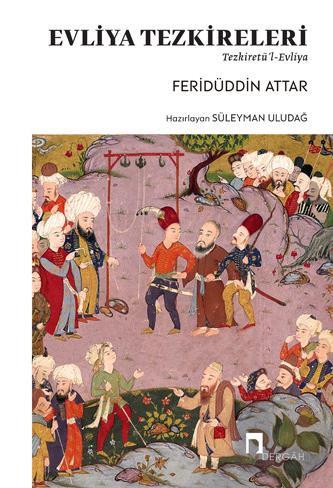
Evliya Tezkireleri is the Turkish translation of Tezkiretü’l-Evliya, a seminal text in Sufism written by Feridüddin Attar (d. 618/1221). Published by Dergâh Yayınları in April 2024, this work is Attar’s only prose composition and contains the lives and teachings of major figures in Islamic Sufism. It is regarded as an important source for the history of Sufism.
Evliya Tezkireleri encompasses the lives, spiritual experiences, ecstatic states, and sayings of numerous Sufis ranging from Ja‘far al-Sadiq to Hallaj-i Mansur. In this work, Attar conveys the anecdotes and teachings of the Sufis, offering readers a profound insight into the depths of Sufism. While meticulously exploring the moral and spiritual dimensions of Sufism, the text also reflects the social and religious structure of its time.
Feridüddin Attar employs a simple and accessible language in Evliya Tezkireleri to convey the profound dimensions of Sufism. The anecdotes, stories, and admonitions selected in the text are designed to teach the foundational principles of Sufism. Attar’s style combines literary elegance with a didactic purpose.
Attar, Feridüddin. *Evliya Tezkireleri*. Haz. Süleyman Uludağ. İstanbul: Dergâh Yayınları, April 2024. Accessed June 26, 2025. https://www.dergah.com.tr/kitaplar/evliya-tezkireleri.
Author(s) | Feridüddin Attar | ||||||||
|---|---|---|---|---|---|---|---|---|---|
Prepared by | Süleyman Uludağ | ||||||||
Publisher(s) | Dergâh Yayınları | ||||||||
Number of Pages | 840 | ||||||||
Type(s) | Sufism Islamic Classics | ||||||||
Year of Publication | April 2024 | ||||||||
No Discussion Added Yet
Start discussion for "Evliya's Memoirs (Book)" article
Summary of Contents
Themes
Narrative and Style