


Evgeny Grinko
Birth Year | 1984 | ||||||||
|---|---|---|---|---|---|---|---|---|---|
Birth Place | Zhukovsky, Moscow Oblast, Türkiye | ||||||||
Nationality | Russian | ||||||||
Profession | pianist Composer musician | ||||||||
Education | no formal music education Autodidact (self-taught) | ||||||||
Musical Style | Neoclassical, experimental, cinematic, post-rock influenced | ||||||||
Instruments | Piano, guitar, drums | ||||||||
Evgeny Grinko is a musician born in 1985 in Zhukovsky, Russia. He began his career in the noise rock genre but later shifted toward neoclassical music. He is internationally recognized especially for his composition titled "Valse".
Grinko’s relationship with music was shaped during childhood through television. The music used in Soviet-era animated films and TV programs he watched before school left a lasting impression on him. He was particularly drawn to Soviet music in the rockabilly and surf styles; his family noticed this interest and gifted him a cassette tape featuring music from these genres.
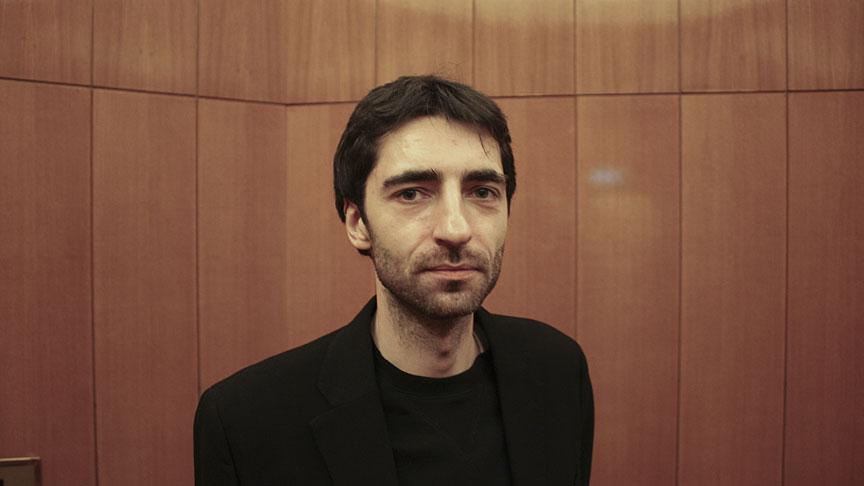
Evgeny Grinko (Anadolu Ajansı)
As Western culture became more visible in Russian media during the 1990s, Grinko was introduced to the music of bands such as Prodigy, Nirvana and The Chemical Brothers. During this period he acquired his first guitar, played it for several years, and then turned to drums. In his youth he performed as a drummer in various indie and noise rock groups in Moscow.
The year 2007 marked a turning point for Grinko. He began teaching himself to play the piano; his proficiency on this instrument gradually became the foundation of his musical identity.
Grinko’s music carries themes of melancholy, nostalgia, hope and a cinematic narrative style. He blends traditional classical music structures with modern approaches, producing compositions in which minimalist and melodic elements are prominent. The piano is usually the central instrument in his works, though he occasionally incorporates other instruments such as cello, accordion and drums.
His piece "Valse" gained widespread popularity in Türkiye through social media and video platforms, significantly expanding his international recognition. This composition has surpassed 350 million streams on Spotify and 168 million views on YouTube.
Evgeny Grinko’s music stands out for its simplicity, emotional intensity and cinematic qualities. His compositions primarily feature the piano, accompanied by instruments such as accordion, cello, guitar and percussion. Grinko’s compositional approach draws from the classical music tradition while shaping a contemporary style that reflects modern emotional states and minimalist elements.
His most famous and most streamed work, "Valse" has been played over 350 million times on Spotify and viewed more than 168 million times on YouTube as of the 2020s. Inspired by the classical waltz form, its gently rising and falling melodic structure went viral in Türkiye, significantly increasing the artist’s recognition in the region.
Evgeny Grinko’s composition "Serenade" is structured around the interplay of piano and cello. This piece, with its subtle melancholic tone, exemplifies the composer’s ability to merge a minimalist compositional language with emotional depth.
Characterized by acoustic elements and soft piano melodies that evoke a sense of harmony with nature, this piece features a simple musical structure that emphasizes feelings of peace and tranquility.
Inspired by the abandoned city of Pripyat following the Chernobyl nuclear disaster, this composition creates an atmosphere of sorrow, emptiness and silence. Despite its minimalist structure, the piece possesses a profound expressive power.
True to its title, this piece carries a romanticism centered on autumn. Through the piano’s unadorned expression, it explores the melancholy of seasonal change.
This composition belongs to Grinko’s body of work with a dramatic structure. Noted for its emotional intensity, it is frequently chosen by listeners during moments of introspection and deep feeling.
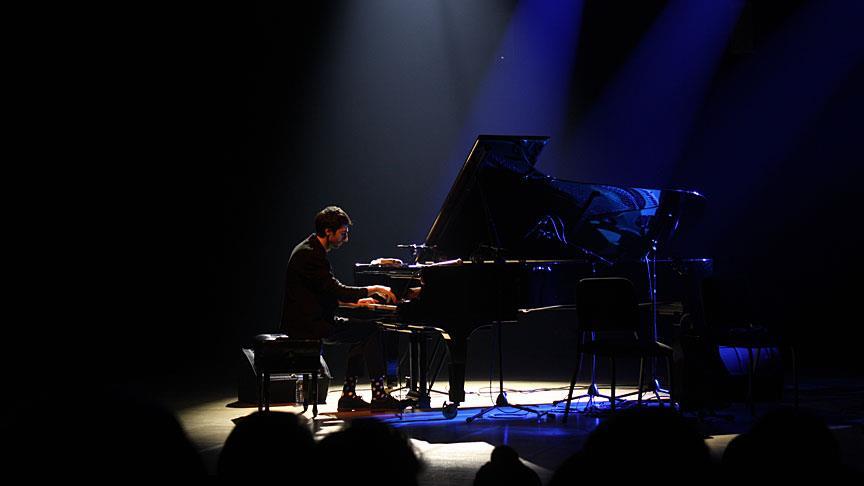
Evgeny Grinko (Anadolu Ajansı)
Grinko’s debut album features early compositions that shaped his musical vision. It highlights minimalist piano melodies, pastoral moods and sparse structures.
The album takes its name from Aureliano Buendía, a character in Gabriel García Márquez’s novel "One Hundred Years of Solitude". The pieces explore literary themes such as time, memory and melancholy.
A more experimental and atmospheric album, its musical narrative is woven with abstract imagery and features diverse instrumentation including piano and accordion.
Shaped around themes of calmness and stillness, as suggested by its title, this composition offers an atmosphere conducive to meditation and deep reflection, exemplifying Grinko’s minimalist expressive language.
Noted for its narrative structure reminiscent of short stories, this album presents a fairytale-like atmosphere. It contains elements appealing both to child listeners and to adults drawn to nostalgic or introspective themes.
Reflecting themes of innocence, purity and sincerity, this album demonstrates Evgeny Grinko’s ability to create emotional depth through simple structures.
With a sweet and nostalgic tone, this album offers a musical narrative that elevates the small pleasures of everyday life.
Themed around awakening to a new day, this album features compositions that evoke hope, renewal and inner peace.
These albums compile unreleased but valued sketches, demos and alternative arrangements that were not included in his main studio albums.
Grinko’s most recently released album contains works from his mature period. Centered on the theme of winter, this work draws attention with compositions of high emotional intensity.
Evgeny Grinko - Uzun ince (Evgeny Grinko)
Evgeny Grinko’s compositions are largely wordless; this quality transforms the listener’s relationship with his music into a more introspective and subjective experience. Although his pieces do not contain direct narratives or stories, their titles and harmonic structures subtly fill this narrative gap through emotional associations. Grinko’s musical style is a synthesis of minimalist music traditions, cinematic structures and influences from Western classical music.
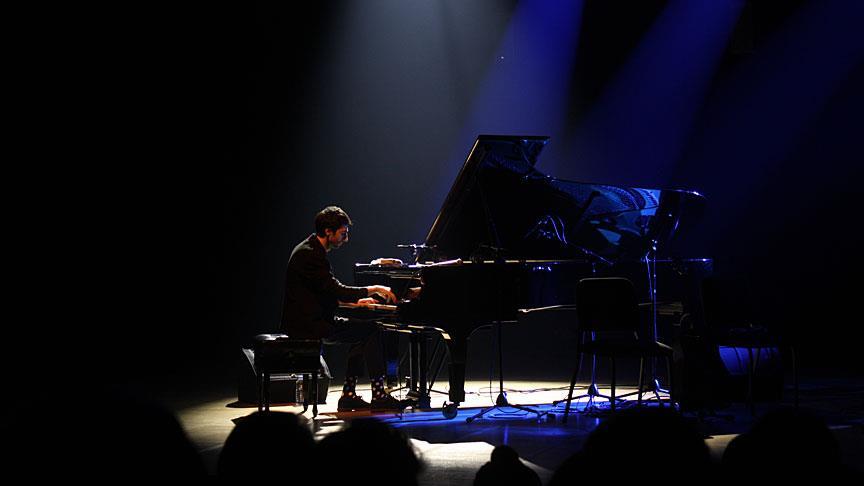
Evgeny Grinko’s concerts are noted for translating the simplicity and emotional depth of his compositions into live performances that create calming, direct connections with audiences. On stage, he occasionally reinterprets his pieces and includes unpublished compositions.
Between 2023 and 2025, Grinko performed concerts across Europe, including at the Kammermusiksaal of the Berliner Philharmonie in Berlin, St. Johns at Hackney Church in London, as well as in Paris, Prague and Amsterdam. He has also regularly performed in Türkiye, receiving strong public response in cities such as Istanbul, Ankara, İzmir and Eskişehir.
Evgeny Grinko has a broad audience on digital music platforms. He reaches over 2.1 million monthly listeners on Spotify, approximately 400,000 subscribers on YouTube and 392,000 followers on Instagram. His music is frequently used for meditation, reading, writing and emotional relaxation. According to 2023 data, approximately seven million people listened to his music for the first time. The organic listener base that developed in Türkiye has significantly contributed to the artist’s lasting popularity in the region.
Anadolu Ajansı. “Evgeny Grinko İstanbul’da Hayranlarıyla Buluştu.” AA.com.tr, December 12, 2018. Accessed May 19, 2025.https://www.aa.com.tr/tr/kultur-sanat/evgeny-grinko-istanbulda-hayranlariyla-bulustu/1333371
Evgeny Grinko. “Biography.” Evgeny Grinko Official Website. Accessed May 19, 2025.https://evgenygrinko.net/biography/
Evgeny Grinko. “Events.” Evgeny Grinko Official Website. Accessed May 19, 2025.https://evgenygrinko.net/events/
Evgeny Grinko. “Music.” Evgeny Grinko Official Website. Accessed May 19, 2025.https://evgenygrinko.net/music/
Evgeny Grinko. “Uzun ince.” YouTube video, 2:11. Published by Evgeny Grinko, June 3, 2024. Accessed May 19, 2025.https://www.youtube.com/watch?v=-FbTlbLTY4A
Evgeny Grinko
Birth Year | 1984 | ||||||||
|---|---|---|---|---|---|---|---|---|---|
Birth Place | Zhukovsky, Moscow Oblast, Türkiye | ||||||||
Nationality | Russian | ||||||||
Profession | pianist Composer musician | ||||||||
Education | no formal music education Autodidact (self-taught) | ||||||||
Musical Style | Neoclassical, experimental, cinematic, post-rock influenced | ||||||||
Instruments | Piano, guitar, drums | ||||||||
Musical Style and Composition
Compositions
Notable Compositions
Valse (2010)
Serenade
Field
Morning In Pripyat
Autumn, Leaves and You
Jane Mary, Cry One Tear
Album-Based Review
Winter Sunshine (2011)
Ice for Aureliano Buendia (2013)
Sail on the Roof (2013)
Silent Like Water (2015)
Tiny Mouse Tales (2016)
Naive Album (2019)
Orange Marmalade (2021)
Morning Chimes (2023)
Outtakes I & II (2018, 2024)
Winter Moonlight (2025)
Musical Philosophy and Aesthetic Approach
Live Performances and International Success
Audience and Influence