

 Recently Added:
This article was automatically translated from the original Turkish version.
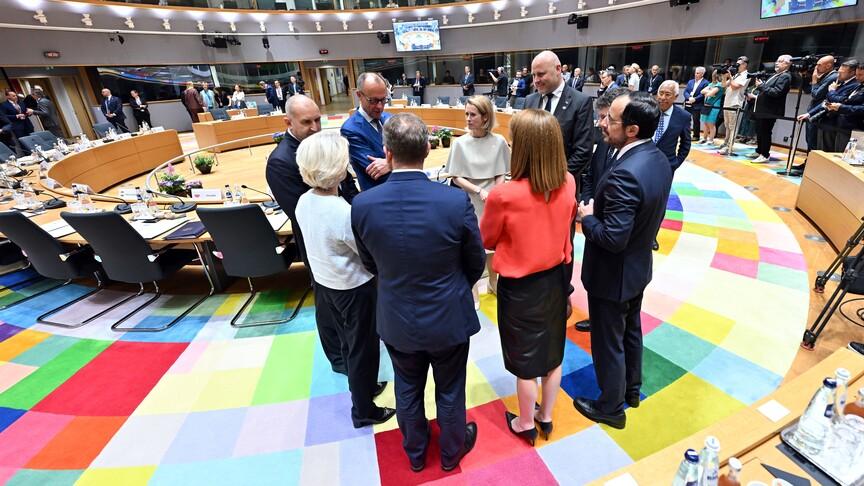
The European Union (EU) Leaders Summit, bringing together the heads of state and government of the EU’s 27 member countries, began on 18 June 2026 in Brussels, the capital of Belgium. The summit, planned to last two days, is expected to conclude on 19 June 2026. It has emerged as a major meeting addressing numerous strategic issues including the course of the Russia-Ukraine War, new sanctions against Russia, economic relations with China, the EU’s long-term budget, defense policies, migration management, developments in the Middle East and Europe’s competitiveness.
The Brussels Summit was convened to develop a common response to the geopolitical, economic and security challenges the European Union has recently faced. The summit also followed immediately after the G7 Leaders Summit held in Évian, France, providing an opportunity to assess the implications of decisions made there at the European level.
Leaders focused particularly on the future of the war in Ukraine, increasing pressure on Russia, imbalances in trade relations with China and the new EU budget covering the period 2028–2034.
The leaders of all 27 EU member states attended the summit. The meeting was chaired by European Commission President Ursula von der Leyen and European Council President Antonio Costa.
Ukrainian President Volodymyr Zelenskyy was also invited to participate in the first session of the summit.
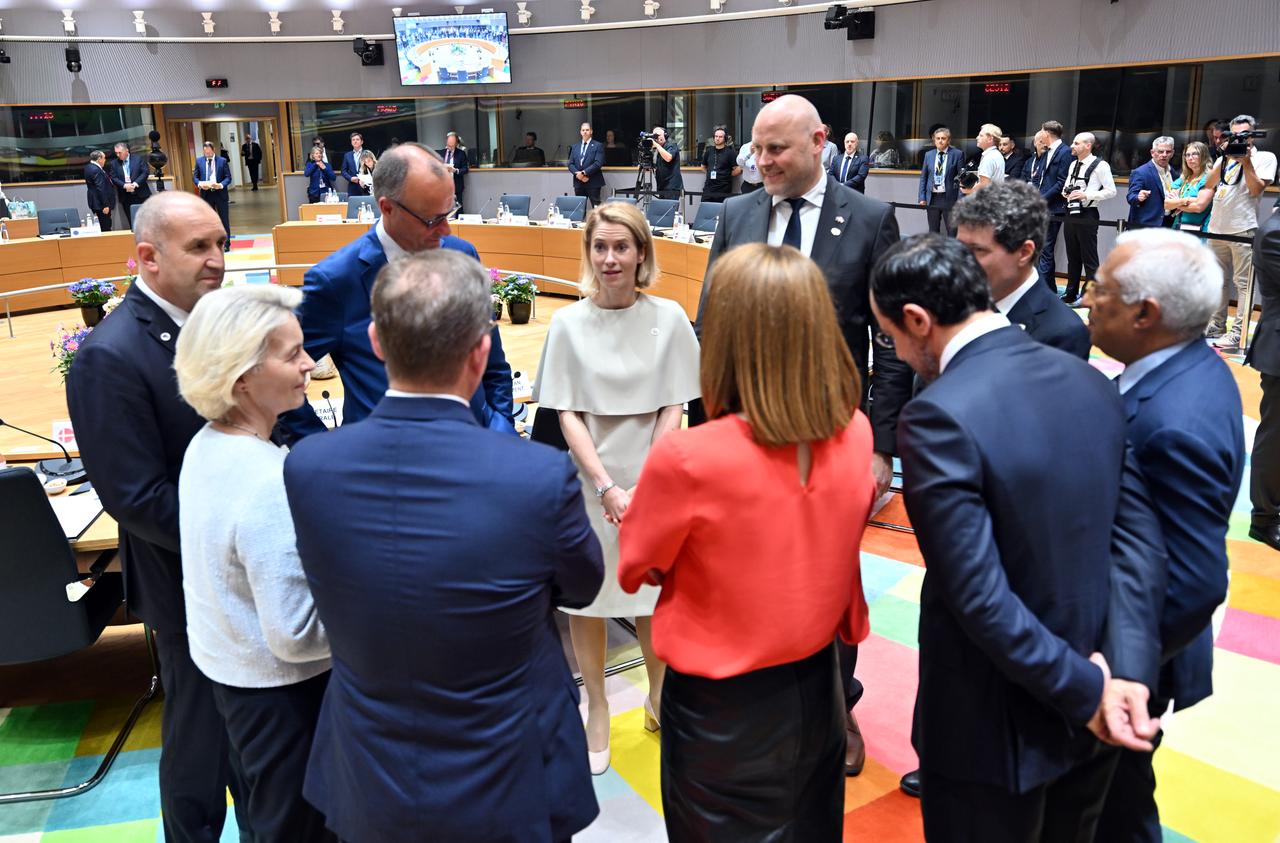
EU Leaders Summit (18 June 2026) Anadolu Ajansı
The meeting also marked the first EU summit for several new leaders who assumed office following recent political changes in their countries, including Hungarian Prime Minister Péter Magyar and Slovenian Prime Minister Janez Janša among others.
The most important item on the summit agenda was Russia’s ongoing war against Ukraine.
EU leaders exchanged views on continuing political, economic and military support for Ukraine. They also assessed new sanction packages aimed at weakening Russia’s war capacity.
The European Commission and several member states advocated for additional measures targeting Russian energy revenues. It was noted that new economic restrictions were being developed to reduce income derived from Russian oil and energy exports. Diplomatic pathways to encourage Moscow to engage more seriously in peace negotiations were also discussed at the summit.
Ukrainian President Volodymyr Zelenskyy, during his meetings with EU leaders, called for accelerating Ukraine’s accession process to the European Union. Zelenskyy argued that Russia was attempting to block Ukraine’s European integration and demanded faster progress in membership negotiations.
However, many EU member states maintained that the enlargement process must proceed within the framework of existing rules. Some leaders stated they were not in favor of accelerating membership for candidate countries that have not fully met their obligations regarding the rule of law, democracy and institutional reforms.
German Chancellor Friedrich Merz introduced the concept of “associated membership” to facilitate deeper integration between Ukraine and the European Union prior to full membership. Under the proposal, Ukraine would be granted observer status in certain EU meetings, enhanced defense cooperation and the establishment of joint mechanisms in various fields. However, this proposal did not gain broad support among member states and was not included among the summit’s key decisions.
The second major agenda item was economic relations between the European Union and China. EU institutions have argued that recent trade imbalances with China have placed pressure on European industry. According to European Commission data, all EU countries recorded trade deficits with China last year.
As a result, some member states called for stronger measures against China’s state-supported production policies and subsidies.
Countries such as France, Poland, Belgium, the Netherlands, Denmark, Sweden and Lithuania supported a more protectionist and stringent approach, while Germany, Spain and Greece expressed concerns about potential damage to economic relations with China.
European Commission President Ursula von der Leyen emphasized in pre-summit statements that Europe must adopt a more realistic approach toward China.
Von der Leyen stated that Europe wishes to maintain dialogue with China but insisted that trade relations must be based on reciprocity.
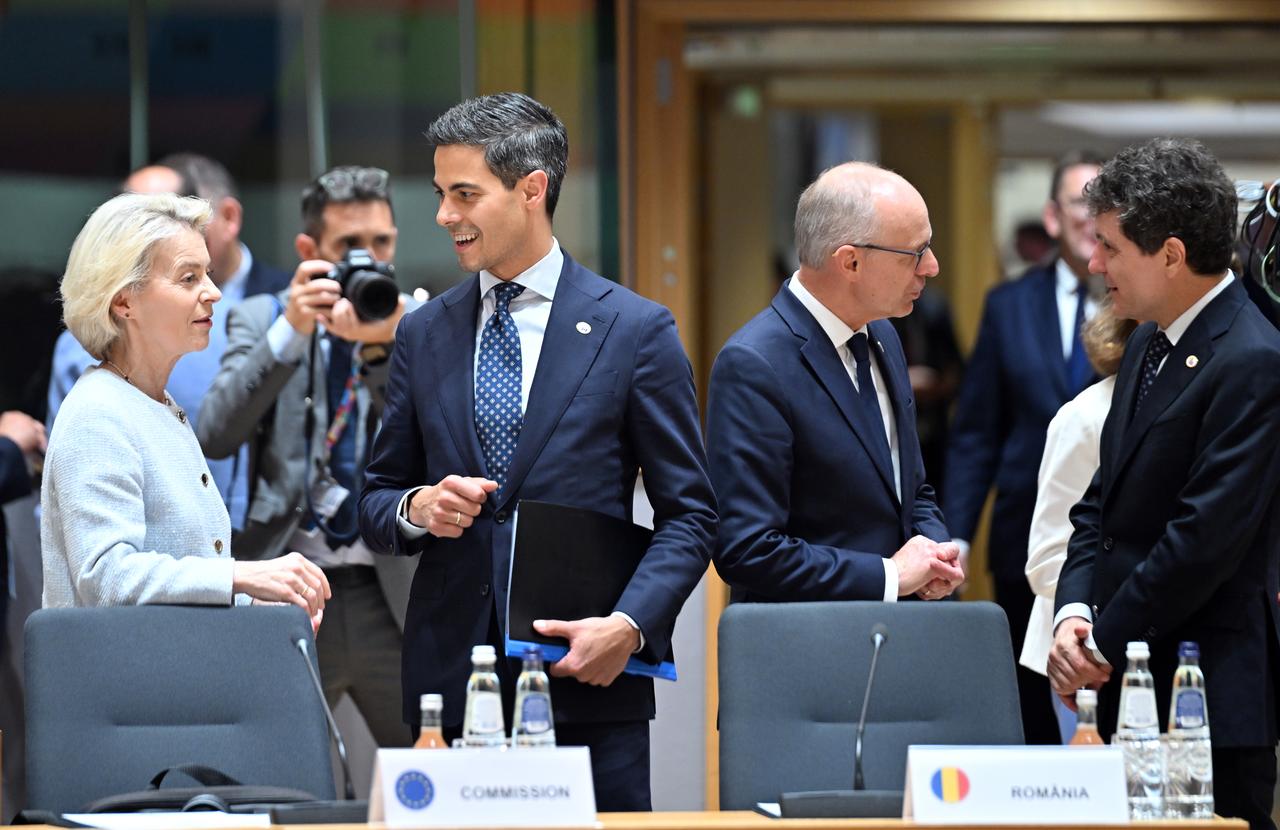
EU Leaders Summit (18 June 2026) Anadolu Ajansı
The Commission President also announced that new trade tools are being prepared to be used in cases where China applies economic pressure.
On the second day of the summit, leaders discussed the European Union’s new multiannual financial framework covering the period 2028–2034. The draft budget, estimated by the European Commission at approximately two trillion euros, became one of the most contentious issues of the summit.
While some countries advocated for preserving agricultural and cohesion funds, fiscally conservative nations pushed for deeper cuts in the budget. Germany and other countries argued that the current budget proposal was excessively high and called for a comprehensive review of expenditures.
In addition to Ukraine and China, leaders also assessed developments in the Middle East. Recent diplomatic initiatives between Iran and Western countries and regional security balances were discussed. Irregular migration, border security, human trafficking, drug trade and strengthening Europe’s defense capabilities were also on the summit agenda.
The June 2026 EU Leaders Summit in Brussels took place at a critical juncture for the European Union, as it faced pivotal decisions on security, economic policy and enlargement simultaneously. Extensive discussions were held on sustaining support for Ukraine, intensifying pressure on Russia, defining an economic strategy toward China and establishing the framework for a new EU budget of approximately two trillion euros. The summit is regarded as a significant turning point in shaping the European Union’s foreign policy, defense and economic direction in the coming years.
Anadolu Ajansı. "AB Liderler Zirvesi İkinci Oturumları Başladı." Accessed June 19, 2026.
Anadolu Ajansı. "Brüksel'de AB Liderler Zirvesi Başladı." Accessed June 19, 2026.
Deutsche Welle. "EU Summit: Merz Calls for Cuts to 'Too High' Long-Term Budget." Accessed June 19, 2026. https://www.dw.com/en/eu-summit-merz-calls-for-cuts-to-too-high-long-term-budget/live-77613962
Euronews Türkçe. "AB liderlerinden Brüksel’de kritik zirve: Ukrayna savaşı ve Rusya’ya yaptırımlar masada." Accessed June 19, 2026. https://tr.euronews.com/my-europe/2026/06/18/ab-liderleri-brukselde-ukrayna-cin-ve-2-trilyon-avroluk-butceyi-gorustu
Euronews. "Peter Magyar's EU Summit Debut Signals Hungarian Reset After Change of Guard." Accessed June 19, 2026. https://www.euronews.com/my-europe/2026/06/18/peter-magyars-eu-summit-debut-signals-hungarian-reset-after-change-of-guard
https://www.aa.com.tr/tr/dunya/ab-liderler-zirvesi-ikinci-oturumlari-basladi/3971857
https://www.aa.com.tr/tr/dunya/brukselde-ab-liderler-zirvesi-basladi/3971285

The leaders of the 27 member countries of the European Union met at the EU Leaders Summit held in Brussels, the capital of Belgium, on 18–19 June 2026. The main agenda items of the summit were the Russia-Ukraine War, new sanctions against Moscow, imbalances in commercial relations with China, and the establishment of a new EU budget of approximately 2 trillion euros.
No Discussion Added Yet
Start discussion for "European Union Leaders Summit (2026)" article
June 19, 2026
Purpose of the Summit
June 19, 2026
Leaders Attending the Summit
June 19, 2026
The Ukraine War and New Sanctions Against Russia
June 19, 2026
Zelenskyy’s Participation and EU Membership Process
June 19, 2026
Germany’s Proposal for “Associated Membership”
June 19, 2026
Economic Relations with China and Trade Imbalances
June 19, 2026
Ursula von der Leyen’s Statements on China
June 19, 2026
The EU’s New Long-Term Budget
June 19, 2026
Middle East, Migration and Security Issues
June 19, 2026
Significance of the Summit