

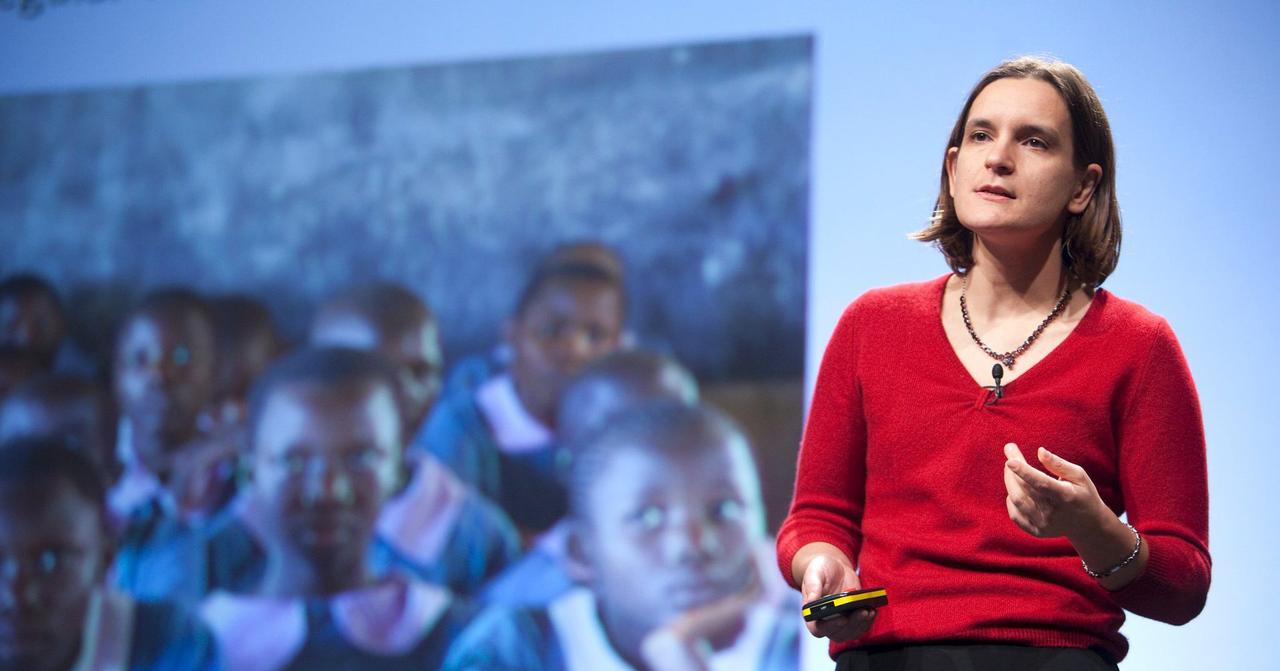


Esther Duflo
Yaş | 52 | ||||||||
|---|---|---|---|---|---|---|---|---|---|
custom_key_1119914 | Abhijit Banerjee | ||||||||
custom_key_1119913 | 1972-10-25 | ||||||||
custom_key_1119912 | Violaine Duflo | ||||||||
custom_key_1119911 | Michel Duflo | ||||||||
Esther Duflo is a French-American economist born on 25 October 1972 in Paris, France. She is renowned for her innovative methods in economics and has become a globally respected figure through her work on combating poverty on and world.
Duflo began her education in France and earned a degree in history and economics from École Normale Supérieure in 1994. She then pursued graduate studies in economics in 1995 at DELTA (École des hautes études en sciences sociales and École Normale Supérieure). Moving to the United States to continue her academic career, Duflo completed her Ph.D. in economics at the Massachusetts Institute of Technology (MIT).
Esther Duflo is a professor of economics at MIT and conducts research on methods to combat poverty in developing countries. Duflo is a co-founder of the Abdul Latif Jameel Poverty Action Lab (J-PAL), an organization dedicated to developing evidence-based policies to reduce global poverty.
Duflo’s research focuses on the following areas:
In 2019, Esther Duflo was awarded the together Nobel Prize in Economics jointly with Abhijit Banerjee and Michael Kremer. The trio received the prize for “their experimental approach to alleviating poverty.” Duflo holds the distinction of being the youngest person and the second woman economist ever to win this prestigious award.
Esther Duflo has become a source of inspiration not only within academic circles but also for policymakers and civil society organizations worldwide, due to her innovative perspectives and experimental methods in economics. The approaches she has developed to combat poverty hold the potential to improve the lives of millions of people.
Abdul Latif Jameel Poverty Action Lab (J-PAL). "About." Accessed March 21, 2025. https://www.povertyactionlab.org/about-us.
Duflo, Esther, and Abhijit Banerjee. Good Economics for Hard Times. New York: PublicAffairs, 2019.
Duflo, Esther, and Abhijit Banerjee. Poor Economics: A Radical Rethinking of the Way to Fight Global Poverty. New York: PublicAffairs, 2011.
Nobel Prize. "The Sveriges Riksbank Prize in Economic Sciences in Memory of Alfred Nobel 2019." Accessed March 21, 2025. https://www.nobelprize.org/prizes/economic-sciences/2019/summary.

Esther Duflo
Yaş | 52 | ||||||||
|---|---|---|---|---|---|---|---|---|---|
custom_key_1119914 | Abhijit Banerjee | ||||||||
custom_key_1119913 | 1972-10-25 | ||||||||
custom_key_1119912 | Violaine Duflo | ||||||||
custom_key_1119911 | Michel Duflo | ||||||||
Academic Career
Research Areas and Contributions
Nobel Prize in Economics
Social and Academic Impact