


This article was automatically translated from the original Turkish version.
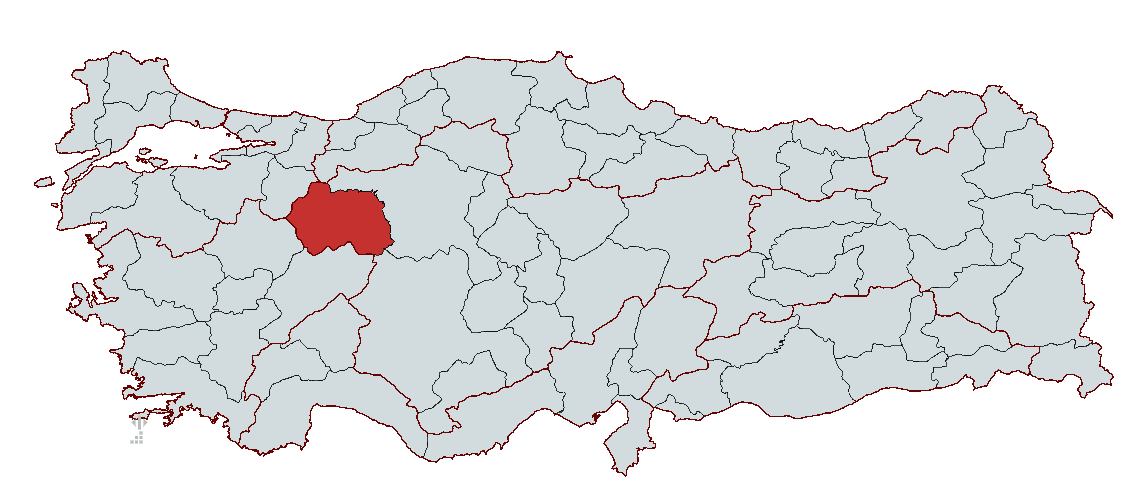
Eskişehir
Country | Türkiye | ||||||||
|---|---|---|---|---|---|---|---|---|---|
Region | Central Anatolia Region | ||||||||
Population | 915.418 (2023) | ||||||||
Area | 13.652 km² | ||||||||
Climate | Continental Climate | ||||||||
Important Structure | Seyit Battal Gazi Külliyesi Sivrihisar Ulu Cami Odunpazarı Evleri Kurşunlu Külliyesi | ||||||||
Area Code | 222 | ||||||||
License Plate Code | 26 | ||||||||
Governor | Hüseyin Aksoy | ||||||||
Metropolitan Mayor | Ayşe Ünlüce | ||||||||
Eskişehir is a city located in the Central Anatolia Region of Türkiye, distinguished by its deep historical roots, cultural heritage, industrial infrastructure, and educational institutions. The city, watered by the fertile lands of the Sakarya River and its tributaries, has served as a home to numerous civilizations throughout history and has been one of Anatolia’s key trade routes. During the Phrygian, Roman, Byzantine, Seljuk, and Ottoman periods, Eskişehir held strategic importance as a center, and in the Republican era, it underwent significant development through major advances in industry and education.
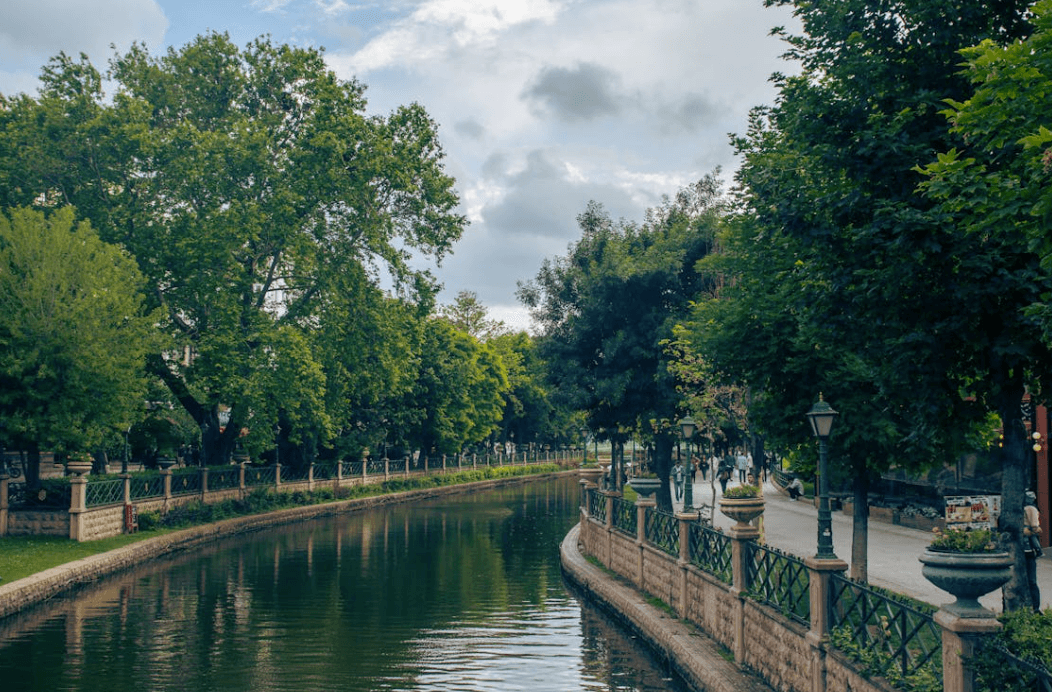
Eskişehir Porsuk Creek (Source: Pexels/Furkan Çoban)
Due to its fertile plains watered by the Sakarya River and its tributaries, Eskişehir has been an attractive region for settlement throughout history. Its proximity to Anatolian and Aegean cultural centers placed it at a point of interaction among various civilizations. In antiquity, the region known as “Phrygia Epiktetos” became one of the most important centers of Phrygian civilization. Eskişehir was referred to during this period as “Mountainous Phrygia” and retained its status as a religious center for a long time.
According to ancient sources, the earliest known name of Eskişehir is “Dorylaion” (Dorylaeum), which was used during the ancient Greek and Roman periods. In Arabic sources, the city is mentioned as “Darauliya” or “Adruliya.” The ancient city gained significance due to its location at the intersection of trade routes, its thermal springs, and its status as one of the wealth centers of Phrygia.
Archaeological excavations have revealed that human settlement in the region dates back to as early as 4000 BC. Şarhöyük, one of the earliest settlement sites, is recognized as one of the most important centers of ancient Eskişehir.
Eskişehir lay within the western boundaries of Phrygian civilization. The Phrygians arrived in Anatolia around 1200 BC and established a kingdom in the regions of Eskişehir, Polatlı, and Ankara. Although Gordion was the capital of Phrygia, important centers within the modern boundaries of Eskişehir included Yazılıkaya (Midas City) and Dorylaeum. Midas, one of the most famous Phrygian kings, ruled over these lands, but the Phrygian civilization came to an end in the 7th century BC following invasions by the Cimmerians.
Following Alexander the Great’s conquest of Anatolia, Eskişehir came under Hellenistic influence and became familiar with Greek culture. After Alexander’s death, the region was dominated by the Galatians and later the Romans. During the Roman period, Eskişehir experienced its golden age, becoming a major center renowned for trade and thermal baths.
In 395 AD, with the division of the Roman Empire, the region became part of the Byzantine territories. During this period, Eskişehir suffered from Arab raids and gradually lost its former prominence.
After the Battle of Manzikert in 1071, Eskişehir became part of Seljuk territory and underwent intense Turkification. During the time of Osman Gazi, the city came under Ottoman control and held great importance as part of the region where the Ottoman state was founded.
During the years of the National Struggle, Eskişehir remained a prominent city for an extended period. Its strategic position on the railway connecting Istanbul to Anatolia, its role in internal conflicts, its function as the gateway for the Greek army’s advance into Central Anatolia, and its contributions to the foundation of the new state all enhanced its significance.
Representatives from Eskişehir who attended the Sivas Congress (4 September 1919) under the presidency of Mustafa Kemal Pasha included Siyahizade Halil İbrahim Efendi, Bayraktarzade Hüseyin Bey, and Hüsrev Sami Bey.
In 1921, the First and Second Battles of İnönü took place in İnönü, 40 km from Eskişehir. These battles were critical confrontations demonstrating the defensive strength of the Turk army. During the Kütahya-Eskişehir Battles, Eskişehir served as an important resistance point, but the Turkish army was forced to withdraw east of the Sakarya River. Following the Battle of Sakarya, which began on 23 August 1921, the Turkish army achieved a major victory in the Battle of Dumlupınar on 30 August 1922. On 2 September 1922, Turkish cavalry entered Eskişehir and liberated the city completely from enemy occupation.
After the proclamation of the Republic, Eskişehir became one of Türkiye’s most important industrial and educational centers. In line with industrialization policies, large facilities such as the Eskişehir Locomotive and Engine Factory were established, strengthening the city’s economic structure. The founding of Anadolu University in 1958 established Eskişehir’s identity as a student city.
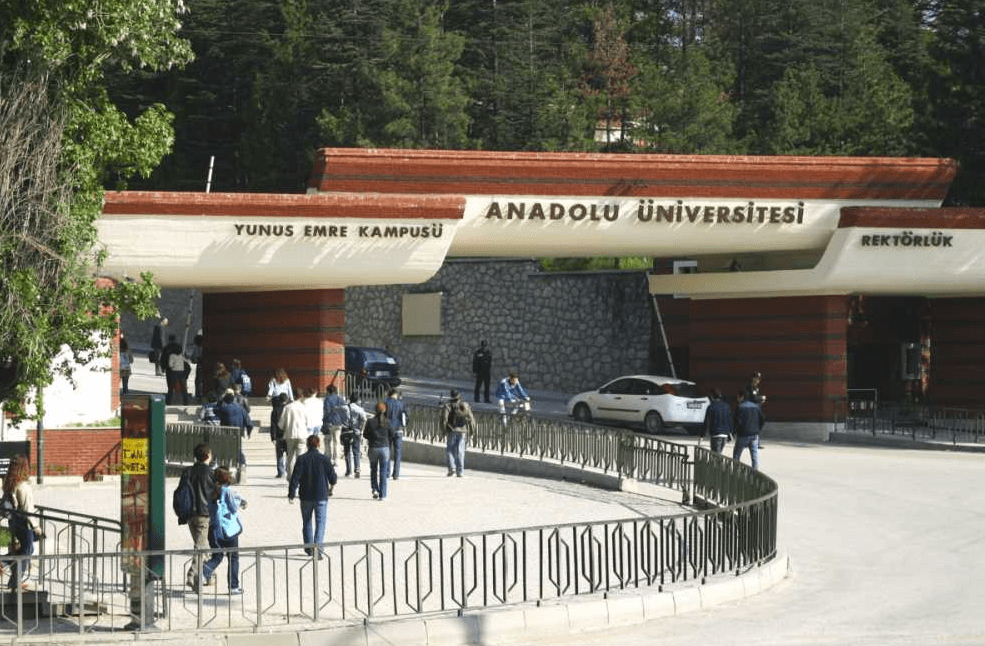
Anadolu University (Source: Culture Portal)
Eskişehir is located in the northwestern part of the Central Anatolia Region, between 29–32 degrees east longitude and 39–40 degrees north latitude. The province borders Ankara to the east, Bilecik and Kütahya to the west, Afyonkarahisar and Konya to the south, and Bolu to the north. Eskişehir has a total area of 13,653 km², covering approximately 1.8% of Türkiye’s total land area.
The highest point within the provincial boundaries is Türkmen Dağı Tepesi, at an elevation of 1,825 meters. To the north, the Bozdağ and Sündiken Mountains, to the south, the Emirdağ range, to the east, the Central Anatolian Valley, and to the west, the Türkmen Mountains form the natural boundaries of the region.
Eskişehir exhibits the typical continental climate characteristics of the Central Anatolia Region. Summers are hot and dry, while winters are cold and snowy. The difference between day and night temperatures is quite pronounced. The annual average temperature in the city is 10.9°C; the coldest months are January and February, and the warmest are July and August. The average annual rainfall is 363.3 mm, with the highest precipitation occurring in May and December, and the lowest in August.
Some districts of Eskişehir exhibit microclimatic features. Particularly Sarıcakaya and Mihalgazi districts, due to their proximity to sea level, have a milder climate. In these areas, crops suited to the Mediterranean climate such as olives, pomegranates, and pistachios are cultivated.
The topography of the province consists of plains in the Sakarya and Porsuk river basins surrounded by mountains. Mountainous areas account for 22% of the land, while plains cover 26%. The most important rivers are the Sakarya River and its tributaries, the Porsuk Creek and the Sarısu. The Porsuk Dam and Sarıyar Dam play important roles in preventing floods and generating energy.
Mountains vary in elevation across different regions of the province and extend in an east-west direction, encircling the city. The Bozdağ and Sündiken Mountains in the north, the Sivrihisar and Türkmen Mountains in the south, constitute the main elevations of the province.
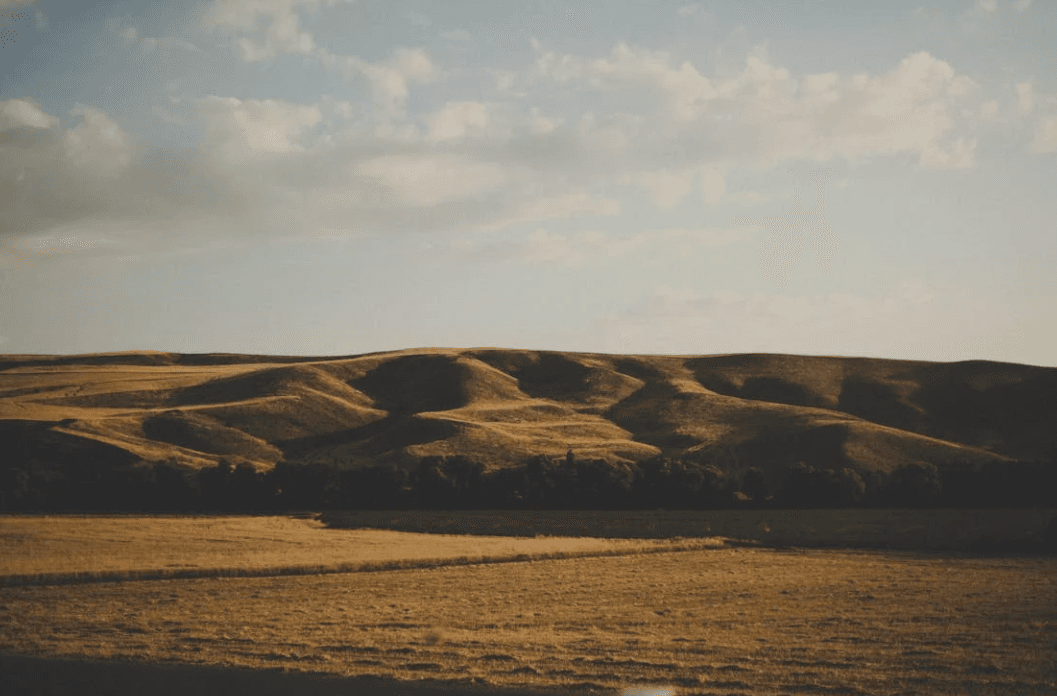
Eskişehir (Source: Pexels/Emir Kaan Okutan)
Eskişehir is one of Türkiye’s significant mineral-rich provinces. The main minerals extracted in the province include:
Thanks to its underground wealth, Eskişehir holds an important position in industry and exports.
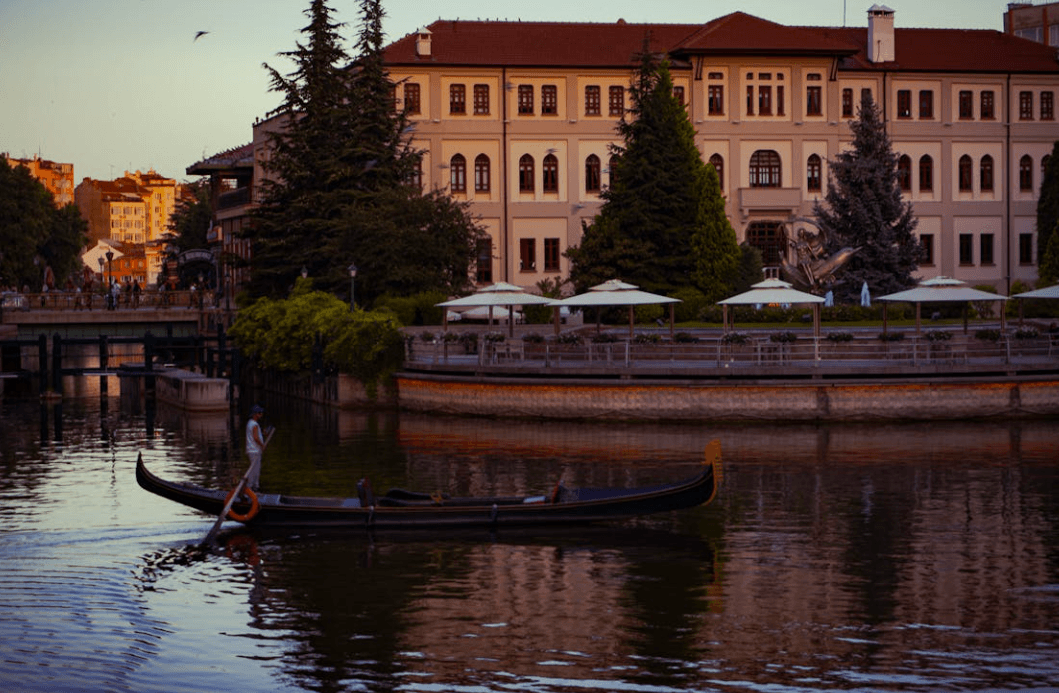
Porsuk Creek (Source: Pexels/Cem Dolcan)
Eskişehir is one of Türkiye’s most advanced industrial and commercial centers, with an economy based on agriculture, industry, trade, and services. The city’s economic structure encompasses a wide spectrum ranging from traditional handicrafts to high-tech industrial production.
Since the Republican era, Eskişehir has gained prominence through major industrial investments. It hosts large factories in fields such as aviation, rail systems, ceramics, white goods, and automotive ancillary industries. The Eskişehir Organized Industrial Zone (EOSB) is one of Turkey’s largest organized industrial zones and provides production space for numerous domestic and foreign companies.
Eskişehir’s trade sector has developed based on its industrial production. The city is one of Anatolia’s key logistics centers and holds a strong position in domestic and international trade due to its railway and road connections.
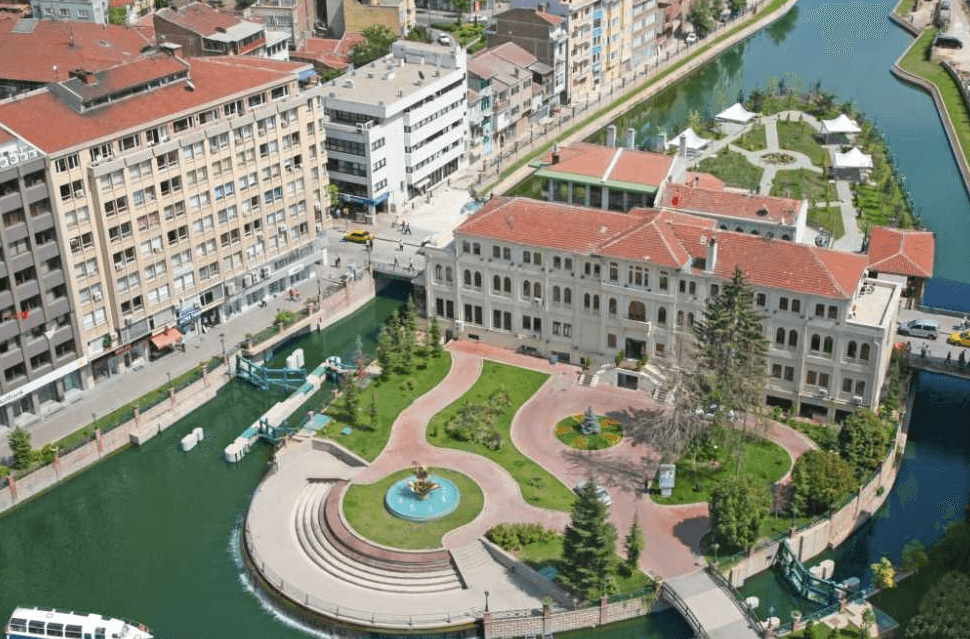
Eskişehir, Köprübaşı (Source: Culture Portal)
Eskişehir has a modern infrastructure with a developed transportation network, educational institutions, and urban transit systems. The city has three types of transportation: tramway, bus, and minibus.
Urban Transportation
Eskişehir’s public transportation system is highly developed. The tramway line is a major public transport vehicle that facilitates access to many parts of the city. Buses and minibuses serve areas not reached by the tramway. The public transportation system enables fast and economical mobility for both local residents and university students.
Universities and Educational Infrastructure
Eskişehir is one of Türkiye’s most important educational centers due to its three major state universities:
These universities bring a large student population to the city and transform Eskişehir into a youthful, dynamic, and education-focused city.
Located in the Odunpazarı neighborhood, the Kurşunlu Mosque was built in 1525 by Vezir-i Sani Mustafa Pasha. The mosque courtyard contains a şadırvan, a kitchen, a guesthouse, and medrese rooms. Behind the mosque, a large domed semahane and open areas indicate that the site was once used as a Mevlevi tekke. The mosque, renovated between 1961 and 1962, reflects the classical style of Ottoman architecture.
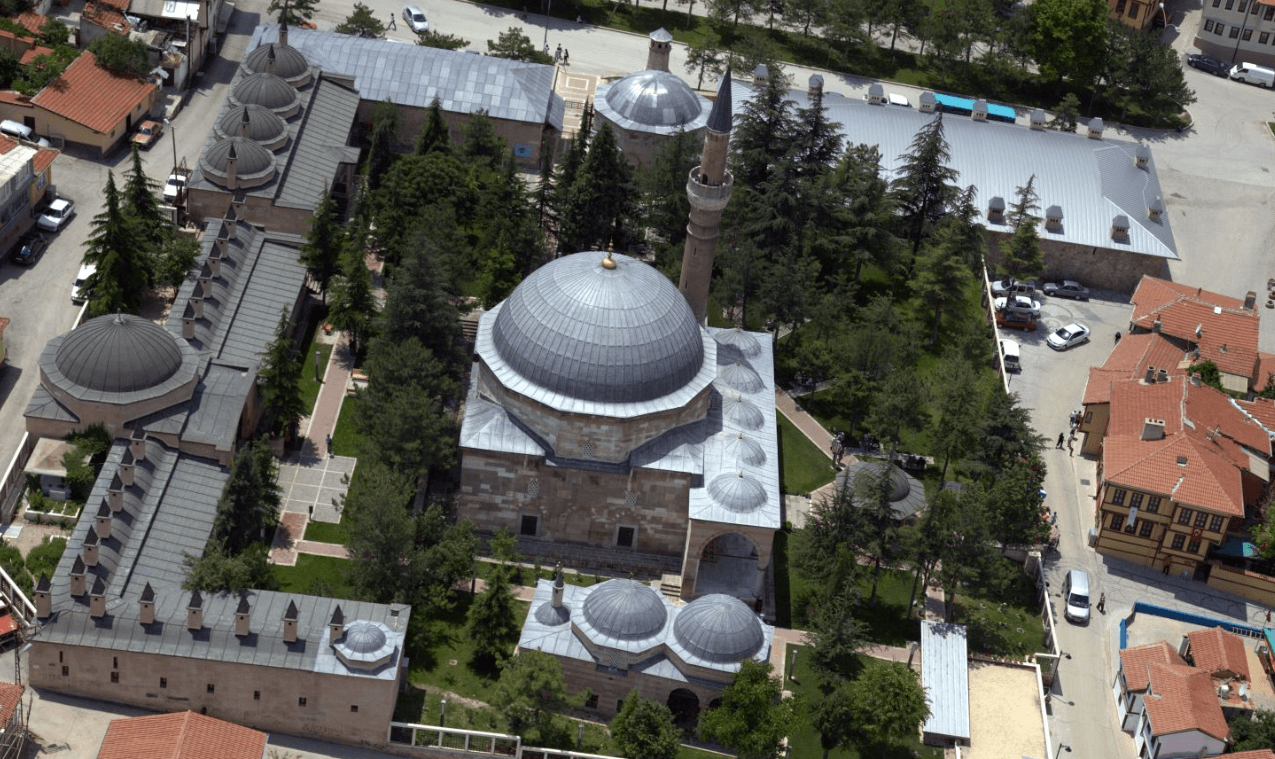
Kurşunlu Külliye (Source: Culture Portal)
Built between 1207 and 1209 on the eastern slopes of Üçler Tepe in Seyitgazi district, the külliye was constructed to honor the Islamic hero Seyyid Battal Gazi. Commissioned by Ümmühan Hatun, mother of Seljuk Sultan I. Alaeddin Keykubad, the külliye was expanded during the Ottoman period and became a major religious and educational center. The structure, now under the ownership of the General Directorate of Foundations, was opened to tourists and religious visitors after restoration in 1954.
The türbe of Şeyh Edebali, regarded as one of the spiritual leaders of the Ottoman state, is located within the Odunpazarı Cemetery in the Odunpazarı neighborhood. The türbe was restored during the reign of Ottoman Sultan II. Abdülhamid.
The külliye located in the Yunusemre village of Mihalıççık district commemorates the great Turkish Sufi poet Yunus Emre. The area surrounding the türbe contains various structures in külliye form, along with numerous inscriptions reflecting Yunus Emre’s philosophy. The phrase “Gelin Tanış Olalım” (Let Us Meet and Know Each Other) encapsulates his messages of tolerance and unity.
The renowned Turkish humorist Nasrettin Hoca was born in 1208 in Hortu Village of Sivrihisar. It is known that Hoca received his education in Sivrihisar and Akşehir. His name, due to his sharp intellect and witty personality, holds an important place in both Turkish culture and world humor history.
Yazılıkaya, one of the sacred settlements of the Phrygians, is located 39 km from Çifteler district. The Midas Monument, the largest open-air temple of the Phrygian period, is a rock sanctuary dedicated to the cult of Cybele. Inscriptions written in the Phrygian alphabet are found on its surfaces, offering important clues about Phrygian beliefs and art.
Located in Ballıhisar Village of Sivrihisar district, Pessinus is an ancient city built by the Phrygians and famous for its temple of Cybele. During the Hellenistic period, Pessinus became a major center of trade and religion and retained its importance during the Roman period.
The current governor of Eskişehir is Hüseyin Aksoy, who was appointed to the position by Presidential Decree No. 2023/376 dated 09.08.2023. The governors who have served in the city from the past to the present are as follows:
Eskişehir’s metropolitan municipality administration is currently led by Ayşe Ünlüce of the Republican People’s Party as of 2024. The mayors who have served in the city from the past to the present are as follows:
Bursa EskişehirBilecik Kalkınma Agency.Eskişehir Yatırım YatırımDestek Ofisi Tanıtım Stratejisi (2018-2023). Eskişehir Investment Support Office, 2018. Accessed February 6, 2025.
Dağdemir, Özcan. "Eskişehir Ekonomisinin Genel Görünümü: Bölgesel Göstergelerle Bir Değerlendirme." Eskişehir Osmangazi Üniversitesi Sosyal Bilimler Dergisi 14 (Special Issue) (November 2013): 1-30. Accessed February 6, 2025.
Eskişehir Büyükşehir Municipality. "Eski Başkanlar." Accessed February 6, 2025.
Eskişehir Büyükşehir Municipality. "Kurumsal." Accessed February 6, 2025.
Evcim, Seçkin. Eskişehir ve Çevresindeki Bizans Dönemi Yapıları.
General Directorate of Mining and Exploration. EskişehirMaden Tetkik Raporu, 2010. Accessed February 6, 2025.
Hürriyet. "Eskişehir İli Yerel Seçim Sonuçları – 31 Mart 2024." Hürriyet Seçim. Accessed February 6, 2025.
Koca, Seda and Serpil Menteşe. "Eskişehir Merkez İlçelerinde (Odunpazarı ve Tepebaşı) Topografik Faktörlere Göre Yerleşimin Dağılışı." Bilecik Şeyh Edebali Üniversitesi Sosyal Bilimler Enstitüsü. Submitted: July 30, 2020; Revised: October 8, 2020; Accepted: November 12, 2020.
Republic of Turkey Ministry of Agriculture and Forestry. "Genel Bilgiler." Eskişehir İl Tarım veOrman Müdürlüğü. Accessed February 6, 2025.
Republic of Turkey Ministry of Agriculture and Forestry. 2016 Yılı Faaliyet Raporu. Eskişehir İl Tarım veOrman Müdürlüğü, 2016. Accessed February 6, 2025.
Republic of Turkey Ministry of Culture and Tourism. "Eskişehir İli Coğrafya Yapısı." Accessed February 6, 2025.
Republic of Turkey Ministry of Culture and Tourism. "Eskişehir İli Diğer Maden Kaynakları." Accessed February 6, 2025.
Republic of Turkey Ministry of Culture and Tourism. "Eskişehir." Kültürsel Koruma Kurulları. Accessed February 6, 2025.

Eskişehir
Country | Türkiye | ||||||||
|---|---|---|---|---|---|---|---|---|---|
Region | Central Anatolia Region | ||||||||
Population | 915.418 (2023) | ||||||||
Area | 13.652 km² | ||||||||
Climate | Continental Climate | ||||||||
Important Structure | Seyit Battal Gazi Külliyesi Sivrihisar Ulu Cami Odunpazarı Evleri Kurşunlu Külliyesi | ||||||||
Area Code | 222 | ||||||||
License Plate Code | 26 | ||||||||
Governor | Hüseyin Aksoy | ||||||||
Metropolitan Mayor | Ayşe Ünlüce | ||||||||
No Discussion Added Yet
Start discussion for "Eskişehir (Province)" article
History
Eskişehir in Antiquity
Phrygian Period
Hellenistic, Roman, and Byzantine Periods
Seljuk and Ottoman Periods
Eskişehir During the War of Independence and the Republican Era
Geographical Structure
Location and Boundaries
Climate
Landforms
Natural Resources and Minerals
Rivers and Dams
Economic Structure
Industry and Production
Trade and Service Sector
Infrastructure
Historical Structures
Kurşunlu Mosque and Külliye
Seyyid Battal Gazi Külliye
Şeyh Edebali Türbe
Yunus Emre Külliye and Türbe
Nasreddin Hoca’s House
Yazılıkaya (Midas City)
Pessinus Ancient City
Administration
Governor
Metropolitan Municipality Administration
Districts