


This article was automatically translated from the original Turkish version.
+2 More
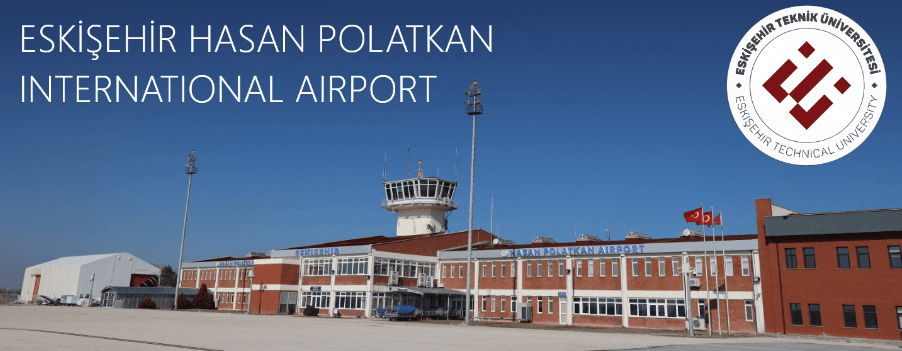
Hasan Polatkan Airport
Location | Eskişehir Türkiye | ||||||||
|---|---|---|---|---|---|---|---|---|---|
Opening Date(s) | March 1989 | ||||||||
ICAO Code | LTBY | ||||||||
IATA Code | AOE | ||||||||
Apron Capacity | 3 aprons | ||||||||
Passenger Capacity | 300,000 passengers/year | ||||||||
Geographic Coordinates | 39°48′45″N 30°31′14″E | ||||||||
Hasan Hasan Polatkan Airport opened for air traffic in 1989 under the name "Eskişehir Anatolia Airport". Its establishment followed the founding in 1986 of the Civil Aviation Vocational School which formed the foundation of the Faculty of Aviation and Space Sciences at Eskişehir Technical University place. The airport was established to conduct civil aviation training activities primarily in pilotage and air traffic control and to provide air transportation services to the public region.
In 2007 it became the 21st airport in Türkiye to be licensed under the Civil Aviation General Directorate’s Regulation on Airport Construction Operation and Certification (SHY-14A). Thus Hasan Polatkan Airport acquired the distinction of being the world’s first and only university airport with such a license.
In 2015 its name was officially changed to "Eskişehir Hasan Polatkan Airport" by a decision of the Council of Ministers and in 2018 it was affiliated with Eskişehir Technical University. As of 2020 it has attained the status of a permanent international border crossing point.
The airport supports numerous educational programs under the Faculty of Aviation and Space Sciences at Eskişehir Technical University house:
The airport regularly operates international flights to cities such as Brussels Ostend/Brugge Lyon Düsseldorf Cologne and Amsterdam summer particularly during peak seasons like Europe hat. During the off-season flights are primarily limited to Brussels and Ostend. Additionally Hajj and Umrah flights are also conducted.
Although the COVID-19 pandemic severely impacted the aviation sector in 2020 Hasan Polatkan Airport experienced a relatively smaller decline and recovered more quickly than the global average world. Passenger numbers dropped by approximately 40 percent in 2020 compared to a global average decline of 60 percent. During this period rescue flights were conducted to bring Turkish citizens abroad back to Türkiye and the airport remained operational. June In 2020 flights resumed under the SHGM Pandemic Certification.
Hasan Polatkan Airport holds a unique position in Türkiye due to its support of academic education its contribution to civil aviation its infrastructure international connections and multifaceted service structure. It provides economic social and cultural benefits to Eskişehir particularly through educational flights and international transportation activities. With ongoing infrastructure projects and increasing passenger capacity it also has the potential to become a larger regional airport in the future.
Eskişehir Teknik University HasanPolatkan Havalimanı - "General Information." Accessed March 22, 2025. https://hph.eskisehir.edu.tr/tr/Icerik/Detay/genel-bilgiler
Eskişehir Teknik University HasanPolatkan Havalimanı - "Hakkımızda." Accessed March 22, 2025. https://hph.eskisehir.edu.tr/tr/Icerik/Detay/hakkimizda
Eskişehir Teknik University HasanPolatkan Havalimanı - "Havalimanı Tarihçesi." Accessed March 22, 2025. https://hph.eskisehir.edu.tr/tr/Icerik/Detay/havalimani-tarihcesi
Eskişehir Teknik University HasanPolatkan Havalimanı - "İstatistikler." Accessed March 22, 2025. https://hph.eskisehir.edu.tr/tr/Icerik/Detay/istatistikler

Hasan Polatkan Airport
Location | Eskişehir Türkiye | ||||||||
|---|---|---|---|---|---|---|---|---|---|
Opening Date(s) | March 1989 | ||||||||
ICAO Code | LTBY | ||||||||
IATA Code | AOE | ||||||||
Apron Capacity | 3 aprons | ||||||||
Passenger Capacity | 300,000 passengers/year | ||||||||
Geographic Coordinates | 39°48′45″N 30°31′14″E | ||||||||
No Discussion Added Yet
Start discussion for "Eskişehir Hasan Polatkan Airport" article
Physical Characteristics and Infrastructure
Services
Flight Services
Ground Services
Other Services
Educational Activities
Flight Destinations
Pandemic Period and Aftermath
Security and Certifications