This article was automatically translated from the original Turkish version.
Geographical Indication Type | Signpost | ||||||||
|---|---|---|---|---|---|---|---|---|---|
Application Date | 05.09.2014 | ||||||||
Registration Number | 364 | ||||||||
Registration Date | 06.07.2018 | ||||||||
Product / Product Group | Textiles | ||||||||
Applicant / Registrant | Aziziye Municipality | ||||||||
Place of Production | Erzurum, Türkiye | ||||||||
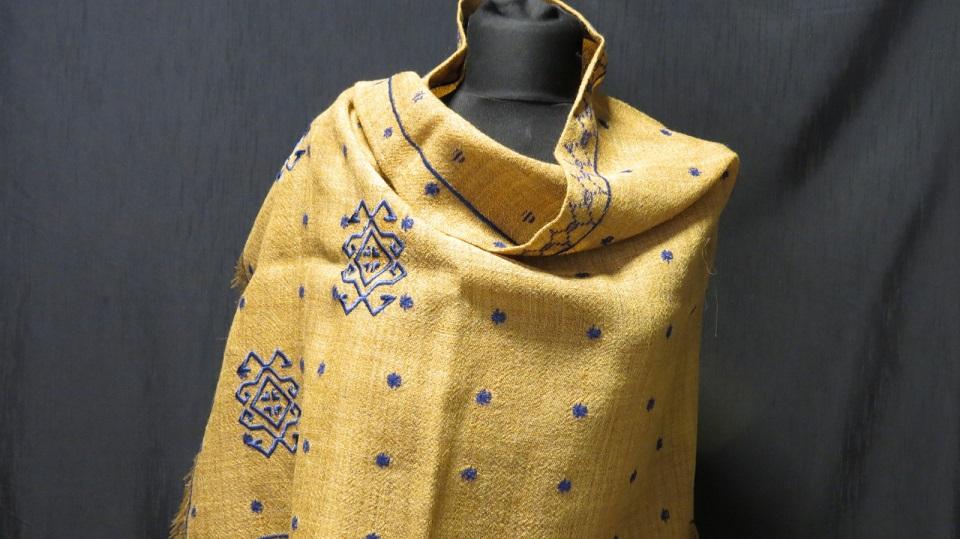
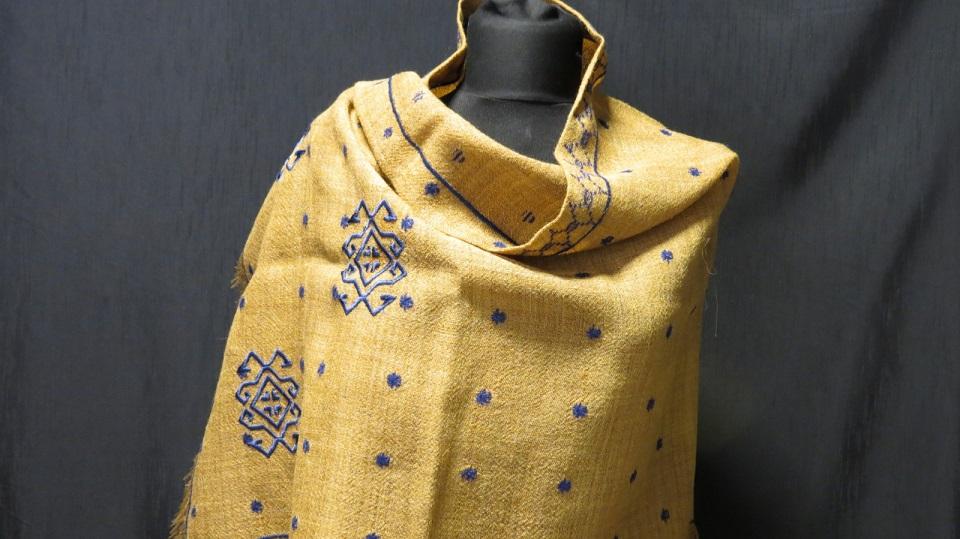
Ehram (ehram) is a traditional women’s outer garment made from finely twisted sheep’s wool, woven on a shuttle loom with a flat surface, adapted to the harsh climatic conditions of Eastern Anatolia. This garment, widely used in Erzurum and surrounding provinces, reflects both its historical craftsmanship and cultural identity.
Ehram is a covering garment worn by women that conceals the face down to the chin while leaving the eyes exposed. It is etymologically linked to ancient veiling garments and the Islamic pilgrimage garment known as ihram. In Erzurum, the word “ihram” is pronounced as “ehram”; similarly, “çulha” is rendered as “culfa”.
The garment has been produced in its current form since the 1850s. Erzurum has been the central hub of its production, where culfa artisans traditionally practiced the craft. Ehram weaving remained a distinct profession until the mid-20th century.
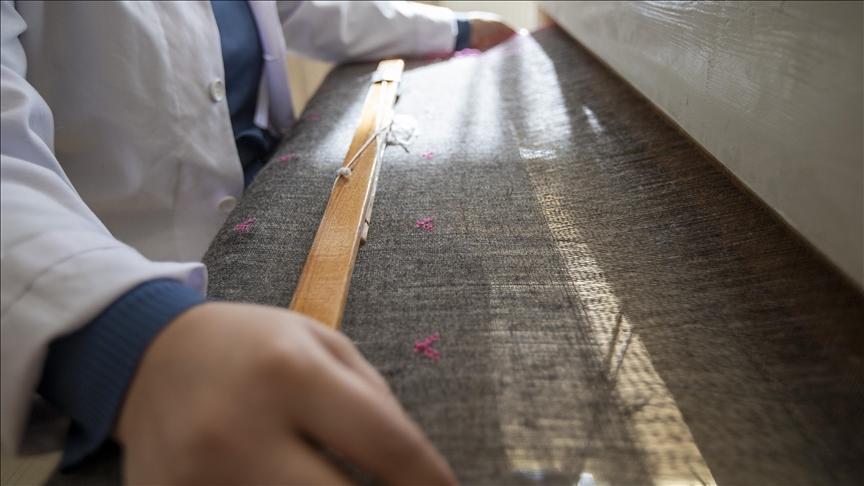
Ehram During Weaving(AA)
Sheep’s wool is washed with a mallet and beaten and carded while still damp.
The wool is separated into fine strands and processed into yarn; unusable portions are discarded as “waste”.
Spun threads are wound onto bobbins using a spindle and transferred to spools with the aid of a spinning wheel.
For durability, the threads are dipped in a paste made from the çiriş plant and limestone, then stretched.
Dağ: Maintains the warp threads taut and even.
Oturak (weaving and adjustment platform): The area where the weaver sits.
Ayakça: Activates the heddles to open the shed.
Kuşlar: Enable the vertical movement of the heddles.
Kol ve Tüfe: Pull the reed and provide connection.
Mitit: Two long wooden rods that keep the weaving taut.
Mekik ve Masura: Carry the weft thread and pass it through the warp.
Selman ve Sabitleme Demiri: Wind and secure the fabric.
Dehdün (rear, middle, upper): Ensures the even alignment of the warp threads.
Ehram Reed: A wide reed with bamboo teeth that determines fabric quality.
Gücü ve Tahsil Değneği: Directs and tensions the warp threads.
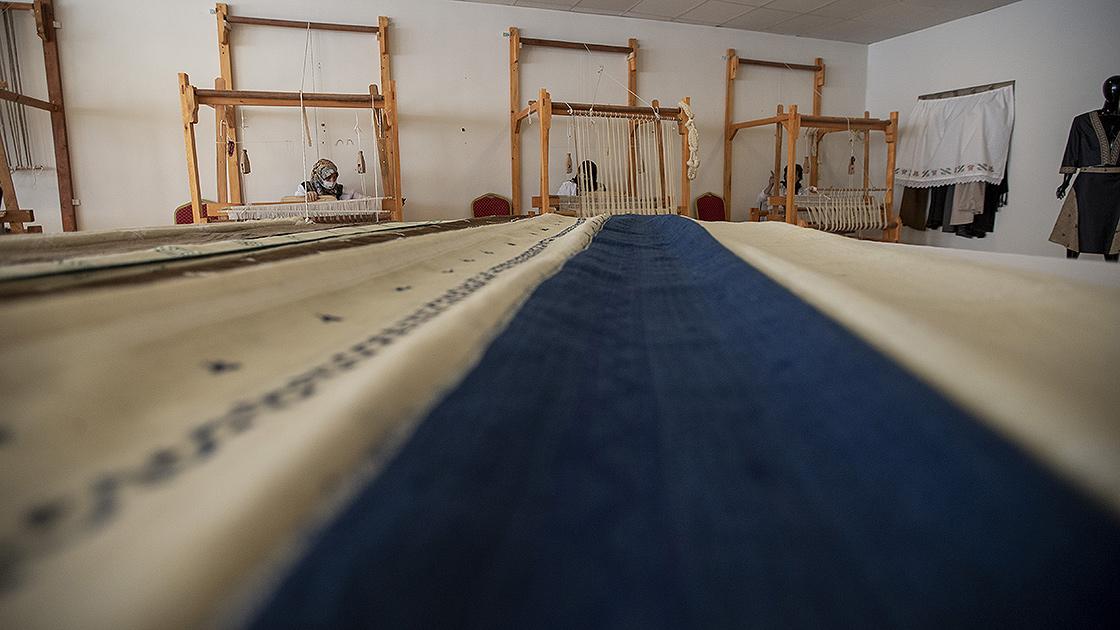
Ehram Loom(AA)
The border (edge section) is woven with cotton thread.
The weaver steps on the ayakça in sequence to open the shed between the warp threads.
The weft thread is passed through the warp using the mekik; motifs are woven with specially placed colored threads.
Due to its narrow width, the fabric is woven in two pieces and sewn together diagonally.
Dimensions: Approximately 185 × 250 cm; one weaver can produce one ehram per day.
Natural tones of sheep’s wool—white, purple, brown, and black—are predominantly used.
Color signifies age: White is worn by young girls, purple or brown by middle-aged women, and purple or black by elderly women.
Motif examples: Clock Strap, Thyme Branch, Cheetah Horn, Antique, Mirror Box, Apple Lattice.
Embroidery is applied either during weaving or afterward using a needle.
Natural dyes are used: Green from walnut, brick red from onion peel, burgundy from quince seed, and purple from mint root.
The ehram is worn by draping it from below the chin to cover the face. It is secured by tucking the ends between the waist and belt; the side flaps are called “felenek”. An atkı (shawl) is then draped over the top to complete the ensemble.
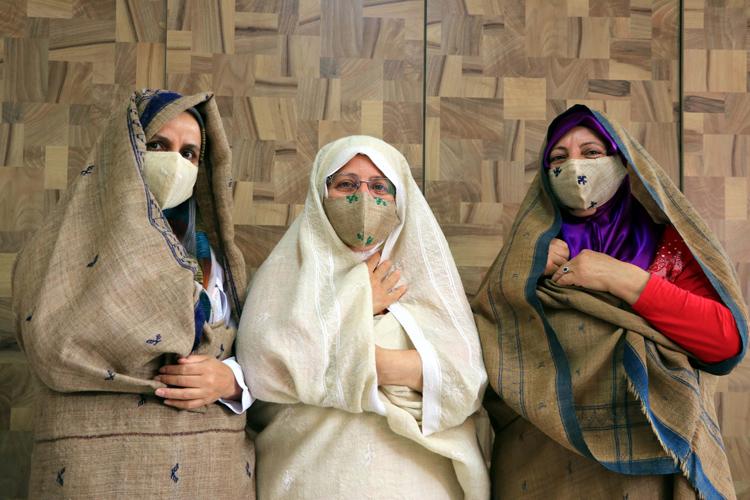
Women Wearing Ehram(AA)
In 2018, the Aziziye Municipality officially recognized ehram as a local cultural symbol. This registration is significant for documenting Erzurum’s cultural heritage. The production method, use of natural materials, and technical specifications are now legally protected.
The weaving process has historically been carried out by women. Spinning, motif application, cutting, and sewing are all performed by women. Today, workshops and training programs focused on female employment continue to sustain this tradition.
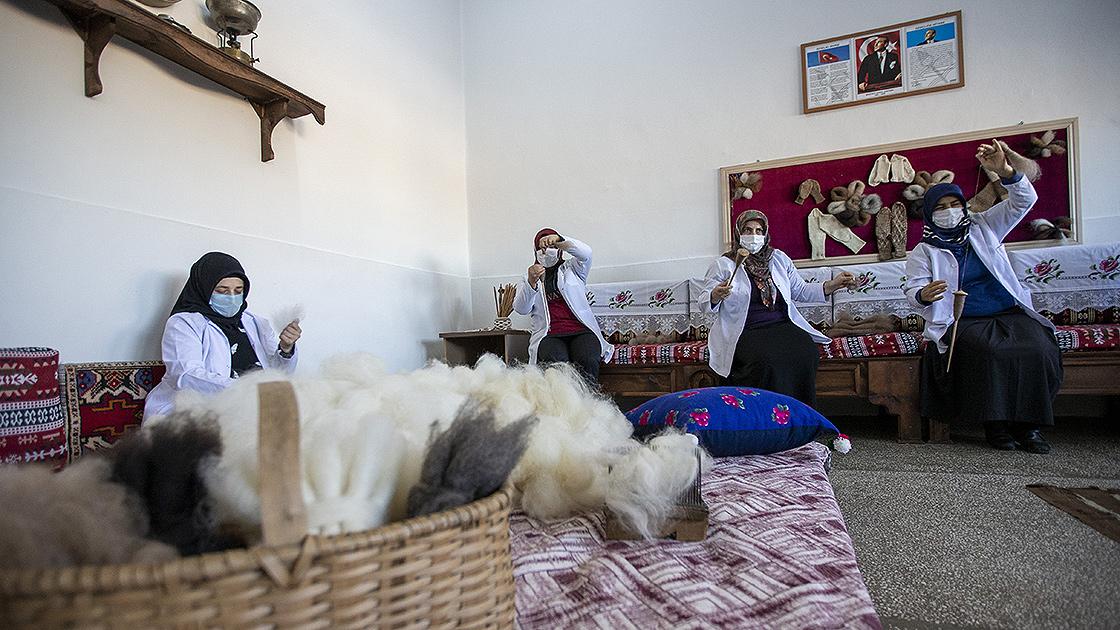
Women in Ehram Production(AA)
Girls’ Vocational High Schools, Community Education Centers, and regional development projects preserve ehram weaving by both teaching and producing it.
Its chemical-free composition makes it skin-friendly. Due to wool’s natural insulation properties, it is especially advantageous during winter months.
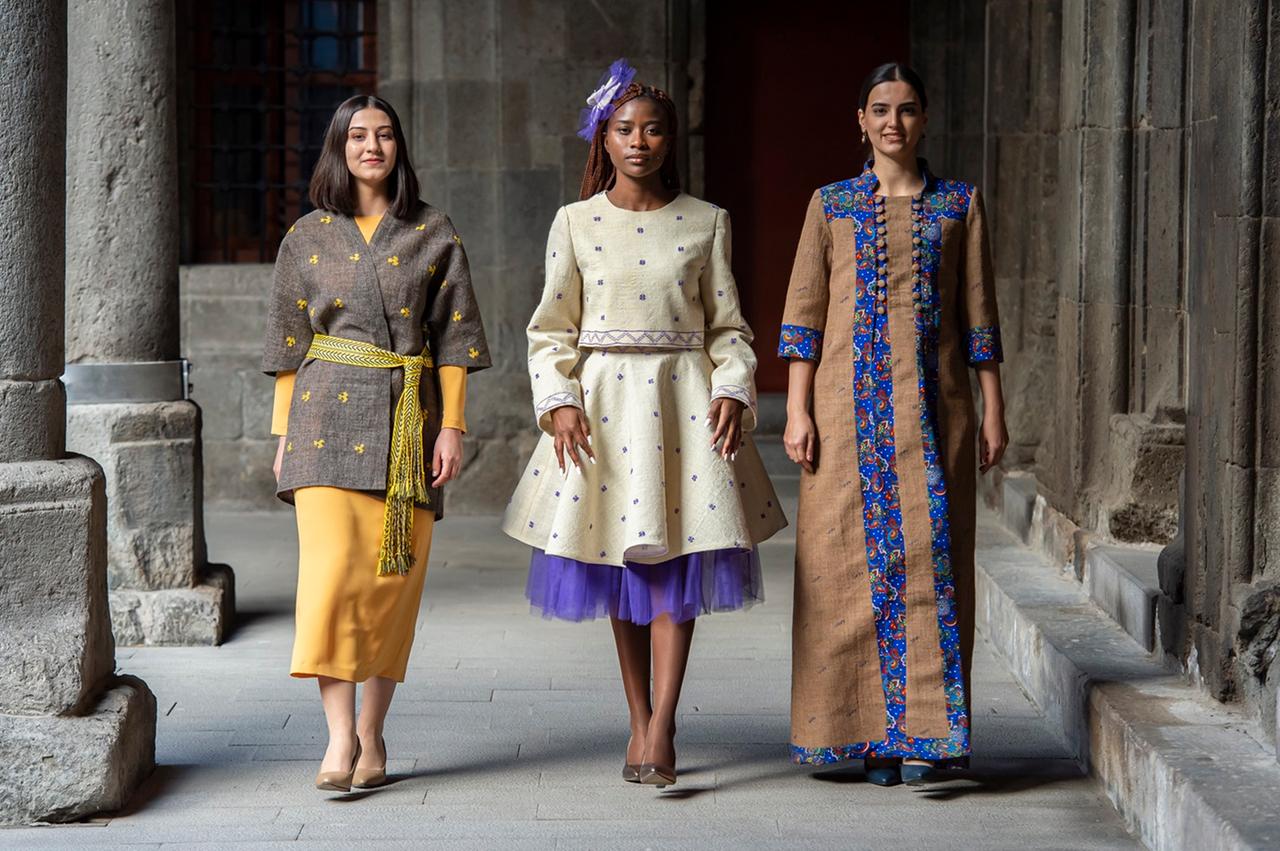
Different Usage Examples(Erzurum Governorship)
Today, ehram fabric is used in the following products: bags, wallets, belts, vests, ties, bedspreads, prayer mats, tablecloths, magnets, keychains, and decorative items.
Fashion designers are integrating ehram fabric into contemporary outerwear.
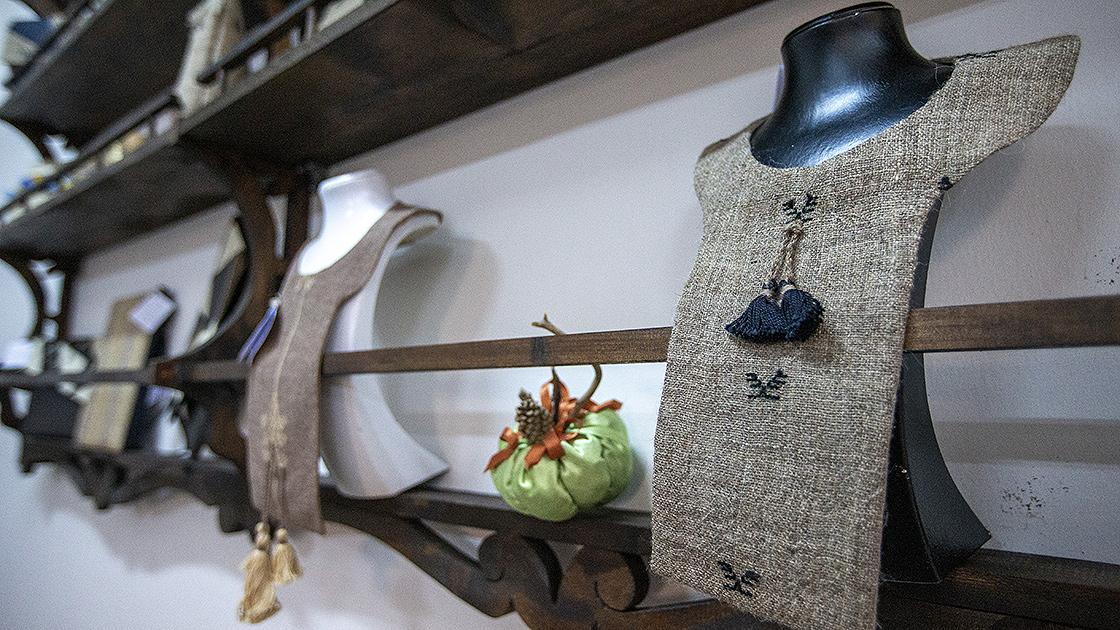
Different Usage Examples(AA)
Anadolu Ajansı. "Erzurum’un Asırlık Kumaşı Ehramdan Maske Üretiliyor." Accessed July 6, 2025.https://www.aa.com.tr/tr/yasam/erzurumun-asirlik-kumasi-ehramdan-maske-uretiliyor/1918372.
Anadolu Ajansı. "Erzurum’un Tescilli Ehram Kumaşı Farklı Ürünlerle Geleceğe Taşınıyor." Accessed July 6, 2025.https://www.aa.com.tr/tr/kultur-sanat/erzurumun-tescilli-ehram-kumasi-farkli-urunlerle-gelecege-tasiniyor/2466875.
Erzurum Portalı. "Erham Bir Kumaş Türü Değil, Bir Örtünme Biçiminin Adıdır." Accessed July 6, 2025.https://erzurumportali.com/shf/2971/Erham-Bir-Kumas-Turu-Degil-Bir-Ortunme-Biciminin-Adidir.
Erzurum Valiliği. "Ehram (İhram)." Accessed July 6, 2025.http://www.erzurum.gov.tr/ehram-ihram
Salman, Fikri, and Zeynep Kırkıncıoğlu. "Geçmişten Günümüze Erzurum’da Ehram (İhram) Dokumacılığı." *Arış Dergisi*, no. 10 (2014): 42–51. Accessed July 6, 2025.https://dergipark.org.tr/tr/pub/aris/article/534114
T.C. Ministry of Culture and TourismErzurum İl Directorate of Culture and Tourism. "Ehram." Accessed July 6, 2025.https://erzurum.ktb.gov.tr/tr-176363/ehram.html
Turkish Patent and Trademark Office. Geographical Indications Portal. Ministry of Industry and Technology. Accessed July 6, 2025.https://ci.turkpatent.gov.tr/cografi-isaretler/detay/38137.

Geographical Indication Type | Signpost | ||||||||
|---|---|---|---|---|---|---|---|---|---|
Application Date | 05.09.2014 | ||||||||
Registration Number | 364 | ||||||||
Registration Date | 06.07.2018 | ||||||||
Product / Product Group | Textiles | ||||||||
Applicant / Registrant | Aziziye Municipality | ||||||||
Place of Production | Erzurum, Türkiye | ||||||||
Definition and Etymological Origin
Historical Background
Materials and Production Process
Wool Preparation
Loom Structure and Components
Weaving Technique
Color and Embroidery Culture
Wearing Style
Cultural Significance of the Geographic Mark
Women’s Labor and Craftsmanship
Preservation Through Educational Institutions
Health and Natural Properties
Modern Applications