


This article was automatically translated from the original Turkish version.
Electromagnetic compatibility (EMC) is an engineering discipline and a set of standards that enable electronic and electrical devices to operate without interfering with each other or their environment. In modern times, EMC is a critical factor for the reliability and performance of devices in fields such as communication systems, automotive, healthcare, and industrial electronics. The primary goal of EMC is to prevent electromagnetic interference (EMI) and to enhance the electromagnetic immunity (EMS) of devices.
EMC consists of two main components:
Electromagnetic interference refers to the generation of unwanted electromagnetic signals that can disrupt the operation of a device. EMI can occur in two distinct ways:
•Conducted interference: Electromagnetic signals transmitted through electrical wires or circuits.
•Radiated interference: Signals propagated through electromagnetic waves in the air.
The source of EMI can be natural, such as solar storms, or man-made, such as motors and radio signals. If uncontrolled, EMI can cause malfunctions and performance degradation between devices. These interferences can lead to signal loss, data corruption, and even device failures, particularly in sensitive electronic systems.
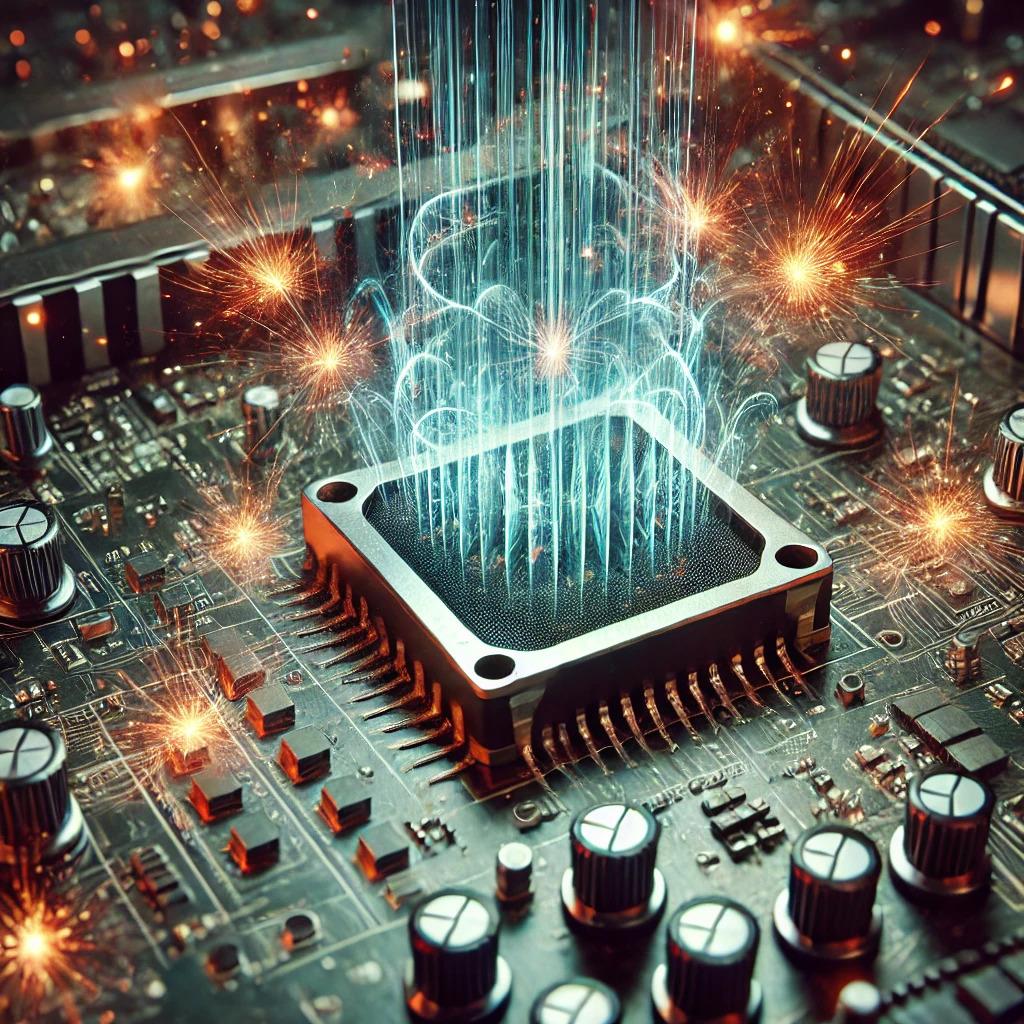
Electromagnetic Interference - DALL·E
Electromagnetic immunity refers to a device’s ability to withstand external electromagnetic interference. Devices with high EMS levels can operate without being affected by ambient electromagnetic waves. EMS tests aim to measure resilience by simulating typical electromagnetic environments a device may encounter. For example, tests are conducted against radio frequency noise, electrostatic discharge (ESD), and transient voltage changes (surges).
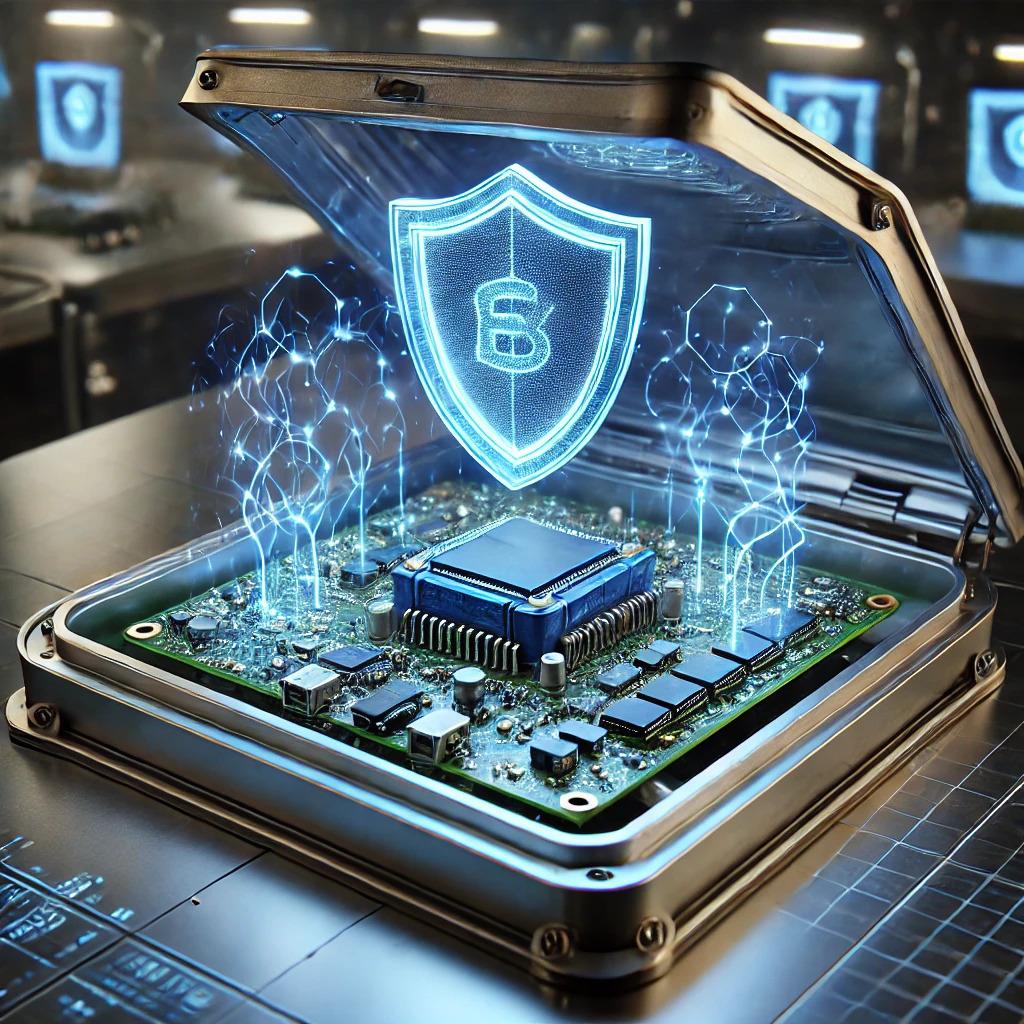
Electromagnetic Immunity -
Various design techniques are employed to ensure EMC compliance:
EMC filters used in electronic circuits reduce interference by suppressing unwanted high-frequency signals. They are commonly used in power supply circuits. EMI filters may contain capacitors, inductors, and ferrite cores, and are designed to block interference within specific frequency ranges.
The electromagnetic radiation from devices can be limited using metallic enclosures or conductive coatings. This technique plays a vital role in protecting sensitive electronic systems. For instance, military and medical devices require high levels of shielding. Special structures such as Faraday cages provide effective protection against strong electromagnetic fields.
A proper grounding system reduces electromagnetic interference by preventing potential differences between devices. Grounding is particularly important for EMC in industrial facilities. Minimizing connection errors and establishing low-impedance paths helps minimize electrical noise.
In printed circuit board (PCB) design, appropriate trace layout, number of layers, and component placement can enhance EMC compliance. Signal integrity and noise reduction techniques must be carefully considered. For example, high-speed signal traces should be kept as short as possible and isolated with proper ground planes. Separating circuits with different voltage levels and creating low-impedance power distribution networks play a critical role in reducing electromagnetic parasitics (EMC noise).
Various standards have been developed worldwide to ensure EMC compliance. Some of these include:
•IEC 61000: General EMC standards established by the International Electrotechnical Commission (IEC).
•FCC Part 15: EMC regulations set by the Federal Communications Commission (FCC) in the United States.
•CISPR 22/32: EMC test standards for information technology equipment.
•MIL-STD-461: Standards applied for EMC testing in military systems.
Devices undergo laboratory testing to verify compliance with these standards. EMC tests are generally divided into two main categories:
•Emission Tests: These verify that the electromagnetic waves emitted by a device remain within established limits. Measurements are performed using antennas and specialized EMC test chambers.
•Immunity Tests: These measure a device’s resistance to external electromagnetic interference. For example, exposure to radio frequency interference or electrostatic discharge typical in industrial environments is tested.
EMC is vital in numerous sectors:
• Communication Systems: Maintains signal quality in radio, television, mobile phones, and satellite systems.
• Automotive: Prevents interference between in-vehicle electronic systems. In electric vehicles, power electronics components present significant EMC challenges.
• Healthcare Technologies: Ensures medical devices such as MRI and EKG machines operate without disruption from electromagnetic interference. Ensuring EMC compliance in hospitals is critical for patient safety.
• Defense and Aerospace: Enhances the reliability of radar, radio, and military systems. EMC protection in aircraft and submarines is essential for mission success.
• Industrial Automation: Ensures stable operation of sensors, motor drives, and control systems on production lines.
CISPR. *EMC Standards for Information Technology Equipment.* Accessed March 1, 2025.https://www.itu.int/en/.
Federal Communications Commission (FCC). *EMC Regulations.* Accessed March 1, 2025.https://www.fcc.gov/.
International Electrotechnical Commission (IEC). *Electromagnetic Compatibility (EMC) Standards.* Accessed March 1, 2025.https://www.iec.ch/.
OpenAI. *DALL·E.* Accessed March 1, 2025.https://openai.com/dall-e.
U.S. Department of Defense. MIL-STD-461: Military Standard for Electromagnetic Compatibility. Washington, DC: Department of Defense, n.d.

No Discussion Added Yet
Start discussion for "Electromagnetic Compatibility" article
Electromagnetic Compatibility and Its Components
Electromagnetic Interference (EMI)
Electromagnetic Immunity (EMS)
EMC Design Methods
1. Filtering
2. Shielding
3. Grounding and Bonding
4. PCB Design
EMC Standards and Testing
Applications of EMC