


This article was automatically translated from the original Turkish version.
+1 More
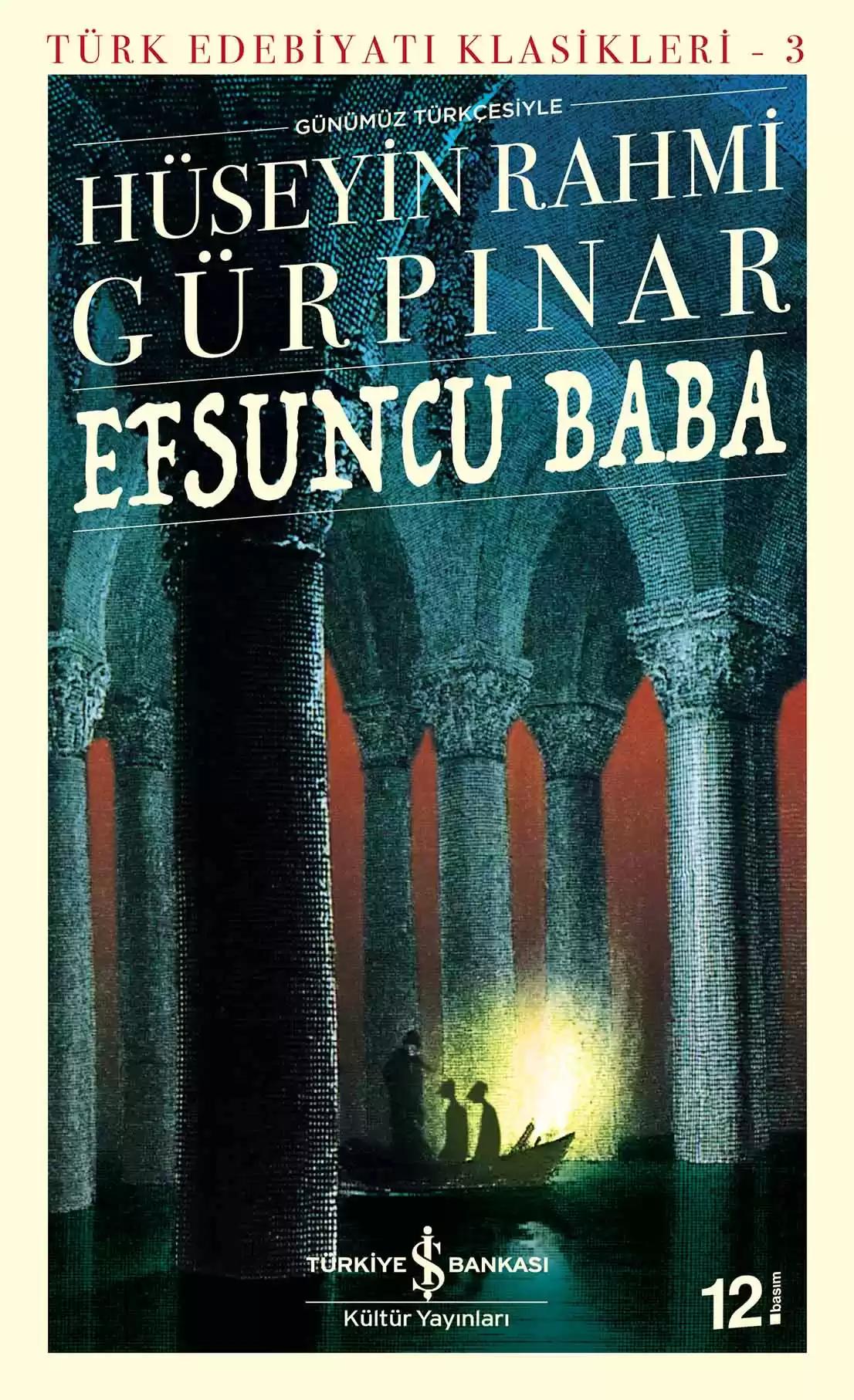
Efsuncu Baba
Author(s) | Hüseyin Rahmi Gürpınar | ||||||||
|---|---|---|---|---|---|---|---|---|---|
Type(s) | Novel | ||||||||
Subject(s) | Superstitions conflict between knowledge and ignorance religious exploitation | ||||||||
Theme(s) | Social criticism superstitious beliefs lack of education ignorance | ||||||||
Efsuncu Baba is one of the novels published by Hüseyin Rahmi Gürpınar in 1919. The work examines events taking place in Istanbul and various aspects of the social structure. Written with a realist perspective characteristic of Gürpınar, this novel draws attention for its satirical critique of the social issues of its time. Superstitions, folk beliefs, and societal frauds form central themes of the narrative.
Hüseyin Rahmi Gürpınar is regarded as one of the leading representatives of realism in post-Tanzimat Turkish literature. He was actively productive during the Servet-i Fünun and Second Constitutional periods. In his works, Gürpınar favored an observational narrative style and brought diverse segments of society into his novels. Istanbul’s everyday life, street culture, and neighborhood existence are among the primary subjects of his writings. In this context, Efsuncu Baba is a work that reveals the dynamics of individual-society relations and the impact of ignorance and superstition on social life.
The novel centers on events surrounding a man who presents himself as an “efsuncu,” or sorcerer, within society. Known by the nickname Efsuncu Baba, this character deceives people into believing he possesses magical powers and exploits them for personal gain. The main conflict of the novel arises from the struggle between individuals swept up by superstition and those who rely on reason and science. Throughout the narrative set in Istanbul, the author portrays both the tragicomic situations of the characters and the damage inflicted by superstition on individual and social life.
Efsuncu Baba is a novel that critiques superstitions, ignorance, and folk beliefs in society. In this work, Gürpınar addresses religiously disguised frauds and the unquestioning devotion shown by society toward such individuals. The novel demonstrates how belief in superstitions renders individuals vulnerable to exploitation while simultaneously exposing weaknesses in the social order. Lack of education, the marginalization of rational thought, and the population’s susceptibility to manipulation are among the key elements criticized in the text. Gürpınar employs a humorous style in addressing these issues, yet beneath this humor lies a serious social critique. The novel ironically presents the tragic circumstances into which individuals fall due to ignorance.
Efsuncu Baba is one of Hüseyin Rahmi Gürpınar’s most important novels in which social criticism is intensely developed. It stands out for reflecting the social structure of its time and incorporating elements of traditional Turkish theater. Moreover, it represents the continuity of the social critique tradition that emerged after the Tanzimat reforms during the Servet-i Fünun and Second Constitutional periods. Among Gürpınar’s novels written with the aim of educating the public, Efsuncu Baba is one of the most prominent for its critique of superstition and ignorance.
Dündar, Hülya. “Hüseyin Rahmi Gürpınar’ın Efsuncu Baba Romanı ve Geleneksel Türk Tiyatrosu ile İlişkisi.” *Çukurova Üniversitesi Türkoloji Araştırmaları*. Accessed June 12, 2025. https://turkoloji.cu.edu.tr/HALKBILIM/hulya_dundar_efsuncu_baba_geleneksel_turk_tiyatrosu.pdf
Gürpınar, Hüseyin Rahmi. *Efsuncu Baba*. Haz. Engin Kılıç. İstanbul: Türkiye İş Bankası Kültür Yayınları, 2018.
Öztürk, G. (2023). “Hüseyin Rahmi Gürpınar’ın Efsuncu Baba Romanında Hurafe ve Batıl İnançların Eleştirisi”. RumeliDE Dil ve Edebiyat Araştırmaları Dergisi, (34), 730-740. Accessed June 12, 2025. https://dergipark.org.tr/tr/download/article-file/3111370

Efsuncu Baba
Author(s) | Hüseyin Rahmi Gürpınar | ||||||||
|---|---|---|---|---|---|---|---|---|---|
Type(s) | Novel | ||||||||
Subject(s) | Superstitions conflict between knowledge and ignorance religious exploitation | ||||||||
Theme(s) | Social criticism superstitious beliefs lack of education ignorance | ||||||||
Author and Literary Period
Plot of the Novel
Themes and Ideological Content
Significance and Place in Literature