

+1 More

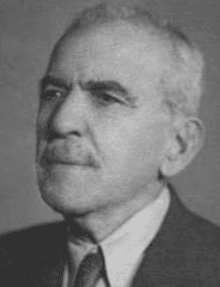
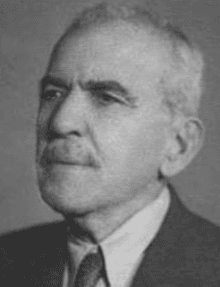
Eb, I'm here to help with your translation request. However, the text you provided — "Ebubekir Hâzım Tepeyran" — is a proper noun: a person's full name. In accordance with the guidelines, proper names, including personal names, must be preserved exactly as written and not translated. Therefore, the correct English translation is: **Ebubekir Hâzım Tepeyran**
Year of Birth | 1864 | ||||||||
|---|---|---|---|---|---|---|---|---|---|
Place of Birth | Niğde | ||||||||
Ölüm tarihi | 1947-06-05 | ||||||||
Place of Death | İstanbul | ||||||||
Profession(s) | member of parliament Statesman minister governor writer | ||||||||
Grammar | Persian Arabic French Turkish | ||||||||
Ministerial Position | Minister of the Interior | ||||||||
Term in the Grand National Assembly | Member of Parliament for Niğde (1923–1927 / 1939–1941) | ||||||||
Literary Genres | memoir poetry short story Novel | ||||||||
Important Works | Hatıralarım Belgelerle Kurtuluş Savaşı Anıları Zalimane Bir İdam Hükmü Hayatım: Canlı Tarihler I İdarî-İçtimaî Sanihat Kar Çiçekleri Les Fleurs Dégénérés Eski Şeyler Küçük Paşa | ||||||||
Governorships | Dedeağaç Trabzon Bursa İstanbul (Şehremini) Aleppo Beirut Ankara Sivas Baghdad Manastır Mosul | ||||||||
Ebubekir Hâzım Tepeyran was a statesman who held various administrative posts during the late Ottoman and early Republican periods, while also producing literary works in poetry, short story, novel, and memoir genres. He particularly reflected his observations of village life in his novel Küçük Paşa, and transferred his administrative experience gained in different provinces into the literary domain.
Ebubekir Hâzım Tepeyran was born in 1864 in the Tepeviran neighborhood of Yenice Mahallesi, Niğde. His father was Bekir Beyzade Hasan Efendi, Director of the Niğde Registration Office, and his mother was Muhsine Hanım. His family belonged to a lineage that had funded public works in Niğde such as mosques, baths, and fountains. He adopted the local nickname “Tepeyran,” by which his neighborhood was known, as his surname.
He received his primary education at Hafız Osman Mektebi in Niğde. Continuing his studies due to his father’s postings, he attended schools in Isparta and Antalya, graduating first in his class from Niğde Rüştiyesi. He studied Arabic, Persian, and French. He began his civil service in Niğde in 1878, holding various positions in the Registration Office and also teaching writing at the rüştiye.
Between 1882 and 1885, he served as secretary of the Konya Education Council and published articles in the provincial newspaper. In 1886, he was appointed to the Kastamonu Correspondence Office; there he taught Mecelle and Mülkiye law at the idadî. In 1891 he was transferred to İzmir, then in 1893 to the position of Deputy Governor of Edirne, and in 1896 to the governorship of Dedeağaç.
During his tenure in Dedeağaç, he initiated various urban development projects; however, he was dismissed from office in 1898 due to a journal published against him. When the accusations were found to be baseless, he was appointed Governor of Mosul. In subsequent years, he served as governor of Manastır (1903), Baghdad (1906), Sivas, Ankara, Istanbul City Governorship (1909), Hejaz (1910), Beirut (1911), and Aleppo (1912). For measures he took following Italy’s attack during his term in Beirut, he was awarded a medal by the Académie Universelle d’Histoire in Paris.
In 1914, he was appointed head of the Ministry of Interior and Education at the Council of State. In 1918, he became Governor of Bursa. In 1920, he served as Minister of Interior in the governments of Ali Rıza Paşa and Salih Paşa. During this tenure, he was sentenced to death by the Divan-ı Harb for supporting the Kuva-yi Milliye; the sentence was later commuted to hard labor. His sentence was lifted and he was released during the government of Tevfik Paşa.
In 1921, he was appointed by the Ankara Government as governor of Sivas and Trabzon. He served three terms as a Member of Parliament for Niğde in the Grand National Assembly of Türkiye between 1923 and 1927 and again between 1939 and 1941.
Tepeyran began his literary career with poems published in the Konya Provincial Newspaper. His 1910 collection of short stories, Eski Şeyler, contained six stories. In his novel Küçük Paşa, also published in 1910, he addressed rural life in Central Anatolia. The novel examines the social structure of the era, the lives of villagers, and the hardships faced by children.
Küçük Paşa, published in 1910 and republished in a simplified edition in 1947, centers on the experiences of a boy named Salih who returns from Istanbul to the village. The novel realistically portrays the economic and social structure of Anatolian villages, their dialects, customs, and the difficulties they encountered. In the preface, the author stated that the purpose of the work was to depict the reality of village life.
Ebubekir Hâzım Tepeyran died on 5 June 1947 in Istanbul at the age of 83 and was buried in the Erenköy Sahrayıcedit Cemetery.
Demir, Ayçin. “Bir Jurnal Hikâyesi: Ebubekir Hazım Bey’in Dedeağaç Mutasarrıflığı ve Azli.” *Türk Dünyası Araştırmaları*, vol. 133, no. 262, January–February 2023, pp. 69–82. Accessed May 21, 2025. https://dergipark.org.tr/en/download/article-file/2810745
Tonga, Necati. “Ebubekir Hâzım Tepeyran’ın Küçük Paşa Romanına Yansıyan Köy Hayatı.” *Gazi Türkiyat*, Güz 2013, no. 13, pp. 121–132. Accessed May 21, 2025. https://dergipark.org.tr/tr/pub/tariharastirmalari/issue/47791/603725
Özsarı, Reyhan. “Tasvirî Anlatım ve Ebubekir Hazım Tepeyran’ın Küçük Paşa Adlı Romanında Tasvirî Anlatımının Kullanılışı.” *AKAD*, Volume 1, no. 1, Spring 2013, pp. 48–57. Accessed May 21, 2025. https://dergipark.org.tr/en/download/article-file/929748
“Ebubekir Hâzım Tepeyran.” *Türk Edebiyatı İsimler Sözlüğü (TEİS)*. Accessed May 21, 2025. https://teis.yesevi.edu.tr/madde-detay/tepeyran-ebubekir-hazim
“Who is Ebubekir Hâzım Tepeyran?” *Türk Edebiyatı*. Accessed May 21, 2025. https://www.turkedebiyati.org/ebubekir-hazim/

Eb, I'm here to help with your translation request. However, the text you provided — "Ebubekir Hâzım Tepeyran" — is a proper noun: a person's full name. In accordance with the guidelines, proper names, including personal names, must be preserved exactly as written and not translated. Therefore, the correct English translation is: **Ebubekir Hâzım Tepeyran**
Year of Birth | 1864 | ||||||||
|---|---|---|---|---|---|---|---|---|---|
Place of Birth | Niğde | ||||||||
Ölüm tarihi | 1947-06-05 | ||||||||
Place of Death | İstanbul | ||||||||
Profession(s) | member of parliament Statesman minister governor writer | ||||||||
Grammar | Persian Arabic French Turkish | ||||||||
Ministerial Position | Minister of the Interior | ||||||||
Term in the Grand National Assembly | Member of Parliament for Niğde (1923–1927 / 1939–1941) | ||||||||
Literary Genres | memoir poetry short story Novel | ||||||||
Important Works | Hatıralarım Belgelerle Kurtuluş Savaşı Anıları Zalimane Bir İdam Hükmü Hayatım: Canlı Tarihler I İdarî-İçtimaî Sanihat Kar Çiçekleri Les Fleurs Dégénérés Eski Şeyler Küçük Paşa | ||||||||
Governorships | Dedeağaç Trabzon Bursa İstanbul (Şehremini) Aleppo Beirut Ankara Sivas Baghdad Manastır Mosul | ||||||||
No Discussion Added Yet
Start discussion for "Ebubekir Hazım Tepeyran" article
Birth and Family
Education and Early Civil Service
Administrative Appointments
Armistice and Republican Period
Literary Activities
The Novel Küçük Paşa and Village Life
Other Works
Death