This article was automatically translated from the original Turkish version.
Incubation Period | 2–21 Days | ||||||||
|---|---|---|---|---|---|---|---|---|---|
Major Virus Types | EBOV, SUDV, BDBV | ||||||||
First Detection | 1976, South Sudan, Democratic Republic of the Congo | ||||||||
Affected Organisms | Humans, Primates | ||||||||
Agent | Viruses in the Orthoebolavirus Genus | ||||||||
Disease Group | Viral Disease | ||||||||
Ebola virus disease is defined as a severe viral illness with high mortality rates, caused by viruses of the genus Orthoebolavirus in the family Filoviridae, affecting humans and non-human primates. The disease was first identified in 1976 during simultaneous outbreaks within the borders of present-day South Sudan and the Democratic Republic of the Congo. The disease is named after the Ebola River near which the outbreak occurred in the Democratic Republic of the Congo.
Viruses causing Ebola disease are classified within the genus Orthoebolavirus. Three main virus types are known to have caused major outbreaks:
Other types have also been identified, such as Reston ebolavirus and Taï Forest ebolavirus. Reston ebolavirus was first detected in monkeys transported from the Philippines to the United States.
Ebola outbreaks have long occurred in rural rainforest areas of Central and East Africa. The disease has primarily affected the Democratic Republic of the Congo Sudan Uganda Gabon and the Republic of the Congo. The West Africa outbreak beginning in 2013–2014 drew global attention because it was the first time the disease spread extensively to densely populated urban centers. The outbreak caused widespread fatalities particularly in Guinea Sierra Leone and Liberia.
Research suggests that fruit bats may serve as the natural reservoir of the Ebola virus. Transmission to humans occurs through direct contact with the blood organs secretions or other bodily fluids of infected animals. Contact with wild animals such as chimpanzees gorillas monkeys forest antelopes and porcupines is reported to increase the risk of infection.【1】
The virus is generally transmitted to human communities during hunting the handling of sick or dead wild animals and the preparation of bush meat. Consumption of fruit bats and ingestion of fruits contaminated with bat secretions are also considered possible transmission routes.【2】
The Ebola virus spreads through direct contact with the blood and other bodily fluids of infected individuals. It can also be transmitted via surfaces contaminated with vomit feces blood or other fluids from infected persons. Transmission does not occur before the onset of symptoms. However once symptoms appear infected individuals become contagious.
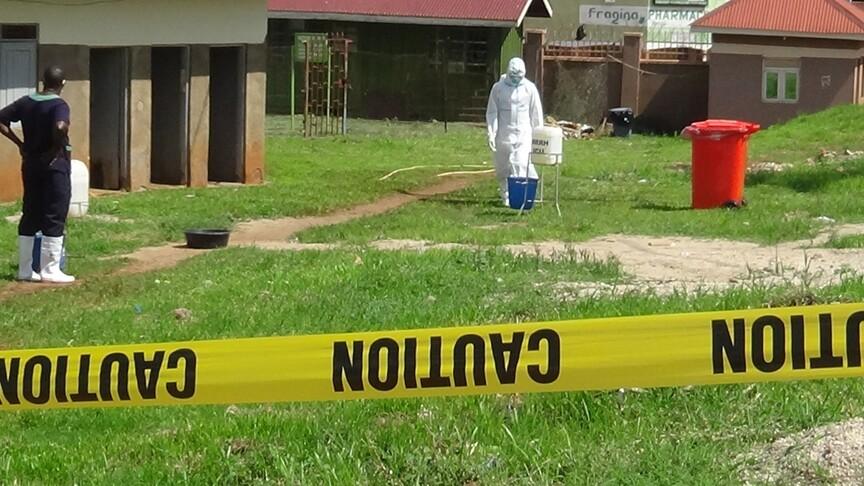
Healthcare workers are frequently infected due to inadequate application of protective measures during close contact with patients. Direct contact with bodies during funeral ceremonies is also identified as a major risk factor in the spread of outbreaks.
The incubation period of Ebola disease ranges from 2 to 21 days. The illness typically begins with sudden high fever fatigue muscle pain headache and sore throat. As the disease progresses vomiting diarrhea abdominal pain and skin rashes may occur. In some cases impairment of kidney and liver function is observed.
In advanced stages internal and external bleeding may occur. Bleeding can be observed in vomit feces or various parts of the body. Involvement of the central nervous system may lead to confusion aggression and behavioral changes.
Early symptoms of Ebola disease resemble those of malaria typhoid meningitis and other viral hemorrhagic fevers making diagnosis challenging. Definitive diagnosis is achieved using RT-PCR tests ELISA assays antigen detection tests and cell culture methods.
Laboratory samples pose a high biological risk therefore testing must be conducted under strict biosafety conditions.
The World Health Organization (WHO) has developed intensive supportive care protocols to improve survival rates in Ebola patients. Rehydration therapy pain management nutritional support and treatment of concurrent infections are critical components of this approach.
Monoclonal antibody treatments mAb114 (Ansuvimab) and REGN-EB3 (Inmazeb) are recommended for Ebola virus disease. As of now no approved specific treatments exist for illnesses caused by the Sudan virus or Bundibugyo virus.
Vaccines Ervebo and the two-dose regimen Zabdeno and Mvabea have been approved for prevention of Ebola virus disease. Ervebo is primarily used during outbreaks. WHO and international health organizations support preventive vaccination of healthcare workers and frontline personnel.
Research into candidate vaccines targeting other Ebola virus types such as the Sudan virus continues.【3】
Control of Ebola outbreaks relies on contact tracing laboratory services safe burial practices infection control in healthcare facilities and community education. Isolation of patients and early access to treatment play a vital role in reducing transmission.
WHO emphasizes that healthcare workers must adhere to standard precautions including hand hygiene use of personal protective equipment and safe medical practices.【4】
Physical and psychological effects may persist for extended periods in individuals who have recovered from Ebola disease. The virus has been reported to persist in certain immune-privileged sites such as the eyes brain and testes in some survivors.
Studies have detected that the Ebola virus can be transmitted through semen for months after recovery. Therefore survivors are advised to adopt safe sexual practices.【5】
The World Health Organization collaborates with at-risk countries on surveillance preparedness planning contact tracing vaccination programs and laboratory support to prevent Ebola outbreaks. The organization also implements safe burial practices health worker training and community awareness campaigns in outbreak-affected areas.
Warning: The content in this article is provided solely for general encyclopedic information purposes. The information here should not be used for diagnosis treatment or medical advice. Always consult a physician or qualified healthcare professional before making any health-related decisions. The author of this article and KÜRE Encyclopedia assume no responsibility for any consequences arising from the use of this information for diagnosis or treatment purposes.
Anadolu Ajansı. "Afrika ülkeleri Kongo Demokratik Cumhuriyeti ve Uganda'da Ebola salgını yeniden patlak verdi." Accessed May 22, 2026. https://www.aa.com.tr/tr/dunya/afrika-ulkeleri-kongo-demokratik-cumhuriyeti-ve-ugandada-ebola-salgini-yeniden-patlak-verdi/3940712
Centers for Disease Control and Prevention (CDC). "About Ebola." Accessed May 22, 2026. https://www.cdc.gov/ebola/about/index.html
UNICEF Uganda. “Ebola Virus Disease (EVD).” Accessed May 22, 2026. https://www.unicef.org/uganda/ebola-virus-disease-evd
World Health Organization (WHO). “Ebola Disease.” Accessed May 22, 2026. https://www.who.int/news-room/fact-sheets/detail/ebola-disease
World Organisation for Animal Health (WOAH). “Ebola Virus Disease.” Accessed May 22, 2026. https://www.woah.org/en/disease/ebola-virus-disease/
[1]
World Health Organization (WHO), “Ebola Disease,” Access date: 22 May 2026, https://www.who.int/news-room/fact-sheets/detail/ebola-disease
[2]
World Organisation for Animal Health (WOAH), “Ebola Virus Disease,” Access date: 22 May 2026, https://www.woah.org/en/disease/ebola-virus-disease/
[3]
World Health Organization (WHO), “Ebola Disease,” Access date: 22 May 2026, https://www.who.int/news-room/fact-sheets/detail/ebola-disease
[4]
World Health Organization (WHO), “Ebola Disease,” Access date: 22 May 2026, https://www.who.int/news-room/fact-sheets/detail/ebola-disease
[5]
World Health Organization (WHO), “Ebola Disease,” Access date: 22 May 2026, https://www.who.int/news-room/fact-sheets/detail/ebola-disease

Incubation Period | 2–21 Days | ||||||||
|---|---|---|---|---|---|---|---|---|---|
Major Virus Types | EBOV, SUDV, BDBV | ||||||||
First Detection | 1976, South Sudan, Democratic Republic of the Congo | ||||||||
Affected Organisms | Humans, Primates | ||||||||
Agent | Viruses in the Orthoebolavirus Genus | ||||||||
Disease Group | Viral Disease | ||||||||
Types and Structure of the Ebola Virus
Historical Development of Ebola Outbreaks
Natural Reservoir and Animal-to-Human Transmission
Human-to-Human Transmission
Symptoms of Ebola Disease
Diagnosis of Ebola Disease
Treatment and Supportive Care
Ebola Vaccines
Control of Outbreaks and Preventive Measures
Conditions Observed in Individuals Recovering from Ebola Disease
World Health Organization’s Intervention in Ebola Outbreaks