


This article was automatically translated from the original Turkish version.
Earplugs are personal protective devices inserted into the external ear canal to reduce incoming sounds, prevent foreign substances such as water or dust from entering the ear, or support conditions such as sleep and concentration.
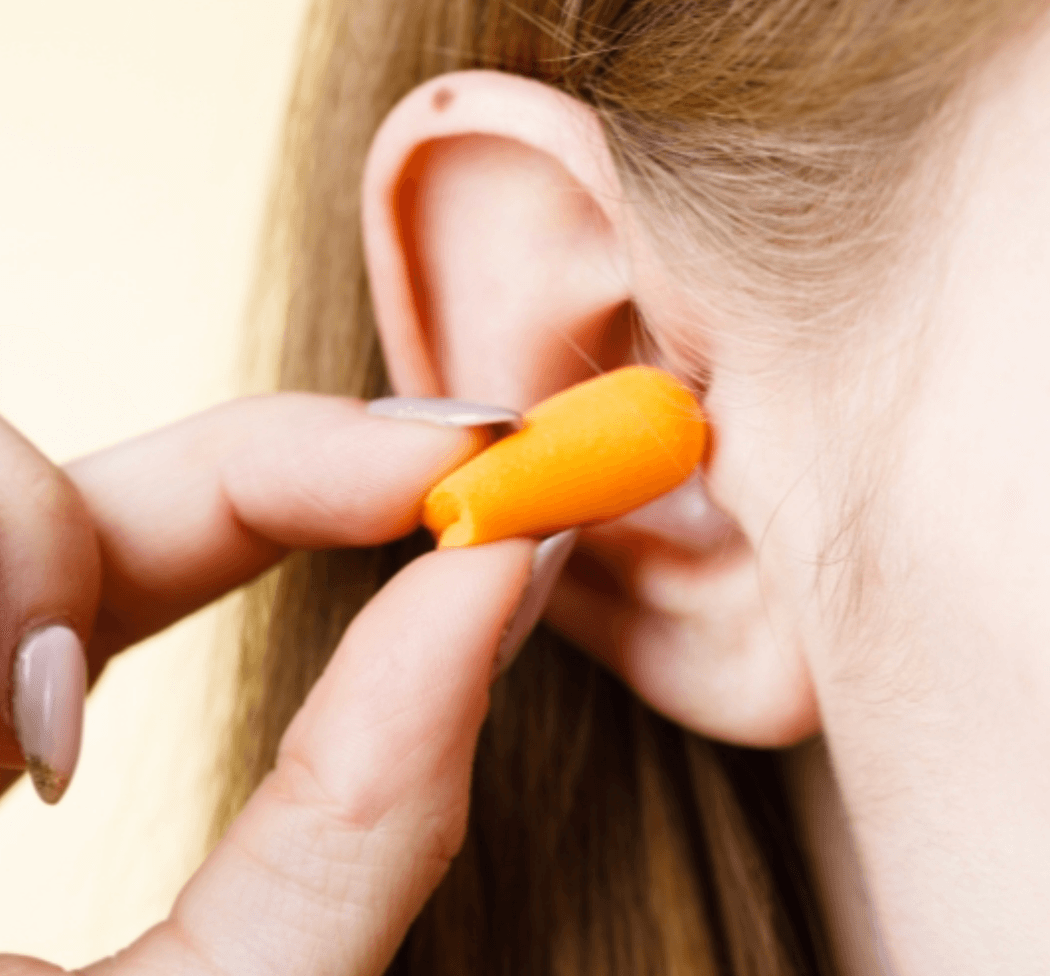
Kulak tıkacı (Hearingaids)
•Materials: They are typically made from soft and flexible materials such as foam (polyurethane), silicone, or wax.
•Noise protection: For industrial workers, musicians, or individuals exposed to high noise levels during sleep.
•Water protection: To prevent conditions such as middle ear infections during swimming or bathing.
•Sleep and concentration: For individuals seeking to create a quiet environment.
•Occupational safety
•Healthcare (intensive care, sleep support)
•Sports and swimming
•Travel (against airplane pressure)
Some stone objects discovered in archaeological excavations have been identified as earplugs, with various interpretations proposed regarding their function. Stone artifacts found at the Boncuklu Tarla Höyüğü excavation site have been assessed as possibly used as earplugs in prehistoric times. This indicates that earplugs are not merely modern medical devices.
Poor sleep quality among patients in intensive care units is a common issue. Research has shown that the use of earplugs and eye masks improves sleep quality in these patients. In the study by Akyol and Keskin, patients using earplugs and eye masks reported a better sleep experience. Similarly, the study by Öz and Cerit demonstrated positive effects of these interventions among coronary intensive care patients.
Although earplugs are recommended to protect the hearing health of individuals exposed to industrial noise, their usage remains insufficient. A study conducted among university students and call center employees found that despite awareness of earplug use, adoption rates remain low.
Earplugs are not only modern medical devices but also functional objects used for various purposes throughout history. Today they are regarded as effective protective tools both in healthcare for improving sleep quality and in preserving hearing health. However, there is a need to enhance usage habits and raise awareness.
Akyol, M., and Ö. Keskin. “Kulak Tıkacı ve Göz Bandı Kullanımının Yoğun Bakım Hastalarının Uyku Sorunları ve Uyku Kalitesi Üzerine Etkisi.” SBÜ Hemşirelik Dergisi 7, no. 1 (2025): 1-12.https://dergipark.org.tr/tr/doi/10.48071/sbuhemsirelik.1382467.
Karabulut, T. “Boncuklu Tarla’da Ele Geçen Taş Objelerin Terminolojisi Üzerine Düşünceler.” Ege Üniversitesi Arkeoloji Dergisi 25, no. 1 (2020): 1–15.https://dergipark.org.tr/tr/pub/egearkeoloji/issue/58165/808954
Öz, A., and B. Cerit. “Göz Bandı ve Kulak Tıkacı Uygulamasının Uyku Kalitesi Üzerine Etkisi.” Hacettepe Üniversitesi Hemşirelik Fakültesi Dergisi 10, no. 2 (2023): 123-134.https://dergipark.org.tr/tr/doi/10.31125/hunhemsire.1333834
Ünlü, M., and M. Dursun. “Üniversite Öğrencileri ve Çağrı Merkezi Çalışanlarında Gürültü Maruziyeti ve İşitme Sağlığı.” Uluslararası Sağlık Yönetimi ve Stratejileri Araştırma Dergisi 4, no. 2 (2018): 160–172.https://dergipark.org.tr/tr/download/article-file/614556.

Key Features of Earplugs
Purposes
Application Areas
Earplugs in Historical Context
Use of Earplugs in Intensive Care Units
Use of Earplugs in Preserving Hearing Health