


This article was automatically translated from the original Turkish version.
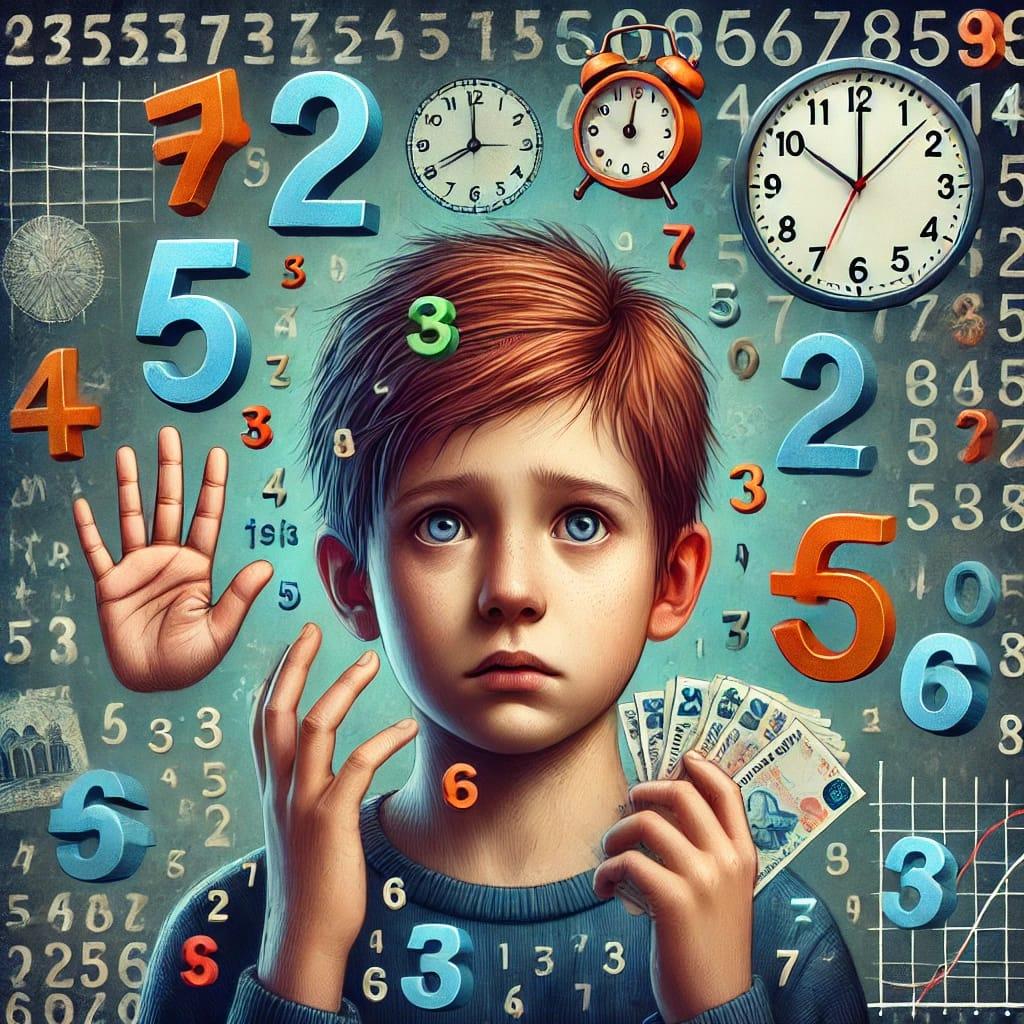
DYSLEXIA
Definition | Mathematical learning difficulty within the specific learning difficulty domain | ||||||||
|---|---|---|---|---|---|---|---|---|---|
Main Causes | Non-specific individual and environmental factors | ||||||||
Special Day | March 3 Dyscalculia Day | ||||||||
The term dyscalculia originates from the combination of two ancient Greek words: “dys,” meaning “bad,” and “calculia,” meaning “counting.” In this context, the word “dyscalculia” literally translates to “bad counting.” Dyscalculia, also defined as “mathematics learning difficulty,” is one of the subtypes of learning disabilities.
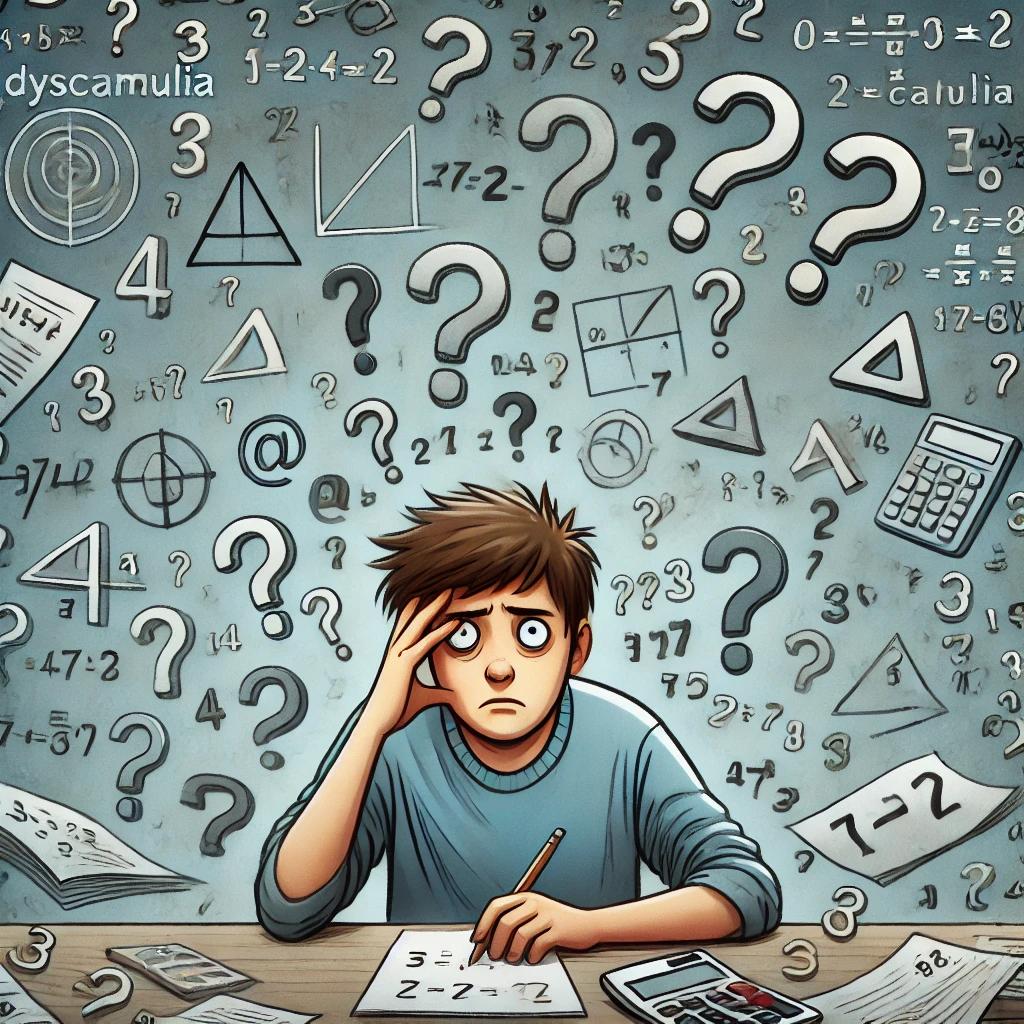
Designed with artificial intelligence.
It is a learning disability characterized by difficulties in establishing mathematical relationships, understanding the concept of numbers and numerical sense, and comprehending and applying operations and concepts. It also involves inadequacies in understanding coordinate systems, time, and spatial concepts. Today, special education professionals address this learning disability. Due to differences in the tests and criteria used for diagnosis, it is difficult to determine the exact prevalence of dyscalculia. However, research suggests that dyscalculia affects approximately 3 to 6 percent of the general population.
Learning difficulties may arise from:
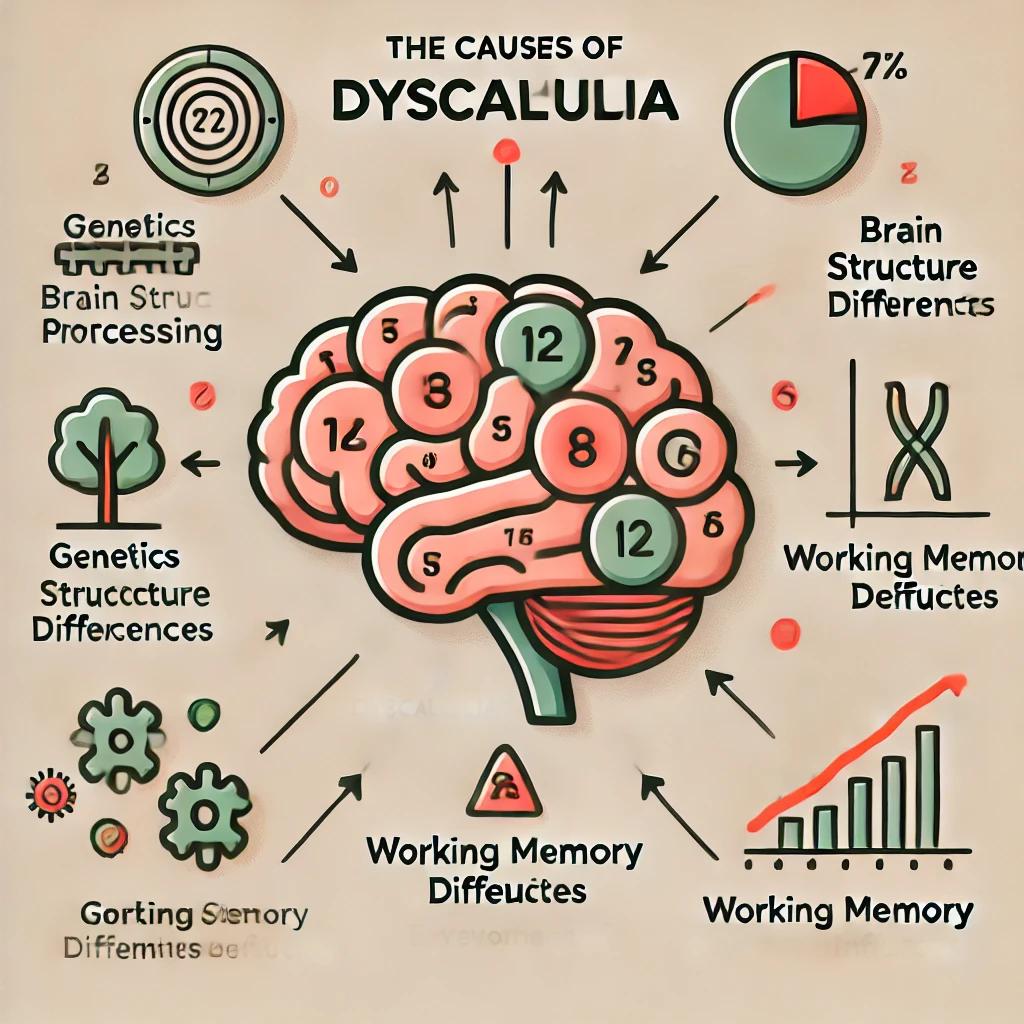
Designed with artificial intelligence.
Although often associated with intellectual disability or inadequate mathematics instruction, mathematical learning difficulties can occur in individuals with normal intelligence due to environmental factors. However, mathematical learning difficulty cannot be explained solely by environmental influences. It is a distinct and specific learning disability in its own right. Therefore, dyscalculia is a separate condition from intellectual disability or low academic achievement and cannot be accounted for by intellectual deficits or poor education. Psychological and genetic factors also play significant roles in this learning disability.【1】
Gross-Tsur, V., Manor, O., & Shalev, R. S. (1996). Developmental dyscalculia: Prevalence and demographic features. Dev Med Child Neurol, 38(1), 25-33. Accessed March 19, 2025.Accessed Adresi.
Korkmazlar, Ü. (2003). Okul öncesi dönemde öğrenme sorunlarını tanımak. Okul Öncesi Eğitim: Sorunlar ve Çözümler Sempozyumu Bildiri Metinleri, İstanbul: Özel Okullar Derneği Yayınları, pp. 27–36. Accessed March 19, 2025.
Messenger, C., Emerson, J., & Bird, R. (2007). Dyscalculia in harrow. Mathematics Teaching Incorporating Micromath, 204, 37–39. Accessed March 19, 2025.Accessed Adresi.
Mutlu, Yılmaz. "Matematik öğrenme Güçlüğü (Gelişimsel Diskalkuli)." researchgate. Accessed March 19, 2025.
Sinem SEZER,Ayça AKIN. "Teachers’ Opinions About Dyscalculia Seen in the Students." *Elementary Education Online*, 2011: 758,759. Accessed March 19, 2025.Accessed Adresi.
[1]
(Dünya Sağlık Örgütü, 1994)
DYSLEXIA
Definition | Mathematical learning difficulty within the specific learning difficulty domain | ||||||||
|---|---|---|---|---|---|---|---|---|---|
Main Causes | Non-specific individual and environmental factors | ||||||||
Special Day | March 3 Dyscalculia Day | ||||||||
Causes of Dyscalculia
Some Common Difficulties Experienced