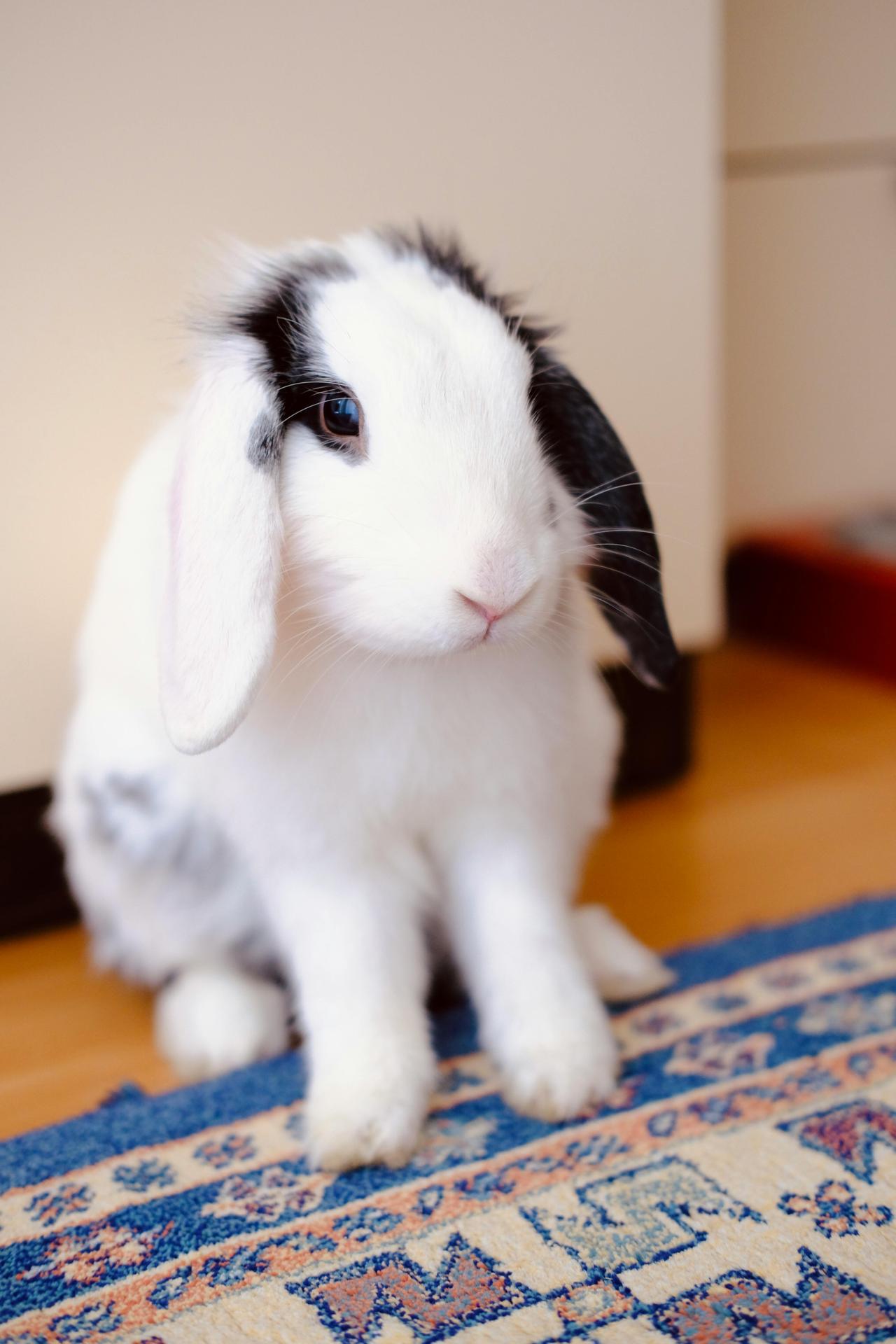
This article was automatically translated from the original Turkish version.
Dutch Lop Rabbit (Oryctolagus cuniculus)
Weight | 0 2–9 kg | ||||||||
|---|---|---|---|---|---|---|---|---|---|
Diet | Vegetables Fibrous plants Dry feed | ||||||||
Habitat | Clean environment with room for movement Spacious | ||||||||
Character | Docile, social, curious | ||||||||
Species | Domestic rabbit (dwarf breed) | ||||||||
Origin | Netherlands | ||||||||
Body Structure | Small, compact | ||||||||
Color Variety | Solid, spotted, patched | ||||||||
Lifespan | 8–10 years | ||||||||
Distinguishing Feature | Lop-eared | ||||||||
Holland Lop Rabbit (Oryctolagus cuniculus) is a mammalian species belonging to the family Leporidae, native to southwestern Europe and partially northern Africa. Through human activity, it has been introduced beyond its natural range and now occurs on many continents. The species is notable for both its wild populations and domesticated forms and is regarded as the ancestor of modern domestic rabbits.【1】
The Holland Lop Rabbit belongs to the order Lagomorpha and is a member of the family Leporidae. Although it shares the same family as hares (genus Lepus), it is classified within a different genus. This distinction is particularly evident in behavioral traits and lifestyle. The species is known for its burrowing behavior, a characteristic that differentiates it from many other leporid species.【2】
The Holland Lop Rabbit is a medium-sized mammal whose body length, weight, and fur color vary according to environmental conditions. It typically has a gray-brown coat that provides camouflage in its natural habitat. Its relatively long ears are well-developed for hearing. Powerful hind legs enable rapid running and jumping. Its body structure is adapted for both swift movement in open areas and life within burrow systems.【3】
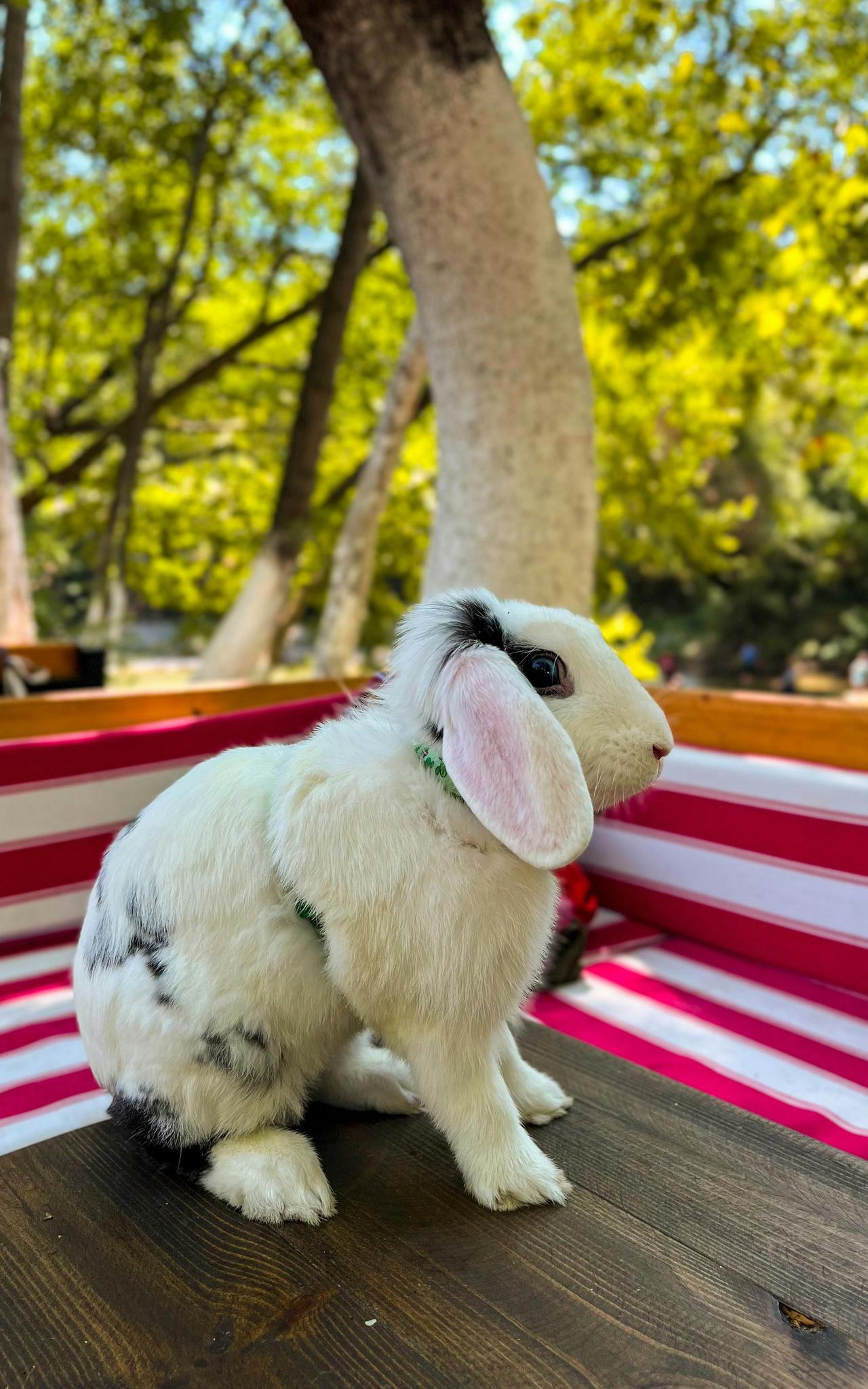
Holland Lop Rabbit in an outdoor environment (Pexels)
The natural range of the species is limited to southwestern Europe and northern Africa; however, due to human activity, it has spread widely across the globe. The Holland Lop Rabbit prefers open areas, scrublands, agricultural lands, and semi-arid regions. Its complex underground tunnel systems, known as warrens, are one of its most characteristic habitat features.【4】
These burrows may have multiple entrances and exits, providing protection from predators and a safe environment for reproduction. Individuals living in colonies share these burrow systems.【5】
The Holland Lop Rabbit is a social species and typically lives in colonies. These colonies may be organized within a distinct hierarchical structure. Communication among individuals occurs through visual signals and body movements. In the presence of danger, individuals may thump their hind legs on the ground to alert others.【6】
The species is primarily active during crepuscular hours. It spends much of the day within its burrows and engages in feeding activities during early morning and late afternoon.【7】
Holland Lop rabbits require a spacious and clean living environment. Continuous confinement in cages is not recommended; they should be provided with regular opportunities to roam freely in designated areas. This species can adapt well to domestic settings and may be housed indoors or in controlled outdoor environments when appropriate conditions are maintained.
Regular cleaning of the living area is essential for hygiene. Grooming is generally straightforward but should be performed periodically. Due to their drooping ears, special attention must be paid to ear cleanliness. Regular nail trimming and dental health maintenance are important aspects of care. As rabbits’ teeth grow continuously, appropriate chewing materials must be provided to satisfy their natural gnawing needs.
The Holland Lop Rabbit is a herbivore, with its diet consisting largely of grasses, leaves, and various plants. Feeding habits may vary depending on local vegetation. Its digestive system is adapted for the efficient processing of plant material.【8】
The Holland Lop Rabbit is known for its high reproductive capacity. Under favorable environmental conditions, it can breed year-round and exhibits rapid population growth due to its short gestation period. Females can give birth to multiple offspring, significantly contributing to the species’ successful dispersal.【9】
Young are typically kept within the burrow and are dependent on their mother during early development. Colony living plays a vital role in protecting the offspring.【10】
The Holland Lop Rabbit is an important species in many ecosystems. Through grazing pressure on vegetation, it influences ecosystem dynamics. It also serves as a primary food source for numerous predators.【11】
However, in some regions, the species is considered invasive. When introduced beyond its native range by humans, it can negatively impact local ecosystems and cause damage to agricultural lands.【12】
Atlas of Living Australia. "Oryctolagus cuniculus." Atlas of Living Australia Species Profile and Threats Database. Accessed April 30, 2026. https://bie.ala.org.au/species/https://biodiversity.org.au/afd/taxa/692effa3-b719-495f-a86f-ce89e2981652
Avsever, Meriç Lütfi, Seza Eskizmirli, and Serra Tunaligil. “Aeromonas hydrophila Isolation from Holland Lop (Oryctolagus cuniculus) Rabbits.” *Etlik Veteriner Mikrobiyoloji Dergisi* 26, no. 1 (2015): 21–22. Accessed April 30, 2026. https://dergipark.org.tr/tr/download/article-file/627305
Myers, Phil, Tamara Benson, and others. “Oryctolagus cuniculus.” Animal Diversity Web. University of Michigan Museum of Zoology. Accessed April 30, 2026. https://animaldiversity.org/accounts/Oryctolagus_cuniculus/
Observation.org. "European rabbit (Oryctolagus cuniculus)." Observation.org Species Page. Accessed April 30, 2026. https://observation.org/species/409/
Pexels. "Ahşap Zemin Üzerinde İç Mekanda Sevimli Sarkık Kulaklı Tavşan." Accessed April 28, 2026. https://www.pexels.com/tr-tr/fotograf/ahsap-zemin-uzerinde-ic-mekanda-sevimli-sarkik-kulakli-tavsan-35891267/
Pexels. “Canlı Bir Açık Hava Ortamında Büyüleyici Hollanda Lop Tavşanı.” Accessed April 28, 2026. https://www.pexels.com/tr-tr/fotograf/canli-bir-acik-hava-ortaminda-buyuleyici-hollanda-lop-tavsani-33726178/
Pexels. “Şirin Siyah Beyaz Tavşan Rahat Ev Ortamında.” Accessed April 28, 2026. https://www.pexels.com/tr-tr/fotograf/sirin-siyah-beyaz-tavsan-rahat-ev-ortaminda-32680464/
[1]
Myers, Phil, Tamara Benson, and others. “Oryctolagus cuniculus.” Animal Diversity Web. University of Michigan Museum of Zoology. Access Date: 30 April 2026.
[2]
Meriç Lütfi Avsever, Seza Eskizmirli̇ler and Serra Tunaligil, “Aeromonas hydrophila Isolation from Holland Lop (Oryctolagus cuniculus) Rabbits,” Etlik Veteriner Mikrobiyoloji Dergisi 26, no. 1 (2015): 21–22.
https://dergipark.org.tr/tr/download/article-file/627305
[3]
Atlas of Living Australia. “Oryctolagus cuniculus.” Atlas of Living Australia Species Profile and Threats Database. Access Date: 30 April 2026.
[4]
Observation.org. “European rabbit (Oryctolagus cuniculus).” Observation.org Species Page. Access Date: 30 April 2026.
[5]
Meriç Lütfi Avsever, Seza Eskizmirli̇ler and Serra Tunaligil, “Aeromonas hydrophila Isolation from Holland Lop (Oryctolagus cuniculus) Rabbits,” Etlik Veteriner Mikrobiyoloji Dergisi 26, no. 1 (2015): 21–22.
https://dergipark.org.tr/tr/download/article-file/627305
[6]
Meriç Lütfi Avsever, Seza Eskizmirli̇ler and Serra Tunaligil, “Aeromonas hydrophila Isolation from Holland Lop (Oryctolagus cuniculus) Rabbits,” Etlik Veteriner Mikrobiyoloji Dergisi 26, no. 1 (2015): 21–22.
https://dergipark.org.tr/tr/download/article-file/627305
[7]
Atlas of Living Australia. “Oryctolagus cuniculus.” Atlas of Living Australia Species Profile and Threats Database. Access Date: 30 April 2026.
https://bie.ala.org.au/species/https://biodiversity.org.au/afd/taxa/692effa3-b719-495f-a86f-ce89e2981652
[8]
Meriç Lütfi Avsever, Seza Eskizmirli̇ler and Serra Tunaligil, “Aeromonas hydrophila Isolation from Holland Lop (Oryctolagus cuniculus) Rabbits,” Etlik Veteriner Mikrobiyoloji Dergisi 26, no. 1 (2015): 21–22.
https://dergipark.org.tr/tr/download/article-file/627305
[9]
Meriç Lütfi Avsever, Seza Eskizmirli̇ler and Serra Tunaligil, “Aeromonas hydrophila Isolation from Holland Lop (Oryctolagus cuniculus) Rabbits,” Etlik Veteriner Mikrobiyoloji Dergisi 26, no. 1 (2015): 21–22.
https://dergipark.org.tr/tr/download/article-file/627305
[10]
Atlas of Living Australia. “Oryctolagus cuniculus.” Atlas of Living Australia Species Profile and Threats Database. Access Date: 30 April 2026.
https://bie.ala.org.au/species/https://biodiversity.org.au/afd/taxa/692effa3-b719-495f-a86f-ce89e2981652
[11]
Atlas of Living Australia. “Oryctolagus cuniculus.” Atlas of Living Australia Species Profile and Threats Database. Access Date: 30 April 2026.
https://bie.ala.org.au/species/https://biodiversity.org.au/afd/taxa/692effa3-b719-495f-a86f-ce89e2981652
[12]
Observation.org. “European rabbit (Oryctolagus cuniculus).” Observation.org Species Page. Access Date: 30 April 2026.
https://observation.org/species/409/

Dutch Lop Rabbit (Oryctolagus cuniculus)
Weight | 0 2–9 kg | ||||||||
|---|---|---|---|---|---|---|---|---|---|
Diet | Vegetables Fibrous plants Dry feed | ||||||||
Habitat | Clean environment with room for movement Spacious | ||||||||
Character | Docile, social, curious | ||||||||
Species | Domestic rabbit (dwarf breed) | ||||||||
Origin | Netherlands | ||||||||
Body Structure | Small, compact | ||||||||
Color Variety | Solid, spotted, patched | ||||||||
Lifespan | 8–10 years | ||||||||
Distinguishing Feature | Lop-eared | ||||||||
No Discussion Added Yet
Start discussion for "Dutch Lop Rabbit (Oryctolagus cuniculus)" article
Taxonomy and Systematic Structure
Morphological Characteristics
Distribution and Habitat
Behavior and Social Structure
Care and Housing Conditions
Housing
Hygiene and Health
Diet
Reproduction and Life Cycle
Ecological Role and Relationship with Humans