

This article was automatically translated from the original Turkish version.
Registration Number(Text) | 865 | ||||||||
|---|---|---|---|---|---|---|---|---|---|
Registration Date(Text) | 20.08.2021 | ||||||||
Applicant/Registrant(s) | Diyarbakır Chamber of Commerce and Industry | ||||||||
Province(s) | Diyarbakır | ||||||||
Type of Geographical İndication | Mahreç Sign | ||||||||
Product / Product Group(s) | Bakery and confectionery products sweets dough products | ||||||||
Diyarbakır şehriyesi is a traditional dough product specific to Diyarbakır province in Türkiye and is protected as a geographical indication under Law No. 6769 on Industrial Property. Following an application by the Diyarbakır Chamber of Commerce and Industry, it was officially registered on 20 August 2021 and placed under geographical indication protection.
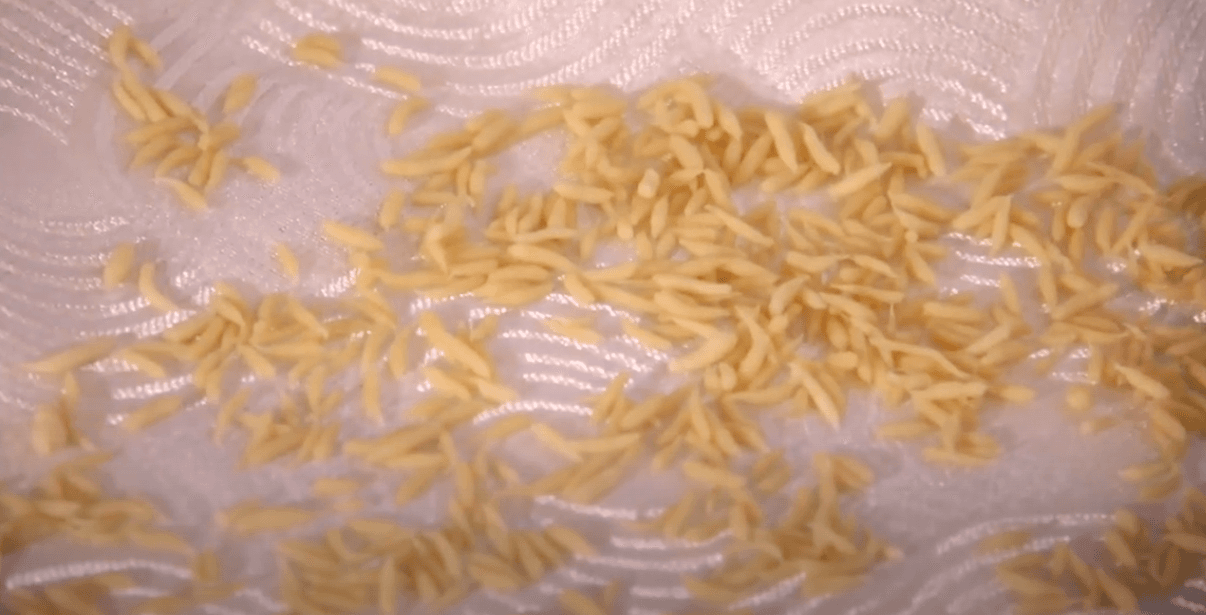
Diyarbakır şehriyesi is produced by kneading dough from wheat flour, butter, liquid oil, salt and water, then stretching and thinning small pieces by hand using the fingers, detaching them into individual strands, and finally drying and roasting them. This production method is a traditional technique unique to Diyarbakır province and requires skilled craftsmanship.
One of the product’s distinctive features is the use of butter made from sheep’s milk. The wheat flour is obtained by grinding local durum wheat varieties grown in Diyarbakır using regional mills. The technique used to shape the şehriye is a skill rooted in the region’s cultural heritage and passed down from generation to generation.
The dough is prepared by kneading wheat flour, salt, water, butter and liquid oil until it reaches a chewy consistency. The dough is then divided into portions, placed in the palm of the hand, and stretched and thinned using the thumb and index fingers of both hands. The resulting strands are carefully detached and laid out on a clean cloth to dry. The drying process takes one day, after which the product is roasted in a pan or oven to achieve its final form.
The production of Diyarbakır şehriyesi may occur only within the boundaries of Diyarbakır province. The product’s quality is directly linked to this geographical area. The traditional production method and the use of local ingredients confer uniqueness to the product as an integral part of Diyarbakır’s cultural heritage.
The geographical indication emblem and the term “Diyarbakır Şehriyesi” must appear on the product itself or its packaging. If this is not feasible, the term and emblem must be displayed in a clearly visible location within the production facility.
The production and use of the geographical indication for Diyarbakır şehriyesi are monitored at least once a year by a control body established under the coordination of the Diyarbakır Chamber of Commerce and Industry. This body consists of representatives from the Diyarbakır Directorate of Agriculture and Forestry, Dicle University, Diyarbakır Metropolitan Municipality and Diyarbakır Chamber of Commerce. During inspections, compliance with raw material specifications, adherence to the traditional production method and correct use of the geographical indication are verified.
Turk Patent and Trademark Office. "Diyarbakır Şehriyesi." *Coğrafi İşaretler Portalı*. August 20, 2021. Accessed October 23, 2025. https://ci.turkpatent.gov.tr/cografi-isaretler/detay/2916
Turk Patent and Trademark Office. "Diyarbakır Şehriyesi: Coğrafi İşaret Sicil Belgesi." Turk Patent and Trademark Office, August 20, 2021. Accessed October 23, 2025. https://ci.turkpatent.gov.tr/Files/GeographicalSigns/941eacab-99db-475e-b3a1-71af723e006b.pdf.

Registration Number(Text) | 865 | ||||||||
|---|---|---|---|---|---|---|---|---|---|
Registration Date(Text) | 20.08.2021 | ||||||||
Applicant/Registrant(s) | Diyarbakır Chamber of Commerce and Industry | ||||||||
Province(s) | Diyarbakır | ||||||||
Type of Geographical İndication | Mahreç Sign | ||||||||
Product / Product Group(s) | Bakery and confectionery products sweets dough products | ||||||||
No Discussion Added Yet
Start discussion for "Diyarbakır Şehriyesi" article
Definition and Distinctive Characteristics
Production Process
Geographical Boundary and Reputation
Usage Format
Monitoring