


This article was automatically translated from the original Turkish version.
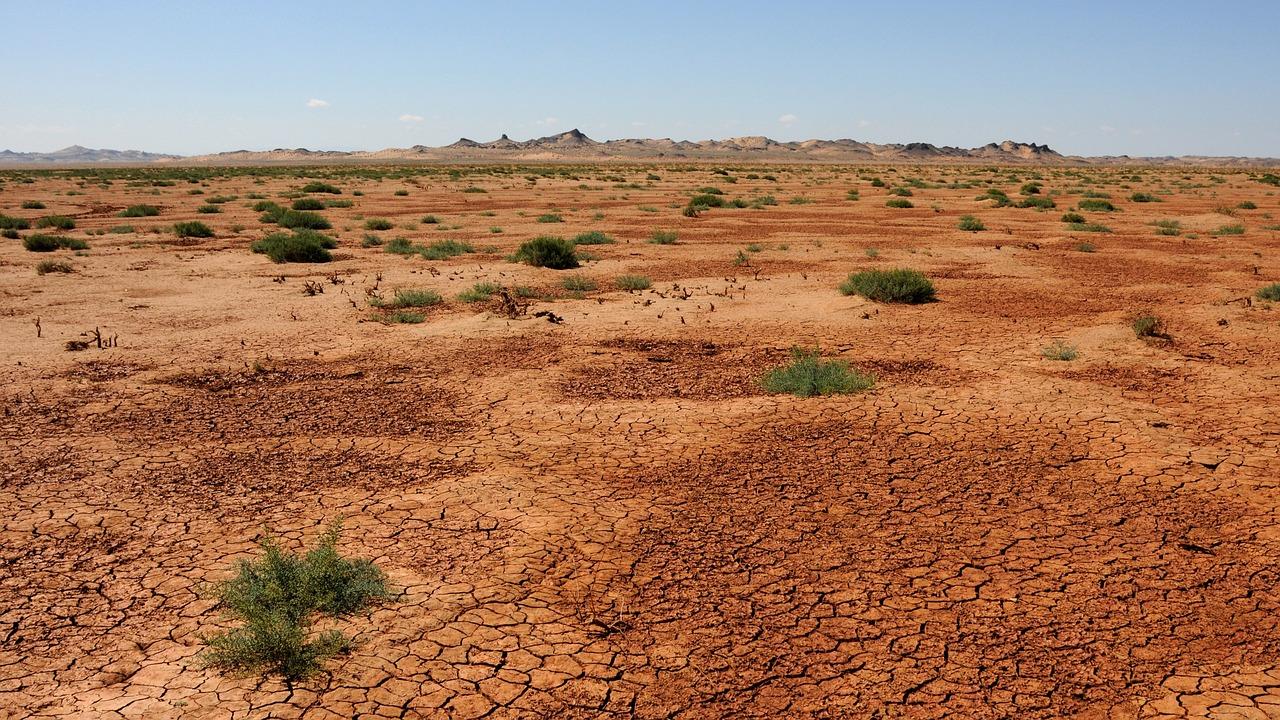
Desert Climate
Vegetation | salt-tolerant shrubs succulents Cacti | ||||||||
|---|---|---|---|---|---|---|---|---|---|
Hot Deserts | Australian interior Atacama (South America) Lut Arabian Peninsula Sahara (Africa) | ||||||||
Cold Deserts | Antarctic interior Central Asian interior regions (Gobi) | ||||||||
Desert climate is a type of climate characterized by extremely low precipitation throughout the year, where evaporation exceeds rainfall and arid conditions dominate. It is commonly found around the 30th parallels, within the tropics. Due to descending air movements in this zone, cloud formation is inhibited and rainfall becomes exceedingly rare. Desert climates can occur in both hot and cold regions.
In the Köppen climate classification, desert climate is denoted by the letters “BW.” Hot desert climate is classified as BWh, while cold desert climate is designated as BWk. This classification is determined based on the relationship between precipitation and temperature, as well as vegetation cover. In hot desert climates, temperatures remain high throughout the year, whereas winters in cold desert climates can be severely harsh.
Several key factors contribute to the formation of desert climate:
The hot desert climate is found in regions such as the Sahara Desert in North Africa, the Arabian Peninsula in the Middle East, the interior of Australia, and the Atacama Desert in South America.
The cold desert climate predominates in the interior regions of Central Asia and certain high-altitude areas, such as the Gobi Desert.
Türkiye does not have a classic hot desert climate. However, certain regions, particularly the Central Fırat section of Southeastern Anatolia, may experience conditions similar to desert climate during summer months. According to the Aydeniz classification method, desert climate conditions have been observed in some months at stations such as Gaziantep, Adıyaman, and Şanlıurfa. In particular, the Şanlıurfa station has been identified as the region experiencing the highest annual frequency of desert climate conditions. Analyses indicate that desert climate conditions prevail in this area for approximately 47% of the year.
Desert climate is synonymous with persistent drought. Low rainfall renders agricultural production nearly impossible, and limited water resources restrict human settlement. Soil fertility declines due to high temperatures, dryness, and wind erosion, leading to degradation. The persistence of drought brings about socioeconomic challenges.
Where T is the annual average temperature and P is the summer precipitation ratio.
Meteoroloji Genel Müdürlüğü. İklim Sınıflandırmaları. Ankara: Klimatoloji Şube Müdürlüğü, 2014. Accessed PDF: 22_iklim_siniflandirmalari.pdf.
Pixabay. "Desert Image." Photograph. Pixabay. Accessed May 18, 2025. https://pixabay.com/tr/.
Ritter, Michael E. “Tropical Desert Climate.” The Physical Environment. Accessed 2025. https://geo.libretexts.org/Bookshelves/Geography_(Physical)/The_Physical_Environment_(Ritter)/09%3A_Climate_Systems/9.04%3A_Low_Latitude_Climates/9.4.05%3A_Tropical_Desert_Climate.
Topçu, Emre. "Türkiye’nin Orta Fırat Bölümü’nün Bulanık Mantık Yaklaşımı ve Aylık Aydeniz Metodu Kullanılarak Kuraklık Analizi." Avrupa Bilim ve Teknoloji Dergisi 23 (April 2021): 296–303.

Desert Climate
Vegetation | salt-tolerant shrubs succulents Cacti | ||||||||
|---|---|---|---|---|---|---|---|---|---|
Hot Deserts | Australian interior Atacama (South America) Lut Arabian Peninsula Sahara (Africa) | ||||||||
Cold Deserts | Antarctic interior Central Asian interior regions (Gobi) | ||||||||
Climate Characteristics
Causes of Formation
Global Distribution
Situation in Türkiye
Drought and Its Effects
Evaluation According to Climate Classifications
BW is defined by Y<10×(T−10)+3P